BEHP transcript Disclaimer
This transcript has been produced automatically using Otter.
It provides a basic, but unverified or proofread transcript of the interview. Therefore, the British Entertainment History Project (BEHP) accepts no liability for any misinterpretation of the content of this interview.
However, the BEHP wants to make every effort to improve the quality of these transcripts and would welcome any voluntary offers to proofread this and/or other interviews. If you want to help, please contact BEHP Secretary, sue.malden@btinternet.com
Nick Gilbey 0:00
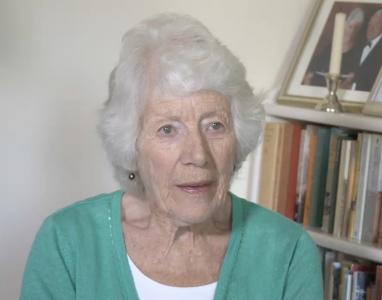
Okay, this is a British Entertainment History Project interview with Elizabeth Bale. The date is the seventh of July, 2025 and we're here at Elizabeth Bale's house in Somerset. First question, when did you become where were you born? And when I was born
Elizabeth Bale 0:29
in Devonport in 1941 the only nursing home in Plymouth during the war,
Nick Gilbey 0:35
right? And how did you become interested in television.
Elizabeth Bale 0:44
I was always interested in entertainment. And at school, I always learned to play the piano, and played I always was the accompanist for everything in the school and in house, prayers and everything like that. And when I left, I was going to go to music College. Decided my ear was not good enough, so went and did the fastest secretarial course I could, which was 30 weeks in London. And then thought I would like to go back to the West Country, where my family were, but my father suggested I apply to the BBC in London. I thought of applying to independent television that was just starting in Plymouth under Peter Cadbury. Oh no, apply to the BBC. So I did on the rest is history. I joined in November 1960
Nick Gilbey 1:45
just before that. Then, was there anybody in the family who gone into television or entertain world? No,
Elizabeth Bale 1:56
but my father always loved musicals, and as soon as he could get a radiogram, he would always have lps on of, you know, the musicals of the day. And he and my mother used to go to London once a year for the Motor Show. And they always went to see a musical, things like, bless the bride, I seem to remember.
Nick Gilbey 2:19
So, what did you? Did you have a television
Elizabeth Bale 2:24
he got a television set when I left school because he was paying school fees for my brother and for me, and he was working independently as a chartered accountant. So the television was bought when I left school, my brother being younger than me, and the first thing I remember seeing peculiarly was the hot chestnut man with Johnny Morris, with whom I worked a few years later.
Nick Gilbey 2:51
Right? So you went off to London, and again, you, I suppose that was your independence. And really did television have any Did you see any television in those days?
Elizabeth Bale 3:08
I don't think we had a television in the flats that I lived in in London. I'm sure we didn't. We probably couldn't afford them, but I just was always drawn to it until and of course, in those days, I think that working for the foreign office or the BBC was regarded as one of the top jobs for secretaries. In fact, I have a book somewhere which says
Nick Gilbey 3:39
that just, just, just check that it's recording. Okay, yeah, it says it's recording, so that's fine. So how many, how many years did you How long was the course, the secretarial course, 30 weeks, 30 weeks,
Elizabeth Bale 3:58
the fastest you could
Nick Gilbey 4:02
and so then you, you mentioned Peter Cadbury. What? Westwood television?
Elizabeth Bale 4:08
My father said, Oh, don't go and work for Peter Cadbury. Applied to the BBC. So being a dutiful daughter, I did, and asked to work in Plymouth. And I still have the letter, we don't take anybody straight in to the regions. PS, if you like an exploratory interview, give me a ring. And this was in Langham place, or wherever she was. So I went for this interview and got the job. Got a job.
Nick Gilbey 4:38
Yeah, when you started working for the BBC, what was your impression? Did it live up to your expectations?
Elizabeth Bale 4:49
Yes, I think it did. The first two weeks we there were several of us. We were sent on a training course. We had to learn all the acronyms, or we were taken to Bush House. We. Were taken to Broadcasting House. We were in a house, I think, in Marylebone High Street, that subsequently fell down. Somebody said it was very rickety. We weren't taken to the centre, oddly, Television Centre, but we were given a good grounding in how the BBC functioned. Bear in mind, in 1960 61 and at the end of the two weeks, I was very lucky, because I was sent to Television Centre.
Nick Gilbey 5:29
So when you were taken on, you didn't know whether you were going to work in radio or television or external services,
Elizabeth Bale 5:36
nothing at all. I was a very junior Secretary with very low speeds because I'd done the short course. I could type fast, having played the piano, but shorthand was a bit slower, and I was sent to the centre and sent to work for somebody who needed two secretaries to do their typing in television establishment, as it was called in those days, on the sixth floor. Michael kinchin Smith, who was in the Army during the war, and I can't remember the head of the department, had been a bomber pilot during the war, and we were working with those sort of people. And what was
Nick Gilbey 6:17
the role of the established BBC, establishment
Elizabeth Bale 6:20
personnel, what you and I call personnel today, yes, I remember filing an awful lot of those forms, which were sent out every time there was a change in your pay or your job, and I had to file them all the Boris
Nick Gilbey 6:39
did. It was a, was there a wider remit there in terms of checking people? I mean, I don't know if you've heard the story about the colonel that was employed or something to make sure that every application that that you, that you had had to be had to be checked out to make sure you weren't a Russian spy. Or
Elizabeth Bale 7:04
I was never aware of that, but I was very junior in the office. I used to deliver things around the centre to Don barberstock, Grace, Wyndham, Goldie, they were all on the sixth floor at that time, and I committed a cardinal error in that I delivered the report, annual report for Grace Wyndham Goldie Secretary without marking the envelope, personal to Grace Wyndham Goldie, but her secretary was wonderful, because she rang up and told me what I've done wrong, which was good.
Nick Gilbey 7:45
Did you get the impression? What impression did you get? Or did you have a conversation with grace, windy Goldie, who's quite a legend within the BBC. No,
Elizabeth Bale 7:55
she was one of those remote figures. The best thing, I think, that I remember was when we finished work, we used to go to the viewing galleries, which I think were on the fourth level, because there are only two studios open. I think it was four and five, I can't remember. And we could look in and watch said, cars and things like that being shot, you know. And we always used to go and just see what was happening in the studios before we left. And of course, in those days, you could walk in and out, no identification, nothing.
Nick Gilbey 8:30
So was that when you when, when you got to that stage? Did you think I've landed on your feet in terms of the job that you got?
Elizabeth Bale 8:41
Well London was very dirty, and coming from Cornwall, I found it, you know, I didn't like London. And Michael klinson Smith knew that I wanted to move, so he arranged for me the following March to go for an interview in Bristol, which I did, and I transferred there on May the eighth, 1961
Nick Gilbey 9:09
so you wouldn't How long were you in the centre?
Elizabeth Bale 9:11
Six months, if that. But
Nick Gilbey 9:15
at least he gave you a grounding of what went on in London,
Elizabeth Bale 9:18
exactly. And the fountain worked in those days, it didn't leak over tele Sydney, yes, and when I got to Bristol, it was completely different, because it was small, apart from the fact the engineers were out at an OB base out at Whitchurch at that time. But you got to know everybody. And I was again, lucky. I was sent to radio talks unit because somebody was off for three months, and I went to work for the external services producer, and I very quickly learned how to book a studio and whether I wanted echo or not, because the lady doing the book. Things had been a Ren during the war, and she did not suffer fools gladly.
Nick Gilbey 10:06
Was that at white ladies Road, yes,
Elizabeth Bale 10:08
yeah, yes. We were in the lovely houses in white ladies Road, yes, yes. And then after three months, the girl whose job I was doing came back. And so I then applied and got the job for the head of radio talks unit, Bill koysch, because his secretary had left. But while I was working in external services, the BBC had decided that it should have a late night programme called Asian Club, to have some people from India, Pakistan in a programme. And the the studio in Bristol was being refurbished, so we were using st Catherine's Hall, which was a church hall not that far from BH. So I remember the discussions about this, and there would have to be entertainment, because it was live at 1030 at night. So Mrs. Mead, who was in charge of our canteen, said, I will do my special drink, Asian delight. And she frosted all the rims of the glasses with sugar. I don't know what was in it, but it was pretty powerful, and some of us in talks unit were asked to go as hostesses for the oceans. I mean, it wouldn't happen today, I shouldn't think. And yes, Peter Page, who was in Bristol at that time, was the director with a girl who knew the gallery, and that was my first introduction to being on the floor of a television studio with a programme going out.
Nick Gilbey 12:06
I see, so that was a network programme. I think
Elizabeth Bale 12:09
it was because I think they did them round the regions, and it was Bristol's town. I
Nick Gilbey 12:14
see, yes, this was quite an early idea to include. Include, includes, yeah, yeah, making sure that everybody was represented on a national broadcaster. I see Yeah, yeah.
Elizabeth Bale 12:30
And I used to be sent down to a Asian restaurant in Park Street to see the manager, who was coordinating it all well. He was finding, he was finding the people,
Nick Gilbey 12:43
yes, right? And what restaurant was that? Then it was
Elizabeth Bale 12:47
called, but his name was sushi, Lamond, and you don't forget names like that. But it was, I can't remember what it was called. It was part way down Park Street, and it was an Indian restaurant, right?
Nick Gilbey 12:59
So Bristol had a multicultural not as much as it is now, I suppose,
Elizabeth Bale 13:07
no, I don't think we were ever particularly aware of it. There were. You never particularly went to Bristol too, but I can't remember, though I do know the person who made all the uniforms for the zookeepers was in Bristol too,
Nick Gilbey 13:27
right? So how long did that last? Then, for were we up to 62
Elizabeth Bale 13:33
now? Yes, yes. And then we started this Frank Gillard, who was our controller, is reputed on a flight back from Emerick to have thought it'd be a good idea to have local broadcasting in the UK. So talks, radio, talks unit with stringers and journalists on the staff did one or two one day experiments, one in Swindon and one in Bristol, to try it out, to see how it worked. And then it was decided to do a week long exercise in Bournemouth and pool area. And at the last minute, I was asked to go because the girl who should have gone couldn't I was doing the typing and making the tea because the DG down came to see how it worked, and we were in some old hall with annex rooms, and it was Obviously proved successful, because local broadcasting followed
Nick Gilbey 14:42
from that. So what was a was it a combination of music and talks, or it
Elizabeth Bale 14:48
was mostly news articles, I think, because then they'd cut into the network, into radio, four or home services? It was then, but
Nick Gilbey 14:56
the sort of main plank of it. Was local news. Local
Elizabeth Bale 15:01
news exactly because it was felt that everything was too national, I think. And I think that was the reason that Frank Gillard thought we should have more local radio stations, basically.
Nick Gilbey 15:13
And this was before regional television or ITV or BBC. Then was it? Well, no, because, you see, don't forget, there was Plymouth already. And oh, of course, Peter Cadbury and West William, yes,
Elizabeth Bale 15:26
yes. And that was 1959 he was starting in Plymouth,
Nick Gilbey 15:31
I don't suppose, do you know when, because Frank Gillard was, I think he was behind the idea of having regional television beyond Bristol, wasn't he?
Elizabeth Bale 15:46
He could well have been. He always pushed, pushed for the regions, because he came from Somerset. And yes, but then you see, of course, he moved to London,
Nick Gilbey 16:00
yes, because Bristol is, is such a large city, it was difficult, probably, to and film crews were sort of based in Bristol. I suppose they must have had people who could, but it would dominate the news in terms of output, I suppose, for the whole of the south west, south west,
Elizabeth Bale 16:28
yes, because, you see, we were governed by the transmitters. Don't forget, in those days, as to our area, both for television and I imagine, less so for radio, though, because, of course, there were all these unattended studios in Exeter and Toro and places like that where people could pop in and do a sound piece.
Nick Gilbey 16:51
Right? So what happened after your you were radioed?
Elizabeth Bale 16:58
I was in radio. And then when some of these people, there was a secretary, did any questions. But sometimes when she was away, I used to have to go and do any questions, which was usually Michael Bowen was the producer. And when it was like that, Frank Gillard used to come and warm up the audience. They had previously chosen the questions, which I then had to type rather quickly on an old Portable typewriter, and then I used to hand the mic round to all the questioners in the front row. I think Junior secretaries don't do it anymore. I think you've got to be much more senior. And but it gave a very wide experience of broadcasting.
Nick Gilbey 17:51
So any questions came from, where different locations
Elizabeth Bale 17:56
all over the place. But in those days, it was based in the south west. It didn't go beyond the South West. I remember doing it in Bideford and Plymouth, and can't remember other places, but you know, all in the south west. And Frederick risewood was the chairman and always stayed at the Grand Hotel in Bristol when he came. Bless him,
Nick Gilbey 18:16
what? Sorry, who was the producer? Then
Elizabeth Bale 18:19
Michael Bowen, who also I worked for on children's hour, because he they deemed any questions and any answers wasn't enough for him, so I worked for him on children's hour. That was radio, yes, radio children's hour. I was nearly there at the demise of children's hour. Yes, I had an interesting experience with Children's Hour, with Charles causley, the poet who lived in Lawson and I'd known since I was a child, because he we decided to have a six part series on poetry which Charles would introduce and select and script. So they thought, well, it would be a good idea to have a competition for children to enter, send their entries into Bristol, and because the last programme was due to go out on something like December the 30th. It worked very well, because I was going home to Lawson for Christmas, took home the entries and delivered them to Charles, who wrote the script over the over Christmas, I collected the script and went, drove back to Bristol and ran into snow. Bear in mind, this was December, 1962 on shoot shelf Hill typed up the script, and Michael Bowen had gone to Plymouth. He'd organised it that he did any questions in Plymouth on the Friday night, and we would record the programme on the Saturday in Plymouth. Was a transmission on the Saturday or Sunday. I think it was a Sunday. Trouble is when you make plans, you don't take account of the weather. And I set off driving on packed snow from Bristol on the Friday night with these scripts in the back. Nobody else had got a copy anywhere else, and I got stuck in a snow drift about 10 miles from home, about half past 10 at night. So I rang my father, who sent the garage out. They couldn't get the car out, but they got me out. My brother, meantime, had been dispatched to see Charles causley Because he didn't have a phone and he didn't drive, and he said, I don't mind what she's doing. I'm going on the first train in the morning to Plymouth. So my I got home about half past two in the morning. My brother met him at half past six on the station with the scripts. Went to Plymouth programme recorded, as far as I know. Michael Bowen got back to Bristol, but Charles causley had been asked to do a recording because the Beeching cuts were coming in that night, and it was the last GWR train from Plymouth to Lawson, and Charles decided not to go on the last train, but the penultimate train, because the last train never ran, because the snow was so bad, he spent the night in the train on the edge of Dartmoor somewhere, and got home at Apple street the next afternoon. And so did all the other train enthusiasts who'd gone to Plymouth in the morning and were coming back in the evening, yes, and it was the start of the bad winter. And I eventually got back to Bristol by train on the Tuesday and recovered my car in the March. I think,
Nick Gilbey 21:47
yes, it was, I do remember it
Elizabeth Bale 21:50
was, it was, yeah, yes.
Nick Gilbey 21:54
So where do we go from here? Then
Elizabeth Bale 22:00
I think I was getting bored in radio. And I had been in the gallery once for a children's television programme where they had regional entries competing against each other, and there were three children sitting, I suppose, a Question Master, I really can't remember, and Michael bone was away. He said, Oh, you go and do it. Well, it was a vision mixer, so I was saved. And I didn't really know the studio engineers at that point either.
Nick Gilbey 22:35
But, and this is in Bristol. In Bristol, yes, yes. Was there was just one last studio, or
Elizabeth Bale 22:43
Yes, Studio A, there was a small studio, Studio B, where the news was done. But at that time, the news was on the wenvo transmitter, so it was shared with Cardiff. So you had 10 minutes of Cardiff and then 10 minutes of Bristol. I can't remember when that changed, and we're talking 1963 64 Yeah, yeah, yeah, yes. So, so then I worked in studio a lot, because I changed and applied and got the job working for Winwood Reed, who, at that time, was producing animal magic. So that's when I came to work with Johnny again. Well,
Nick Gilbey 23:23
that will be Animal Magic will be remembered by a lot of people. Everybody remembers it, yes, what are your memories?
Elizabeth Bale 23:35
Johnny was funnier off than on the screen. He was very funny. He was very good company. And the, I think we did, a lot of the programmes were done live, you know, and you could, you can have badgers running around behind the site in the studio, and it was because they were live and we were I was always queuing, filming and timing everything. I've never forgotten that three words a second is how you count a commentary. You don't forget you and but because most of the filming was mute, I didn't go out filming very much. And
Nick Gilbey 24:24
because Johnny did the noises of the animals,
Elizabeth Bale 24:27
and he wrote his scripts, and I never retyped them, he didn't want them retyped because he knew how to do them. So I was sitting there with the script, and Johnny script there. And you know, well, you do.
Nick Gilbey 24:43
So you didn't sit beside him and do it. He just took your script and
Elizabeth Bale 24:48
Well, you see, we do the sort of camera script and the links for the other film inserts, but his commentary was always on separate piece of paper, and there was no auto queue in those days. Is. But I think actually, he may well, I can't remember. We must have dubbed a lot of it before, so that when we actually did the programme, the whole thing was synced.
Nick Gilbey 25:14
Was that I can't remember, but I know you said there's film inserts, but there was live bits. We used
Elizabeth Bale 25:21
to have live animals in the studio. The first programme I ever did there were two snakes from Bristol Zoo, and we had a makeup girl who came down from London. I can't remember her name, and she wore them around her neck during the lunch break. So I thought, I have to touch a snake to find out. And of course, they're warm. Yes, it was a it was good fun. But Animal Magic used to run for about a series of 12 or 13 and then have a break. And we used to do about 25 a year. So in between, the producer, Wimbledon Doug Thomas, who was her PA, would go out filming. So I didn't always, I wasn't always that busy, so I kept being sent to work for other producers. I think the first proper OB I did was in 1964 I'd forgotten all about it until the other day. It was a morning service in Bristol,
Nick Gilbey 26:17
right just before we finish with animal magic. It did make Johnny Morris a household name. Do you think EMI goons? Yes.
Elizabeth Bale 26:28
Quite recently, our priest in this village did an interview for the church magazine, and he was asked what his memories were of his childhood, and it was watching Animal Magic. Who would he most like to meet? Johnny Morris, so next time I saw him, I said, I've worked out that when you were seven, I was working on Animal Magic. Yes, and John sparks, who was editor of the Natural History unit for years and worked on a lot of the early Attenborough series, including the mountain gorillas, said that if ever he said where he worked, everybody said Animal Magic. Didn't remember any of the other series. It's extraordinary, yes, and people still say Animal Magic really.
Nick Gilbey 27:22
Do you know how many years it lasted?
Elizabeth Bale 27:26
It started in about 62 because I moved there in 63 and it was axed in about 83 it was out of time by then. It was inappropriate. It was quite right that it should have been axed,
Nick Gilbey 27:47
you know, right. So, on to outside broadcasts then, or just,
Elizabeth Bale 27:53
well, I was doing them while I was on Animal Magic with other producers. I went to work for John Irving one summer, he was doing a programme called going for a song, which is really a forerunner antiques road show. It's when Arthur Negus was found amongst other people. And do you know how he was found? What you know, I don't know how John found him, because I went literally to type the scripts, do the camera cards, whatever else. And some were obese. We did one at cottey manor in Somerset. We did one at Southampton University, in the studio in the theatre there, and some were in the studio in Bristol, and
Nick Gilbey 28:46
the same producer working in the studio. And I mean,
Elizabeth Bale 28:50
yes, and John King was his pa at that time, Simon King being his son, you go on. And yes, I can remember taking Sylvia Sims shopping in Southampton because she'd brought a white dress, and we were still in black and white. And of course, it would burn on the camera tube, so I had to take her to get a coward dress.
Nick Gilbey 29:20
There were several technical considerations then, were there in those sense? I mean, originally, I think you had to wear a blue shirt and not a white dress or things.
Elizabeth Bale 29:31
And interestingly, David Attenborough always, and if you look at him now, he always wore blue shirts. He had two the same which he always took on location with him.
Elizabeth Bale 29:41
I never actually worked with him, but friends of mine who did told me that, which made sense, because there was never a continuity problem.
Nick Gilbey 29:53
It wasn't the same shirt, no, but it was exactly the same. Yeah, in those. The early 60s. What was working at BBC Bristol? Like? How many people were there? Or was it a friendly atmosphere? It
Elizabeth Bale 30:08
was very friendly. I should think there were between 150 and 200 staff there. It was a very exciting time, because the engineers were always experimenting, and I was struggling the other day to remember, because there's something which I don't think I ever fully understood about the colour blue. And one of the engineers came up with a scheme which I think was called colour separation overlay. And we a few years later, when I was working for Peter on OBS, properly, we did a programme at Slimbridge with Peter Scott for Christmas, and I think we used it there. How
Nick Gilbey 30:53
was it used? I can't
Elizabeth Bale 30:54
remember. Don't ask.
Nick Gilbey 30:58
Was some of it done in the studio? Then? Was
Elizabeth Bale 31:00
Yes, and somebody invented a device for black edging things, if you wanted to black edge, something to make it stand out. But it was just such a stimulating atmosphere, because in the canteen, everybody sat with everybody. They weren't, you know, once you knew them, and you it was just very stimulating. And lots of ideas and production staff, everybody was there together sort of thing,
Nick Gilbey 31:28
choosing so they weren't sort of all technical people together,
Elizabeth Bale 31:33
or No, I often used to sit with the engineers, but then I knew them all, you see,
Nick Gilbey 31:39
yeah, and that was different to the London studios.
Elizabeth Bale 31:44
Oh, I imagine so. Yes, I imagine so. But then, as a very junior secretary at Television Centre, I wouldn't have known anybody beyond the few girls I worked alongside. So yeah, Bristol was very friendly, and it was good fun,
Nick Gilbey 32:05
and so you were sharing a flat with others then. Or was that
Elizabeth Bale 32:12
no because when would read, I worked for her for nine months, and she wasn't very well, and she went home to Oxfordshire for Christmas, and effectively she didn't come back, but she got six months paid sick leave, so her PA, Doug Thomas, who had been a film editor, I think, or assistant film editor. He and I did the programme for six months, and I still have a letter, because at the end of it, I was given whatever they called it. I was given a check for 50 pounds, which in about 1963 was quite a lot of money, because the two of us just did everything for the programme, right? And then we had another film editor who came up, I can't remember they used to come to our office.
Nick Gilbey 33:10
Which programme was Animal Magic. Animal Magic, right? Yeah,
Elizabeth Bale 33:14
because she never came back. But I took on her flat in Bristol, because I was in a not very pleasant flat with the with the basement bit in it, and I wanted to move and she was a top floor in one of the terraces in Clifton overlooking the Cumberland basin. And so I moved in
Nick Gilbey 33:34
there. It was a quick walk to to the studio.
Elizabeth Bale 33:38
Was quick enough, but I had a car, not that I took it every day. No, it depended where I was going next sort of thing. So yes, I had a friend who used to she'd come and live with me for about six months between jobs or between this, that and the other. She was one of those sort of peripatetic people. But it was, and I had a great friend who was in another flat, and if I was away working, she would plant my bulbs in September for me, and I do the same for her if she was away filming.
Nick Gilbey 34:16
Right. So back to OBS and,
Elizabeth Bale 34:19
well, yes, because I was getting a bit bored with animal magic in 1966 and a friend of mine wanted to go South Africa. She was also in the Beeb to visit two aunts and uncles out there, but she didn't want to go on her own, so I eerily said, Oh, I'll come with you. How we got five weeks off? I don't know, because we used to get three weeks and two days holiday. And I did, I did do quite a lot of overtime, I suppose, when I was working on going for song and things like that. So I accumulated it all. And Jean May, who was the head of well personnel. After all of us girls, was very supportive, and I thought I would go to South Africa to work and stay there. And at the Easter, I didn't know, my mother wasn't well, and my father said. My mother said, Well, you've got a flat full of furniture. And my father said, Well, you can put it in store. And he said, it's up to you, don't worry. But it was enough to stop me going to work, because I'd have had to go back into radio, because at that time in South Africa, there was no television. So I came back in the August to see the job working for Peter was on the board, which was the only other job in Bristol I really wanted, because he was a West Regional outside broadcast producer. I didn't think I'd get the job, because it was another girl who came down from London, but I did. It was a board, was it? Yes, he floored me, because some I'd also worked on a series of studio programmes for Eileen Maloney, which was about bringing up children, I think Piaget theory. I was there literally to do what you could call the secret the technical side of a pas job, you know, camera cars, scripts, that sort of thing. So I done those, and sitting at the board, asked various questions. I can't remember who was on it. And then Peter looked at me, and he said, I see you worked for Miss Maloney. What did you think of the programmes? I thought I'm sunk. I've had it because I hadn't paid any attention to the content of the programmes, because nothing to do with me. I was just sort of, you know, anyway, I did the job. And yes,
Nick Gilbey 36:56
so what? How did the OB department at Bristol were, how many people were involved? Do
Elizabeth Bale 37:05
you mean on the production side?
Nick Gilbey 37:08
Yeah, sorry, well,
Elizabeth Bale 37:11
Ken savage did all the religious broadcasting, but he went to Bangladesh to teach them how to do television, basically, soon after I, I think by the time I went to work for Peter, because we ended up doing all the songs of praise and morning services that Ken had done. And Peter had a PA Well, he was a director, John Dobson, who also was in the office, but John did a lot on his own, and I was working for these two usually we could dovetail everything. I remember the first swimming programme John and I did for grandstand about two months after I started working for them, and that was a bit of a shell shock for both of us, I think, because, you know, in those days, you had to get the numbers. It was like horse racing. I had to get the numbers of who'd come first, second and third, so the cameraman could pick them out, because they couldn't see. And you just had to be terribly aware and be able to tell the cameramen terribly quickly what to look for while John or Peter was busy directing the cameras and doing their own mixing.
Nick Gilbey 38:33
Yeah. So it was a steep learning curve, steep
Elizabeth Bale 38:37
learning curve, and you flew by the seat of your pants regularly.
Nick Gilbey 38:42
And this was live,
Elizabeth Bale 38:43
yep. But the first, actually, thinking about it, before I did that one with John the swimming for grandstand. And you can imagine grandstand and what that was like. We used to do come dancing, which, of course, was inter regional, yeah. And two, two outside broadcasts, yeah, that's right. And I remember the first one I did was South Sea, I think, in a mecha ballroom, and we drove back to Bristol afterwards, and it was the noise. It was the sound because, of course, you've got the sound mixer just the other side of Peter, and then the engineering manager the other side. There were just the four of us in the row with racks below. And yes, I went and had my hair cut off then too, because it had been long, and putting hands on and off I went and had my hair cut off and stayed short for the rest of my time. Well,
Nick Gilbey 39:36
perhaps we get to the point here where we talk about the we're talking about MCR 2028 I think it was an earlier one. Was it
Elizabeth Bale 39:45
we had MCR 14, I think before, but I can't remember when it changed or where. I think we were still in MCR 28 because in 1970 the last programme. And we did with MCR 28 was a football match in Plymouth, and I'd taken the photographs because I knew it was being withdrawn, and then it had to come out in the June because we had a general election. And so I think we must have had that one at the Plymouth, at the Exeter declaration, we were there, and John was up with Jeremy Thorpe in North Devon, so we were split all over the place.
Nick Gilbey 40:29
Can we just explain because when you're out on an OB it's you and the rest of the crew are basically male, aren't they, and particularly in MCR 21 which was a 1960s pi outside broadcast unit you had along along the back, there was, As you said, there was the engineering manager, Sound supervisor, Sound supervisor, director, and then PA, yeah, and it was all very cosy in there. Did you what did you think about that? Or did you think about that? Or
Elizabeth Bale 41:13
was I never thought about it, I never thought about it. And some of us have talked recently. We never had any problems. We never had any problems, because everybody was had respect for each other. I think it's as simple as that,
Nick Gilbey 41:35
because it wasn't just working, was it? I suppose you know there were times when you were waiting to go on air or whatever, and socialising.
Elizabeth Bale 41:44
You know, the simplest method of getting a crew on your side is to take sweets with you. I always had sweets, always and, you know, we sort of de stress people sometimes just to suck a sweet
Nick Gilbey 42:04
so put it another way, you knew how to handle them,
Elizabeth Bale 42:08
yes, I suppose.
Nick Gilbey 42:11
But they were all you know you.
Elizabeth Bale 42:16
There was an incident once with when I was working on Animal Magic, when I walked on the studio floor one morning of a programme, and the senior engineer, who I knew, said to me, are you sure your tech RECs are right? So your technical requirements, which was one of the pages at the front of the script? So I said, Yes, but why? And he said, Are you sure? And there was a bit of sort of sniggering going around,
Nick Gilbey 42:50
ah, Mike, actually, she's better if it's like that, if that's okay.
Elizabeth Bale 42:55
R and T are close next door to each other on the typewriter. And I had, normally, we had to have tape for the sick tune. I unfortunately had typed rape required, and that was why the senior engineer said to me, are you sure you want this? But it was all in good heart. I never forgot,
Nick Gilbey 43:24
gosh, yeah, so, so when did your this is 1964
Elizabeth Bale 43:35
66 just before the, well, I was finishing off with animal magic. I can't remember who got my job. I've forgotten, but the seven bridge was due to be opened the first one and the girl who had been working for John, because up until then, they'd each had a PA. She was leaving or going elsewhere, and it was deemed that one person could work for both of them. But because she had done obese and I'd only done a few, she did the actual opening of the bridge with Peter, but I worked with John on the studio pull together for the night, because I was obviously completely familiar with the studio, and that's really when I started working for both of them, which was all right, till one was filming in Essex and one was filming on the Isles of Scilly. And I couldn't work out how to do both,
Nick Gilbey 44:35
so I did. So what happened? I
Elizabeth Bale 44:37
went to the hours of silly and somebody John had been a journalist and could type what Peter could sort of type. And so another secretary from went with him, because he was doing a one about sailing boats, because he loved sailing. Was that an outside broadcast? No, these were films. They were films. Yes. John did a lot of outside broadcasts, huge number, because he eventually went into Ken Savage's slot as and did the programmes, you know, morning service, songs of praise, and all those sort of programmes. So we stopped doing them. Then, I can't remember quite it was about, I worked for both of them for about two, two and a half years.
Nick Gilbey 45:26
So what? So that was one producer within or two producers within a bigger department? No, that was the department. That was the OB department. So what Ken Savage was, well, Ken
Elizabeth Bale 45:43
was the religious broadcasting producer, really,
Nick Gilbey 45:48
but he'd use facilities from
Elizabeth Bale 45:51
but he did OBS, you see, and I remember doing some studio programmes with him as well, very early on.
Nick Gilbey 45:59
So when, when you said, well, like even when you decided that you needed to do a programme from what was the structure then? Did you have control of MCR 28 or was it? Was it part of just BBC fleet?
Elizabeth Bale 46:16
No, it was based in Bristol, and it was just allocated as soon as programmes came through from programme planning in London, which obviously they must have done, you know, then it was allocated to us for the period that was needed, and that did slightly depend. But so many of the programmes we were doing had been done for a while, so people knew how long the scanner was needed for, and how long the engineers, you know, and the riggers needed it to be able to rig. But race courses were slightly different for horses, when you've got the Queen there and you have to double rig everything.
Nick Gilbey 47:03
Yeah, that was a belt and braces. It
Elizabeth Bale 47:06
was, I do remember bath races one summer, and apparently she the Queen was going to be there. One of the riggers said there was a problem anyway, at the far side of the race course. I don't remember what it was, but I think they fixed it in time. But yes, everything was always double rigged.
Nick Gilbey 47:27
Oh, should we just hold it there? You want to get that?
Elizabeth Bale 47:30
It's probably a nuisance call. I don't know. They can leave. They can leave a message. It's always
Elizabeth Bale 47:38
urgent. There isn't a fire. I don't think it's telling me who it is anyway, so it doesn't
Nick Gilbey 47:45
matter. Oh yeah, we get a lot of names. It's terrible. Yeah. Okay, yeah. So I mean something like come dancing, I suppose you got a lot of warning, and you said you were in, I suppose that was West region. Was it South Sea or
Elizabeth Bale 48:04
South Sea? And they used to do the Winter Gardens in western Super Mare, until Mecca built a place in Bristol. And so then we televised it from down the back of what used to be the Colston Hall, really, or alongside it. And of course, you never knew, because if the team got through, you never knew when the next final or semi final was going to be. But
Nick Gilbey 48:30
was it live? It was live.
Elizabeth Bale 48:33
It was live, live. Yeah, always, always live. We did go to Manchester once to come dancing. It's the way the BBC worked. Ray Lakeland was Peter's opposite number in Manchester, you know, the North West outside broadcast producer, and he rang Peter one day and he said, Can you come up and do come dancing? Because it's Aintree the same week. But of course, the camera positions were all decided, because that's how they always did them in those halls. You know, you didn't go and so we went up and did it. Stuart Hall was introducing it. I made no impact on him at all, probably as well. I think the next day, we drove from Manchester to Salisbury to do boxing. But you see, we would always go on planning meetings anyway, in advance, with the engineer in charge, walked the course at badminton, Horse Trials with some select camera positions. But again, you see they were mostly the same every year. If the course was the same, if they changed the course, then you had to review the position of the cameras.
Nick Gilbey 49:47
Some were more complex. And I suspect backing to backington was quite complex. It
Elizabeth Bale 49:53
was because we had a two camera unit. Don't ask me where we got an extra two. Camera unit from in those days down at the Lockington road end, and then we got four nearer the house and the main part of it.
Nick Gilbey 50:13
But all that was quite well planned.
Elizabeth Bale 50:16
That was all quite well planned. The show jumping on the Sunday was always quite interesting, because we used to have Sunday grandstand sometimes in those days, and I do remember one when the Queen was player, of course, and we had to come out in time for the news. But you can't actually hurry show jumping in time for the news. And at that time, Brian Cowgill was head of OB sport. I remember him shouting at me down. Talk back. Your timings are wrong. You'll lose me in my job. And I I could always do math, mostly. So I said, No, they're right. The he did come out on time.
Nick Gilbey 51:09
So he lived up to his reputation.
Elizabeth Bale 51:13
Ginger, he did. And then he went to Thames, didn't he? He did when Jim knew him.
Nick Gilbey 51:23
No, there'll be many references to Mr. Cowgill.
Elizabeth Bale 51:30
Well, there you go. We, we've all had an experience,
Nick Gilbey 51:35
including, including, I'll tell you afterwards, right? So.
Elizabeth Bale 51:48
And in between, we used to make a lot of documentary films,
Nick Gilbey 51:52
right? Oh, right. What sort of programmes were they?
Elizabeth Bale 51:58
Quite a lot. Was the Natural History unit. We did one. Did one on the isles of when I went to the Isles of Scilly, because it was 1968 Peter had found out, read or heard the divers were diving on the wreck of HMS Association, which was the cloudsley shovels ship which perished with three others coming back from the Mediterranean in 17 107 I think 87 and it was a one off 50 Minute. So we went down to film the divers and it was all arranged at the last minute, and we were going down in August and finding accommodation. We had a freelance film crew, because all our film crews were either on holiday or out. Because we only had three crews in Bristol, I think film crews and I managed to find accommodation all over the place. Peter took his family because it was only holiday we could get. So they camped, and then he rang me up, and he said we could do with a car over here. So when I went down, I was going over the same day as the camera crew. I stayed with my parents in Lawson on the way down, and drove down very early in the morning and drove straight onto the key in Penzance, as you used to be able to, looked down into the hold of the salonian and said, Have you got room for a mini Oh, yes, see the man in the shack and pay him honestly, just that simple. And they loaded my car in. And the cameraman had a estate car, which was much heavier. I remember it was a Subaru or something. Yeah, we had a we were there for two weeks, but we had an amazing boatman, Mike Hicks. He's not with us anymore. I had coffee with him about 20 years ago when I was over there, and we sort of hired his boat to take us out to the Western rocks. And I wasn't a very good sailor. And one of the old fishermen said to me, go to the chemist. I take them in the winter when we do the relief of the bishop rock, which was done with breeches boy in those days, because it was still manned. And these tablets cost me six months each in 1968 and they were just loose. I think they made them themselves, but they worked. I took one one day when I thought we were going out to the Western rocks, and we went to Tresco, and the crew thought it was very funny, because I walked around as if I was a bit drunk all day. They did. They did work, yes, and I gave them. I gave them to a film. Crew who were going from Cape Town to, I think, Tristan, da Cunha. And I said, I think you better take these tablets with because it was quite a rough crossing.
Nick Gilbey 55:14
So can we put a date on that?
Elizabeth Bale 55:18
Oh, 1968 it's the only script I kept. I've still got it. And a family member went over on holiday this year, and she was 15 or so when we were over there filming, and they met up with Mike Hick's son, who had a copy of the film. So I've got it on a memory stick, but I haven't washed it yet. Yes, it was, it was, it was good, and it was a lovely film. It was shown about three times on BBC Two, right,
Nick Gilbey 55:59
so black and white, I suppose. Was it, or was it, was it? Did you film it in colour? I mean, it's just,
Elizabeth Bale 56:06
I'll have to look it up and tell you Eastman colour 16 mil. Oh, right, yeah, we did get colour film stock for that, but we didn't get colour film stock for Frank Sawyer, who we'd filmed a year before for animal people, because it was too expensive, they decreed, which was a great shame. He's a wonderful old river bailiff. Sorry. What was that? This was a programme in a series called animal people for Natural History unit, because people like Jerry Durrell and people like that were in it. But Frank Sawyer was a river bailiff on the River Avon in Wiltshire, and he knew his River, and he tied flies, and he's written a lot of books, which I still have. Somebody I met fairly recently said, Oh, but he said, That's a Bible on fishing his book, so, but we had to do it in black and white, to great shame, because it's a world that's gone that's the problem,
Nick Gilbey 57:20
yes, but I suppose it when was it was a couple of years before everything went colour. I suppose, yeah, as it was repeated, it would have been nice if it was in colour.
Elizabeth Bale 57:35
Yeah, it would have been, but never mind.
Nick Gilbey 57:39
So it was quite enjoyable, working.
Elizabeth Bale 57:42
Oh, it was yes, because then the next series we did was great zoos of the world for the natural history unit. And it was eight programmes. And we did some of the other natural history producers did some of them because they were film. They had to be film one. Went to Arizona and San Diego. And that was actually San Diego was such a big zoo two programmes, and there's Arizona. Sonora desert museum was the other one in Tucson, in Arizona. But we went, we did London Zoo, Antwerp Basel and Berlin.
Nick Gilbey 58:25
So this all came out of Bristol, and at what? So that was a natural history they were natural history films, yeah. So you worked on them? Yeah, yeah. Peter was a producer. I see yes. So yes, so
Elizabeth Bale 58:41
yes, because we it was you could cross boundaries almost of departments in those days, because there were not that many natural history producers, if you go back that far, and they were all busy doing other things.
Nick Gilbey 58:57
Yes. So David Attenborough was working away, then doing different things. Then was he
Elizabeth Bale 59:04
Yes, but he hadn't trial. Life started after I left. Peter didn't work on any of those. But no, he because it was his idea to do zoos, parks and then wildernesses. And I worked on zoos and parks, and then I left. But then he did wildernesses. I remember him going up the Sud in Egypt, and the girl who worked for him was very upset because he wouldn't take her with him. And I'm not surprised he wouldn't have taken me had I been still working for him, because it was a very tough assignment, I think. And some of them were well, wildernesses, you know, that tells you everything. But the zoos were interesting. We did. We had four weeks. And Anthony Smith, who was a journey. List, but he'd done quite a lot of natural history programmes.
Nick Gilbey 1:00:05
Was your mic? Can you just close it a little bit?
Elizabeth Bale 1:00:12
So we would schedule it so that Anthony would come for the middle section. So we tended to do a bit of we'd do a lot of the filming, and then he would arrive to do a bit. Then we'd go on to the next one in Europe, whichever way around we did them Berlin. I think that's right. Then we went on to Basel Sue and then he came home and we went back and finished off in Berlin. When we finished in Basel, so and we had a Bristol crew with us. Staff crew, yes, it was BBC, staff crew, yes, yeah. So we knew them very well, you say, because we'd worked with them a lot, which makes it a lot easier. Though. We did have a an assistant cameraman from Manchester. I've just remembered because for some reason, there wasn't one available in Bristol. Just nice chat.
Nick Gilbey 1:01:10
Was the film department growing at that point?
Elizabeth Bale 1:01:14
No, I don't think it was growing. We had basically three film crews, and also, you see one or two of the assistant cameraman were cameramen in their own rights. And you see, if we went filming going back to Animal Magic, an assistant cameraman would often be all that was needed at Bristol zoo for a short sequence. So yeah,
Nick Gilbey 1:01:40
we're talking late 60s, yes, yeah, it did grow and grow the
Elizabeth Bale 1:01:46
natural the natural history, and it grew hugely. Yes, it was quite small, because when I first joined it with animal magic, you see, in 1963 it was really very small. More people came. 6566 67 more zoologists came. You know, when you look back, a lot of the staff in Bristol, and this is more of an overview, and this applies particularly to some of the secretaries, and it was why I kept being sent to work for other producers, because the secretaries had never done the gallery. They'd never had any training, mind you, I learned on the job too. But, and it was why I was sent to do these series with other producers and a friend of mine, who came down from she joined the BBC when they were taking on a lot of new secretaries, for want of a better word, when, before BBC Two started, and she worked in London for a long time in LA and then she came to Bristol, And she said to me that she was appalled how so many didn't know how to do the job which she'd been trained to do because she had the proper training. They offered me a training course halfway through my working for Peter, which was years too late, so I never went on the training course.
Nick Gilbey 1:03:18
Okay, plus, we can go back to sort of working on OBS, what was the sort of work rate for for the outside broadcasts department? Then, I mean, what would you average doing? Number of that we were doing? You shared us, presume, because there was only one outside broadcast unit based at Bristol. So the crew had to keep fairly busy so they would work
Elizabeth Bale 1:03:52
well. You see, for instance, I can remember the Alba van disaster, and our crew was sent for straight away. So they went, you see, and they, yes, they were fully employed, but not always with Bristol production side, because they had to be fully employed, didn't they, and
Nick Gilbey 1:04:22
but it worked out well enough. And
Elizabeth Bale 1:04:24
in terms of, oh, I think so, yes, I think I think so.
Nick Gilbey 1:04:31
I mean, that's a difficult one. I mean, other than, you had nothing planned then for the unit,
Elizabeth Bale 1:04:38
so no, that wasn't lucky. And actually, I was driving home listening. She was on the radio that night. And I think I knew they were going, but yes, so they would, although it was based in Bristol, obviously, I suppose the OB planning department would have utilised it. Or wherever it was needed, apart from in the South West, if needed.
Nick Gilbey 1:05:05
Well, of course, it did our world, which was that massive programme that was transmitted all over Europe, I think it was actually at Abbey Road Studios, and that was trying to sing, was it 1968 it could have been, yeah, yeah, so, but you enjoyed working with the crew there.
Elizabeth Bale 1:05:31
Oh, yes. I mean, we all got on. We all knew each other. We used to play Skittles together in the evenings, you know, things like that. It was a fairly social side as well. But yes, one of the of course, I'd forgotten about Sir Francis Chichester coming into Plymouth, and I remember going down with Jack palaceco, who was the engineering manager, and Peter and I've been working for him for about six or eight months. And suddenly my world had changed from being studio and office bound to being outside. The ridiculous thing is, Peter always loved ice cream, so we went to buy ice creams for all of us, and we sat on the home supposedly planning for this man to come back from his round World Adventure eating ice creams.
Nick Gilbey 1:06:28
But that was quite a difficult outside it
Elizabeth Bale 1:06:31
was difficult in a lot of respects we used for these big, what you would call a national outside broadcast. Basically, David Coleman was our commentator. Now, he was an athletics man, so I'm not quite sure, but never mind. And I had to find accommodation, which I think was out at wembary or somewhere, because I couldn't find it in Plymouth. And we were down by the old royal Western Yacht Club on the west hoe in Plymouth. And we were parked there, and we we had hired, chartered next Minesweeper from a shipyard in South Wales, and we had two cameras de rigged onto it, or rigged onto it, and John Dobson was the director on that and they went out into the Western approaches to try To find him. And in those days, the only communication was via Portishead radio station. I can't remember exactly how we managed it all, but we did well. This was Coast Guard communication. I think it must have been Yes, and anyway, at that time, the Jim pople, who came down to direct for westward, who happened to be Peter's first cousin. They had Southerner, which was southern televisions, ship boat going out in the western approaches. And at that time, there was an awful lot of competition between independent television and the BBC. It didn't exist at our level, but at higher levels it did, and there was a very great sadness because one of the crew for ITV was so sea sick that he died, and our crew was shattered, and just said, is it worth it? Because here were these two ships going out looking for him, and then it was a Maybank holiday.
Nick Gilbey 1:08:58
I so how long? When did you get the
Elizabeth Bale 1:09:02
I can't remember, but I know I was up and down to Bristol. I go up to the office in Bristol for a couple of days, and then I had a desk or a table in the engineer's office in the old Broadcasting House in Plymouth, and I would work there. So I knew everybody in Plymouth as well by then. Well, we both did. And
Nick Gilbey 1:09:30
so it was the Bristol unit.
Elizabeth Bale 1:09:33
Yes, it was waiting, waiting for him. But I say I can't remember when they came down, because you see, how did we know? You knew he was going to come into the royal Western Yacht Club, so they'd got to rig to see that. But then I do remember climbing the Smeaton tower on Plymouth hoe looking for camera positions for a good wide angle of the whole of the, you know, harbour. But I. One of the oddest things I had to deal with was that I had a telephone call from the office where we charted this ex Minesweeper from, and she said, where do we send the crews wages? Because I suppose they were still paid in cash. Now how long? How did I know where anybody was going to be? So I said, Well, maybe send it to your Falmouth office. Well, I got that wrong because, of course, they were further up the channel than Falmouth. Anyway, my brother was home for the weekend, so don't ask me how it did it. He I asked him to go down to Falmouth and collect this money and bring it up to Plymouth, which he did. I suppose I must have phoned somebody and said, Look, you know, my brother, Peter Hodgson is coming to collect the wages for the ship's crew. It worked. But, yes. And then he decided to come in. He he was nearby on the Sunday, I think it was the Sunday, and was he going to come in that night? Was he going to wait and come in the next morning? And then somehow we gathered he was going to come in that night so lights were needed. Mercifully, Jim and Peter, all their engineering managers, got together and organised lights to be used by both parties. I mean, it made so much more sense. And so he came ashore that night. I don't remember the rest of it.
Nick Gilbey 1:11:46
So you were in the BBC Bristol unit,
Elizabeth Bale 1:11:50
yeah, yes, down on the royal West, Royal Western Yacht Club, just on the west hoe, yeah.
Nick Gilbey 1:11:55
So you had feeder from cameras there. Did you get any other from the ceiling, or
Elizabeth Bale 1:12:03
we must have had them in from John on his ship. Yes, because we must have done, because I can remember Peter at one point, because we had, you know, you had the usual bank of four monitors, and we must have had, they must have rigged additional monitors, yes, so that we could take that in. But you see, when he came in close, you can't bring a minesweeper in that close in Plymouth. Could you? No, you couldn't. And actually, ITV and Jim did better than we did. I do remember that's a confession. Well, it is a confession, but I have a feeling that there was a sort of post mortem afterwards, which I wasn't party to, but I think Peter was, yes. Well, you know,
Nick Gilbey 1:12:46
as I said, the unit, the Bristol unit, MCR, 28 it was quite confined, so yes, and you were sitting next to your future husband, yes, yes, but a long way off from, I think, my husband, right? I see yes, right, yeah, but you obviously got to know each other quite well we did,
Elizabeth Bale 1:13:13
because we were travelling so much and we were doing so much. Yes, it was a busy, hectic time, but I think he thrived on it, and I did too, and John did as well. But John was always very organised.
Nick Gilbey 1:13:36
And what does that mean? He didn't
Elizabeth Bale 1:13:38
really need a secretary or a PA half the time. I remember we all worked in the same office. I remember throwing a rubber across the room one day, and I said, you don't need a secretary. I knew him very well
Nick Gilbey 1:13:54
from your notes that you made. There was the fleet review. Ah,
Elizabeth Bale 1:14:01
well, that was something else. The Queen was due to prevent present a new colour to the Western fleet in 1969 aboard HMS eagle, which was the flagship of the Western fleet. In those days, there's one Navy friend said to me, that's when we had a navy somewhere. I've still got a list of all the ships, but I haven't found it yet. And so planning start. This was July, but planning started in about January, I think, and Peter regularly had to go up to Northwood, where the mod still is, and they and he said to me one day, he had huge problems, because in those days, all the engineers were male, there were no females, and he had huge difficulty persuading the. The powers that be that he needed one female, because they just couldn't believe this. And anyway, they accepted it
Nick Gilbey 1:15:12
for what?
Elizabeth Bale 1:15:14
Well, because we had a scanner inside an aircraft carrier.
Nick Gilbey 1:15:18
Do you? I think you mentioned that they had a, I don't know if it was a rule
Elizabeth Bale 1:15:24
that, yes, in those days, any captain of any ship thought it was unlucky to have females sleeping in their ships. Apparently, superstition. So as it turned out, it was very fortunate, but the fleet were to assemble off Weymouth for their rehearsals, and we had two or three nuclear submarines there as well. And so we had to have a colour scanner from London because it was to be in colour, and we were still in black and white in Bristol. So the biggest crane on the south coast happened to be in Devonport to load the scanner down onto the suddeck, down in an aircraft carrier. So all the vehicles from the OB base at Kendall Avenue had to be driven down to Plymouth to be loaded into the aircraft carrier. And we also had cameras on HMS Duncan. Can't remember what sort of a ship it was, with two cameras and John Dobson, again, on this other ship. And so these were all installed, and the engineers presumably must have rigged the camera positions, because I can't remember where I was, but I was always on the shore at that time. And they then travelled with the Navy up to Weymouth, where they all assembled for their rehearsals. And I think that's when we went down from Bristol. We'd been up and down, but we went down from Bristol. We were down there about it was a week we were down there for the fleet review. And you know, you had to, we went to board every day for rehearsals, and they rigged cameras on the flight deck where it was due to take place, and on the hanger deck below, in case it rained. And it was a huge job for the riggers. Must have been absolutely huge, bringing it all back to a colour scanner, flight deck, hanger deck, and then we were down below even again. And the rehearsals all went fine, and we went to the ships, and we saw everything, and people got used to seeing us around just as well, I think. And I some reason, must have met a navy liaison chap who was on shore, which was very useful, and the night that they all sailed down to Torbay, which was something like the I can't remember, two or three days before I drove down, of course, it was end of July, and I'd had to find accommodation in Torquay for because we had a bear in mind that in at that time, you had to have radio links line of sight, so the signal had to come off the aircraft carrier, back to bury head, and we had somebody there, and we had recording facilities there too, because he was going to do a pull together for highlights to be transmitted late, later that night. And he was on show, and we had another producer, director, but I don't know where he was. I've forgotten. And this was all fine, and we had the final rehearsals, and we came ashore because the Queen was to dine in the aircraft carrier the night before the before the presentation, and Britannia had arrived at some point, and anybody who wasn't needed was sent ashore that night. So all our crew came ashore, everybody came ashore, and. So we were we were talking. We'd had dinner in the and the weather was changing. And in true seafaring way, a storm blew up, a really fierce summer storm, and we knew the press boats were going to go back at whatever time it was, sort of 930 1030 1130 and I took Peter for the 1030 boat, and then those of us on shore went to bed two o'clock, if you weren't allowed to go. No, I couldn't sleep in the ship. I've got to go out the next morning. And the presentation was something like I was nine in the morning. 10 o'clock, the Queen did get back to Britannia, but I believe 12 wrens had to sleep in the aircraft carrier that night, which amused me somewhat. And I think there were, I was told there were Marines patrolling outside their doors. Whether that's true or not, doesn't matter. But two o'clock in the morning, the hotel Porter came and woke me up and said, there are men asking for you. So I went down, and I saw the senior camera, and I saw radio links engineers and all sorts of because they mercifully knew where I was staying. And the hotel was fantastic, and it was full of families for the summer. And they said, well, they can all come in and sleep in the lounge. But I said, Well, I missed the boat. They'd missed the last boats. They never ran because the storm was so bad. And I said, Well, I better go and find this chap, this navy liaison chap. And I remember Morris able to see the cameraman saying to me, he said, You're not going on your own. He said, Torquay is full of drunken sailors, and they were put up in school halls and church halls and things like that. So he came with me, and I found this chap, and of course, he'd got the weather forecast, and he knew by the morning the weather would have abated. So he said, we're going to run the first boats at half past six, come down for half past six. And the hotel, I think, gave us some sort of breakfast or something, I can't remember. And so we got on the first boats, and there was a radio Lynx engineer looking at me, and he said, I think I'm going to be seasick. And I had some of my salonian sea sick tablets, so I gave him one. But the naval officer would see me around. He said, Have you climbed a scrambling ladder before? So I said, No. Well, he and I always carried a bag with stop watches and clipboards and everything else in, and I also put a change of clothes in, not a change of shoes, but I put a change of clothes in. So he said, you put your hands on the rung below the feet above you, and you go up, and I will carry your bag for you, which he kindly did, because I think I would have had a huge problem. The side of the aircraft carrier, literally against the side. They were chains and wooden things, as I recall, yes, but so they could swing. Do you wonder I didn't want to carry my bag
Nick Gilbey 1:23:13
off a moving boat?
Elizabeth Bale 1:23:14
Yes, yes. I wasn't seasick. I was too busy thinking about what had to be done. I had short hair, and I had the navy blue Mac on, and there were naval ratings hauling people over as quickly as they could. And then went, Oh. And I just fled, because all the doors were closed, the bulkheads were all closed. I had to open, you know, you step in over, open it. And I scrambled down to where the scanner was. It was a good job I'd familiarise myself with the layout of the aircraft carrier. And I scrambled in beside Peter, who promptly said, You're the last person I expected to see, because I was there for talk, back to London with presentation. Apart from anything else you know,
Nick Gilbey 1:24:04
so did the programme go out?
Elizabeth Bale 1:24:06
Yes, we had a charge hand rigger on camera one, because everybody was in the wrong place. But it all happened, and it was all transmitted from the hangar deck, and then in the afternoon, there was to be this steam passed like a fleet review at sea, out of sight of land, and the weather blew up in the most wonderful way. There were these white scudding clouds, blue sky. And we sent back all these wonderful pictures. And in those days, the BBC would transmit for hours something like that. And when we eventually got back to Bristol A few days later, and. One of the old senior engineers who used to buy them was in, just in the gallery, sitting in the corner smoking. Said those are the best pictures I've seen for years. So he thought that is an accolade, but not much to do with. You know, it was just luck, yes, and we did actually not have to get off the aircraft carrier, down a scrambling ladder. By then we could come down the step ladder thing,
Nick Gilbey 1:25:30
onto, what, onto?
Elizabeth Bale 1:25:31
Well, there was a sort of, there was a metal staircase that came down the side, and then there was a little flat platform, which would come out. And then you could get into another boat? Yes, yes, I do remember Peter saying to me, before we ever went on the aircraft carrier, he said to me, please don't come down the step the ladders between the decks, holding on walk down the way the Navy does. So you go down them forwards. Well, for obvious reasons, it's like a friend of mine who went filming in Dartmoor Prison, and she was told no skirt. Well, of course, she wouldn't have worn a skirt anyway, but she had to be terribly careful, and was told exactly what to do as well. You know, yes. So we then drove to London that night to dub a film at Television Centre The next morning. That was sort of like
Nick Gilbey 1:26:38
we led so ITV didn't cover that?
Elizabeth Bale 1:26:41
No, they didn't cover it. I don't think they covered it at all. Don't know. Don't think so
Nick Gilbey 1:26:46
well, certainly not as outside organised
Elizabeth Bale 1:26:49
we weren't aware of them, not remotely aware of them, no. But in during the storm, we were told two of the nuclear subs had actually dragged their anchors in Torbay. It was a fierce summer storm.
Nick Gilbey 1:27:04
Worrying time for them. Yeah. So do you remember the last week, two weeks months that you worked for the BBC in
Elizabeth Bale 1:27:15
Oh, oddly, the very last programme I did was the songs of praise in Noel at St John's Church in the middle. And I walked past it and think, yeah, I remember you Yes. That was about, I don't know, two or three weeks before I left,
Nick Gilbey 1:27:34
and you're working for OB. Still,
Elizabeth Bale 1:27:36
yes, yes, yeah, yeah. I went on working for Peter and OB is, until I left and we, you see the there was some very thoughtful directors in those times, because Dennis Munger always used to do all the racing around London. And we were due to do racing one New Year Boxing Day, I think, from Newton, Abbott. And he rang up and suggested that I went up to Newbury to see what had to be done by the PA, which I did, the very fact that actually that racing was cancelled because of foot and mouse, neither here nor there, but it did serve me in good stead where we did racing from bars instead, because it's like any of these sports where the cameraman can't see who's won. You've got to be the eyes to see, because whoever the director is is too busy, you know, mixing his shots between cameras and directing the cameras. So,
Nick Gilbey 1:28:43
yes, so you were learning right up to the end. Oh,
Elizabeth Bale 1:28:48
I think you went on learning all the time, because if you didn't, you wouldn't get very far, you know, and I retired and married and went to live on a farm, but Plymouth knew that I was only 30 miles away. And the summer afterwards, I think, I had a phone call, could I go down for three weeks to work for the producer in charge, who wasn't Tom salmon, it was Sarah Wilkinson, who'd been a journalist during the Biafran war. I think he told me some horrendous stories of what happened to him, and so I just worked in the office for three weeks with him, and then the following year, I had a phone call. My daughter was six months old. Could you come and do the gallery for spotlight tonight? One girl has gone on holiday, and the other one is stuck on the Isles of Scilly in fog, which can happen all too often. Isles of Scilly,
Nick Gilbey 1:29:59
you were familiar. Were doing that, but it's quite a news programme is quite Ah, well, I
Elizabeth Bale 1:30:06
I had done quite a lot of points west in Bristol as well, when somebody was away for six weeks. Could I do points west whenever I could fit it in? So I was used to doing the news, so I Yeah. I went down to Plymouth. Remember walking into the newsroom at lunchtime, and Peter page was the director. Had been the very first director ever I'd seen in action in Bristol on nation club all those years before. I do remember I miscued a bit of film of Keith black lip, I was out by three seconds. And three seconds is a very long time when you're sitting in the studio doing a programme, isn't it? You had to do the rundown or the wall. Cute. Allison, he always, always, yeah, I must have miscounted three words a second, mustn't i? So that was my very last peg packet from the BBC was doing spotlight.
Nick Gilbey 1:31:09
There were quite a few familiar faces, I suppose.
Elizabeth Bale 1:31:13
Well, they were in those days, you see, because Peter Crampton was there and we had actually done a quiz in Plymouth at some point to celebrate Mayflower. Was it 350, years, I can't remember. We did a Mayflower quiz and the prize was the winning team went to America because Peter managed to find somebody in America who was very philanthropic, basically. And they used to host people from this country going over there and staying with host families. Yes, because I remember we went round about four schools in Plymouth looking for the most suitable one, and I think we ended up at plimstock comprehensive, I can't remember, because we used to do so many old little programmes like this, because Peter was full of ideas.
Nick Gilbey 1:32:16
Yes. So over your career at the BBC. You worked in London Television Centre. You were internal. What was it radio? Where were you based then? Well,
Elizabeth Bale 1:32:33
I was radio. It was all in Bristol. Oh, yes, you
Nick Gilbey 1:32:37
didn't do any radio in
Elizabeth Bale 1:32:39
London. No, no, it was just all television establishment, as it was called in those days, yes, yeah, yeah,
Nick Gilbey 1:32:50
a little bit in Plymouth,
Elizabeth Bale 1:32:53
yes. But, you know, I'm sort of trying to remember we, we think, no, we did football in Plymouth now I can remember being on Fowler hill. We had a, I don't know why we were editing football there. There was a session one winter where it seemed it was deemed to be a good idea to have a 10 Minute opt out after match of the day, you'd have a local match of the day for 10 minutes, a highlight of one of the football matches in the region. I know rather a lot of football grounds in the South West, as well as Luton and places like that, when they were playing away. Editing them was a complete nightmare, because, of course, in those days, nobody would believe this now, and I can remember doing a rugby semi, semi final, Hellfire corner Campbell, when Cornwall were playing Lancashire. I think the way we used to do it, you used to take a piece of paper and you would divide the pitch into eight blocks, and then with a stopwatch, you would time every throw in, every this, every that in the box and the timing, because then when you came To edit in theory, you could cut between one and another 110 minutes later, if it fitted. They were very intensive. That was complex, it was. And football matches were the same, yeah, and you suddenly had to learn. And funnily enough, I'd never played rugby or football at school. I had played cricket, but not yes, those those editing sessions, I can remember them now. They were a complete nightmare. You know, they were really hard work. So
Nick Gilbey 1:34:53
can we go from a nightmare to perhaps your best memories of your career? I. Yes, too many.
Elizabeth Bale 1:35:04
Very hard to remember. There were so many, and there were so many that was so much fun. I did an extraordinary programme with John King in the studio once, I might have been working for Peter. I can't remember, because I was I used to get loans to people who hadn't got pas who knew how to do the gallery or anything. It was an experimental programme for gentlemen, okay, well, it was quite nice, don't worry. But I had my mini had been adapted because my father was involved with a firm who had devised effectively swivelling headlights on cars, to put it in its simplest form. So he's all a good idea if I had it fitted to my car up in somewhere like Crawley while I'd gone off from Gatwick for a fortnight's holiday. I don't know why he thought it was a good idea, but he did the fact that the car completely died as I was driving home, and I had no lights 10 miles from Lawson, but it was moonlit, and there wasn't much traffic in those days, so I drove home by moonlight that night, and the garage had to fix it the next morning. But John King asked me if he could have my mini in the studio with these swivelling headlights. The fact that Citroen had developed it rather well that year at the motor show was neither here nor there, and I can't remember the rest of this programme. I don't think it ever took off, I said. But many years later, probably 2530 years later, I the television was on at home, and I suddenly looked and realised they were doing a programme about programmes that had never seen the air, never been aired. And there was my car in this programme, I just sort of did the double take, yes. So, I mean, I did so many different programmes, but the one thing I realise, because some people say to me, you know, an awful lot, it's through working at the BBC. When I was working on children's hour, Michael Bowen was a traditional jazz fanatic, and so we used to do a programme on children's hour called downbeat. He used to have to go to London to select the shellac discs and carry them on the train. They could not be sent any other way. He had to carry them. He loved doing
Nick Gilbey 1:38:01
it, so it was the variety that was the variety, and
Elizabeth Bale 1:38:04
I realise now I learned to block. He couldn't understand why I didn't like jazz. And I said, but I'm a classically trained, claim, trained pianist at a girls school,
Nick Gilbey 1:38:16
yes, but it introduced you to it did different things
Elizabeth Bale 1:38:20
exactly, and I learned so much through so many different people. And yes, it's just one of those extraordinary things. And I now do a lot of volunteering at Wells cathedral, and what none of them know. And I told somebody the other day, one of the verges, I think, in 1962 or three, Eurovision did A Christmas Carol service, and the only Cathedral in England was wells cathedral, because our crew were there, and I went with a friend, and this first time I ever went to Wells cathedral, it's just the way life works. I do remember another songs of praise in wells not in the cathedral, in a church I know where, again, we were told that Tony Blackburn would introduce it. This is about 19, I don't know, 6970, and the bishop objected. And of course, because we were recording it, we didn't have what we called a del direct exchange line. We only had them put in when we were live. And I can remember rushing to phone boxes to make phone calls, because in the end, I think Jeremy carriage, who did the local news and did a lot of songs of praise, Jeremy came to do it.
Nick Gilbey 1:39:47
Well, I think we've probably covered, you've covered. I just need to say something which I didn't say at the beginning, which was the copyright as. This interview is vested with within the British and British entertainment history project, and I hope you agree that that's all right. I.