
Ian Rutter
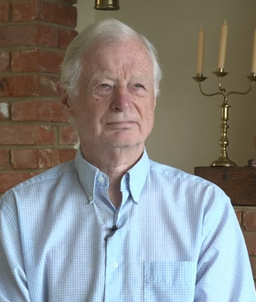
Family name: Rutter
Work area/Craft/Role: Engineer, VT Editor
Industry: TV
Company: BBC, BBC Television
Interview date(s): 28 August 2025
Interviewer(s): Nick Gilbey
Camera: Nick Gilbey
Production Media: video
Duration (mins): 51
This transcript has been produced automatically using Otter, https://get.otter.ai/interview-transcription/.
It provides a basic, but unverified or proofread transcript of the interview. Therefore, the British Entertainment History Project (BEHP) accepts no liability for any misinterpretation of the content of this interview.
However, the BEHP wants to make every effort to improve the quality of these transcripts and would welcome any voluntary offers to proofread this and/or other interviews. If you want to help, please contact BEHP Secretary, sue.malden@btinternet.com.
Nick Gilbey 0:00
This is a British Entertainment History Project interview with Ian Rutter at his home in Cookham. But we Berkshire, Berkshire, Berkshire. Yes, yes. The date is the 28th of August. 2025 I just have to say that the copyright of this interview is vested in the British Entertainment History Project, and we can start from there, if that's okay, yes. Can I just ask you where you were born and when
Ian Rutter 0:39
born in Bedford in 1946 then being a member of my father was in the RAF we travelled all around the world, here, there and everywhere
Nick Gilbey 0:52
I see so there was, there wasn't any family connection with television, or
Ian Rutter 0:56
not at all. No, I got into television by accident. We lived in Pinner, and I had won a technical scholarship into the RAF, but I didn't get enough A levels. So the RAF gave me some money to go away. So I bought my first car, travelled around, had a little local job stacking shelves for the petrol. I had huge fun, and then I got a sharp elbow from dad one day saying, Here, lad, isn't it time you got a proper job. I thought, whoa. How do I do that? And I had no idea what I wanted to do. And I noticed these five young lads living next door to me, and they had days off in the middle of the week. They drank beer, and there were young ladies around. I thought these guys are onto something, so I went and had a word with them, and found they all worked for the BBC. And of course, they're all on the AP shift system, which is a seven day fortnight. So you had three days off one week and four days off the next. And I thought this was magic, so I wrote a letter, Dear Mr. BBC, give us a job. And I've always been interested in photography, electronics, all that sort of thing. I used to do a lot of eight mil films, and I passed the interview, got onto the TA course in Evesham.
Nick Gilbey 2:14
So that interview, were you nervous about it? Or,
Ian Rutter 2:19
oh gosh yes, because I thought, if I don't get into the BBC, I had no plan B. I just didn't know what to do, to be honest, but I was so excited about it, and as they say, the rest is history. I was in the BBC for over 31 years.
Nick Gilbey 2:35
So what, what did you join us? And what was your interview for?
Ian Rutter 2:41
I joined as a technical assistant, as a basic engineer, and then, of course, Evesham was up and running in those days, and we were sent to Evesham and had a wonderful, thorough engineering training in all aspects. 1966 September, 66 I joined. And even then, the technology was changing rapidly. They were still telling us how valves and everything worked, although transistors were coming in, but it was a superb basic grounding in engineering, because the BBC had to do that because it specialised. There was nothing else. No college could teach you what you needed to know to be a BBC engineer, because it was such specialised equipment. And of course, the BBC had a research department and designs department inventing all the new kit that was coming in. We even had a manufacturing department which made it because no manufacturer could so they had to give us a thorough engineering training, which they did. And of course, you had to pass a lot of exams at the end. Or they said, bye, bye.
Nick Gilbey 3:49
Were there any surprises when you joined? Or was it all good? Or was there some things that you were surprised
Ian Rutter 3:56
at? The surprise was how hard I had to work. Suddenly, for the first time in my life, you concentrated on exams because you knew at the end of the day there was money involved, your your your pay was directly linked whether you passed the exams and moved on to the next next bit. So yes, I worked really hard,
Nick Gilbey 4:18
but enjoyable,
Ian Rutter 4:21
thoroughly enjoyable, because at school, they wanted to teach me about all sorts of things I had no interest in because I'm an engineer. So they were teaching me things that just went over my head. I wasn't interested. But when I got to Evesham, everything they were teaching me was focused on television or radio or engineering of all aspects, from electrical to mechanical as well and electronic. So because it was so interesting, I just really got into it and took it all in and studied hard.
Nick Gilbey 4:55
So I suppose at school, it was more theory that here you got, you were. Grappling with things that were hands on.
Ian Rutter 5:03
The school were more interested in turning me out to be a civil servant to run the British Empire. Unfortunately, nobody realised we were fresh out of empire at that time, so what they were teaching me is totally not what I was interested in.
Nick Gilbey 5:22
And so you said you spent six months at Wood Norton.
Ian Rutter 5:26
I did. Yes. Did six months at Wood Norton. There were two ta courses. You had to go the A and the B course. And then what
Nick Gilbey 5:36
was the difference between the two courses? They were
Ian Rutter 5:38
just a was more basic. It was a more basic course on engineering and basic electrical principles, and B was much more technical. And then they sent you out on a six month tour around the entire BBC. So I started in news at Alexandra Palace, and then I went to all the different departments in Television Centre. I went to film at Ealing studios. Then I went to outside broadcasts. And outside broadcasts. I thought, This is unbelievable. I actually went to Windsor Castle and was allowed to play with microphones. You know, at Windsor Castle when the Queen was doing a review of some scouts, and I thought this was magic. I'd never been to Windsor Castle so obese really opened my eyes as to what was possible, which is why I fought hard and eventually got to Kendall Avenue in Acton.
Nick Gilbey 6:36
So what happened at the end of your year? Then you had to apply for jobs
Ian Rutter 6:41
or or we had to state where we would prefer to go in the BBC, having gone through all the different departments, which gave you a lovely overall view of the structure of the BBC, all the different options available. And I just thought, there's only one place I really want to work. And that was outside broadcast, because I like being outside anyway. And fortunately, I was one of the lucky ones to get to OBS, because that was quite a popular department for people wanting to go to I
Nick Gilbey 7:14
see. So there was competition to get there. You've sort of told us a bit about why you wanted to do that, so you'd actually had experience of going out on on OBS, yes, I think there is a definite divide, isn't there, between going into studios and maybe not doing a nine to five job, but the the regularity of OB?
Ian Rutter 7:42
Yes, the irregularity is good news and bad news. The good news, of course, every day was different. And if you are in an OB, you are totally self sufficient. You're out in a field, out on a golf course, out in the middle of nowhere at an event, and you had to think on your feet. You had to keep the programme going, and the camaraderie in the unit to do that was fantastic. And you all worked very, very hard as a team. And if somebody made a mock up of it, the team would join round to keep the programme on the air, and the guy who got it wrong bought the beers at the end of the day. So it was all very self regulating, really.
Nick Gilbey 8:27
And those when you were starting, I suppose, mainly monochrome units.
Ian Rutter 8:34
I started in black and white. Yes, I was on MCR 25 which is a sister ship to MCR 21 which is being restored. And it was the last of the black and white units, because colour came in in 68 at Wimbledon. And then I moved on to the colour, initially scanners for a short length of time, and then I was put on radio links for two years, which is a very common way of introducing you to OBS. And after two years of radio links, I went back to scanners. And then I was walking in to Kendall Avenue late one morning, as one tended to do, and my boss, Roy Bertram, it was fell out of a tender and I grabbed him before he fell on the floor, and he got up, dusted him himself off, and said, Oh, would you like Goon to VT? I said, Oh, yeah. Okay, me game for anything. I didn't know anything about VT, so next thing I knew, I was on VT. Is John Wilson, OPPO?
Nick Gilbey 9:37
Can? Can we just sort of go back to So what sort of OBS did you do with MCR 25
Ian Rutter 9:49
we did very few, because I was only on it for a short length of time. I remember doing Windsor. It's the real one I remember. And I one thing I do remember we had a stuffed cat. Hat as a mascot, ginger cat, which was brought out various opportunities. And it was he was a stuffed cat. Weird. Why that was on the unit? Nobody knew, but it was one of those things that had been there for a long time, the unit mascot, I can't remember any other programmes I did
Nick Gilbey 10:19
on it. It was a busy time for obese at Kendall Avenue then, wasn't it? It
Ian Rutter 10:25
was. It was not as busy as it then became. It became much more busy as we got more commercially orientated, as that you know, much later on in my career. And what about
Nick Gilbey 10:39
your time on radio links and things because, I mean, what did that involve? Did it involve being midway points and all that,
Ian Rutter 10:48
all of that we with radio links in those days. We didn't do sound, we only did the vision. So it involved rigging two foot or four foot dishes up masts, up on Eagle, towers up on water, towers, all sorts of places from either for a midpoint or for a starter or for an ending, and they all fed into London. And I remember once we did one, we set up the circuit and tested it, and went home. Next day, we came back and we couldn't get a signal. We couldn't work out why, and it was on an eagle tower. So got on the top of the eagle tower and pumped it up. When I looked out, I could see what we our path was. We were firing straight into a gasometer, which was down the day before when we did the test, but now, when we wanted to do the programme, it had pumped itself up, so he had to move the truck. Pretty smile. You had a few yards. But to make it work, was that actually at the OB site, or was that was at a midpoint? Yes, midpoint, right? So you'd have an eagle tower at midpoint. You'd have an eagle towers at midpoint, yes, to pass the signal on, just depending where you were. Eagle towers tended, or PTAs as well, tended to be at the start, but we could use them at mid points as well.
Nick Gilbey 12:09
All that had to be planned, I presume, or was it because you Well, for a new venue or new
Ian Rutter 12:16
OB a lot of the midpoints were well known, and the paths back to London. So wherever the OB was, you tend to try and fire at a known midpoint where you could then pass the signal on. Otherwise you'd have to start again and start getting the OS maps out and drawing lines and working out obstructions and planning the whole thing. But I was a very junior TA, so I didn't really get too involved. I did a lot of interesting programmes. I did a motor a motorboat race, Power Boat race on the Isle of Wight, which smashed up all the cameras because all the valves got black and white cameras, and on a big naval boat crashing across the waves. The Navy said they won't last now, our lot said, Oh yes, they will. They're tough OB cameras, and it smashed every valve in the camera
Nick Gilbey 13:13
that was on a on a naval boat, then quite a big boat.
Ian Rutter 13:18
It was a fast patrol boat, yes, a speedy, but fast enough to keep up with the power boat races.
Nick Gilbey 13:25
Because southern TV had sudden, that's
Ian Rutter 13:30
right, a motor vessel. They had a motor Yes, they did, yes. I remember that, yes,
Nick Gilbey 13:35
right, yeah. So you certainly experienced life on the road then, but I suppose that you were relatively young then
Ian Rutter 13:50
young, and it was a lot of fun as a young person. You were going away, and in those days, you always at the end of the day, you always sort of went into the pub and all your mates, and you discussed the programme and worked it all out and chewed over what had happened during the day. So it was very, very convivial. And we were always, as I got more senior, the attitude was You were always wanting to teach your crew, the latest techniques, the latest ideas, what you could or couldn't do, which, of course, all eventually went out the door when freelancers came in, because knowledge became power. So that sort of attitude changed. But during the time I was there, we have we took great delight in teaching the younger crewmembers how to do things
Nick Gilbey 14:44
right. Did you have to organise your own expenses, accommodation and things
Ian Rutter 14:51
like that? Yes, that was a strange thing. The BBC gave you a fixed amount for 24 hours and. And out of that, you had to pay for your accommodation and all your food, a system which worked very well,
Nick Gilbey 15:11
but
Ian Rutter 15:12
it divided people, because people in offices thought us on the road getting expenses were living it up. So it caused a lot of friction, and then that freelance, that simple system of one fixed amount for 24 hours, changed, and they started demanding receipts for everything.
Nick Gilbey 15:32
So before Could you, could you save money on that?
Ian Rutter 15:36
You could, if you wanted to, you could decide, you could decide, say, to have a cheap hotel and spend the money on, say, food or beer or something else. It worked very well, because if you were often given a very short notice of doing a programme, take the Grand Prix, the British Grand Prix at Silverstone, for instance, you might be told two weeks before you're going, that you're going. So you try and book accommodation two weeks before which you had to find yourself. You try finding a hotel or bedroom two weeks before the British Grand Prix, you could end up 100 miles away. They were so booked up. So what people would do would go and take a tent camp on the site and take a tent and put the money in their pocket. When the game of receipts came in, people said, well, we're not going to do that anymore. You can't have a receipt for a tent. And also, we said back to the BBC, well, it's you better find us some accommodation, because we can't find any. And that's when suddenly, the cost of sending crews around rocketed because the flexibility of a simple system was changed by bureaucrats who didn't really know what they were doing.
Nick Gilbey 17:02
Yeah, that's interesting. So the two years that you did on links, what year would that be?
Ian Rutter 17:14
Oh, it would have been 67 to about six, 769, 70 some, around about there, then I went on to scanners. Then in about 71 I moved on to mobile. Vt, so when you went to scanners, they were mostly colour. They were transitionees. It was, it was the first colour scanner, and we did an incredibly stupid thing to prove we couldn't do it. One of our bosses wanted a scanner to be de rigable, so you could take it all out, all the equipment out, all the cables out, and rig it up into, say, a room somewhere. So we tried to do this in the scanner Hall at Kendall Avenue, and there's a very good picture of cables everywhere. And there are so many cables, and the weight of cables was so high, it was pulling the connectors off the back of monitors and things, and the wires are dropping out. It was, it was a horrendous thing to do, and it was never done again.
Nick Gilbey 18:20
So it was never put into practice. No, never was done again, of course. MCR, 21 and 25
Ian Rutter 18:29
you could, you could do that because it's so simple, wasn't it, and there's so few components involved, which is why, when the colour came in, that attitude was, well, we still have to be able to do that D rig, which we're to say we did once and never again. Yeah, I'm not
Nick Gilbey 18:47
quite sure, because there was a, it's a bit hazy, but there was a central control, I think, a monochrome central control room, and there were certainly colour ones.
Ian Rutter 18:58
There was a lot of de rigging going on and building of studio centres, especially for Wimbledon, where you had to build a central area. You couldn't necessarily always get a truck in. So you used to build sort of little control rooms. There'd be a control room for the VT System in there, so one person could control what was leaving the VT department of all the machines as a sort of sub mixer, if you like. So we did do a lot of as equipment got smaller and more transistorised, rather than valves, we did start doing more de rigging. But of course, monitors then were huge, great, heavy bits of kit, but you were delicate and not very waterproof either.
Nick Gilbey 19:48
Yeah. So I think Brian called it the c squared or something that cmccr, yes, yes. So there was still a lot of rigging. Or. Or connecting to do to do that.
Ian Rutter 20:03
There was my when I went on to VT, my first VT truck was actually an old, redundant, I think it was a TK truck of some sort, came out of redundant stores, and colleague of mine had put a machine in it so he could record drama from the lmcr, which is a light mate mobile control room, sort of a scaled down scanner. And that started. And then from there, I upgraded that, because I the machine in it couldn't edit. But I was doing an awful lot of acting editing. I acted as a VT editor for three years, and I said to Roy Vitti, my boss, you know, doing all this acting, I really should get an upgrade, you know, on a promotion. And he said, you can't have it. I said, why? He said, because your machine can't edit lmvt For this was I said, What do I need to do? He says, I've got an idea. So he chatted to his mates at Television Centre in video tape department, and they provided all the technical advice, and I got a whole load of kit of parts. So while I was recording dramas, I'd be pulling the boards out and soldering in all the components and everything to turn my machine into an editing machine. This sometimes meant it took a while to run the machine up when they wanted to do a take in drama, because I didn't bits, but I managed to put a whole new bunch of electronics in and make the machine capable of editing. And then I got the job.
Nick Gilbey 21:50
So going back a bit, VT was always at base, basically, and the links,
Ian Rutter 22:01
no, no mobile VT in be in Kendall Avenue. We had three trucks each with one two inch machine in this was in colour time, in colour time, yes, and in black and white. It had three machines, Roger Collins, Roger white and John Wilson ran the three VT machines, and I was John Wilson's oppo, where I learned all then days, the editing was cutting in with a razor blade on two inch tape, after you developed it with special iron filings and put it under a microscope, and then when you cut the tape, you joined it back together with a special sticky black tape, a silver black tape.
Nick Gilbey 22:44
And we're talking about the 70s. The
Ian Rutter 22:48
editing, cut editing, carried on to the beginning of the 70s. It got less and less as we became capable of electronic editing, but it was still cut editing in the early 70s, and I remember doing the motor show at Earls Court with John Wilson, and we'd finished the Edit early. We were so pleased with ourselves, you know, fancy finishing an edit early. We had a quarter of an hour to spare, and John was spooling back to the beginning of the tape. And what he didn't realise was he now had more than 90 minutes on the 90 minute spool, and as he was spooling back, it expanded the tape beyond the end of the spool and hit the head cover of the machine, and the whole thing came grinding to a halt. And we all panicked. You know, that was the programme. It was one solid lump of video tape jammed into the machine. But John thought, I know what to do. He put a razor blade through it where it was jammed. So we take one spool or put a razor blade through the other end where the other spool was. We dismantled the head cover and all the grotty jammed up tape, threw that in the bin and joined the two ends together, which meant we went on the air, and we were actually about three minutes programme short, and with a random edit, we were waiting for the phones to ring and everybody to start complaining, but nobody noticed. Nobody noticed this random edit and a three minute short on the programme, we thought, why do we bother?
Nick Gilbey 24:29
So, apart from you mentioned the Motor Show, I suppose a lot of it was VT was used on drama. But then where else would it
Ian Rutter 24:42
be? I it was used on every type of programme, from royal weddings to events to operas to pop concerts. And I've been so lucky. I've made every type of programme you've ever seen on television, wildlife programme. Films, all sorts, because we were just involved in everything, in OBS. And I've just been so lucky. I made every single type of programme which is which has ever been on television.
Nick Gilbey 25:15
So do you have favourite programmes?
Ian Rutter 25:21
Not really some of them. Yeah, one or two were pretty good. I mean, they hoisted my VT truck onto the deck of the art royal once it was the last pebble mill at one programme, and we cast off. And the night before, we'd been invited into the officers mess by the Navy, and they had a wonderful system. You had to fill in a chit of paper to order a drink, and two thirds G and T seemed to work quite well. And when you couldn't fill in the piece of paper, they didn't know what you wanted to see, they stopped serving you. Anyway, we had a good evening, and next day, we were desperately in need of coffee. I and my colleague Steve Preston, and he said, What we need is some coffee. Yeah, yeah. So Steve opened the coffee machine and still had dregs in from the day before, and he opened the door, and this was a truck on the top deck of the arc Royal. And the arc royal was shifting by now. We didn't realise how fast it was going, and when Steve opened the door, the door shot open and Steve flew out the truck, luckily, still holding on to the door handle with a coffee pot in his other hand, and the lid came off the coffee pot and rolled across the flight deck as a Harrier was about To take off. The Navy were not amused. You can just see the headlines, can't you? BBC shoots down Harry with coffee pot lid. But it was a good programme. It was a really good, interesting programme to
Nick Gilbey 26:51
do. So nothing was well, there were a lot of unusual things that you had to do.
Ian Rutter 26:59
We the technology was moving so fast, and we had a very, very advanced the best manager I ever had was Roy Vitti. And we used to complain to him that the kit we were being given was technically out of date and taking too long to arrive. And he got so fed up with us moaning at him. He said, Okay, you design it, you build it. I'll sort the money out. And we thought, Well, hey, we've won. Here. You go down the corridor and think, what would we let ourselves in for? But he, he was true to his word. And we designed the VT trucks from then on, and we physically built them in Kendall Avenue with our own hands and with the help of mechanical workshops and all the other workshops, and then we made programmes with them.
Nick Gilbey 27:47
So what equipment we talking? Are we talking? It's the end of two
Ian Rutter 27:52
inch. It moved if this is towards the end of two inch. And we designed trucks that could park alongside each other, and they'd have a Gangplank, and you lifted out a gang plank so you could assemble, effectively, an editing suite on site as many machines as you wanted. Just park side by side by side. That was our idea. And then the machines as they got smaller. We did have more than one. We had two machines, two two inch machines in a truck. Then one inch came in, and we started putting more one inch machines in a truck. And then the cassette machines came in, the BV 75 came in, which was the one that, you know, all the all the little cameras could go down around recording and give us a tape, a beta max, then it became the tape. The machines got smaller and went digital to d3 and we could pile even more machines into a
Nick Gilbey 28:57
truck. What about you going back to the change from two you had a controller for the two two inches.
Ian Rutter 29:06
The two inch machines were not it was simple remote. It was all analogue technology. You ran, if you wanted to edit between two machines, you ran a cable between two machines and the playing guy a two inch machine, took 10 seconds to run up and become stable. So every edit, you had to go back 10 seconds and the man doing the playing, because you had two operators, one on each machine. And excuse me, the guy as a play in was a wonderful way of learning how to edit.
Nick Gilbey 29:43
Do you want to stop and have a glass of water? So what happened after that 10 seconds? You press the button,
Ian Rutter 29:52
well, you press the button, and on a two inch machine, it would read what was called an edit pulse. I. Yeah, and that triggered the electronics to go from playback to record. And the plane guy would also have his in the next picture and sound coming in 10 seconds before, and you'd play it in. And it was just a simple crash start when you hit the play button, the playing machine would start alongside you. And of course, you also had to take the audio off onto a quarter inch tape, because if the outgoing was say, a load of people cheering and clapping and the incoming would be quiet for the next player coming in, you didn't want the applauding suddenly to crash out. So you take, take the sound off on the quarter inch and then put it back on via an audio mixer. I will stop there, especially if you were cut editing, you had to lift the sound off on the quarter inch and then put it back so you had the ability on two inch to split when you recorded. You could record the vision and the sound separately. So what you would do with two inch you before the Edit, the cut edit, you would press the audio record button before the vision edit, so you now had the same audio, but coming off a quarter inch tape in sync, playing back in via a mixer. So you could then when the vision edit happened, you could take the applause out, slowly bound underneath it, and then fade up incoming sound. So you had an audio mixer. Had an audio mixer, right? But again, the BBC was so mean in the early days that they wouldn't pay for an audio mixer. And we did a programme where the producer came and said, I've got some money left over. Boys, do you need anything? It was wheelbase, actually, which was the precursor to Top Gear. And we said to Brian Robbins, the producer, yeah, yeah, we need an audio mixer. He said, How much? I said they were about 20 quid or something, which is a lot of money. Then he said, Don't worry, I'll sort it out. So we went and bought an audio mixer, leftover money from our programme, and that suddenly transformed the quality of our edits, made it much neater. So that was
Nick Gilbey 32:19
you were doing a lot of wheel bass and
Ian Rutter 32:21
yes, it we did a lot of wheelbase programmes in the early days. Yes, very clever programme, because the two Brian Robbins and Tony salmon, they liked playing boats as well. So they renamed the programme waterline so they could go play boats in the summertime.
Nick Gilbey 32:40
I so when you got to replace them with one inch machines, what? What was the different technique that you had to use
Ian Rutter 32:54
one inch machines was a revolution, because it was the first machine where we could do slow motion. You'd record something, you stop the tape physically, and then you wound it back, and then you'd wind it back by hand. You'd lick your finger first and wind the spool around by hand at the slow motion speed required. And that was how we did the early action replays. All you had to remember was where you stopped recording. If the director says, keep going. Vt I want to see the reaction of the crowd, you had to remember exactly where you'd stopped recording on the crowd. Otherwise, you fell off the recording. All the pictures disappeared. And there was a well known expression that said you were only as good as your last replay.
Nick Gilbey 33:45
I'm just trying to work that out in my own mind, really, that you say doing a football match or something, yes, and you want to replay, yeah, you have to have a dedicated machine to do
Ian Rutter 34:01
that. You all, all one inch machines could do an action replay,
Nick Gilbey 34:06
but then you recording it on the second
Ian Rutter 34:09
one. Yeah, it you our trucks had two or three one inch machines in because they were so small. So you dedicate one machine to carry on recording the mixer out, but then the other machines you could either switch or be permanently connected to a single camera, so you got an action from a camera. Yes, right?
Nick Gilbey 34:33
And that, what sort of dates was that? Sorry, push you on that one.
Ian Rutter 34:40
But one inch came in in the 70s. I'd have to look it up to find the
Nick Gilbey 34:46
actual Well, I think, I think towards the end of the 70s,
Ian Rutter 34:49
yeah, mid, mid, yeah, mid to late 70s, wasn't it? I think,
Nick Gilbey 34:54
well, it was Ampex C system or something.
Ian Rutter 34:58
Yeah, it was the ampx. X the BBC always bought Ampex. Yes, they were VPR twos. And I on my truck, I had the last of the VPR twos. Eventually I was the last truck which converted after BPR twos. One inch became redundant,
Nick Gilbey 35:19
so that time Kendall Alan had four
Ian Rutter 35:23
Kendall Avenue, we still only had four VT trucks, and I was editor number
Nick Gilbey 35:30
four. Were there any in the other in based elsewhere?
Ian Rutter 35:34
There were two in Manchester and a couple in Scotland. So between the four London trucks and the two in Manchester, we had to cover the whole of England. You the only day we could guarantee off in a year was the Sunday in the middle of Wimbledon when they didn't play. Until one year it rained and they did play, and that was the only day you could guarantee off, which meant your lifestyle was fairly chaotic. You never knew when you had a day off. The hours we were working were getting higher and higher. I've got time sheets show I was working over 100 hours a week, a day of work. Normal day of work would be 12 hours. I mean, that would be a standard day, but if you're doing a highlights programme in the evening, say, say, on the Gulf, you'd be recording, editing all day long. Then everybody went home, you were left on your own, and you had to put a highlight. You had sort of, say, between six o'clock and 10 o'clock or seven o'clock and 10 o'clock to put an hour's highlights programme together. And suddenly you later, you were working hard. You had to work really hard to get that highlights programme ready. So
Nick Gilbey 36:56
there were times when you had a bit of time on your hand. I mean, you were just monitoring one machine or something, and then when you had to do that sort of highlights,
Ian Rutter 37:06
and as an editor, you had to get all the machinery sorted out, yes, and sometimes you didn't get the programme finished when you had to go on yet, say, at 10 o'clock for The highlights, you only had two thirds of the programme made, so you put the tape onto one machine, hit the play button and transmit that out to the world, and then you had to put the rest of the programme together very, very quickly before the first reel ran out. Quite a lot of pressure. It was and there are only two of you in the truck, three of you in the truck doing this, you'd have your sport assistant producer, be me as the editor, and I'd have a colleague as a playing man. So the just the three of you putting an hour's worth of programme ready, you know, transmission out by in a few
Nick Gilbey 37:58
hours. What was the relationship like between yourself and the assistant producer. I mean, were they asking for too much? Sometimes,
Ian Rutter 38:07
no, you they they would always push you as far as they thought they could push you, because everybody had a focus on making the programme as good as it possibly could be. Very often this was all down to time constraints. So sometimes the programme, as it went out, was a little bit rough at the edges, shall we say. But if it was sport, it had all the main bits in it. If it wasn't sport, say, a more refined sort of programme, a music programme, or an event, say, a royal event, then you edited it more carefully. Or if so, I used to do the Leeds piano competition, and that you went out where the sound went out on radio three. So you had to do the Edit, not just for television, but you had to do the sound part of the editing that kept radio, kept radio three happy. So when the producer came in watching me do an audio edit, if he could see the faders moving, you know, he thought I was doing the Edit to, you know, the mix too quickly, so you had to put a different part of your brain in to keep other people happy. Or sometimes we were doing programmes for international use where you had to to edit it slightly differently for to keep different foreign producers happy.
Nick Gilbey 39:40
What sort of things, what might they ask for?
Ian Rutter 39:43
They they wouldn't. They would want things that showed their country, that they want, shots that showed their supporters or their flag or their commentator. And you have to sort of take the universal. Coverage and sort of adjust it to keep them happy, to keep them not a lot, but just one or two subtle little extras they had asked for. And if they have a joint programmes, obviously you had to do that,
Nick Gilbey 40:12
right? So were there a lot of joint programmes? There were things with the
Ian Rutter 40:19
programmes became joint towards when the BBC started getting far more commercial in the 90s, 1990s where they couldn't afford to make a programme on their own, and it was a lot of sponsors coming in. So it became more flexible then. But generally even for when I was recording dramas, it, most people left the BBC alone. They trusted the BBC, and they would trust them to make a programme of the highest quality and not want to interfere too much.
Nick Gilbey 40:58
What sort of dramas Did you work on?
Ian Rutter 41:01
Oh, lots of period dramas, one or two weird dramas, sort of modern day dramas.
Nick Gilbey 41:11
Any notable then that you can
Ian Rutter 41:14
did Mansfield Park once and we borrowed the wooden Quaker cannons from HMS Victory to put on the sea front. And there was Fanny to big emotional farewell. And in the back she couldn't see very large ship going by saying, See link on it, which I think became one of the clips that was repeated in the things that went wrong,
Nick Gilbey 41:46
but you became a little bit disillusioned with the BBC.
Ian Rutter 41:52
It's not a little bit disillusioned. Can I mention John Burt, am I allowed to mention? Yeah, whatever you think. I mean, we I actually went on strike once when John Burt came in and he awarded himself a pay rise, vastly more than we were getting as an annual salary, and we were putting in for a pay rise, and we weren't being given it. So that started the sort of unhappiness. But on the other hand, the BBC probably had to get more commercially orientated, because the world of television was stock was changing. When I started in television, there are only three channels, so we had the monopoly of transmitting everything. When we lost that monopoly, as more channels became available, we no longer were the only go to people for people had programme content. Suddenly, the people with programme content could say, Wait a minute. We're not begging you to transmit our programme. We're asking you how much you're going to pay for our programme. And whole business changed dramatically. And after 31 years, I was getting so fed up of being away from home for half the year. And it was about to have another massive sea change from colour. I'd gone from black and white to colour and all the different iterations of videotape, and I was getting fed up and realised the next revolution was coming, which was digital television. And I just decided I'd had enough, and a third of outside broadcasts were offered voluntary redundancy. So I thought you got two options when you get fed up in a job, you can stay and moan about it, or move on. And the BBC offered me enough to move on, and only when I left the BBC did I realise the technical training and abilities I had meant I could put my hand to anything as an engineer, because in a VT truck, you had to know about everything. You had to know all the mechanics. I mean, if the air conditioning broke, you had to mend that. You had to know all about the electrical system, because we designed and built it, you had to know about the electronic side. So when I left, I realised I knew a lot more than I thought. And I discovered electric boats. And I then designed and built electric boats, which took me to India to do the Maharana of Udai fours electric boats. The deal was, if I come and mend his electric boats, he'd put me up in a marble palace, and my wife would come along as well. And that's on Lake piciola, where he owned the palace. The middle of the lake. So we went out there, and I bended his boats. Took a while, and then I I've done other boats. I've done a public trip boat, a hybrid public trip boat for Venice, which has been very successful in other boats. So I'm and I'm still, at the age of 79 I'm still designing and building electric boats, because I love it so much. The technology has moved on. It's all computer controlled, so the brain cells get stirred up every now and again when I try and make it work. I love it, yeah. But no complaints.
Nick Gilbey 45:33
So you've lived through an era where we've gone from analogue to digital, gone
Ian Rutter 45:39
from Valve analogue. Valve analogue to transistors to digital. And yes, so that's quite a change, isn't it? Yeah, yeah, but I love it. And I get to meet some very interesting people with electric boats. And basically you're making their toys work. Nobody needs a boat. And when I make their toys work, they're happy. And when they're happy, they pay the invoice.
Nick Gilbey 46:06
So in a way, you've got the BBC just saying,
Ian Rutter 46:11
in totally the BBC, sheer training and experience of outside broadcasts where you're on your own, wherever you were, you were on your own. You had to make it work somehow. No matter what failed, what equipment failed, you had to make it work. I mean, you couldn't say to Tiger Woods, you know, excuse me, Mr. Woods, I wasn't quite ready for the winning pup. Can you nip out there and do it again? You know. Do you think that would have been different if you weren't on OB, yes, because anywhere else in the BBC, you were surrounded by support videotaping Television Centre. For instance, if a machine broke, you went on to another machine and called in maintenance, the men the one that had broken, while you carried on putting the programme together on another machine. You hadn't got that option in OBS. You had to make it work, whether you wanted to or not. It just had to work. So sometimes you you up through the night with a machine in pieces trying to work out why they gone wrong in putting it back together. So it's a different psyche altogether. Then, yes, some people could cope with it. Some couldn't, because you were under pressure. I mean, there's only you there. It's self regulating. You either took to it or you didn't. I mean, you weren't thrown in a deep end. Well, I was, I mean, my first edit, I was thrown in a deep end when I didn't know I had to edit. But yes, it was, it was wonderful. And I cannot think anybody will have that sort of career again and be able to work on so many different types of programmes. Everything you've ever seen on television, just a lot of it was experimental. We come up with new ideas. And they say, oh, yeah, we'll do that. We'll do that. Production supported us wonderfully. If we thought we could try something different. They say, Okay, try it out, see if it worked. When digital came in, we had the first experimental, live slow motion. It was called. It was a computer that would record. And instead of having a one inch tape where you had to remember where you stopped recording, the computer would carry on recording. And I was doing cricket match down at the oval, and first day was fine. The second day I went to play in a wicket. Instead of wicked it, it played in somebody scoring a four different batsmen all together. And this is an action replay. The guy had just been take, you know, knocked out, and you can imagine very confused commentators, very, very noisy talk back from the director screaming at me, what are you doing? Vt, and I thought, Oh, dear, sorry, I've got that wrong. Carried on. Few minutes later, the same thing happened again, playing in totally different thing from what I should have played in. Well, by now, everybody thought, you know, I was an idiot. Luckily, a shift changed, and another chap, another editor, took over, and the same thing happened to him. We didn't know why, so we rang the man up in Belgium in Brussels who'd invented this machine, and we tried to explain to him what we were doing. We were there for five days at a cricket match. He said, What? There are five matches? No, no, it's one cricket match over five days. And he clearly couldn't understand this. So he said, get on Eurostar, which used to terminate at Waterloo, which he did, came over and visited us. So I bought him a tea towel that explained the rules of cricket, you know, and one side's in, the other side's out, and the side out, he's trying to get the seat of. And he then realised and told us the reason it was going wrong. He had no concept of a sport going on more than one day. He designed this machine for football match which lasted over one day, an hour and a half, and he hadn't put into the time code what day it was, he'd only put the time of day in, so that was why we were playing random things in, because it didn't know which day it was. So we put him back on Eurostar, sent him home and said, rewrite the software, please. And he did. He became a lot better after that.
Nick Gilbey 50:37
So there were a lot of changes going on within your working life in terms of the electronics.
Ian Rutter 50:44
Yes, when I started, I was editing with a razor blade. When I left, I was pressing buttons on a computer. That was a range of change. And of course, you had to try and keep up until I couldn't and didn't and left
Nick Gilbey 51:02
right well. Thank you very much. And.
Images may be subject to copyright. If you are the rights holder and wish any image to be removed, please contact us and it will be taken down promptly.
Disclaimer: The views and opinions expressed by interview participants are personal and do not necessarily reflect the views of the History Project or any of its volunteers, employees or representatives. (See details). Please also see our Takedown Policy.