
Auto Draft
BEHP 2020-2022 Bulletins
View the BEHP Bulletin pdfs here.
From Analogue to Digital
The History Project is built using an experimental, simplified, open source, open data framework for managing people-based multimedia collections, that is being developed for use by organisations working on people-focused projects, such as community heritage, oral history, reminiscence, etc.
—–
Like the best journeys, the design and creation of the History Project’s online archive has been one of discovery, learning and development. As a committee member of BECTU’s WPD branch, I became aware of the History Project through one of its members, now the Chair, Mike Dick. He introduced me to the project and I learned of the considerable work of its members who, having started the project in the 1990’s had built a remarkable collection of over 600 interviews reflecting the industries of screen, stage and radio, in which fellow trade union members worked.
My initial aim was to help produce more interviews that would address the existing paucity of ethnic minorities in the collection. However, it soon became apparent that while this omission needed to be addressed, a more immediate concern was preserving the existing collection and improving the accessibility by starting to the archive collection of almost 700 interviews.
The issues and problems we faced were were not unusual for many voluntary organisations – lack of resources of time, funding and the dependency on the goodwill and availability of volunteers. By contrast, however, our aims – to digitise our collection, improve our archive for users by adding transcripts and additional information, updating our working processes to take advantage of digital technology, and provide increased accessibility website – were as challenging as they were ambitious.
Open source was chosen as part of the principle of open data, trade unionism and the origiunal trdae union meners. Its poltical as smuch as pragmatocs – about ownership, flexibility, futureproofing, building a community of users and contributors, open ways of working, open accountability, etc. Proprietary software would have tied us to one vendor and become subservient to the limitations of that product and its associated company. Lack of funds necessitated updating 700 records, individually, by hand.
The issues and problems we were facing were thise faced by many orgs- lacl of time, funding, dependency on vilaunteers, etc. In addition was the need to upgrade an archve and a working orocess fro analagoue to digital. Nee to make it accesible and reach a wider audience, to streamline working processes qnd making it more iclusieve. These are the advantages of ibtroducing digit?tion. Key moments in the change process.
Open source was chosen as part of the principle sof open data, trade unionism and the origiunal trdae union meners. Its poltical as smuch as pragmatocs – about ownership, flexibility, futureproofing, building a community f users and contributors, open ways of working, open accountability, etc. Proproetary software would have tied us to one vendor and become subservient to the limitations of that product and its assocoated company. Lack of funds necessitated updating 700 records, individually, by hand
BACKGROUND
The History Project was founded in the 1980’s by foresighted members of the ACTT (the precursor to BECTU) who recognised the value of recording the experiences of fellow industry professionals. Many of these worked across the broadcasting, film and theatre industries, so initiating a unique, cross-industry interview archive of personal histories. Whether in front or behind the camera or stage; famous names or not; these professional men and women of screen, stage and radio were brought within the remit of what was called ‘The History Project’.
Almost imperceptibly, the volunteers who worked on this project gradually amassed over 700 interviews consisting of over 4,000 hours of audio and video recordings, creating a truly remarkabale and unique record of British film, theatre, television and radio. The project was supported by the Project members’ union, ACTT and this support was later consolidated by BECTU (who had absorbed the old union and who generously continued to provide support and helped with the initial hosting of the archive database on their own website.
I became aware of the History Project and the work of its members to build a collection of interviews reflecting the industry in which trade union members worked. My initial motivation stemmed from wishing to contribute to the archives by helping to address the lack of Black and Asian interviewees
PROBLEMS
From analogue to digital
Problems of managing the process of change within the community, didn’t know what they wanted, didn’t understand what they needed, was desirable, didn;t understand the issues, , community The vision of the HP team included
1. The website could not be improved/upgraded/redesigned without facing prohibitively expensive fees associated with. Needing to design organically – as the organisation identified its requirements – precluded the possiility of a detailed brief that could be followed by an agnecy in a cost-effective way.
2. The voluntary organisation had no funds so the cost needed to be as close to zero in terms of development and annual maintenance. –
3. Few IT/web/design literate members, so it needed to be designed with all levels of user in mind.
4. A database that needed re-organising and improved interview records with relevant photographs, audio, video and transcription content.
5. Making the archive of over 4000 hours of media content, more accessible to the public through an improved web interface and designed for use on different devices.
6. Improving the search facilities and enhancing
7. Improved profiles with links to media files, transcripts, photos and related online sources.
8. It needed to be scaleable to cope with increased interviews and media files as well as felxible and robust enough to meet th demands of today’s mutiplatform users and be relevant in the future.
9. The workflow needed to be redesigned to allow for greater and wider contributions that reflected the industry in terms of geographic, gender and ethnic diversity.
10. The system need to be built with a non-proprietory system, so that the experience of the disadvantages of being held ransom to the commercial proclivities of a single vendor for servicing and upgrades was not repeated.
11. Non-profit sector familiarity – a system that could fit in with other partners – many of which ave familiarty with using Drupal (See BFI, BBC, BAFTA, Oxford.ac.uk and Cambridge.ac.uk, https://www.drupal.com/showcases, etc.)
12. Ideally – replicable – so that lessons learnd could be easily shared and the knowledge gained, leveraged by other oral history and non-profit media organisations.
13. No feedback or stats on visitors and , more importantly, what type of visitors and what features/functionality they need most from the site.
SOLUTION
Pro bono web consultancy services by Redport – for design and technical project management
A Drupal website, that is open-sourced, flexible and a well-proven content management system (CMS). In future, anyone should be able to manage or upgrade the entire system. (Drupal.org/about, rackspace.com, mint.com, box.com, BBC – https://www.youtube.com/watch?v=U54Vhl16YbI, etc)
Acknoeledging that the best design process based on an agile, community baesd open source devekopment process.. HP is not a business wirth fixdc budgets anf workprocesses
A digital archive platform that costs less than £10 pm for 1TB of data (approx interviews)
The design is based on open source assets that are easily managed by anyone.
Webhosting is in conjunction with a standard commercial Drupal hosting service.
Audio and video files are hosted on Google Business.
Sample media clips are publicly available on Youtube (a Google subsidiary) and also on Vimeo.
Draft transcripts are produced by Speechmatics.com
Community Forum for sharing user feedback and suggestions from members and site links to social media
Whilst designing to meet the specific requirements of the History Project, we also built-in the capacity to host other interviews from partner organisations or oral history projects seeking similar solutions. Due to the opensource nature, those projects wishing to adapt or host their own version can do so by using our software, free of charge.
The new online workflow that has been created also allows interviews to be produced and managed on national basis, for the first time, thus allowing volunteers all over the country to participate and contribute to the development of this national interview archive collection.
BACKGROUND HP was founded in the 1980’s by foresighted members of the ACTT (the precursor to BECTU) who recognised the value of recording the experiences of fellow industry professionals. Many of these worked across the broadcasting, film and theatre industries, so initiating a unique, cross-industry interview archive of personal histories. Whether in front or behind the camera or stage; famous names or not; these professional men and women of screen, stage and radio were brought within the remit of what was called ‘The History Project’. Almost imperceptibly, the volunteers who worked on this project gradually amassed an astonishing 4,000 hours of audio and video recordings of over 600 interviewees, creating a truly remarkable and unique record of British film, theatre, television and radio. The Project was supported by the Project members’ union, ACTT and this support was later consolidated, by BECTU (who absorbed the old union) who generously provided hosting of the archive database on their own website.
The first problem was managing the process of change within the project community; to identify what we needed now, what we needed in the future, what was desirable, and what was affordable. Rarely is there congruity between these vying demands, and this project was no exception. Nevertheless, the Committee and members agreed on the following:-
1. The existing website could not be improved/upgraded/redesigned without facing the associated costs, which for a small, voluntary non-profit organisation were prohibitively expensive. Due to the varying demands and the necessity to design organically – in step with the identification of the organisation’s immediate and future requirements – it precluded the possibility of a detailed brief that could be followed by any agency in a cost-effective way.
2. The voluntary organisation had minimal funds so the cost needed to be as close to zero as possible, both in terms of development and annual maintenance.
3. Few IT/web/design literate members, so it needed to be designed with all levels of user in mind. 4. A database that needed re-organising and improved interview records with relevant photographs, audio, video and transcription content. 5. Making the archive of over 4000 hours of media content, more accessible to the public through an improved web interface and designed for use on different devices. 6. Improving the search facilities and enhancing 7. Improved profiles with links to media files, transcripts, photos and related online sources. 8. It needed to be scaleable to cope with increased interviews and media files as well as flexible and robust enough to meet th demands of today’s muti-platform users and be relevant in the future. 9. The workflow needed to be redesigned to allow for greater and wider contributions that reflected the industry in terms of geographic, gender and ethnic diversity. 10. The system need to be built with a non-proprietory system, so that the experience of the disadvantages of being held ransom to the commercial proclivities of a single vendor for servicing and upgrades was not repeated. 11. Non-profit sector familiarity – a system that could fit in with other partners – many of which ave familiarty with using Drupal (See BFI, BBC, BAFTA, Oxford.ac.uk and Cambridge.ac.uk, https://www.drupal.com/showcases, etc.) 12. Ideally – replicable – so that lessons learnd could be easily shared and the knowledge gained, leveraged by other oral history and non-profit media organisations. 13. No feedback or stats on visitors and , more importantly, what type of visitors and what features/functionality they need most from the site. SOLUTION Pro bono web consultancy services by Redport – for design and technical project management A Drupal website, that is open-sourced, flexible and a well-proven content management system (CMS). In future, anyone should be able to manage or upgrade the entire system. (Drupal.org/about, rackspace.com, mint.com, box.com, BBC – https://www.youtube.com/watch?v=U54Vhl16YbI, etc) Acknowledging that the best design process based on an agile, community base open source development process.. HP is not a business with fixed budgets anf work processes A digital archive platform that costs less than £10 pm for 1TB of data (approx interviews) The design is based on open source assets that are easily managed by anyone. Webhosting is in conjunction with a standard commercial Drupal hosting service. Audio and video files are hosted on Google Business. Sample media clips are publicly available on Youtube (a Google subsidiary) and also on Vimeo. Draft transcripts are produced by Speechmatics.com Community Forum for sharing user feedback and suggestions from members and site links to social media Whilst designing to meet the specific requirements of the History Project, we also built-in the capacity to host other interviews from partner organisations or oral history projects seeking similar solutions. Due to the opensource nature, those projects wishing to adapt or host their own version can do so by using our software, free of charge. The new online workflow that has been created also allows interviews to be produced and managed on national basis, for the first time, thus allowing volunteers all over the country to participate and contribute to the development of this national interview archive collection.
Multimedia Archiving for Oral History Groups
For audio and video archiving we look at Wistia, Vzaar, Vimeo, Youtube and Google Drive, Amazon, Dropbox, OneDrive, iCloud, Box
Google is cheapest, but Dropbox due to folder sharing is easier to control and use for certain tasks.
More about the BBC Plymouth Centenary event
New patron for the BEHP
We are very pleased to announce that Michael Pearson, Lord Cowdray has agreed to become a patron of the British Entertainment History Project . Among many other things he was a film producer, running Cupid Productions, a film production company. He produced Sympathy for the Devil, in 1968 a film starring The Rolling Stones (1968)directed by Jean-Luc Godard,and Last of the Long-haired Boys (1968),he Legend of Spider Forest – AKA Venom (1971) and Exec-produced Vanishing Point in 1971.
BBC Plymouth Centenary celebrations
Death of Sir Sydney Samuelson
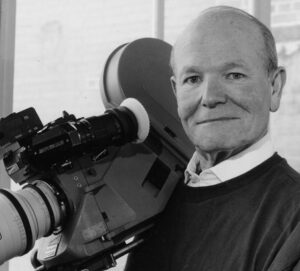 It was with great sadness that members of the British Entertainment History Project(formerly the BECTU History Project) learned of the death of our patron, Sir Sidney Samuelson
Sir Sidney was a member of the History Project and always supporting its founder, Roy Fowler in the early days of the Project regularly attending many meetings in Soho and Clapham.He continued to support the Project for as long as personal circumstances allowed him.
Among the many accolades he received were, in 1967, the BSC Golden Camera Award for outstanding services to the U.K. film industry: He was also an Honorary Life Member of BECTU; a Fellow of the BFI; an Honorary Life Fellow of the BKSTS (now IMIS); and an Honorary Life Member of the Guild of British Camera Technicians as well as the first Patron of the British Entertainment History Project.
Leslie J Wheeler and MGM at Borehamwood
A brief Memoir from a member of the sound department at MGM Borehamwood which sheds a little light on the earlier part of the studio’s history.
behp0259-leslie-j-wheeler-memoir
RED LIGHT AND BELL, by Leslie J Wheeler Hon FRPS., FBKSTS.
[A memoir, focusing on MGM Studios at Borehamwood, re-keyed with minor corrections from a faded typescript. DS]
In the recent grip of winter and with the snow many inches deep on the ground, it has been pleasant for us oldies to reminisce – particularly with the aid of the flames and coals of a (practical) fire provided by the modern equivalent of the Gas, Light and Coke Company! And to gaze intently into those red coals and conjure up so many memories of those pictures in the fire.
In my own case the pictures went leaping right back to 1947, and when MGM opened their first British studios in Borehamwood, next to Elstree in Hertfordshire. Right from the start MGM British was chaired by Ben Goetz – a very fatherly figure indeed although he was always known as ‘Uncle’ Ben. A certain D.P Field quickly composed a little ditty which ran ‘Uncle Ben, Uncle Ben, surrounded by unusual men’, but more about D.P. and his ditties later.
What is very certain is that Uncle Ben opened MGM with a very carefully hand-picked staff of the highest order.
In charge of the Camera Department was none other than Freddie Young. In Special Effects he had Tommy Howard and as Director of Sound Recordings was A.R.Watkins. Lora Wright was in charge of production and Irene Howard looked after casting – and she was sister to the late lamented Leslie Howard. I could go on and on – it seemed that the MGM firmament was now studied with stars, and by no means were all of them appearing in front of [i.e. on] the silver screen!
Really big Heads of Departments were big enough to have well-known people as their assistants: thus Freddy Young had Skeets Kelly as his camera operator and he may well have stayed there all the years MGM British existed, but for his untimely death whilst filming from a helicopter.
A.W.Watkins actually had two right-hand men, but his better claim to fame concerned his rather flashy car he used to drive to the studios in – and which it was always rumoured that he won outright one day whilst playing poker with some of the lads behind the ‘flats’ on the set of one of London ‘s Film Productions at Denham Studios. When MGM opened their British studios all sound was Photophone[?] and it was either the RCA variable area type or the Western Electric variable density system. At MGM it was always the variable density system produced by passing light through two tightly ‘strung’ ribbons. They weren’t the only things which were highly strung at MGM – because the aforementioned D.P.Field was the Senior Electrical Engineer working for A.W. Watkins and, and DP was the most highly strung fellow I have ever known.
I suppose I cannot hope to leave the Sound Department without saying that the MGM system of recording was so advanced for its time that it was officially known as the ‘200 mill push-pull variable density’ and that it was so exacting that it required someone in charge of ‘sensiometric control’ to liaise with the laboratories and ensure that everything was absolutely perfect every time the lion roared!
It so happens that I was appointed ‘sensiometric control engineer’ with a contract at MGM to form A.W. Watkin’s ‘other’ right-hand man. Thus D.P.Field and myself were more or less level-pegging under A.W.Watkins, who was known by everyone as ‘Watty’ . He was always a quiet man, immaculately dressed and with perfect manners at all times – quite the reverse of D.P. Field. And ‘Watty’s’ final fade-out was playing a round of golf with Tommy Howard on the course at Moor Park.
But back to my ‘pictures in the fire’, and once Uncle Ben had selected all his staff, just what pictures did they really make there.
Well like all prudent producers they didn’t open with pictures of their own, but with a number of ‘renters’ who came into the studios and rented both studio space and technicians with which to make their own epic.
Thus we started with Edward Dryhurst’s [screenwriter] picture entitled Whilst I Live, still famous for the theme tune [The Dream of Olwen] but hardly remembered for Tom Walls who played the gardener [?] [Nehemiah, a faith healer] although he was almost totally deaf at the time and took all his cues by lip-reading.
Another of our early renters were always known as The Boulting Brothers, and they together with a very young Dickie Attenborough, who …made The Guinea Pig. This was made at MGM at a time when the studio was going through a great safety scare – and the gate-keeper had to ensure that everybody was properly accounted for. This particularly annoyed D.P.Field although it was pointed out to him that the Fire Chief needed to know if D.P. was in the studio so that they could save his life in the event of a fire!
Dickie Attenborough got to hear that D.P and the Fire Chief did not see eye to eye, and on one particular day when all the gates were bolted and barred during a fire-drill, a very young Dickie, egged on by D.P. was seen to be climbing over the main gate, still of course in his school-boy’s uniform, and complete with school cap firmly on his head!
One day Ben Goetz was seen to be walking along with Herbert Wilcox on the road between Stage 1 and the Theatre Block. Herbert was heard to say “Tell me Ben, how many people do you have working for you?”, to which Ben, quick as a flash replied “Oh, about half of them, I reckon!” Now it may or may not have been his original remark – and he may have been hoping for the immortal fame of Sam Goldwyn at the time, but he did say it, and I was walking just behind them and heard it for myself almost, you might say ‘straight from the horses’ mouth’.
Naturally it became known as one of the famous sayings of ‘Uncle Ben’. Even so it did nothing to put Herbert Wilcox off, because he made his next two pictures at MGM. Firstly, was Spring in Park Lane, with Anna Neagle and Michael Wilding – and the couple were so successful that they followed it with Maytime in Mayfair.
By then it was rumoured that the days of renters were nearly over and, and surely MGM were going to make a picture of their own, and so it proved to be.
Spencer Tracy and Deborah Kerr came along to make Edward, My Son – one of the very few pictures Spencer Tracy made without Katherine Hepburn, but it was a great success once Tracy had hit upon the idea of setting light to the furniture store he and his partner owned together, and then collecting the insurance money. But as he went from strength to strength it drove his wife to drink! I mainly remember this film for the shot when Deborah Kerr – almost paralytic with drink – turns to mount an enormous staircase and says as she reaches a squeaking stair – “That’s the funny one” – only a little point but very much worth it’s keep.
And that was one of the first stages in my introduction to post-synchronisation. The Americans at this time were great ones for post-synch and didn’t seem to mind very much if they couldn’t record first-class sound on set – because it could always be post-synched and re-recorded in the dubbing theatre afterwards. This required the artist to repeat the offending line many times over; and we in the sound department often couldn’t help learning special lines just as well as the artistes themselves. As for example when the Black Knight was talking to a very young Elizabeth Taylor, who played Rebecca in Ivanhoe, because he had to say to her: “when next you come to me, come with desire in your heart and fire in your bosom, or no man’s life is saved”. It was the sort of line we would say to any likely secretary, and just watch her reaction!
Another favourite from Ivanhoe was when, at the jousts, the king said to Robert Taylor, observing George Sanders (playing the Black Knight): “Black from head to foot, the ill-gotten knave.”, only to receive the reply “He’ll soon be red with blood, my lord.” Such post-synch sessions could produce no end of laughter if reproduced at the right place and the right time.
I could go on and on, but what has this to do with red lights and bells? Well, one thing I am sure of is that it certainly has nothing at all to do with the more questionable ladies of Soho – but relates to the fact that when shooting interiors at MGM, that was the first statement made by the second or third [assistant] director on the floor to bring everyone to order and to start preparing to shoot the next shot.
The command called for the warning red light to start blinking, for the electrically operated stage doors to be closed and locked and then for him to shout the magic word “Quiet!” This was followed by “roll ‘em” and the camera operators reassuring observation of “running” and then “speed”, so that the clapper-boy could follow the instruction to “mark it”, and finally, the all- important word “Action!” by the Director himself.
Oh, and by the way – thank goodness for the coal fire to stare into – even if it was an imitation!
Copyright by Leslie J Wheeler
Newsletter No.3
The Production of a BBC Television play in the 1950’s – Nathaniel Titlark
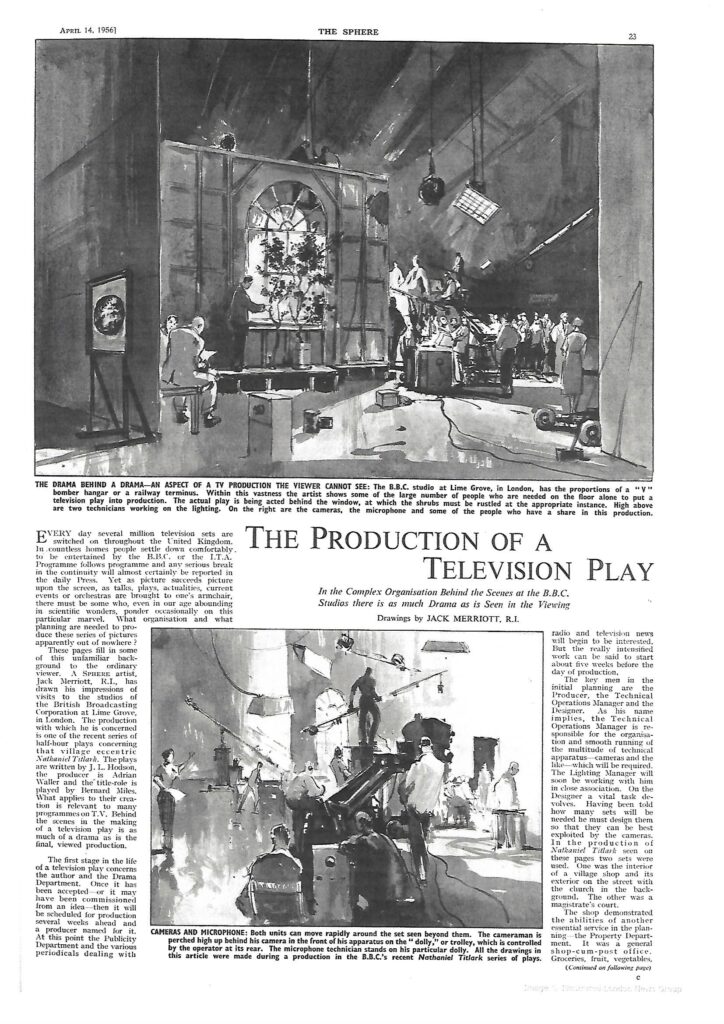 The Production of a BBC Television play, 1950s style.
Whilst checking a file on Sheelagh Rees (BEHP interview No 249), I came across an article about BBC TV drama which sheds some light on the history of live television production. A short series of linked plays, produced at the BBC Lime Grove studios, written by James Lonsdale Hodson, and produced (that is, directed) by Adrian Waller, called Nathaniel Titlark and set in a fictional village in the Chilterns. The four episodes were: Matrimonial Affairs (transmitted on February 21st 1956; The Major and the Widow (March 6th); A Vote for Titlark (March 20th) and Nathaniel helps an Invasion (April 3rd). The stars were Bernard Miles, no doubt in a familiar “rural” role, with Megs Jenkins as his wife. Other parts were played by James Page, Richard Caldicot, John Moore, Dorothea Rundle, Julian d’Albie, Harriette Johns, Norman Pierre, Jean Taylor-Smith and J. Leslie Frith. Designs for the play were by Guy Sheppard, who did a lot of TV drama in this period.
A fuller description of the production process, with illustrations of the studio and the sets is in the article itself, which is included with this note*. It was originally published in The Sphere of April 14th 1956. The pictures which are sketches are by Jack Merriott, R.I. who was a regular contributor to The Sphere, but is perhaps better known as one of the great illustrators of transport posters for British Rail.
I don’t know whether Sheelagh was involved in the production, but shemust have wanted to show the kind of work she was involved with at the BBC.
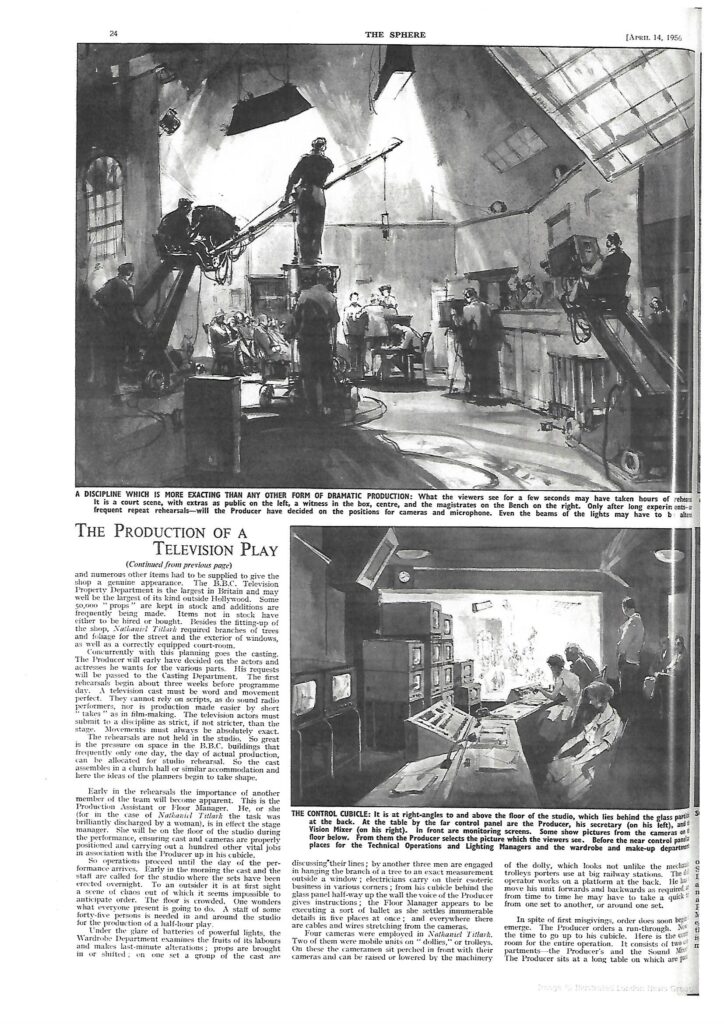
BONUS FEATURE. The final photographs adjacent to the article are of the then newly opened BBC Manchester Studios, at Dickinson Road, Rusholme, with a rehearsal in progress. Towards the rear of the picture can be seen the Littlewoods Girls Choir (rivals of another football pool’s group, The Vernons Girls), with Ken Frith at the piano on the right. Producer Barney Colehan is in the foreground.
David Sharp
*we are most grateful to acknowledge the images are © Illustrated London News/Mary Evans Picture Library.
Sad death of History Project founder – Roy Fowler
 Roy Fowler. Producer, Director and Historian.
Many in our industries, particularly in film and television, will be sad to learn of the recent death of Producer/ Director Roy Fowler. He died at home in London at 92. Roy was a remarkable man.
A precocious movie intellectual, he wrote a book on the French film industry, read for 20th Century Fox. This was followed by a very well received biography of Orson Wells- “Orson Wells a first biography”. A little while later he became an Associate Member of the Screenwriters Guild while still in his teens. He joined ACT – The Association of Cinematograph Technicians – in 1947 and after a productive career in film and TV here and in the States He became an active Chair of the Union’s Producer Director Committee in the Nineteen Eighties. I worked closely with Roy as the Official servicing the Committee. We became friends. He could be difficult and testy but he had an energy and enthusiasm which I found attractive.
A full account of his career and union activity is beyond the scope of this brief tribute. I want to acknowledge here what I believe was perhaps his most lasting contribution to our industries: the ACTT History Project. It began in 1985 at a Union Conference when Producer and LIFS Principal Bob Dunbar and Roy sat drinking wine over lunch in a Soho Pizza Express swapping stories, laughing about people in the industry and the movies they had worked on. They lamented the fact that so much experience and knowledge was being lost as workers in the industry died. During their conversation it occurred to Roy and Bob that It would be interesting to explore the possibility of creating a group to record the life stories of people in the industry to preserve those personal histories.
Roy decided to follow it up. He discussed it inside the union and out, wrote letters, pitched and smoozed, talked to organisations. He came to me and asked what I thought. It was brilliant, I told him so and the Union provided accommodation for the project, office support and meeting rooms with Roy fiercely insisting that the Project remain independent. And it did. Many current and retired union members joined and supported the project. It was a runner and Roy’s role as the founder of the project was crucial. There were many other individuals who played a key role in the Project but Roy’s was the guiding hand. We all owe him a lot.
The Project has now evolved into the British Entertainment History Project. An impressive and respected initiative which is now an internationally recognised archive of more than 700 interviews recording the working lives of the men and women who work and have worked in our industries. It is an entirely independent organisation run on a completely voluntary basis with interviewers and technical crew drawn from the industry. It is our Project.
The interviews are freely available. They are fascinating history of our industries and the people who built them from lab technicians and loaders to directors and writers. They are used by programme makers, writers, researchers, historians, Students and the general public. You can access them on the BEHP website. Better still join the Project: Interview and record. The future needs you.
The 50th Anniversary of the UK Cinema Release of John Schlesinger’s “Midnight Cowboy”.
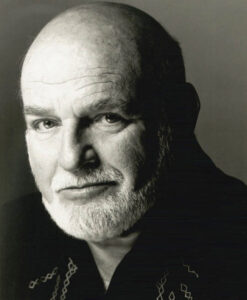 Today is the 50th anniversary of the UK cinema release of the great British director John Schlesinger’s movie “Midnight Cowboy”. It starred Dustin Hoffman as “Ratso” Rizzo and Jon Voight as Joe Buck. The film won three Academy Awards – Best Picture, Best Adapted Screenplay and Best Director.
The British Entertainment History Project has an 147 minute interview with John Schlesinger recorded on the 30 th March 1994. It covers his early career at the BBC in the 1950s. He talks eloquently about directing such classics as “A Kind of Loving” “Billy Liar” “Far From The Madding Crowd” and “Marathon Man”. You can find the interview at
https://historyproject.org.uk/interview/john-schlesinger
In this excerpt he talks to interviewer Norman Swallow about the making of “Midnight Cowboy”
John Schlesinger : “Onto the next. And so started a rather wonderful winter, my first in LA on the beach and we rented a house in Malibu and we worked from there. It was great fun. And the script was sort of gradually coming together.
Norman Swallow: This is Waldo Salt
John Schlesinger: Waldo Salt, yes. Wonderful. He hated writing, he was a wonderful writer but he hated the actual act, of facing the blank sheet of paper and he would put off all the time actually committing to paper. We had to in the end ring him and say tomorrow you’re delivering 10 pages, yes. Yes, yes I promise. And the following morning dawned and we were all waiting at Malibu and no Waldo, we’d ring. Are you coming, yeah, well it’s all in my head. Well
is it on paper. No, it isn’t on paper yet. And that’s the way we had to get it out of him, by deadlines.
Norman Swallow: He obviously got it in the end.
John Schlesinger: He certainly did,
Norman Swallow: And well worth getting out too
John Schlesinger: Absolutely. None of us knew it was going to have the effect that it did. We just felt free to make, I’d read the book on the advice of a very interesting painter living in London, an America painter called Kaffe Fassett whose since become a very well known for embroidery and tapestries and things like that and had an exhibition at the V & A. And Kaffe was a friend of mine and I wish I’d listen to his advice more often, because afterwards he said, after recommending that I read Midnight Cowboy, he said there’s a book called The Elephant Man you should read. I didn’t take his advice. I read it but I didn’t do it. Anyhow that was how Midnight Cowboy came about.
And you know I was there for the first time in America, no strings , I was beginning to get well known here but I was totally unknown over there except for Darling and so it started, so started this American connection. Yes.
Norman Swallow: Forgive me for interrupting, you had a marvellous cast again.
John Schlesinger: Wonderful cast
Norman Swallow: Again your superb relationship with actors and getting them to give their very best.
John Schlesinger: It’s very interesting, Hoffman was the first cast. I’d only see The Graduate and I thought he’s not right for Ratso Rizzo, but Jerry Hellman the producer said I’ve seen him in Henry Living’s A off Broadway and he’s a wonderful character actor and you should meet him. And he had the good sense to dress in a dirty old raincoat and we wandered around 42n d Street and all those areas and he blended in perfectly. By the end of the evening there was no question he wasn’t the right man for it.
And Voight followed much, much later. We thought we’d found our cowboy. We tested him and the casting director said you
must see John Voight. We said we’ve seen his photograph and he isn’t our idea of the cowboy at all, this kind of round, Dutch, big nostrelled, blond face. No. But she said just meet him, so we did, and he read for us and we added him to the list of people being tested and he still didn’t get the role. Nor did the man we all thought did would, but there was another actor, a Canadian actor called Michael Sarrazin. And what you do when you’re testing is that you make pre test deals with agents and studios, meaning if they get the part this is the fixed price that we’re going to pay. And he was under contract to Universal, Michael Sarrazin, and we did the test, decided much against the casting directors will who much preferred Jon Voight that we would go with him and Jon Voight had already rung me and said thank you, it was a very fair test, I hope we get to work some day.
Sarrazin came in for costume fittings. And then Universal, his representatives, tripled the asking price and got so greedy that Jerry said fuck them. And we went back to the tests again and decided that Jon Voight’s every bit as good, if not better. It was terrible for poor Michael Sarrazin and Jon got the role
Norman Swallow: It worked out well in the end John Schlesinger: It worked very well in the end.
Norman Swallow: That got an Oscar as the Best Picture, or you got the Oscar
John Schlesinger: It got 3 Oscars. Writer, director and best picture.
Norman Swallow: And Dustin Hoffman was nominated
John Schlesinger: Nominated, and so was John Voight. But sentimentally I think out of, John Wayne got it for True Grit. I think they were more generous at the BAFTA awards. I think they got awards here.
Norman Swallow: A very great film
John Schlesinger: It’s just been revived, 25 years. They’ve reissued it, we remixed it and stereo phonically
Norman Swallow: Did you
John Schlesinger: Oh yes, I had a lot to do with it. It’s on now.
John Schlesinger: It would never get made today, Midnight Cowboy
Norman Swallow: Really
John Schlesinger: Never, not in the present climate, they would show us the door.
Ossie Morris talks about working with Franco Zeffirelli on “The Taming of the Shrew”
The British Entertainment History Project is deeply saddened to hear of the death of the great Italian film director Franco Zeffirelli. Our collection of interviews includes one recorded in 1987 with Ossie Morris who worked with him as Director of Photography on the movie “The Taming of the Shrew” starring Richard Burton and Elizabeth Taylor. In this transcript of the interview, Ossie talks about working with Zeffirelli on the movie. You can listen to the complete six hours and forty three minute interview at: https://historyproject.org.uk/interview/oswald-ossie-morris . The section about working with Zeffirelli is on Side 8.
Interviewer: Let’s talk about Zeffirelli.
Ossie Morris: Zeffirelli was very talented very talented. A bit , how can I say a bit , he seems to be a bit bewildered when he makes a film. You’re not quite sure whether he knows what he wants.
But eventually you do find out what he wants and it’s usually something pretty terrific. If you’ve seen any of Zeffirelli films, artistically they’re absolutely beautiful. We were going to do Taming Of The Shrew and I said Franco do you know how we’re going to do this film because you know we’ve got to do something. It is a wonderful chance to do something. He said “Well I think we should make it look like some of the Venetian paintings of the period”. So we went to Italy. They do these most wonderful art books mostly books published in English in Italy these days. We went and we got a whole lot of the paintings of the period I’ve got it upstairs now. We made three loose leaf copies of the various paintings of the period we thought should be the style of the film. Zeffirelli had one, Mongiardino the designer had one and I had one and that was virtually the bible for the film. So each of us knew what was expected of the other one. And we used that and I tried to photograph the film on the lines of these paintings. Zeffirelli cast in the same way. The costume designers designed the costumes in the same style of the painting so everybody knew what everybody was doing. And it’s the one film where that’s ever been done. And it really was necessary with that film because it was such a visual film, apart from being Shakespeare, it was visual and we have those three books. Now that’s fine you think, but there is always a snag. We have two very powerful people in it.
Richard Burton and Elizabeth Taylor. Elizabeth insists on having her own costume designer because Elizabeth by then is beginning to put on a lot of weight and Irene Sharaff who was the designer had to do this corset type of bodice that Elizabeth needed to keep her stomach in a bit, because Elizabeth was beginning to eat rather heavily. And liked a lot of good food ,Irene Sharraf obviously had got preconceived ideas of the colours that suited Elizabeth and they didn’t always fit in with our pattern of Venetian paintings. So there was a problem. So Franco said to me “Ossie what are we going to do about it Elizabeth does not look good. The colours are wrong. And Richard does not look good. The colours are wrong”
Zeffirelli was a bit scared of Richard and Elizabeth so muggins once again becomes the middle man. He said “Ossie you know Richard and you know Elizabeth will you go and talk to them and see if we can alter their costumes”? I said “well Franco, I will try but I don’t guarantee to be successful”. Well I knew their American production manager very well, Dick McWhorter. I said to Dick “Look we’ve got a problem here. Zeffirelli doesn’t like the costumes”. He said, Well I will think about going to get a change. I said well look can you fix it that I go and see Richard on my own. I’ll talk to Richard first. So that was arranged for me to go and see Richard and I explained to Richard what had happened and I said Zeffirelli is not happy with your costume Richard and he’s a bit nervous about coming out speaking to you about it. I said but more important he’s not very happy with Elizabeth’s. He said “Well I don’t see how you’re going to get anywhere with that because she’s had Irene Sharaff all this time and she’s not about to change”.
“Well maybe we could get together and maybe have a meeting with Irene Sharaff “. Well to cut a long story short, in the end we got everybody together Irene Sharaff, Elizabeth, Richard myself, Dick McWhorter, Zeffirelli and the wonderful Italian custom designer Danilo Donati and we finally agreed that he would be allowed to make a set of costumes for Richard and if we all thought the costumes were better than Irene Sharaff’s, Richard would wear the Italian costumes. Well there’s no question they were marvellous and they were hilarious and they were brilliantly hilarious costumes. Richard had no hesitation in saying that he would wear them. But they did some designs for Elizabeth. She gave them to Irene Sharaff but you know it’s where a question of personal pride comes into it, Irene Sharaff is a quite a well-known American designer. She’s not about to be told how to design a costume by Franco Zeffirelli. So sadly we didn’t get anywhere with that. Elizabeth had her own costume. I think it shows slightly in the film, maybe not as much as it might have done. But right at the very end when the picture was looking so stunning. When what we called the epilogue, the big costume scene, the costume she’s wearing in that picture over there. That was in fact designed by Danilo Donati so she did allow that one to be designed by him. It’s a big cloak which went over Irene Sharaff’s costume so Irene Sharaff thought she designed it but she really didn’t. The cloak was designed by Danilo Donati. And so there was a compromise. But again, it’s dealing with people .
Interviewer: Was Zeffirelli easy to work with?
Ossie Morris: Oh yes. A bit cunning, all Italians are cunning. He insisted that I had an Italian crew . Well I agreed to have an Italian crew because to help the finances. There was a lot of lira put into the picture and they were a bit short of dollars and I had to be paid. I didn’t want to be paid in lira but to be paid in sterling which was dollars really. So they were keen to have an Italian crew. I used to find there was a lot of dialogue went on between him and the Italian camera operator and I couldn’t always understand what was going on. I had to put a stop to that. I did and I got on very well with them. Franco is a lovely man to work with , a very gentle man, very talented, full of ideas and they come out at the last minute. You know like you’re sitting there and he comes out with a wonderful idea. And you’ve got to quickly implement it. But no it was a wonderful film to be on. I was very thrilled to be on that one.
Searching for Jack Cox
If you watch British films made between 1920 and 1959, it is almost certain that you have seen the work of Jack Cox. From Hitchcock thrillers like Blackmail (1929), via wartime factory workers in Millions Like Us (1943), Margaret Lockwood and James Mason raising temperatures in The Wicked Lady (1946), to laughs with Norman Wisdom and Honor Blackman in The Square Peg (1959), Cox photographed many major movies. My particular research interest is in the work of Maurice Elvey, and in the 1920s Cox advertised himself as ‘Maurice Elvey’s cameraman’. While many of their films are now lost, their partnership survives in the Sherlock Holmes mystery The Sign of Four (1923) and the magnificent Hindle Wakes (1926).
Sadly, we don’t hold an interview with Jack Cox. But stories of him can be found in other interviews in our collection. He was clearly very highly respected, and he seems to have been a significant support and inspiration to his younger colleagues.
To camera operator Len Harris, Cox was ‘a marvellous chap’. At Gainsborough, when he was starting out, Harris remembered, ‘a film would finish but then they’d do some more scenes […] I very often got the job of lighting these extra scenes. And sometimes Jack Cox would be working on a picture on the next stage and they’d say, officially, “Could you just go and have a look at it?” Well old Jack, he would come in, look around and say, “Yes that’s fine, yes, yes, yes, yes they’re fine. Shoot it, shoot it! Turn over!” And he’d walk away and, as he was going, he’d say to me, “I should flood that a bit more if I were you.” You know, so nobody else heard!’ Once, Cox witnessed Harris in difficulty and afterwards advised, “Look if you’re ever asked and you’re not ready, say you’re not ready. If you are ready, say you’re ready.” He said, “You’re perfectly entitled to say you’re not ready, unless you’re being very slow.” And I’ve always remembered that, ever since that day.’
Director of Photography Eric Cross remembered that Cox ‘had a weird camera called a Willard which was an American sort of sewing machine with wooden boxes on top […] Jack’s Willard had a handle on the back and we used to judge its exposure through the film and when he went over to a Bell and Howell he used to have a special little viewer with a piece of film in it which judged the exposure.’ Once again, Cox took the time to help his junior colleague. When asked ‘What cameramen with whom you worked gave you the greatest assistance and help?’ Cross responded, ‘Well, I think Jack Cox really. Although he was an early cameraman he was very efficient, I learnt quite a lot from him.’
Director Roy Ward Baker described Cox as a ‘very formidable figure’ and ‘a man of status and stature’ with ‘a dry, sardonic sense of humour. I met him once in Piccadilly towards the end of war and by that time I was in the Army Kinematograph Service and I was very excited and I’d become a director. I bumped into him in the street and I was delighted to see him and full of what I was doing and how marvellous it all was. He looked at me straight into the eye and said “who’s teaching you then?” That rather punctured my ego. He was right of course. We were teaching ourselves and falling over each other like a basket full of puppies.’
These are just three of the interviews in which Cox is mentioned – and there are others. To me, this helps demonstrate the value of the British Entertainment History Project: even when we don’t have an interview with a particular individual, they may well be found in the words of others. I would love to hear Jack Cox himself talking about his life and career – particularly his time with Maurice Elvey. This isn’t possible, but he has a presence in the collection through the warmth with which his colleagues remembered him.
Latest Batch of Interviews Digitised in January/ February 2019
Interviews digitised January / February 2019
Audio
Ossie Morris # 9 9 sides of tape
Oswald (‘Ossie’) Morris (1915-2014 ), cinematographer, OBE, BSC, was born on 22 November in Middlesex. One of the most significant cameramen of the post-war era, Ossie began his career working as a projectionist during his school holidays. In 1932, he left school to become an apprentice in the film industry, with his first job as a clapperboy on After Dark(1932) at Associated Sound Film Industries, Wembley. During WWII, Morris served as a bomber pilot for the Royal Air Force, and returned to the film industry when the war ended. After some experience as an operator at Pinewood in 1946, he was given his first film to light in 1950.
His career took off properly in 1952 when he was asked to take over the photography of the film Moulin Rouge, which was to become a milestone in Technicolour photography. He continued to develop new trends in colour cinematography in Moby Dick (1956). He was also equally at home in black and white, working with Vittorio De Sica on Selznick’s Stazione Termini (1953). His first feature film as photographer was Look Back in Anger (1959), with well-known classics such as The Guns of Navarone (1961), Lolita (1961), The Hill (1965), Oliver! (1968) (nominated for an Oscar in 1968) and Goodbye Mr Chips (1969) following in quick succession. Pumpkin Eater (1964) won a BAFTA for Best Black and White Cinematography in 1964. He then won an Oscar in 1971 for Fiddler on the Roof (1971), which was shot through a brown silk stocking in order to portray the colours of the Yugoslavian landscape on screen. Other 1970s films include Sleuth (1972), The Man with the Golden Gun (1974), The Man who would be King (1975) and The Wiz (1978) (nominated for an Oscar in 1978), a re-make of The Wizard of Oz. Prior to his retirement in 1982, Morris photographed The Great Muppet Caper (1981) and The Dark Crystal (1982) with Jim Henson. In 1997 he was awarded an OBE.
Lewis Gilbert # 386 18 sides
British film director, producer and screenwriter, who directed more than 40 films during six decades; among them such varied titles as Reach for the Sky (1956), Sink the Bismarck! (1960), Alfie (1966), Educating Rita (1983) and Shirley Valentine (1989), as well as three James Bond films: You Only Live Twice (1967), The Spy Who Loved Me (1977) and Moonraker (1979).
Abel Goodman # 245
Born 1931 on General Election day in Birmingham. Moved to Bournemouth at age of 3. First film he saw was Wuthering Heights which frightened him as a small child. The Way Ahead he remembers as one of the many other films he saw. In the film In Which We Serve he thought Noel Coward a ham. The first company Abel Goodman worked for was Cinechrome in Bournemouth, he talks about its setup up and operation. He was a member of the Bournemouth Film Society and then did his National Service in the army. In 1952 he joined Technicolour as Assistant Assembly Editor working with the three matrices. This was suggested as a way to get a union ticket. Then to Elstree as an assistant doing rubber numbering, this was also where Nic Roeg was the Focus Puller. Then to the Film Producers Guild with Green Park in 1954. In November of that year he started working at Merton Park Studios on documentaries. Left Merton Park to Future Productions – an offshoot of Associated Rediffusion working on technical & scientific films. In 1963 he started working in Bond Street on commercials and worked with many famous film directors who did commercials at the time (Ken Russell, Joseph Losey, Philip Saville). Started directing in 1961 inserts for commercials at Garretts and he was appointed Shop Steward at ACTT. Briefly out of work for family reasons 1973 and then worked in Holland until 1978. Worked for Worldwide, Millbank and Moving Picture Company. 1990’s moved to video tape.
Michael (Mickey) Hickey # 371
Mickey was a British film industry pioneer.He started his career as a projectionist of silent movies in 1928 at Astoria in Charing Cross Road, London. Soon after, the cinema started showing “talkies”
and he became one of the few people in the country to learn how to operate the new sound equipment.
The interview contains an important discussion of early sound systems.
In the 1930s he worked at Paramount News
When war broke out in 1939, he was drafted into the army’s film unit. Some of the film crews were sent to battlefields in Europe and North Africa, but Mickey spent the war at Pinewood Studios, mainly making training films for new recruits.
After the war he worked as a sound man at MGM’s new studios in Borehamwood, where he stayed until the studios closed in 1969. Among the films he worked on was Lolita, Barry Lyndon, 2001: A Space Odyssey, Ryan’s Daughter, Where Eagle Dare and Frenzy.
Peter Handford # 71
Peter was a pioneering location sound recordist,
During a career, which stretched from 1936, when he joined Denham Studios as a 17-year-old sound apprentice, to 1988, he worked with host of top flight directors including Alfred Hitchcock, Sidney Pollack, Tony Richardson and David Lean. He struck up friendships with Katherine Hepburn, Robert Redford, Meryl Streep and Clint Eastwood and was the proud recipient of an Oscar and a BAFTA award for his work on Out of Africa. Although he worked closely with Hollywood during his later years, he will be forever linked with the English New Wave Free Cinema movement of the 1960s, led by Tony Richardson and including such other leading maverick directors as Karel Reisz, John Schlesinger and Jack Clayton.
He helped create such classics as Room At The Top, The Entertainer, Saturday Night, Sunday Morning, Sons and Lovers, Billy Liar, Tom Jones, Charge of the Light Brigade and Oh What A Lovely War.
He went on to work on Dangerous Liaisons, Gorillas in the Mist (both 1988) and White Hunter Black Heart (1990). His last film was Havana (also 1990).
Peter also left an enduring legacy to railway historians by recording, and therefore preserving, the sounds of the great steam engines, and ensuring their release on a record label which he himself instigated.
Maurice Carter #174
540 minute interview
Maurice Carter t/role:
Art Director and Production Designer Maurice was born on 24 April 1913 in London. He was one of the first in England to use back projection. He also founded the Guild of Film Art Directors – British Film Designers Guild. He was nominated for Nominated for Academy Awards for Best Art Director ‘Anne of the Thousand Days (1969) and ‘Becket’ (1964) Nominated for BAFTA Awards for Best British Art Direction ‘Anne of the Thousand Days (1969)The Quiller Memorandum (1966) and ‘Guns at Batasi’ (1964).
John Shearman # 23
John Shearman was an active young member of the wartime documentary movement while working at the RAF’s film unit. Post-war, he enjoyed long stays in two key organisations. At omnipresent production consultancy Film Centre, he was a significant behind-scenes influence on the advance of oil filmmaking, particularly Shell’s. On the home front, he became trusted right-hand man to British Rail Films supremo Edgar Anstey. Shearman’s many productions included the sequence of films documenting the 1960s construction of London Underground’s Victoria Line.
John Jeffery # 273
Colour Film Services ,. Technicolor, Humphries. Comment about experience with Stanley Kubrick
John Aldred # 102
John Aldred worked as a sound engineer, sound recordist and dubbing mixer in the film industry from 1937-1986. Worked in order at: Sound City (Shepperton), Denham, Pinewood, Army Film Unit, Crown Film Unit, MGM-Borehamewood, Shepperton and Rank Film Labs. Born in 1921 in Doncaster, son of a dental surgeon, educated at private school, wasn’t that interested in education and he was more interested in cinematography from a young age. His family moved to Middlesex, he left education aged 16 and got a job at Sound City (Shepperton) in 1937 on £1 a week as sound assistant/playback operator. The first film he worked on was Wanted. Here he worked with Vistatone (Marconi) sound equipment at Shepperton and worked with the producer John Baxter (who hired out a stage at Shepperton). His contract lasted six months at Shepperton after which he was made redundant. Through his father’s dental nurse who had a daughter in the wardrobe department at Denham he heard there were openings in the sound department: “…at a marvellous salary of £2 10s. a week”. He used Western Electric equipment at Denham. Worked as sound camera loader? At Denham he was involved in organising the Denham sound department (which consisted of 8 sound crews at that time) into the ACT union in 1938. The membership increased dramatically after a recruiting drive due to the excessively long hours and what he calls “elastic” approach to hours at Denham. At Denham he worked with Cyril Crowhurst who introduced night training classes to the sound department. Also worked with DP Field. Involved in productions such as The Thief Of Baghdad, Citadel and 60 Glorious Years. During the war he was in the sound department making The Lion Has Wings and In Which We Serve. In 1942 he joined the Army Film Unit at Pinewood. Worked as sound camera operator on The True Glory, Desert Victory, The Way Ahead. Recorded war sound effects in Western Europe during WW2 with Peter Handford. The stories about this experience are fascinating. He then joined the Crown Film Unit working under Ken Cameron where he worked on Western Approaches. Through A.W. Watkins he got an interview with Douglas Shearer (head of sound at MGM) in 1947 and was offered twice the pay he was on at Pinewood as sound maintenance engineer at the new MGM Borehamwood studios, after about two years he moved back into production as assistant dubbing mixer. Worked on various films, including Under Capricorn with Hitchcock, on 10-minute shoots. In 1956 he left MGM and moved to Shepperton as he could get over the union rate there, at this time the studio was very busy, employing 13 sound crews. He worked there until 1968 and was dubbing mixer on many films including The Innocents , Dr Strangelove, Lawrence of Arabia. Then had a year contract with Paramount, then worked in Canada and freelance with Hall Wallis, then couldn’t get any work so he got a job as head of sound at Rank Film Laboratories. In 1980 he became involved with the British Kinematograph Sound and Television Society (BSKTS) and was involved in training courses and industry standards in sound. He retired from Rank Film labs in 1986.
Alan Izod # 40
Lived in Australia for formative years moved back to UK and joined Q Studios Marylebone as trainee. Gaumont British Instructional films as asst Director Documentaries Cleveland Street at £5 pw. Dallas Bower and Paul Rotha associates..Editor at Educational General Services 1936 .Worked on naval Films Dinah Sheridan in one.Moved to British Council . 1941 Naval Film Unit making B & W documentaries on Navy. Absorbed into Navy worked alongside John Paddy Carstairs. Joined COI after leaving Navy working on colonial films. Formed Central African Film Unit as Producer 1948 16 mm Documentaries.At this time the interviewer Stephen Peet worked for him until 1956. Louis Nell worked as Cameraman. Working as a colonial making films about Africa from base at Salisbury Rhodesia amongst others Wives of Nendi.1964 stopped film work went to London as Information Officer Was there at Rhodesia UDI . Returned to Rhodesia . To Australia as publisher of school books.
Ken Locke # 444
Head of Film Examination, Programme Acquisitions at the BBC
Video
Gawn Grainger # 738
Writer actor
Mary Orrom # 614
Writer Producer
Joe Kerr # 649
Joe Kerr started at BBC as a painter on holiday relief. After joining NAATKE he rose to branch President. Joe Kerr details problems and relates disputes in depth. All techniques of painting in TV studios are covered. At Royal Variety Shows all backroom workers have to be in a dress suit. He recounts how he attempted to revive the comedian Tommy Cooper after he had collapsed on stage. Changed to ITV LWT and continued there on shows of all kinds. Worked on Moonshot the live continuous TV show during the Apollo Moon Landing. Left LWT for freelance on series such as The Bill.
Philip Bonham-Carter
In a recent interview with cinematographer, Philip Bonham-Carter, he reveals his passion for capturing situations when they happen. It doesn’t matter if the lighting isn’t good or even if there is no light at all –the importance of capturing these moments, that can never be repeated, governs his approach. This is how the ground-breaking BBC documentary series, ‘The Family’ was filmed in 1974. An approach that bought him quite a lot of criticism, at the time, from his fellow cameramen at the BBC who felt he was ‘letting the side down’, by not carefully lighting the interiors. This technique was very different from that used by Richard Cawston when he produced the documentary, ‘This is the BBC’ in 1959. While you are meant to be watching events as they happen over a 24 hour period at the BBC, every scene is obviously clearly crafted with probably two or three takes for each scene. By 1974 the possibility of ‘actuality’ filming had become more achievable with lightweight hand-held 16mm cameras ( Philip used an Aaton), fast Zeiss lenses and film speeds. For the interiors in the family’s house, Philip did put colour correction gel over the windows but no film lights inside or even photofloods in the existing light sockets. There was no second camera, which is common place today, so Philip had cover the whole action on his camera and make sure the editor had suitable points to cut in and out of a sequence. I believe Philip Bonham-Carter led the way in this filming technique. Well worth listening to the whole interview where Philip also talks about his long career, including filming the Queen and the Royal Family over many years.
The BEHP, conducted by Darrol Blake, is on the BEHP website – Interview number. 728
Philip Gilbert
In an interview conducted by Mike Dick, Philip Gilbert, Head of BBC Events Department in 1997, explains the difficult decisions that had to be taken the week after the sad news that Diana, Princess of Wales, had died in a car crash on 31stAugust in 1997. Philip was also the BBC person who liaised with Buckingham Palace but no information, for a number of days after her death, was forthcoming about the funeral arrangements – Philip and his team had to second guess what arrangements were being made or would be made for Diana’s funeral. You can find out what happened behind the scenes that week and the whole of Philip Gilbert’s career by listening to the full interview with him on the BEHP website.
Interview number. 733
Jack Jones film screening – 11th January 2019
FIRST SCREENING IN WEST LONDON!
Friday 11th January at 7.30 pm.
West London Trade Union Club, 33-35 High Street, Acton, W3 6ND.
Book your ticket from labourheritage45@btinternet.com OR phone Linda on 07813 095383
Tickets are free BUT please book as space is limited.
A voluntary collection will be made.
Jerome Kuehl 1931-2018
“JERRY KUEHL – media historian and long time member of the British Entertainment History Project
The archive world has received some very sad, but inevitable news of the death of Jerry Kuehl. Jerry had stoically coped with ill health for many years. Jerry, with wonderful support from Adele- his wife of many years, managed to keep his heart going for more than 30 years after his big heart attack. He told me some years ago, he was crossing the road outside the Royal Free when he was knocked over by a “kamikaze” cyclist , carried into the hospital where an abdominal aneurysm was discovered – so thanks to the cyclist Jerry got another innings!!
Jerry worked on “The World at War” (and before that “The Great War”). Jerry was a great supporter of archives and archive productions, having made many in his illustrious career. Jerry was always there, if needed, to check any historical footage (especially WW2) information. Above all else Jerry was a wonderful friend to have. He introduced me to the BECTU History Project (now the British Entertainment History Project) when I first left the BBC – thinking I needed something to occupy my time!!
Sue Malden
You can also find an obituary by Taylor Downing here: http://iamhist.net/2018/10/jerome-kuehl-1931-2018/
Edna Traill (nee Owen)
Edna Owen or Miss Owen as she was always known by when at ITN. Virtually employee number one Edna Owen was there from the very first night of ITN when ITV started in September 1955. An interesting insight into those very early days. She recounts the day when the training days were over and the group of employees would be split in to two shifts. Potentially to not meet anymore. A formidable manager who made sure all were doing their best.
David Hamilton
David Hamilton was a continuity announcer for ITV. I remember him most when he played football for the ITV team. Turning up at Brockwell Park council football pitches with his boots in a bag. Unlike most of us he arrived in his Rolls Royce! Very likeable fellow footballer on the day. Mostly know as “diddy” no doubt for his size although I never remember him being very small. Worked with many other famous people at ITV like Eamon Andrews.
“Pinching pictures”: Alf Tunwell and the art of the newsreel
Fifty-five years ago Ralph Bond, documentary filmmaker and Vice-President of the ACTT film and television union, sat down in the union’s offices in Soho Square to interview Alf (“A.A.”) Tunwell, doyen of Britain’s cinema newsreel camera operators. The audio interview is now part of the History Project collection, has recently been digitised and uploaded, and is a sheer delight.
It clips along efficiently, runs for less than an hour, and had obviously been meticulously prepped by Ralph Bond. He gently guides Alf through his career, and prompts him to share his favourite anecdotes. And as a result we get a fascinating insight into the lost world of the cinema newsreel, focussing mainly on the period from the 1920s to the 1940s.
But because the interview itself was conducted in 1963, and we are listening to it over half a century later, we get a second layer of historical reflection. In the 1960s, newsreel films were still part of the staple cinema diet, alongside advertisements, trailers for upcoming pictures, the B-movie, and the main feature. So Ralph and Alf look forward from their 1963 vantage-point to speculate on the future prospects of the cinema newsreel, while we look back from 2018 knowing that it finally faded away in the 1970s.
Alf’s career started before the First World War as an office boy with the Warwick Trading Company, founded by ‘actuality’ film pioneer Charles Urban. From there he moved to Barker Motion Photography (early owners of the site which would later become Ealing Studios) and G.B. Samuelson’s operation at Worton Hall in Isleworth (the Samuelson dynasty is still very much with us). By this time he had moved on from office duties to technical work, initially in the dark-room as a developer, then as a camera hand-cranker, and finally as an operator.
Alf stayed with Samuelson through the ‘20s, but in 1929 he joined British Movietone News which was setting up the country’s first sound newsreel. His stories about the rivalries between the newsreel companies – Gaumont, Movietone, Paramount, Pathé, Universal – are a treat. For instance: at each big sporting event such as a Grand National or FA Cup Final, only one company would have a license giving them official access. Crews working for the other companies would therefore try to “pinch pictures” as best they could, through bribery or deviousness or both. And the license-holder, naturally, would try to stop them. As Alf tells it, it was all good clean fun and everybody met in the pub afterwards for a drink and a laugh. But to find out what exactly he got up to in his efforts to “pinch pictures” on behalf of Movietone, log into the interview and listen to the man himself.
During the Second World War Alf helped the Canadian Army to set up its own film unit, training over 200 soldiers in the use of lightweight cameras. Later in the 1940s he worked with MGM, and his final long-term job was as Head of the Camera Department with the UK end of the US newsreel company Hearst Metrotone News. By the time he sat down with Ralph Bond in 1963, he was a grand old man of the cinema newsreel having seen it develop from its silent origins, through the advent of sound, and of colour, and so on to its final eclipse by television.
You’ll find the interview at https://historyproject.org.uk/interview/alf-tunwell .
A Century On: Rescreening Maurice Elvey’s Nelson Film
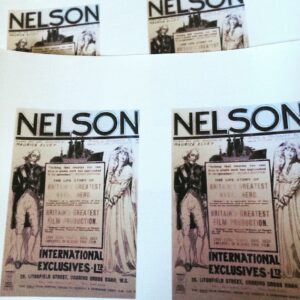 On Saturday 29 September 2018, a very exciting film screening is taking place at the No.6 Cinema in Portsmouth – a rare showing of Maurice Elvey’s 1918 film biography of Nelson. The screening is taking place on an auspicious date: the 260th anniversary of the birth of Admiral Lord Nelson; and is being shown in an appropriate venue: just around the corner from HMS Victory.
If he is remembered at all today, Maurice Elvey tends to be simply thought of as Britain’s most prolific director. He started making films in 1913, in the silent days, and successfully made the transition to sound, finally retiring in 1957. His films were diverse in style, genre and quality, which makes it challenging to assess his career overall, but in his early filmmaking days, he was recognised as a leading figure in the British film industry, and one of his most important films – and probably his most personal project – was Nelson.
Elvey first came up with the idea of making a film biography of Nelson in 1913, but none of the many film companies he approached were tempted by his enthusiasm. Undeterred, he worked on other films and carried on thinking of Nelson for 5 years until, finally, in 1918, a firm called International Exclusives backed his idea. With the screenwriter Eliot Stannard, Elvey developed a wide-ranging scenario that both covered Nelson’s life and also explored the continued importance of Nelson to the Navy of the First World War. The production was planned on a large scale – huge numbers of extras were recruited, numerous locations were chosen, lavish sets were built, and a fine cast assembled, notably Donald Calthrop and Eric Barker as Nelson, man and boy, Ivy Close as Lady Nelson, and Malvina Longfellow as Lady Hamilton. Most importantly, Elvey was granted rare permission by the Admiralty to film on HMS Victory, where, with his favoured camera operator Alfonso Frenguelli, he recreated key scenes from Nelson’s naval career. Filming was challenging, but Elvey was delighted to be working on such a large scale to achieve his ambition. He was well on the way to delivering a finished project, when, on the night of Tuesday 18 June, a fire at the printing works of the London Film Company, destroyed key sequences of Nelson. So Elvey, the actors, and the crew rushed back to Portsmouth, and then to the studios, and retook the lost scenes, under considerable pressure – many of the people involved were committed to other projects, and time was very short.
Unusually for a British film of this period, Nelson survives in what appears to be a complete form, so it is still possible to watch it a century on. It’s a fascinating watch. It is flawed, and the fire left its mark on the quality of some of the scenes, but it is still a remarkable achievement – and a significant piece of British film history. Many reviewers of a century ago thought highly of the film, it seems to have done very well at the box office, and there is evidence that its original audiences enjoyed it. We will have to wait to see what the audience of 2018 makes of it, but it will certainly provoke discussion!
The History Project holds an interview with Maurice Elvey, which was carried out in October 1963 when he talked to Ralph Bond about his early career. In this interview, Elvey talks briefly about Nelson and working on the Victory. He told Bond, “That’s the most moving thing I’ve ever done, to reproduce the death of Nelson. This was something that frightened me – I’d never do such a thing again”.
The September 2018 screening is being organised by South West Silents, with live music from Stephen Horne and Martin Pyne, and an introduction from the History Project’s Dr Lucie Dutton.
Woodfall: A Revolution in British Cinema
This month (April 2018) the BFI is running a retrospective on Woodfall Films, the company which in the late 1950s and 1960s pioneered a new sort of cinema in Britain. This was, of course, also the time of Truffaut, Godard and the New Wave in France, but it is a disservice to both movements to yoke them too closely together. Each was struggling with social, economic and aesthetic challenges rooted in its own national circumstances.
For Woodfall, class was always central, not just in its early essays featuring working class protagonists (Saturday Night and Sunday Morning in 1960, A Taste of Honey in 1961, and The Loneliness of the Long Distance Runner in 1962), but also in the later costume dramas (Tom Jones in 1963 and The Charge of the Light Brigade in 1968). It was always committed to the virtues of location- rather than studio-based shooting. And it usually found a way to celebrate joy in life, while acknowledging its brevity.
The name most closely associated with the Woodfall project was the director Tony Richardson. He died in 1991, and the History Project never interviewed him. Nevertheless, for anyone interested in this pivotal moment in British cinema, the History Project collection is a rich resource. There are several interviews which touch upon or refer to individual films or crew members, but perhaps the most relevant are with three of Richardson’s cinematographers, and one of his editors.
Ossie Morris (https://historyproject.org.uk/interview/oswald-ossie-morris), interviewed in 1987, was cinematographer on two Woodfall films, Look Back in Anger (1958) and The Entertainer (1960). He went on to win BAFTAs for The Pumpkin Eaters, The Hill and The Spy Who Came In from the Cold, and an Oscar for Fiddler on the Roof.
The interview with Walter Lassally (https://historyproject.org.uk/interview/walter-lassally) was conducted in 1988. Walter was cinematographer on A Taste of Honey, The Loneliness …, and Tom Jones. The year after he made Tom Jones, Walter won an Oscar for his cinematography on Zorba the Greek.
David Watkin (https://historyproject.org.uk/interview/david-watkin) was cinematographer on Mademoiselle and The Charge of the Light Brigade. He is probably best known for photographing Out of Africa, for which he won both a BAFTA and an Oscar.
And finally we have a video interview with Kevin Brownlow (https://historyproject.org.uk/interview/kevin-brownlow) who edited The Charge of the Light Brigade. Kevin has many other claims to fame, including his championing of silent cinema, and his work in film preservation and restoration. His own counter-factual drama It Happened Here (1965), a remorselessly unflattering portrayal of Britain under Nazi occupation, was bank-rolled by Tony Richardson in one of his many acts of generosity to struggling film-makers.
The art of film grading: Bill Girdlestone
The BEHP’s audio interview with Bill Girdlestone – conducted in 1987, and now digitised and available on the website at https://historyproject.org.uk/interview/bill-girdlestone – offers fascinating insights into the world of the film lab, and in particular Bill’s own craft of grading (For an invaluable historical overview of Britain’s film labs, go to http://www.brianpritchard.com/British%20Labs.htm). His career spanned much of the twentieth century, from the First World War to the 1970s, taking in the advent of sound and the coming of colour. And his changing fortunes also shine a light on the power-play and cut-throat competition which characterised the British film industry in these decades.
As a boy before the First World War Bill was already a film enthusiast, who built his own home projector and was always scrounging random strips of film. One day in Wandsworth he met a cinema manager willing to sell him odd feet for a few bob. In later years he realised he had been buying stolen goods, film which should have been returned to the renters but had been withheld by the manager so as to make a bit of money on the side – a common problem at the time.
Bill’s first job in the industry was as an office boy for Provincial Cinematograph Theatres (PCT), Britain’s first national cinema chain. (For a list of former PCT cinemas which are still open, go to: http://cinematreasures.org/chains/664/previous). But he wasn’t cut out for an office, and quickly moved on to the Worton Hall studio at Isleworth, set up by George Berthold Samuelson, father of Sir Sydney Samuelson (whose own BEHP interview is at https://historyproject.org.uk/interview/sydney-samuelson). Here he had the pleasure of washing out the lab’s chemical tanks.
His next move was to the London Film Company’s lab at Twickenham, to work as a printer. One of his first jobs was to print rushes for D.W. Griffith’s Hearts of the World. This must have been around mid-1917 when Griffiths was filming in England and on the Western Front: Hearts of the World was a propaganda film, backed by the British Government and intended to bolster US public support for the Allied war effort.
After a short period of Army service, Bill went into the dark-room at the Gaumont-British film lab in Shepherd’s Bush. His job was at the ‘front end’, making the negative and producing the first print; bulk printing was done separately in the ‘works laboratory’. This was where his career really got started, because Gaumont-British was a major force in the industry. The company grew steadily through the 1920s and 1930s, affiliating with others – notably Gainsborough – and running film studios at Lime Grove and Islington in addition to the Shepherd’s Bush lab. Its international links meant that Bill was handling negatives from different countries, and he realised that American negs were far better than British ones, with subtler contrasts and textures. He started experimenting with film grading, working by trial and error, adjusting the chemical mix and developing time to try to replicate this higher quality. And as he did so, he started attracting the attention of the camera department: he describes being in awe of the American cinematographer Nicholas Musuraca, quite unaware that Musuraca was equally impressed by him, and used his negative as a model for others to aspire to.
It might be thought that Shepherd’s Bush, as the in-house lab, would have enjoyed a guaranteed flow of work from Gaumont and Gainsborough productions, but in fact things were less clear-cut. Michael Balcon, who from 1931 was overall Director of Production, came from the Gainsborough side, and had no particular loyalty to Shepherd’s Bush. In fact, according to Bill, he positively preferred to place work with Humphries lab in Whitfield Street. Although Bill was very much on the technical side, he observed these commercial rivalries and it’s clear from the interview that had his own views – including the view that Humphries owed much of their success to their willingness to pay ‘back-handers’.
Bill worked at Shepherd’s Bush until about 1950, when he was caught up by the ambitions of another big beast in the film industry. From the early 1930s, flour-magnate J. Arthur Rank had, ploddingly but effectively, built up a formidable vertically-integrated film empire. In 1939 Rank snapped up Alexander Korda’s brand-new but heavily-mortgaged studios at Denham; and in 1941 it acquired Gaumont-British and Gainsborough. In the late 1940s Rank decided to concentrate its film processing in a new, state-of-the-art lab at Denham. Shepherd’s Bush was surplus to requirements and Bill was invited to move to Denham or take redundancy. He chose to move.
It’s clear from the interview that it was a wrench to leave Shepherd’s Bush. By this time Bill was in his fifties, and he’d worked there for the best part of thirty years. His reputation as a master of the art of grading was secure – but it must have hurt to leave the place where that reputation had been won. And initially, he wasn’t too impressed by some of his new colleagues.
And yet, in the end, Denham became a happy place for him. The BEHP interviewers, Roy Fowler and Alan Lawson, asked Bill which had been the most satisfying time in his working life and he replied:-
“At Denham, the last five years. They had sufficient sense to know what I was doing and I was able to produce the best colour pictures that this country ever saw. When I did Oh What a Lovely War, 1968, we showed it at the Plaza, I sat with Dickie Attenborough, it was a Paramount picture. The Paramount executive came to me and he said, ‘Bill, this is the best colour print I’ve ever seen.’”.
Bill retired in 1970, at the age of 71.
Volunteering at the BEHP
I have been volunteering for the BEHP (British Entertainment History Project – www.historyproject.org.uk – a hugely valuable collection of interviews with people who have worked in the Film, TV, Theatre and Radio industries) since April 2017. I am pursuing a career change from digital marketing to archives management because I am passionate about collecting and cataloguing elements of history that tell fascinating stories about society.
I am working on a project to audit the archive by filing and cataloguing copies of audiocassettes, minidisks, CDs and DVDs for each of the 700+ interviews to help volunteers find them for digitising and adding to the website.
What I like most about the collection is that it celebrates professionals who are perhaps as not as well known to the public but have still made significant contributions to the entertainment industry in many different roles. In a way, it brings the credits at the end of shows to life!
Over the last six months I have enjoyed working with my fellow volunteers to find logical ways to file the material and filling in the metadata gaps for the content management system. I am impressed by the wide range of interviewees we have recorded as well as the skills required to film, edit, archive and publish the interviews.
What I have taken away from the experience so far is that the process of optimising the archive is iterative and that a pragmatic approach is best to maintain momentum while identifying opportunities for future improvement.
I am proud to be involved with the project and look forward to seeing it continue to grow as a valuable resource for anyone interested in how their favourite shows are made.
Sidney Cole: editor, producer, union man
Recently digitised and now available online (https://historyproject.org.uk/interview/sidney-cole) is the British Entertainment History Project’s 1987 interview with Sidney Cole. Sidney was a constant presence in the film and television industries from the 1930s to the 1980s. He was an editor and a producer, in both drama and documentary, and throughout a busy career he regularly found the time and the means to put his socialist politics into practice.
Sidney was a South London boy, clever enough to get a place at the LSE, from where he went straight into the film industry in 1930, at the age of 21. He started out as a ‘scenario reader’ at Stoll Studios, and quickly struck up a friendship with Thorold Dickinson who was working as an editor. Thorold was only a few years older than Sidney, but was already a key figure among London’s progressive film intelligentsia, a mainstay of the Film Society and an ally of figures such as Ivor Montagu and John Grierson.
When Thorold moved to Ealing Studios in 1933 to edit Gloria Swanson’s Perfect Understanding, Sidney went with him as second assistant editor. And as Thorold moved from editing to directing, Sidney moved up from assisting to editing in his own right, working on films by Carol Reed and Frank Richardson, as well as Thorold’s own film The High Command in 1936.
They worked together politically as well. Both were early activists within the ACT, the film technicians’ trade union, which had been founded in 1933 and, after a rocky start, found its feet from 1934 once George Elvin came on board as General Secretary. Thorold was elected as one of the union’s Vice Presidents in 1935, and in 1936 Sidney served on an ACT delegation to the Board of Trade to discuss the future of the film industry. In the following year, he too was elected as a Vice President.
By this time the Spanish Civil War was under way, widely seen as the opening episode of armed confrontation between fascism on one side, and socialism and communism on the other. Sidney and Thorold travelled together to Spain in 1938 and made two short films to rally support for the Spanish republic: Behind the enemy lines, and Spanish ABC. Both were distributed by Ivor Montagu’s Progressive Film Institute.
During the Second World War Sidney worked on several films which are now regarded as British classics. In 1940 he edited the melodrama Gaslight, directed by Thorold: it was a stunning success, so much so that MGM bought the rights and tried to destroy all copies of it so as to give themselves a sure-fire winner with their own re-make. Thorold and Sidney thwarted them by squirrelling away a secret print. Sidney also edited Cavalcanti’s ‘s ‘what-if’ fantasy Went The Day Well? in 1942: a brilliantly audacious film, made at a time when victory was far from assured, which tells its wartime story from the vantage point of a peaceful, post-war future. And, in a sign of things to come, he acted not as editor but as associate producer on the ground-breaking horror compilation Dead of Night in 1945.
From this point on, Sidney worked primarily as a producer, firstly of films (including Alexander Mackendrick’s The Man in The White Suit in 1951, and Thorold’s Secret People in 1952), and then from the mid-50s in television.
From 1955 to 1982 Sidney produced a series of long-running, popular shows for commercial television: children’s tales of derring-do (The Adventures of Robin Hood, The Adventures of Sir Lancelot and The Buccaneers for ATV; The Adventures of Black Beauty and Dick Turpin for LWT); and secret-agent tough-guy drama (Danger Man and Man in a Suitcase for ITC). I still remember Robin Hood and Danger Man with enormous affection but let’s face it, none of this was cutting-edge television. And yet, Sidney being Sidney, he still found ways to inject his politics. Robin Hood was produced in the ‘50s when McCarthyism was live in the USA, and Sidney used it as a refuge for blacklisted American writers such as Ring Lardner Jr. and Ian McLellan Hunter who were blocked from working in their own country.
Even in his 70s, Sidney didn’t give up. In 1981, with Thatcher in power and unemployment climbing inexorably, he helped produce People’s March for Jobs, a film about the nationwide trade union march of that year, inspired by the Hunger Marches and Jarrow March of the 1930s. This final project, fittingly, was for ACT Films, the production arm of the union with which he had been associated for almost half a century.
Sidney died in January 1998.
IN THE BEGINNING: EARLY DAYS IN TALKIES AND TV
If Dallas Bower is remembered today, it is probably as the driving force behind the 1944 Laurence Olivier film of Henry V. Olivier himself is credited as Producer and Director, but many believe it was Dallas (credited as Associate Producer) who made the whole thing happen.
His interview with the British Entertainment History Project (https://historyproject.org.uk/content/dallas-bower) reveals that there was more to Dallas Bower than one Shakespearean film. From the late 1920s to the early 1960s he crossed and re-crossed from film to television and back again, and participated both in the birth of the talkies, and the birth of TV. The interview, conducted way back in 1987, has recently been digitised and uploaded to the Project’s website. It covers his whole career, but it is his account of his early years which most intrigues me.
Born in 1907, Dallas was a middle-class London boy, obsessed by the new technology of radio. His first jobs were in wireless, with Marconi and others. Then in 1928 he heard that British International Pictures (BIP) at Elstree were getting fitted out with the latest sound recording kit, to enable them to make talkies. He applied for a job as a Sound Recordist, got it, and arrived just in time to work (uncredited) on Alfred Hitchcock’s Blackmail, ‘Britain’s first talking picture’. (In fact Blackmail was made right on the cusp of the sound revolution. According to legend it went into production as a silent; then Hitchcock was given permission to include some limited sync sound; but he ignored this and made it as a full-blooded talkie. Even so, many cinemas were still not equipped for sound when it appeared in 1929, so a silent version was released alongside the sound version).
Dallas gives a fascinating account of the practical problems of sound recording in these early days – where to place the mike, how to work as a team when the camera was isolated in a sound-proof booth. Equally fascinating is his account of studio working practices: 12 or more hours a day was the norm, and during his 18 months at BIP he only got three weekends off work. When he got the chance, he left BIP for the Stoll Studios at Cricklewood, where attitudes were more civilised.
By this time Dallas was developing a broader interest in filmmaking, and came under the influence of Thorold Dickenson and others in the Film Society. He took an interest in editing and watched editors at work: in his interview he credits “two admirable women”, Doris Dooley and Violet Burdon, “without whom nothing would ever have been in sync”. But he himself only edited one film before moving on again to directing and producing. His first project as Producer and Director was the 1934 quota-quickie comedy The Path of Glory. So far as we know, no copies survive: it’s on the BFI list of ’75 Most Wanted Films’.
So: in six years Dallas had progressed from humble wireless engineer to film producer and director, and by the mid-1930s it seemed that film would be his career. But once again, he took the opportunity to jump sideways into something completely new. While he had been making his way in the film studios, a three-way tussle had been in progress between the BBC, the Post Office, and John Logie Baird, over the feasibility of a public television service. After interminable argument, the BBC had finally, reluctantly, bowed to pressure and agreed to launch a service. In 1935 it acquired Alexandra Palace to serve as its TV broadcasting centre, and started recruiting its embryonic TV team. Dallas joined as a Producer.
The decision to launch the service had been essentially technical: live TV broadcasting started because it was technically feasible. But that still left unanswered the question of content. What should television be? Should it model itself upon some existing art-form or medium? Should it try to be like radio, but with moving pictures? Or like theatre, but on a small screen? Or like cinema, but with all the action performed live and unedited? When Dallas joined the team as one of the BBC’s first television producers, these were the issues he was wrestling with. For instance, he arrived to find that the new TV studios were – quite unlike the film studios with which he was familiar – modelled on theatres, complete with cyclorama. This clashed with his own conviction that television should, as far as possible, take cinema as its model.
Over the next three years Dallas produced a range of pioneering TV programmes for those viewers in and around north London who had bought TV sets, and were able to pick up the signal from Alexandra Palace. He drew on his film industry contacts to make a series about current productions in the film studios; and he produced and directed live TV productions of Shakespeare: Julius Caesar in 1938, and The Tempest (with Peggy Ashcroft as Miranda) in 1939.
The BBC stopped its television broadcasts when the War broke out in the autumn of 1939, to re-focus exclusively on radio. Dallas’s career continued, of course – including his role in Henry V – and is fully covered in his interview. It’s all worth listening to – but for me the most precious parts are those which take us back to the birth of talking pictures, and the birth of television.
Martin Spence
The Birth of Pop: Saturday Club on the Light Programme
On 30th September 2017 we mark the 50th anniversary of the transformation of the BBC’s Light Programme into Radios 1 and 2; and of the Home Service into Radio 4. (The transition from the Third Programme to Radio 3 took a little longer).
The Light Programme and Home Service were both, in their different ways, creatures of wartime. The Home Service was created on the outbreak of War in September 1939, as a merger of the former ‘National’ and ‘Regional’ programmes: it was feared that enemy bombers might use differential signals from regional transmitters as navigation guides. The Light Programme on the other hand was launched as the War ended, in July 1945, making use of the old ‘National’ longwave frequency which was now freed up again. When they were laid to rest in 1967, the Home Service was therefore only 28 years old, and the Light Programme a mere 22. Their middle-aged successors, Radios 1, 2 and 4, have lasted much longer.
The History Project has three wonderful interviews with radio producers who lived through this era. Between them, Bernie Andrews (http://historyproject.org.uk/interview/bernie-andrews), Bill Bebb (http://historyproject.org.uk/content/0591), and Jimmy Grant (http://historyproject.org.uk/interview/jimmy-grant) were key players in BBC popular music – pop, rock, jazz, folk, blues, skiffle and the rest – from the 1950s to the 1980s.
The show that brought the three of them together was Saturday Club – or, as it was called for its first two years, Saturday Skiffle Club – which went out on the Light Programme. The brainchild of Jimmy Grant, it launched in 1957 as a Saturday morning showcase for contemporary skiffle. The term ‘skiffle’ first appeared in American music in the ‘20s, but in Britain in the ‘50s it was being used loosely to indicate a wide range of contemporary music including folk, blues, jazz, rock & roll, and pop.
When the BBC launched Radio 1 ten years later, it signed a raft of deals with record companies which created a positive incentive to focus on ‘needle time’ – playing tracks from commercially-released records. This signalled a major shift away from the music culture which Saturday Club had nurtured since 1957, because although it had always included some needle-time, the programme’s first love was live music. It would get bands or performers in – or it would go out to them – to record unique sessions especially for the show. This was central to its identity; it wasn’t just music radio, it was music-event radio, and the event might be anywhere: in October 1965 Saturday Club went to Copenhagen. In his interview Bill Bebb recalls this culture-shift, and remembers saying to himself: “I’m not here to pick records, I’m here to make music”.
Saturday Club limped on for a few months after the Radio 1 launch, and the Keith Skues show continued its sessional focus for a while after that, but by 1969 it was over. Pop-chart needle-time ruled the roost. So let’s finish with a couple of Saturday Club line-ups from its glory days.
The Radio Times advertised the 1958 Christmas holiday show, on Saturday 27th December (http://genome.ch.bbc.co.uk/90c5aba39c134d49af0d55b5f1d863ef) as “The best of today’s ‘pop’ entertainment”. Heading things up were Cliff Richard and the Drifters – the band’s name-change to ‘Shadows’ was yet to come. Johnny Dankworth was there with his jazz orchestra. And there was “Folk, skiffle, and spasm music from Glasgow played by Joe Gordon and his Folk Four and Fionna Duncan”.
Just over four years later, on 26th January 1963 (http://genome.ch.bbc.co.uk/0bb3f5a6a9154dd18a50e49e24fafcd3) the Beatles made their first appearance on Saturday Club, in a show produced by Bernie Andrews. Also on the line-up were ‘chirpy Cockney’ Joe Brown and the Bruvvers, crooner Vince Hill, and jazz trumpeter Alan Elsdon and his band. Two weeks earlier the Beatles had released their second single, Please Please Me, so I reckon listeners back in January 1963 must have been treated to their own special Saturday Club rendering of that number, plus maybe a reprise of the Beatles’ earlier breakthrough hit Love Me Do.
Beatles fans can find more in Bernie Andrews’s interview. He was a close personal friend to them, and to Brian Epstein, and John Lennon referred to Bernie fondly in the last interview he ever gave, the night before he was shot dead.
Martin Spence
Sir Bruce Forsyth
Find out why Bruce Forsyth nearly became a newsagent. Listen to Brian Tesler’s interview at 01-34-30 to find out why.
Victim: Brave and Bitter
It’s not often that a film or TV programme has a direct, measurable political impact, and perhaps today, with the sheer volume of audio-visual content coming at us from all directions, it can’t happen. But once upon a time it could, and here in Britain we have two celebrated examples from the ‘60s: the Tony Garnett / Ken Loach 1966 TV play Cathy Come Home highlighted the reality of homelessness and helped launch the charity Shelter; and the Basil Dearden / Michael Relph 1961 film Victim helped pave the way for the 1967 Sexual Offences Act and the decriminalisation of homosexuality.
Given the attitudes prevalent at the time, it wasn’t an easy film to get made. For a dramatic treatment of its gestation, focussing on the complex relations and negotiations between writer, producer, director, lead actor, and the censors – listen in to Sarah Wooley’s brilliant radio play, available on BBC i-player at http://www.bbc.co.uk/programmes/b08xcqwp.
When I went to catch Victim at the National Film Theatre a couple of days ago I hadn’t seen it for years, and was probably expecting it to feel a bit hackneyed. Far from it: it’s unsentimental, brave and bitter, narratively tight, beautifully shot, impressive cinema. It manages to work simultaneously as social commentary and police thriller – and also for us, beyond the original intentions of the filmmakers, as London documentary.
Ever since the film was released, Dirk Bogarde’s courage in taking the leading role, at a time when homosexuality was illegal and gay men routinely abused, harassed and arrested, has been celebrated. Quite right too. But it seems to me that the same applies to other members of the cast who contributed to this first mainstream cinematic portrayal of London’s gay sub-culture: Norman Bird, Donald Churchill, Peter Copley, Hilton Edwards, Peter McEnery, Anthony Nicholls, Charles Lloyd Pack, Dennis Price, Nigel Stock … And Derren Nesbitt who plays the blackmailer, in one of his many thug / crook/ bad boy roles, also deserves our respect; as Mark Duguid points out in his BFI Screenonline piece at http://www.screenonline.org.uk/film/id/444107/index.html – the gay-baiting Nesbitt character is “slyly coded” as gay himself.
Finally, there is the film’s incidental documentary value. Much of it was shot on location in and around London, presumably in the autumn/winter of 1960-61. To contemporary cinema audiences the exterior scenes were nothing special: a building site, streets, cars, shops, pubs. And I suspect this was the filmmakers’ intention: to present an unremarkable backdrop of ‘normal’ life as a counterpoint to the hidden presence within it of an embattled gay community, fearfully keeping its head down.
For London obsessives like me, however, these scenes from 56 years ago are a treat. The building site used for the opening sequence was somewhere close to Westminster Cathedral, and I suspect this became the shops along the south side of Victoria Street. Later in the film there’s an encounter on Grosvenor Road looking across the river to Battersea Power Station chugging away on the south bank, its four chimneys stark against the sky, with no hint of the ghastly glass and cladding which hem it in today.
On the other hand, the scenes on Chelsea Embankment, and Charing Cross Road / Cecil’s Court / St. Martin’s Lane, are remarkable for showing how little has changed. You could re-shoot the police stake-out on the steps of the ENO tomorrow and it would look just the same – so long as you get your hands on some retro coppers’ macs and trilbies.
The History Project has conducted two interviews with people directly involved in the making of Victim – producer Michael Relph, and sound recordist Gordon McCallum. Unfortunately neither has yet been digitised so they are not available on the website. However a transcript of the Gordon McCallum interview can be found at http://historyproject.org.uk/content/0058. Also, the film’s cinematographer Otto Heller is mentioned in the interviews with Cedric Dawe, Freddie Francis, and Robert Beatty.
Martin Spence
30th July 2017
Live from Lime Grove: Michael Bond before Paddington Bear
Michael Bond passed away three weeks ago, but when I visited the statue of Paddington Bear at Paddington Station yesterday, it was still an intimate little shrine, festooned with flowers and jars of marmalade. There is definitely a ‘national treasure’ here somewhere, but I’m not entirely clear whether it’s Paddington Bear or Michael Bond. Or maybe a sort of composite of them both?
Although our memories of Michael today are inseparable from the figure of Paddington, there was a Michael before Paddington. When A Bear Called Paddington was published in 1958, Michael was a Cameraman at the BBC studios in Lime Grove. He had been working for the BBC for over a decade, and he would continue to work for them for almost another decade before finally deciding to become a full-time writer.
The History Project interview with Michael, viewable online at http://historyproject.org.uk/interview/michael-bond, focuses on his time at the BBC, not just as a backdrop to his celebrity as the creator of Paddington, but because of the light it sheds on television broadcasting in its early, formative years.
Michael first joined the BBC as a restless teenager. He was 17, stuck in a dead-end job as a solicitor’s clerk, and the War was on. The BBC were advertising for wireless engineers to help construct a wartime network of local transmitters, and he landed a job. This was followed by a period in the RAF in the hope of becoming a pilot, only to find that he got air-sick; followed by a transfer to the Army. But once his service was over, he returned to the BBC where his job had been kept open for him.
His next BBC posting was as an engineer at the ‘listening post’ at Caversham outside Reading, where foreign language broadcasts were monitored. It’s clear from the interview that he found this an interesting time, and that he met a number of ‘colourful characters’ among the refugees and emigrés who worked there. But he was also acutely aware that the BBC had resumed its television service, suspended during the War, and he was keen to be part of it. The problem was that by now the BBC had pigeon-holed him: he had been employed as a wireless engineer, and trained as a wireless engineer, and the Corporation intended that he would serve out his time as a wireless engineer.
Opportunity knocked in the mid-50s, when a cut in Caversham’s funding forced it to shed jobs. Michael was offered a choice between redundancy, or a transfer to some other department, and he seized the chance to move to television. He arrived at Lime Grove just as the BBC was facing up to the challenge of competition in the shape of commercial television. The new ITV network was luring away BBC TV staff with tempting salaries and benefits, but from his point of view this was fine, because it created openings for newcomers like him. He had escaped the prospect of a life sentence in wireless engineering, and could embark on a new course as a television cameraman.
Michael’s descriptions of working life on the studio floor in the 1950s are a treat. Two things stand out for me. Firstly, the sheer hard work of shifting enormous TV cameras, attached to heavy electrical cable which had constantly to be moved out of the way, all of which meant that back problems were a constant hazard among the staff. The BBC doctor was a regular visitor. Secondly, television was a live medium: every image which Michael and his colleagues captured, every camera movement, every zoom-in and pull-out, was broadcast to the audience at the moment of capture. No chance here of “fixing it in post”.
Inevitably there were some hair-raising moments – such as the time when Michael was still a relative rookie, operating Camera No. 4 on a four-camera drama shoot, with the straightforward job of providing a static general view of the set. Then one of the other cameras broke down, followed by a second, and a third, and suddenly Michael was covering the action alone, live, continuously, the sole remaining link between the studio and the audience. He survived.
In the early 60s he moved from Lime Grove to the newly-built Television Centre at White City. By this time he was a Senior Cameraman with a reputation for working on children’s programmes, and a close working relationship with Biddie Baxter, long-time editor of Blue Peter. He recalled that crews “always wanted to do a good programme for her”.
And also by this point, the Paddington books were enormously popular. In 1967 Michael left the BBC and set out on his second career, as one of the most successful and beloved children’s authors of our time.
Roger Moore’s Bond movies
The death of Roger Moore last month triggered a wave of nostalgia, with the main focus inevitably on his seven film performances as James Bond. His were the funniest and silliest of the Bond movies. The plots, the villains, the fights, the gadgets, the seductions, were classic kitsch: cheesy and tacky, yet knowing and ironic. And Moore, with his matinee idol looks and oh-so-expressive eyebrow, was just the man to personify the package, a mocking celebration of Britain’s ‘70s and ‘80s delusions about itself. And the fans loved him for it. Maybe it was rubbish, but it was our rubbish.
Those of a certain age will also remember his earlier TV action-adventure incarnations as The Saint, made by Lew Grade’s ITC for ITV from 1962 to 1969; and ITC’s 1971 follow-on series The Persuaders which added Tony Curtis for a bit of transatlantic appeal. If an episode of The Saint was on, my brother and I would suspend our endless feuding to watch it, simply because it was on. Such was the power of telly.
But back to Bond. The History Project collection includes a number of interviews with, or references to, key figures on Moore-era Bond films.
Ken Adam acted as Production Designer on The Spy Who Loved Me and Moonraker, and there is an interview with him at http://historyproject.org.uk/interview/ken-adam. He was succeeded by Peter Lamont who designed Moore’s last three Bond films: For Your Eyes Only, Octopussy, and A View to a Kill. Lamont is mentioned by Terry Ackland-Snow in his interview at http://historyproject.org.uk/interview/terry-ackland-snow.
Alan Hume was Cinematographer on those same three films. His interview is at http://historyproject.org.uk/interview/alan-hume
Guy Hamilton, who directed Moore’s first two Bond films, Live and Let Die, and The Man with the Golden Gun is mentioned by Sydney Samuelson (http://historyproject.org.uk/interview/sydney-samuelson) and Peggy Gick (http://historyproject.org.uk/interview/peggy-gick). And there is an interview with Lewis Gilbert (http://historyproject.org.uk/content/0386) who directed The Spy Who Loved Me and Moonraker.
Gordon McCallum was Dubbing Mixer on The Spy Who Loved Me, and Re-recording Mixer on Moonraker, For Your Eyes Only, and Octopussy. The transcript of his History Project interview can be found at http://historyproject.org.uk/content/0058.
Finally, Stunt Performer Doug Robinson did his eye-watering stuff on five of Moore’s seven Bond pictures: Live and Let Die, The Man with the Golden Gun, The Spy Who Loved Me, For Your Eyes Only, and A View to a Kill. His interview is at http://historyproject.org.uk/interview/doug-robinson
ROGER MOORE as JAMES BOND: FILMOGRAPHY
Live and Let Die 1973
The Man with the Golden Gun 1974
The Spy Who Loved Me 1977
Moonraker 1979
For Your Eyes Only 1981
Octopussy 1983
A View to a Kill 1985.
Martin Spence
June 2017
BEHP to collaborate on major BBC/Sussex University Project
The BEHP is one of a number of key partners contributing to a major new project, BBC Connected Histories, that will tell the story of the BBC directly through the voices of the people who worked there.
“BBC Connected Histories is a dynamic and ground-breaking collaboration between the BBC and the University of Sussex, creating a new digital catalogue of hundreds of rarely seen audio and video interviews with former BBC staff – from those in the corridors of power to those at the broadcasting coal face. The project is also supported by key partners in the field: the BBC itself, the Science Museum Group (which includes the National Media Museum in Bradford), the Mass Observation Archive based in Brighton, and the British Entertainment History Project. All will be providing vital access to additional archive materials and resources, as well as collaborating on technological design and helping to develop the potential for further research activities.
Notable interviewees recorded over the years include Sir David Attenborough, the drama director Sydney Newman (creator of Doctor Who) and the pioneer of political programming Grace Wyndham Goldie. Also featured are BBC Directors-General and Chairmen, politicians involved in the nation’s broadcasting policy including Harold Wilson and Tony Benn, as well as less establishment figures, such as telephonists who worked at the BBC’s Savoy Hill headquarters in the 1920s.
The BBC Connected Histories project will run for nearly five years in the lead-up to the Corporation’s centenary in 2022, and is being funded by a grant from the Arts and Humanities Research Council (AHRC) totalling nearly £790,000, a record sum for the Sussex Humanities Lab since its programme of research began in 2015.”
The above details were taken from the full Press Release here: http://www.sussex.ac.uk/newsandevents/pressrelease/id/39459
Additional detailed Project information, from the Research Council, is available here:http://gtr.rcuk.ac.uk/projects?ref=AH%2FP005837%2F1
Girls Like Us: Women Editors in British Film
The ‘Girls Like Us: British Women and WWII Cinema’ season continues at the National Film Theatre in May with more great films on offer. As in April, and despite the fact that these 1940s films have been selected for their strong female content, all of them were directed by men. But, also as in April, if we look more closely we will still find women in key roles not just on screen but also behind the camera.
In my previous post I focused on Carmen Dillon, who made her name as an Art Director during the War. But I also highlighted editing as one area where women were making a particular impact in the British film industry of the 1940s. Across the Girls Like Us season as a whole, we have Vera Campbell who was editor of Unpublished Story in 1942; Winifred Cooper on Tomorrow We Live in 1943 and Candlelight in Algeria in 1944; Flora Newton on Thursday’s Child in 1943 and Piccadilly Incident in 1946; and Betty Orgar on Great Day in 1945.
We all know that in general, across most occupations in most industries, higher-status and better-paid jobs are associated with men, and lower-status and worse-paid jobs with women. But the status attached to a particular job, and the practical or creative value of that job, are two different things, and this is illustrated by the case of women film editors.
Film production took shape in the early twentieth century as a male-dominated domain. It was highly technical, and technical work was generally seen as ‘unsuitable’ for women, in common with other jobs which were defined (by men) as challenging, professional or high-status. But this did not apply to editing or ‘cutting’. Editing in the early days seems to have been regarded primarily as a matter of assembling shots whose running-order and inter-relations had already been decided ‘in camera’. The job was understood to require care and diligence, but no great technical or creative ability. This is certainly the view of veteran editor Anne V. Coates – still going strong at the age of 92, whose History Project interview is at http://historyproject.org.uk/interview/anne-v-coates. She says:
“ … most of the editors (i.e. on early, silent films) were women, and they started by cutting negative. And I think that women were considered more patient and careful and all those sorts of things” (http://www.imdb.com/name/nm0167613/?ref_=fn_al_nm_1).
Hence the emergence of the woman editor, which was not restricted to Britain. In Hollywood too, editing provided a way in for women, precisely because it was initially seen as low-status, low-paid work (http://www.hollywoodreporter.com/news/martin-scorsese-jason-reitman-reveal-664559).
In the 1910s and 1920s one of Britain’s leading directors was Maurice Elvey. In later years he recalled that before 1920, one of his crew was:
“that charming lady Alma Reville who was to become Mrs Alfred Hitchcock and at that time used to edit my films for me”.
We don’t know exactly which of Elvey’s films she worked on because credits in those days were few and far between, but she can be seen on screen in his great – unreleased – masterpiece The Life Story of David Lloyd George made in 1918. In 1930 Elvey gave an interview to the Daily Express in which he discussed various film industry roles:
“Another job is the negative editing and cutting and the piecing of the actual film when made. This is usually done by women, and is well paid. Some of them earn from £10 to £15 a week.”
So it seems that by 1930, editing was still seen as women’s work, but its status and financial rewards were improving.
By 1930 of course, sound had arrived, but this was not a key factor. Throughout the 1920s there had been a growing understanding of the creative contribution of the editor, as late-silent projects became increasingly complex and ambitious. If anything, the advent of sound set things back by imposing new limitations on visual story-telling. Eisenstein’s conception of montage is just one, well-known example of the appreciation, in the late-silent era, of editing as a creative moment in the filmmaking process.
The 1930s and 1940s therefore represent an interesting period. On the one hand, there was this new realization of the creative potential of editing, and ambitious young men chose to work as editors to hone their story-telling skills before moving on to direct: Thorold Dickinson, Robert Hamer, David Lean. In his autobiography Nice Work Adrian Brunel described his cutting rooms as “a sort of film university” from which “many brilliant film workers graduated”.
On the other hand, there was a continuing tradition of editing as a female craft. Anne V. Coates remembers the 1940s, when she entered the industry, as a time of many women editors. But few went on to direct, and Anne casts some light on this as well. When asked if she ever wanted to be a director, she answered:
“Yes, when I was younger. But as soon as I had children, I realized I would have to give up too much of my life to directing, and would not be able to give enough to my children … The director has to be there; if he’s not there at 7:30 in the morning, the show doesn’t go. If the editor comes in late because a child has a cough, no one really knows as long as you keep up with the day’s cutting. My husband was a director––and one in the family was enough”. (https://www.editorsguild.com/Magazine.cfm?ArticleID=831)
Even if most women editors did not become directors, they still needed good relations with directors, for the simple reason that directors have a big say in who gets to work on their films. This is especially true of the editor, whose working relationship with the director is inevitably close and intense. The career-defining partnership of Thelma Schoonmaker and Martin Scorsese is probably the best-known example of this today, but it’s not unique. Long-lasting director-editor relationships litter the history of the industry.
Take one of our British 1940s women editors, Thelma Connell. As Thelma Myers, she worked with Noel Coward and David Lean on In Which We Serve; and with Michael Powell on One of Our Aircraft is Missing and The Life and Death of Colonel Blimp. Then in 1945 she edited Sidney Gilliat’s film The Rake’s Progress, and her own career-defining relationship took off. From 1945 to 1960 she edited film after film either for Gilliat, or for his collaborator and friendly rival Frank Launder. Her Gilliat films include Green for Danger (1947), London Belongs to Me (1948), and State Secret (1950); and among her Launder films are I See a Dark Stranger (1946), Folly to be Wise (1952), and two St Trinians films in 1954 and 1960.
Thelma only tried her hand at directing once: in 1954 she co-directed and co-edited the crime drama Tale of Three Women. Instead, she branched out in a different direction, stepping across from the mid-1950s into the new and challenging world of commercial television. First she worked as editor on Colonel March of Scotland Yard, starring Boris Karloff; and then she worked as editor, and subsequently as associate producer, on the long-running children’s series The Adventures of Robin Hood. In his History Project interview at http://historyproject.org.uk/interview/sidney-cole, the producer Sidney Cole talks about his own work on Robin Hood, and recalls Thelma – “a very nice person and very good editor” – advising him on the most economical way to edit (yet another) dramatic Sherwood Forest ambush. But Thelma never gave up on the film industry or on her relationship with Frank Launder. She edited her last film for him, The Pure Hell of St Trinians, while also holding down her TV associate producer job on Robin Hood.
So, if you manage to get along to the NFT season, remember to look out for the films edited by women, and remember to celebrate their work when you find them.
Many thanks to Lucie Dutton (who tweets @MissElvey) for information on Maurice Elvey; and to Polly Rose (who tweets @theflyingeditor) for many invaluable comments and for pointing me to sources on Anne V. Coates, Adrian Brunel and others.
Martin Spence
May 2017
The Latest Batch of History Project Interviews.
The latest batch of History Project interviews uploaded to our website this month include:
Interview number 532 Peter Graham Scott Peter was an film producer, film director and screenwriter. One of the producers and directors who shaped British television drama in its formative years, He was a key figure in television drama in the seventies and eighties and was responsible for top rating series including The Avengers, Mogul, The Troubleshooters, and, most successfully, The Onedin Line, which ran for 9 years. He was much admired by fellow directors as well as actors and was renowned for his film editing skills, which he had honed in the forties while working for J Arthur Rank on films such as Brighton Rock.
Interview number 575 Doug Robinson The younger brother of fellow actor/stunt man Joe Robinson, Doug was born Douglas Bowbank Robinson in central Newcastle-upon-Tyne in 1930. Their father Joseph Robinson Senior and grandfather John were world champion wrestlers, and both brothers trained in wrestling and body-building. Doug’s film career began in the mid-1950s, and his early film work included Ben-Hur (1959). He was also one of the Argonauts in Jason and the Argonauts (1963), and he made numerous British television appearances usually as a tough guy in everything from The Avengers to Steptoe and Son. Together, Doug and Joe became two of the cinema’s most popular stunt arrangers, particularly on the James Bond films. Doug and Joe co-authored, with Honor Blackman, the book “Honor Blackman’s Book of Self-Defence” published by Andre Deutsch in 1965.
Interview number 520 Betty Willingale Betty is a British television producer, formerly a script editor, who is best known for her work on BBC TV drama adaptations of classic literature. She worked on key BBC drama series and serials including North and South (1975) and I Claudius (1976). She went on to form a strong working partnership with producer Jonathan Powell script editing many of Powell’s most successful drama serials including the hit adaptations of A Christmas Carol (1977), Tinker Taylor Soldier Spy (1979) and The Barchester Chronicles (1982)
Interview number 128 Jack Gold Jack was a BAFTA award-winning film and TV director of confrontational documentaries and touching dramas, including Aces High,Goodnight Mister Tom and The Naked Civil Servant.
The Latest Batch of History Project Interviews
The latest batch of History Project interviews uploaded to our website this month include:
Interview number 532 Peter Graham Scott Peter was an film producer, film director and screenwriter. One of the producers and directors who shaped British television drama in its formative years, He was a key figure in television drama in the seventies and eighties and was responsible for top rating series including The Avengers, Mogul, The Troubleshooters, and, most successfully, The Onedin Line, which ran for 9 years. He was much admired by fellow directors as well as actors and was renowned for his film editing skills, which he had honed in the forties while working for J Arthur Rank on films such as Brighton Rock.
Interview number 575 Doug Robinson The younger brother of fellow actor/stunt man Joe Robinson, Doug was born Douglas Bowbank Robinson in central Newcastle-upon-Tyne in 1930. Their father Joseph Robinson Senior and grandfather John were world champion wrestlers, and both brothers trained in wrestling and body-building. Doug’s film career began in the mid-1950s, and his early film work included Ben-Hur (1959). He was also one of the Argonauts in Jason and the Argonauts (1963), and he made numerous British television appearances usually as a tough guy in everything from The Avengers to Steptoe and Son. Together, Doug and Joe became two of the cinema’s most popular stunt arrangers, particularly on the James Bond films. Doug and Joe co-authored, with Honor Blackman, the book “Honor Blackman’s Book of Self-Defence” published by Andre Deutsch in 1965.
Interview number 520 Betty Willingale Betty is a British television producer, formerly a script editor, who is best known for her work on BBC TV drama adaptations of classic literature. She worked on key BBC drama series and serials including North and South (1975) and I Claudius (1976). She went on to form a strong working partnership with producer Jonathan Powell script editing many of Powell’s most successful drama serials including the hit adaptations of A Christmas Carol (1977), Tinker Taylor Soldier Spy (1979) and The Barchester Chronicles (1982)
Interview number 128 Jack Gold Jack was a BAFTA award-winning film and TV director of confrontational documentaries and touching dramas, including Aces High,Goodnight Mister Tom and The Naked Civil Servant.
Girls Like Us: Carmen Dillon, Art Director
In April and May 2017 the National Film Theatre is running a season of films under the heading’Girls Like Us: British Women and WWII Cinema’. There are some real treasures here. Some of the April titles – Went the Day Well?, Millions Like Us, In Which We Serve – are relatively well-known. But – to my enduring shame, I’m sure – I have never seen Demi-Paradise, or The Gentle Sex, or Unpublished Story. I can’t wait.
The ‘Girls Like Us’ theme refers, of course, to the actors. These are films of female agency, where women take the lead in terms of storyline and performance. But with regard to the process of production, they reflect the film industry of their time, the industry of the 1940s. Every film in the series was directed by a man, every producer was a man, every cinematographer was a man. But even so, it wasn’t a masculine clean sweep. Female designers, technicians and craft workers were breaking through here and there. Marjorie Whittle was Hair Stylist on The Gentle Sex and Perfect Strangers; and Elizabeth Haffenden took on the Costume Design for Two Thousand Women (on whom see Melanie Williams’s blog post at http://historyproject.org.uk/blogs/girl-you-don%E2%80%99t-see-julie-harris-and-costume-designer-british-cinema, and interviews with Edward Carrick at http://historyproject.org.uk/content/0182 and Anthony Mendelson at http://historyproject.org.uk/content/0280).
Significantly, the role in which women made the biggest impact – in this collection of films, at least – was that of Editor. Thelma Connell (mentioned in the History Project interview with Sidney Cole at http://historyproject.org.uk/interview/sidney-cole) co-edited In Which We Serve with David Lean in 1942; Vera Campbell edited Unpublished Story in the same year; and Flora Newton edited Piccadilly Incident in 1946.
But the individual I want to discuss here is Carmen Dillon, Art Director on the three films I’ve already highlighted: Demi-Paradise, The Gentle Sex, and Unpublished Story. Carmen, who trained as an architect, had arrived as an Art Director with a bang in 1938, in which year she made four films. But this was not achieved without a struggle: she faced open hostility from some men in the studios, was subjected to comments such as “That bloody Carmen Dillon is keeping a man out of a job”, was not allowed to wear trousers, and was discouraged from mixing with her colleagues.
Maybe the toll taken by this experience partly explains why she dropped off the radar for a while. But in 1942 the director Harold French brought her back to work on Unpublished Story and Secret Mission, after which she was in steady demand. In these years her key relationships seem to have been with French himself, and with Anthony Asquith. After Demi-Paradise she worked with Asquith on several more films including The Way to the Stars, The Woman in Question, The Browning Version, and the sumptuously-designed, gorgeously-Technicolored The Importance of Being Earnest in 1952. By that time she was at the top of her trade, the first woman to win an Oscar for art direction/set decoration for her work on Laurence Olivier’s Hamlet in 1948.
Carmen’s career from the 1950s onwards was a gloriously varied affair, taking in more Shakespearean Olivier, a couple of Carry On’s, and the iconic horror The Omen.
The History Project collection has three sources on Carmen Dillon: her own interview at http://historyproject.org.uk/content/0288, and references to her in the interviews with Kay Mander (http://historyproject.org.uk/interview/kay-mander) and Tom Peacock (http://historyproject.org.uk/interview/tom-peacock). Other online sources include several production case-studies at http://www.screenonline.org.uk/ , and for some wonderful insights into the making of The Reluctant Widow in 1950, go to https://isthereroomformetosew.com/2015/03/18/reflecting-on-the-reluctant-widow/ .
Martin Spence
The History Project Celebrates the 30th Anniversary of its First Interview
Monday 6th March 2017
The British Entertainment History Project celebrated the 30th Anniversary of the recording its first interview with DoP Eric Cross on March 6th 1987. Guest of honour was Roy Fowler who founded the ACCT History Project all those years ago. Roy celebrates his 90th birthday today – the 10th March 2017.
Nice and Quiet? Ken Russell’s ‘The Boy Friend’ (1971)
This month – March 2017 – the National Film Theatre is showcasing Ken Russell’s 1971 production of The Boy Friend, focusing in particular on the production design and costume design that gave it its particular 1920s/1960s crossover look.
The Boy Friend sits right in the middle of Russell’s purple patch, stretching from the mid-60s to the mid-70s, when he produced much of his most enduring work. In the early 1960s he was in television, producing idiosyncratic documentaries, including several on composers – Bartok, Debussy, Prokoviev – for the BBC ‘Monitor’ series. From 1967 he moved into film with Billion Dollar Brain, followed in 1969 by Women In Love which won him an Oscar nomination, and Glenda Jackson an Oscar.
His feet didn’t touch the ground over the next few years. 1970 saw him back with the composers: Dance of the Seven Veils was a highly controversial TV biopic of Richard Strauss, and The Music Lovers was a lurid reimagining of Tchaikovsky’s music and sexuality. These were followed in 1971 by The Devils (blasphemy, erotic fantasy, orgy, torture); in 1972 by Savage Messiah (extremes of artistic angst); in 1974 by Mahler (including Nazi references, although Mahler himself died before the First World War) – and so on. His films were greeted by some as works of genius and by others as offensive exhibitionism.
But like him or loathe him, you couldn’t ignore him, and he is referred to in British Entertainment History Project interviews with Terry Ackland-Snow (http://historyproject.org.uk/interview/terry-ackland-snow), David Puttnam (http://historyproject.org.uk/interview/david-puttnam), and Gordon McCallum (http://historyproject.org.uk/content/0058).
In 1971, right in the middle of this run of sensational and controversial work, Russell made The Boy Friend, a very different sort of film, an unashamedly romantic musical. But many of those who worked on The Boy Friend were regular collaborators from his other, more lurid efforts. These included his wife Shirley Russell, costume designer; George Ball, props master; Michael Bradsell, editor; and Neville C. Thompson, production manager. All of these worked on all or most of Russell’s films from Women in Love through to Savage Messiah and Tommy.
Then there were others, not Russell regulars but experienced technicians who contributed to one or two of his projects. Two of those who worked on The Boy Friend have given interviews to the History Project. The first is the cinematographer David Watkin (http://historyproject.org.uk/content/0320) who by 1971 was a major figure in the industry, having shot The Charge of the Light Brigade and Catch 22, both of which attracted BAFTA nominations for Best Cinematography. He shot The Devils and The Boy Friend with Russell, and later in his career he won an Oscar for Out of Africa. David is also mentioned in interviews with Lindsay Anderson (http://historyproject.org.uk/content/lindsay-anderson) and Oswald ‘Ossie’ Morris (http://historyproject.org.uk/content/oswald-ossie-morris).
Secondly there was the sound recordist Maurice Askew (http://historyproject.org.uk/content/0294) who before doing The Boy Friend had worked on Women in Love and The Music Lovers. He was an industry veteran who by the early 1970s had over 20 years of film and TV productions under his belt, from the children’s TV series Stingray and numerous B-movies, through to big-budget Bond films Thunderball and On Her Majesty’s Secret Service. Maurice was awarded a CBE in 1981.
The Boy Friend has a very different feel to the Russell films which bracketed it: no nude wrestling, no orgies, no torture, blasphemy or Nazis. But for some, this was still the same old Ken Russell up to the same old tricks. Jan Dawson’s review of The Boy Friend in the Spring 1972 issue of Sight and Sound, for instance, was a masterpiece of sniffy vitriol:
“ … Ken Russell consistently approaches his source material as a tattered poster upon which to scrawl those outsized and eye-catching graffiti that pass for an auteur’s signature among less discerning critics of the Common Market countries … He mistakes his distorting mirror for a window on the world … a comic-strip frieze in which petty-minded puppets roll their bulging eyeballs to cavort in clashing costumes through gaudy decors … his source material is first trivialised, then – in its newly impoverished form – inflated to epic proportions … “
It was Russell’s cavalier treatment of his source material – in this case, Sandy Wilson’s much-loved 1953 stage musical – which clearly infuriated Dawson. She accused him of:
“ … eclipsing the fragile dignity of Sandy Wilson’s characters … “.
For Dawson the one redeeming element in the whole catastrophe was Twiggy, in her first screen role, for which she won a Golden Globe:
“ … her natural beauty … has no need of the surrounding ugliness to set it off … She has a sweet, clear voice that restores the songs to some of their original innocence, and serves as a wistful reminder just how much nicer – and quieter– the stage version was”.
I suspect that Russell regarded Dawson’s review as a back-handed compliment: “nice and quiet” was never, after all, his top priority.
A BRITISH NOIR? IT ALWAYS RAINS ON SUNDAY (Robert Hamer, 1947)
In February 2017 the National Film Theatre (NFT) has been screening Robert Hamer’s 1947 classic It Always Rains On Sunday – a dark and complex domestic thriller from Ealing Studios, from a time before it became overwhelmingly associated with ‘Ealing Comedies’. (The first ‘Ealing Comedy’, Hue and Cry, was in fact produced in the same year).
It Always Rains On Sunday stars Googie Withers in perhaps her finest role. In a bleak portrayal of post-war East End working class life, she plays Rose, a woman with a past, forced to choose between a decent but unexciting husband and family, and a glamorous but dangerous old flame who turns up out of the blue, on the run from the law. I won’t say more: if you haven’t seen it, you’re in for a morally-compromised treat.
The film has a noirish flavour, and it’s perfectly possible that director Robert Hamer and cinematographer Douglas Slocombe had seen films such as Double Indemnity or The Postman Always Rings Twice which were coming out of the USA: crime dramas with a cynical line on sex and romance and a starkly expressionist look. But if this is noir, then it is very British noir. American films such as Double Indemnity or The Postman Always Rings Twice are set on the west coast, in a spatial expanse of suburbs, highways, motels and mobility, where the option of escape, of moving on, is ever-present. It Always Rains On Sunday is very different, set in working class London, a world of narrow streets, and poky over-crowded Victorian terraces, where every move is monitored by family members or nosy neighbours. There is an overwhelmingly claustrophobic feeling to Hamer’s film, a sense of being hemmed in, entrapped.
The cast and crew on It Always Rains is well-represented in the British Entertainment History Project collection. Firstly, there’s an audio interview with Googie Withers, along with her actor husband John McCallum. Its available to listen to directly from the website (http://historyproject.org.uk/interview/googie-withers-john-mccallum).
Secondly, there is an interview with the cinematographer Doug Slocombe. Slocombe was in his mid-30s when he shot It Always Rains, but he was already a veteran of some hair-raising filmmaking adventures. He started out as a stills photographer in the 1930s, but was persuaded to do some clandestine anti-Nazi filming in Germany and Poland in 1939, and found himself in Warsaw when the Germans invaded. He just about managed to slip out and get back to Britain, where he did wartime documentary and propaganda work with the Ministry of Information, before he was persuaded by the Brazilian filmmaker Alberto Cavalcanti to move over to Ealing. His best-known projects there include Kind Hearts and Coronets and The Lavender Hill Mob, and post-Ealing triumphs included The Italian Job, The Lion in Winter, and Stephen Spielberg’s insanely successful ‘Indiana Jones’ films in the 1980s. The BEHP interview is audio only, available on the website (http://historyproject.org.uk/interview/douglas-slocombe).
The interviews with Charles Crichton and Sidney Cole are also worth a visit. Neither of them worked on It Always Rains, but Crichton was an Ealing-based editor and director who knew Robert Hamer, and the film’s producers Michael Balcon and Henry Cornelius, and refers to them in his interview. Unfortunately it has not been digitised and uploaded to the website (we’re currently working through a large back-list and haven’t got to him yet), but a transcript is available (http://historyproject.org.uk/content/0072).
Sidney Cole was an editor and producer at Ealing, who went on to have a long career in TV producing series such as Danger Man (which I personally remember with enormous affection). In the 1930s he was one of the founding members of the film technicians’ union the ACT (later ACTT, then BECTU, and now the BECTU Sector of Prospect). Cole refers to Robert Hamer in his interview, which like the Crichton interview is not yet directly available online, but there is a transcript (http://historyproject.org.uk/interview/sidney-cole).
What of Robert Hamer himself, the director of It Always Rains On Sunday? He started out in the 1930s as a documentary editor working at the GPO Film Unit with John Grierson and Cavalcanti. From there Hamer moved to Ealing with Cavalcanti, working initially as an editor, and then as a director. His talent was undeniable: he directed the classic Kind Hearts and Coronets, and his last film was the brilliant comedy of manners School for Scoundrels: if you haven’t seen the tennis scene where Terry-Thomas humiliates Ian Carmichael, you haven’t lived. But Hamer was a tortured soul. He was gay at a time when it was a crime, and he struggled with alcoholism and poor health. He died at the age of 52.
Finally, although Alberto Cavalcanti didn’t work on It Always Rains On Sunday, he too is part of its story in that he personally recruited three of its key creators to Ealing Studios: the director Robert Hamer, the cinematographer Doug Slocombe, and the producer Henry Cornelius. Cavalcanti is probably best known for his film Went The Day Well?, made during the War in 1942, which ‘looks back’ at the War from a fictional-future, post-war vantage point (and I’m delighted to say that the NFT will be screening it in April 2017). But this was only one episode in a career which combined documentary filmmaking, feature films, and political activism. After leaving Ealing, Cavalcanti returned to his native Brazil to carry on making films, but was hounded out by the country’s right-wing government which branded him as a Communist. In his last years he made his home in France.
For more on It Always Rains On Sunday and the people who made it, go to BFI ScreenOnline at http://www.screenonline.org.uk/film/id/486809/
Richard Best
Women in West London Film Laboratories
On 14 December 2016 the History Project screened our documentary, Women in West London Film Laboratories. The documentary is of particular interest to members because it draws upon interviews from the History Project collection, as well as archival footage and interviews we conducted. For those who weren’t at the meeting here is a link. Do let us have your comments.
WOMEN IN WEST LONDON FILM LABORATORIES, 1960-2000 (ANDREW DAWSON AND SEAN P. HOLMES, 2016) 39 minutes
Women in West London Film Laboratories documents the bittersweet experience of women in West London film laboratories. It is the first and might be the last attempt to visually record the lives of lab women.
In the 1960s, most women were offered low-paid, humdrum jobs in shops or factories. In contrast, lab women were well paid, working relations were relaxed and convivial, and women took pride in their work while basking in the reflected glamour of filmmaking. In the British film and televisions industries women were a tiny minority, but in the labs a quarter of all jobs were held by women.
At the same time, the lab environment could be hot and choked with chemical fumes, tasks were repetitive and the culture sexist. Women were confined to a narrow range of ‘women’s’ jobs. In the 1970s, a handful of women took up the feminist movement’s demand for equality but management remained unsympathetic. While women in broadcasting and film expanded the range of jobs available to them, lab women were in relative and absolute retreat. From the 1980s, women and men lost their jobs as the industry contracted.
With digital replacing celluloid so the world depicted in this documentary no longer exists. Neg cutters have gone the same way as nineteenth-century handloom weavers and twentieth-century cinema projectionists. In 2014, the Denham film laboratory, where many of the women we interviewed had worked, closed down. While the historical particularities of lab culture have vanished for good – some may see our documentary as simply a memorial for a lost industrial world – the wider issues of unequal power relations at work and the sexual division of labour are still with us today.
CREDITS
Narrator
Alicia Brooke Robinson
Cast
Sue Ayris, Linda Brown, Janet Craven, Sharen Daley, Jenny Dicken, Jenny Hooley, Pam Mann, Pat Norrish, Jean Timson, Joan Wilson
Archival Footage
Rank/Deluxe still images kindly provided by Alan Brazier; Patterns of Inequality:A Woman’s Work (Open University 1975); Visit by Members of the Rank Organisation Board to Rank Film Laboratories (British Movietone 1978); Film and Television Technician, 1950-90; BECTU Photo Archive
With Thanks To:
Rank/Deluxe still images kindly provided by Alan Brazier; Patterns of Inequality:A Woman’s Work (Open University 1975); Visit by Members of the Rank Organisation Board to Rank Film Laboratories (British Movietone 1978); Film and Television Technician, 1950-90; BECTU Photo Archive
With Special Thanks To:
Matt Barton, Chris Brown, Kate Cheeseman, Hazel Mae Dawson, Mike Dick, Frances Galt, Christopher Hird, Jan Tovey, Julie Watkins
Research
Phill Windeatt
Editor
Andrew Dawson
Written, produced and directed by Andrew Dawson and Sean P. Holmes
BBC Radio uses our Bernie Andrews interview
Bill Aitken from BBC Radio Oxford has produced a documentary about one of our interviewees, BBC producer, Bernie Andrews, who broadcast every major UK rock band before they were famous. The documentary makes extensive use of our HP interviews, as much of the programme is built around our two interviews with Bernie Andrews, conducted by Mike Dick.
Some tasters from BBC Radio Oxford’s forthcoming documentary about Bernie Andrews, one of the most influential radio producers of the 20th Century:
- BBC Broadcasting House in London has a John Peel wing. Why is there no Bernie Andrews wing? If it hadn’t been for Bernie Andrews, John Peel might never have had a career. In defiance of his bosses, Bernie first of all hired John Peel, and then protected him from those at the BBC who wanted to sack John. Bernie’s own career suffered as a result, and is one of the many reasons why there is no Bernie Andrews wing. In Bernie’s own words, “I had hell to pay for that… John Peel did fairly well out of it.”
- “He [John Peel] couldn’t stand David Bowie… …thought he was a cheap imitation of Anthony Newley…” John Peel’s verdict on a young David Bowie – as reported by John Peel’s first radio producer, Bernie Andrews.
- Bernie Andrews entertained the Beatles in his flat in Shepherd Market after BBC sessions, cooking them their favourite meal while they amused themselves with his Mynah bird.
- Saved the Rolling Stones from a failed BBC audition.
- Witnessed Cilla Black doing something naughty at his flat in Mayfair.
- Presided over a BBC recording session during which Charlie Watts of the Rolling Stones was given a drumming lesson.
- Sourced an unusual musical instrument from a nearby building site for a BBC recording session with the Dave Clark Five.
- Brought Led Zeppelin to a mass audience when the mainstream producers and DJs at the BBC were ignoring them.
- Tarted up his drab BBC office, painting it in flamboyant colours and installing an eye-catching aquarium complete with fish.
- Gave David Bowie his first broadcast, much against the wishes of his star DJ, John Peel.
- Was serially dismissed as producer of a string of very popular, and sometimes poll-topping radio programmes.
- Was known to enjoy the occasional jazz cigarette at his desk.
- Saved many priceless – and now historic – pop and rock music recordings from certain destruction as decreed by the Musician’s Union and the BBC.
- Once complained about the damp conditions in his office by turning up for work wearing a pair of frogman’s flippers.
- Broadcast Queen to millions when they were being ignored by the record companies.
- Thought many of the rules and regulations at the BBC were bizarre, smug and, occasionally, stupid.
The programme was broadcast on 27th December, 2016. Here’s a link to the programme website: Legends of Rock 2 – Bernie Andrews, Legends of Rock – BBC Radio Oxford.
(Note: The programme will be available on iPlayer for a month after broadcast, so the link may not work indefinitely.)
Jim Clark, Editor – Obituary
The life stories of an industry: The Eureka moment
Roy Fowler, initiator of the ACTT (now BECTU) History Project, looks back
“He’s film barmy!”
Thus would my bemused Mum explain me away to the local curtain twitchers. I was one of those unfortunates whose cradle was hovered over by the shade of David Wark Griffith, preliminary to a multi-hued career on both sides of the Atlantic, incurably bitten by the cinema bug. I loved the smell of nitrate in the morning.
I tell you this as it bears directly on the foundation of The ACTT/BECTU History Project. My teenage years were spent indulging my filmic passions, hand cranking a 9.5 mm Pathescope,
reading the trades, careering from picture palace to flea pit, tracking down Citizen Kane for yet another viewing, haunting the Denham corridor, writing coverage for Fox whilst still at school, even taking Gabriel Pascal to dinner at the Screenwriters Club, a bijou Georgian
gaff hard by Rank’s favoured Dorchester. Gabby, prodigal with J Arthur’s brass, was less so with his own and came willingly. I can’t recall his menu choice but mine, I remember, was a wartime
spaghetti Bolognese. “Poison!”, he pronounced.
The point is that instead of getting my knees muddy on the school
playing field I had my nose in Variety and The Kine. Gabby let me
attend the Caesar and Cleopatra dailies (one of our industry’s great
all-time turkeys), Mickey Powell let me watch the escalator to
heaven sequence being shot for A Matter of Life and Death. I too
was in heaven, absorbing along the way a great deal of cinema history
and making some fascinating acquaintances.
It all added up for later. I was registering, in fact, the closing years
of Hollywood’s Golden Age alongside the dissolution of this country’s
splendid wartime film renaissance. Having survived an army spell in
Cairo that would have taxed even Evelyn Waugh’s satirical gifts,
childhood indulgences were forsaken as I sought formal entrance to
the industry.
These were the Forties. Rank was in hock to the NatPro for some
staggering sum, Korda had made off with much of the state’s film
funding aid and had a yacht to show for it: cue yet another collapse
of our native production capability. I left for the USA without a backward
glance at the austerity and mess I was abandoning; to my cost,
and possibly in revenge, they devalued the pound the week I did so.
Fade out:
Fade in:
It’s now the late Sixties and, no Nixonian I, my preference was to
resume in this country but in that pre-handbagging era the film
union was guarding its closed shop with concentrated might. To
work, a ticket was essential. I’d joined ACT in 1948 (my number
was an even 13,000) but foolishly I’d forgotten to lodge my card
when going to the States. Seeking to renew it with what was now
ACTT (Television added), I was faced by one of the UK’s best-honed
bureaucracies. ACTT officials managed always to come up with one
delaying tactic after another, usually something to do with the holy
Rule Book. In reality, they were suspicious of producers; plus, Ho!
Ho!, they were asking for thirty years of back dues. For months, not
even a tactical lunch here and there availed but finally our impasse
was amicably resolved and – excellent advice – if you can’t beat
them, join them. I became active in ACTT for the Producers and
Directors.
What about the History Project, I hear a strangled cry. I’ve finally
come to that. ACTT’s Annual Conference was part of the Brothers’
routine and I can be precise – the Project seminally began
subsequent to the 1986 one.
Conference was always enjoyable; in a generally congenial atmosphere,
there were serious debates (ACTT was proud of its
democratic structures, albeit they were unwieldy and expensive to
operate). A fellow delegate that year was an old friend, Bob Dunbar,
likewise a writer/producer. As with all of us, Bob’s career had experienced
its ups and downs but dotted along the way were some great
iconic moments. At age eighteen, forsaking college, he was
despatched by Mick Balcon to Berlin to act as Gaumont’s unpaid
contact on the English language version of an UFA film. He was present
there when the end abruptly came for Herr Issyvoo’s Weimar
and the National Socialists came to power – what more cogent twentieth
century turning point was there than that?
It’s 1936 and, thanks to the Pru, Korda’s great white whale is
newly beached on the Denham by-pass. They came to regret it, it
cost them millions. Anyone who supped with Alex was advised to
bring a long spoon. Bob, second AD, was appointed H. G. Wells’
minder on Things To Come. The talkative and opinionated author’s
ideas didn’t always coincide with Alex’s own and Bob’s job at key
moments was to lure him away from the set for a chat along the
banks of the Colne, a fat cigar in reward.
He spent much of WWII at our Moscow Embassy, editing an English-
language newspaper and befriending S. M. Eisenstein who was
having perilous tussles with Stalin over Ivan The Terrible. 1948 saw
Carol Reed despatch him to Rome to persuade a reluctant and cantankerous
Orson Welles to report to Vienna for The Third Man.
Later he founded the UK’s prototypic film school, only to see it
wrested from him by political manoeuvrings that in the process
bankrupted him.
He and I took lunch together that Conference day and, as we
enjoyed our pizzas and some rough red, we inevitably found ourselves
corpsing each other, comparing backward glances down
memory lane. He recalled keeping tight rein on Ernest Thesiger in
the naughty Berliner Lokals, along with hilarious recollections of the
Bush’s polyglot “Polish Corridor”. I contributed a few Sammy Glick
moments from my days in the US. Teleporting back to 1986 we
wove our way again to the TUC and resumed making the world safe
for democracy.
The Eureka moment came that evening. I was reflecting on the
luncheon hilarities when it struck me, possibly assisted by a recuperative
belt of the single malt, that although we had been discussing
Film History with a capital H, the way things stood it would all disappear
along with us. That seemed enormously regrettable; in most
colleagues’ memories fascinating stuff was uniquely stored away,
simply demanding to be handed on. Ours was, after all, the most
bewitching industry of them all.
Oral History by amateur had become increasingly widespread and
the new Sony Walkman was a great facilitator. Voilà! The solution
was obvious: the film industry needed its own History Project. A
prospective enterprise had named itself.
ACTT was probably the best example of a curate’s egg that ever I
encountered. It had been consciously founded, with others, in the
early Thirties as the ACT by some nicely middle-class gentlemen
occupying senior positions in a select industry they loved – not as a
straightforward nuts-and-bolts trade union but as an Association of
Cine Technicians. “Puffin” Asquith, a notable director and son of the
former Liberal prime minister, had accepted to be its President. Hoity
toity? Not in the least, it had few pretensions and the ranks later
encompassed a share of Fred Kites; “Everybody out!” was sometimes
the cry. Ah, the times we had!
Civilised people that they were, the founders’ wide, altruist interests
remained reflected in the traditions of the union and the pages
of its monthly. In July 1986, for that journal, I wrote a flyer, DON’T
LET THE INCINERATOR CLAIM OUR GOLDEN AGE. I expressed
my sadness that, as colleagues checked out, so many of our collective
industrial, cultural and personal histories went with them, and
so much else was casually tossed into skips. Having canvassed possible
interest, response to the article was encouraging – enough
people liked the idea to test it a stage further.
I discussed it with Roy Lockett, the Deputy General Secretary,
whose response was immediate: OK, but you have to do all the work
and don’t look for any money. From the start, Roy was immensely
supportive and remains so to this day, the single founding member
still active, now the incumbent Chair of the Project to which he
brings all his bureaucratic skills.
Eleven in the morning, 20 August 1986, meeting in ACTT’s
Asquith Room on Wardour Street, six of those who had responded
attended an inaugural pro tem committee (I am the sole survivor);
six more excused their absence. To make it official (that rule book
again), on 25 January 1987 General Council unanimously
sanctioned the Project and thereafter the union was always happy to
provide us with a home and facilities and occasionally a crust or two.
I was insistent, however, that we maintain an independent identity
and remain essentially self-funding (not that we had much of a
choice). It was time to get serious.
Our numbers rapidly grew. Some later dropped out but among the
lasting recruits were new-found friends who stayed with the Project
literally to their dying day. I single out Alan Lawson (an ACT founding
member) who had joined us by the October. His subsequent
contribution was immeasurable and irreplaceable. Alan had been “in
the business” since the silent days, a teenager on camera at Stoll’s.
His father had been Chaplin’s PR man in the UK and had occasioned
a famous tabloid furore when he conned the army into escorting the
original Phantom of the Opera up from Southampton. Alan’s son
and grandson both followed him as film makers. Retired from a fascinatingly
varied career (in 1934 he’d even been part of the Baird
team at Alexandra Palace), Alan was ready for a challenging activity
– he was our busy bee, constantly about the Project’s concerns. We
owe him a great deal, not least in the way of shoe leather. My only
complaint was that invariably he’d call me to talk about things just
as Channel Four news was starting.
Equally due honourable billing are Sid Cole, Norman Swallow,
Stephen Peet, Rodney Giesler, John Legard – they became the backbone
interviewers. Manny Yospa was our dogged treasurer. Others
were welcome bystanders, less active but pleased to have
somewhere to go on the monthly Wednesdays, and one or two were
great kibitzers, proposing much but doing little. Our routines established,
the meetings were pleasures, a club-like feel attached to the
proceedings as we discussed and pursued our objectives at length. Of
course, other than modest expenses, no one received a penny for
their efforts.
Norman and Stephen were renowned documentarists, authors of
notable achievements in gathering social history. The rest of us were
on a learning curve. Feeling our way, we set up two sub-committees,
Ways & Means and Technical, out of which came both fund raising
and acquisition of relevant equipment. Money we raised from many
sources, soliciting the union’s members at large (they were very
forthcoming), tackling industry friends and companies (ditto for their
generosity), looking around for any likely plutocrat, organisation,
foundation or lottery to cadge off. Some came through munificently,
others left a bitter taste. I’ve got a little list, they never will be forgotten.
Quaint as it now may seem, there was not a lot of choice for the
recording medium. We opted for audio, primarily because of its cost
and portability, which in those days dictated cassettes, so we
splashed out for two Walkman Professionals and two Marantz
recorders, both ideal for purpose. We worked in three generations of
tape: the C90 Master was used once, to record and then dub a protection
copy for use in turn to make further reference copies.
Cassettes were colour coded Red, Blue, Green (our hommage to glorious
Technicolor 3-Strip – honest!). The Red Master went direct to
the National Film Archive, the Blue dub was stored in the basement
on Wardour Street, the Green copy was deposited with the BFI
Library for researchers’ access. From early on, we worked in co-operation
with the BFI whose Librarian and Archivists were on the HP
Committee. Of ongoing concern now is the survivability of those
original recordings. Ideally all that material should be both digitised
and transcribed. Money! The University of East Anglia has shown
how satisfying, given proper funding, expert transcriptions can be.
There’s a fascinating book to be drawn from them.
Clearly there was no shortage of candidates for memorialisation
and we were everlastingly making lists of great names still living.
Since, at that stage, our acquaintance and knowledge lay with the
senior production disciplines, emphasis favoured directors, producers,
writers, camera, editors, designers. It does mean the archive is
regrettably short on some other arts and crafts of the four walls studio
era.
Two veteran cameramen, Eric Cross and Bryan Langley, were our
first victims, recorded by Arthur Graham who in 1933 as a devilmay-
care eighteen-year-old at BIP Elstree had bravely awarded
himself ticket #1 in the newly created and highly unwelcome ACT.
My first interviewee was Len Girdlestone, the past senior lab technician
at Shepherd’s Bush, who had practised his arts from 1923.
Approached with some diffidence, it turned out to be a hugely satisfying
experience. Given the eventual size of the archive it’s not
possible to dwell much on individual names but some remain vivid
in my memory. The first interview of which I was really proud was
with Alfie Roome who had “cut” (in Hollywood fashion, the departmental
head then grabbed the editor’s credit) many of the
Gaumont-British and Gainsborough comedies and ended a glorious
career by doing the same with the Carry Ons. Alfie was very sweet
and a bit naïf, rather like some little old Gainsborough character
player, and curiously was convinced that David Lean was gay.
Length and quality of interviews varied hugely. A few were almost
monosyllabic, on a single tape side – “Where did you go?” “Out.”
“What did you do?” “Nothing.” sort of thing. They used to drive me
insane. Most of mine went on for hours over several sessions, examining
exalted careers in minute detail. I had the pleasure of doing
that with some fabled names: Sidney Gilliat (over 22 hours in total),
Ronnie Neame, Roy Ward Baker, Val Guest, Clive Donner…
Clive and Jocelyn [Rickards] were a great couple and always came
up with a delectable lunch overlooking the Thames – a rare perk,
usually one starved. I’ll digress to recount how, on my way to one
session with Clive, at a bus stop close to my home, an empty, ramshackle,
single- decker bus of unknown livery never seen before or
since, mysteriously admitted me and drove me, quite alone, to Hammersmith.
I think it must have been that legendary Celestial
Omnibus.
Another sidelight has also occurred to me. Alfie Roome, Bob Dunbar,
Sidney Gilliat all had influential fathers in senior positions in the
newspaper industry, through whom and unashamedly they got their
break; not, then, a matter of what you know but whom? You bet!
But we were not only into “names”. We were aiming to hand posterity
a comprehensive picture of our cinema industry, variously from
the teen years down to our own time. If I seem to be favouring film
over television it’s simply that, despite all our efforts, few television
people joined in, so film history predominates. There was also,
because of our own experience, a strong bias toward “production”.
Exhibition and distribution are lightly covered and a couple of trips
to Glebelands made only a slight dent in that failing. Perhaps some
Veterans will now do something about it. The Project’s cameras
would always be readily available to them.
A couple more favourite memories linger on. Edward Dryhurst
had played joanna for the flicks at age fourteen, then in 1916 went
to work at Neptune Studios in Elstree (the site today of EastEnders).
Eddie was a delicious old rogue and constant companion to the baldheaded
butler. He’d done everything and knew everyone, my idea of
a film producer. Adolphe Simon was in his mid-nineties and had
been an adventurous Pathé Newsreel cameraman. The day after the
1987 hurricane amid the fallen trees, French-accented still, he
recalled filming Paris from a balloon in 1914 and flying in China in
the early Twenties.
Disappointments were inevitable. Running Shepperton, the Boulting
twins were well acquainted with aforementioned Brother Kite
and endured a running feud with Soho Square over a bitter jurisdictional
lawsuit. Their merciless satire and Peter Sellers’ sublime
creation stemmed straight from the union. Fred’s character was
based directly on one of its organisers – but it’s only fair to remember
ACT’s origins lay in sixteen-hour days rewarded only with 1s.
6d. supper money for fish and chips. I wish we’d obtained a full
account of those shenanigans but, by the time we were recording,
John Boulting had died and Roy, although a friend, graciously sidestepped
going on the record. There were several instances when
senior players tip-toed very cautiously around the legalities. Such
were the pities because, taking the long view, we’d always offer to
embargo sensitive material.
I spent years trying to pin down Jack Cardiff but he was ever elusive;
I think perhaps he was interview weary, having done it so
often, but he’s well documented anyway. Emeric Pressburger, one of
my gods, sadly was past it; Mickey Powell was eager but even as an
octogenarian was always on the move and, too late, too late, we
never quite made the date.
I think my greatest failure and regret was JARO’s John Davis.
Mutual friends had assured him of our bona fides and good intentions
but he remained wary and suspicious, convinced we would
edit the tapes to his disadvantage. We discussed the matter on the
phone several times, his lady wife having summoned him in from
“the gardin”. I offered to deposit sealed copies with his lawyer but it
was no go, unmellowed he wasn’t having any. Such a nice man.
Commercials and Pop Promos are two areas of production activity
I’m sorry we didn’t cover more fully, both iconic to the twentieth
century and incubators of so much feature talent. I’ll leave it to Sue
Malden to give a fuller account of the archive. Like Topsy it jes’
grow’d and amazingly (to our surprise) suddenly reached critical
point, ceasing to be a mom ‘n’ pop affair and gaining recognition as a
national resource, one of a kind. I’ve even heard it referred to as
“the jewel in ACTT’s crown”.
I tell you, for me those were such happy and rewarding days.
Additional to the monthly committees and the incessant recording
activity, we’d also from time to time mount a BAFTA event. Alexander
Korda’s centenary was celebrated with a screening of The Epic
That Never Was (Dirky boy failed to show up). Sui generis Kevin
Brownlow, always a friend and supporter, presented an engrossing
evening devoted to his treasured silents. For Bob Dunbar’s eightieth
birthday we revived The Man Upstairs, his favourite personal production,
joined for the evening by Dickie Attenborough, its star.
1995, in what was accepted as the Centenary Year of Cinema,
saw furious new activity. My contributions were to research and
locate the highly significant sites of Robert Paul’s studio in New
Southgate and where Birt Acres first filmed in Barnet. Plaques for
both followed but somehow Barnet Council “forgot” to invite me to
the ceremonies. It wasn’t the first time I’d had a credit stolen. Nor
the last, as it turned out.
Speaking of plaques, I later had the pleasure (you might say) of
organising a green one in memory of Michael Balcon, on the town
house his family had occupied in Westminster in the early Thirties. It
was not without its travails, as Mick’s son Jonathan will attest, but
present at the unveiling, laboriously traced and rounded up, a few in
their final public appearances, were some truly iconic figures.
Many more plaques need to be orchestrated. I made some effort
on behalf of James Whale (close to me, his pre-Hollywood apartment
survives still on the King’s Road) and, attached to several suitable
sites, the redoubtable Alexander Korda – but it requires broader
shoulders than I now possess. I wonder if volunteer Veterans might
now have a go?
The Project’s formal AGMs, conducted strictly by the book, were
always followed by an invitational (and somewhat liquid) reception
for friends, benefactors and helpers: there’s no doubt, we could have
organised magnificently well in any brewery. Those were our halcyon
years, notwithstanding all the administrative tasks that Alan
and I had to handle. I was conscious, however, that I’d been in the
Chair for a long time and, no admirer of those convinced they held
presumptive right to office, at each annual general meeting sincerely
tried to pass it on. Eventually I made up my mind it was time to go,
I’d done my stint, but along with that were political considerations.
ACTT had ceased to exist, replaced by an amorphous conglomeration
in which its culture had been dissipated. What was that song
we sang in our salad days? The times, they are a-changin’.
I’d always written up the committee minutes seriously but informally,
in free-wheeling fashion. Hoity toity nous? No way! They
were now being circulated to the executive committee and closely
scrutinised by the secretariat. BECTU’s mindset was top down in
contrast to ACTT’s bottom up. Everyone, it seemed, had their two
cents to put in, not only a retentive NEC but notably one jesuiticallyminded
senior official whose picayune and patronising commentaries
were tediously enervating. Minuting one of the group who had himself
styled an enviable lecture cruise as a “freebie”, that word
particularly upset him. I’d merely been quoting the lucky recipient
jesting at himself.
I still looked for the Project to maintain its independence, not
serve as anyone’s accessory; less parochial and self-serving perspectives
were what I’d always had in mind. Having, too, been published
since I was fifteen and having no patience with either control freakery
or Eng Lit 101, I thought enough was enough. In 1996 I quit the
Chair and, bows taken, curtain down, relaxed on a back seat of the
committee to concentrate on recordings and transcripts.
By 2003, on thousands of tapes the collection was approaching
five hundred individual interviews (more and more on video, thanks
to a generous Sony) so it seemed the ideal occasion for a landmark
celebration. BAFTA agreed and I outlined plans for a festive retrospective,
aptly to be named “Read My Lips”; retired, however, from
office, implementation was down to others. It was well handled but,
come the night, I was startled to discover I’d been airbrushed off
Lenin’s tomb and with nary a mention had become a non-person, a
dead parrot, H.P. Sauce maybe. But that’s Show Biz for you (my
restoration to the annals came later, with a subsequent regime).
Politics again, I was aware that, without wider reference, the Project
had become virtually absorbed into the union, to which all our
copyrights were ceded. Of course, our intellectual property required
to be protected and properly organised, but it also needed to be
made as widely available as possible. So, one thing and another, it
just seemed a good time to collect my P45 – fresh fields, pastures
new, and all that; a whimper, not a bang.
That’s more or less my story. Sue Malden will bring it up to date.
I’m proud of The History Project and what we all did together. From
simple, humble, unpretentious origins, it became a useful addition to
the national culture and collective values, typically perhaps in a
quixotic British fashion. Many interesting and informative interviews
with our betters now exist (but needs must constantly be preserved
and added to: I stress, added to).
We are a known oral history collection. We’ve made unique contributions
to books, biographies and encyclopaedias, to theses and
dissertations, to seminars, to documentary films, to radio and television
programmes. In this, our Silver Jubilee year, both ACTT and
BECTU (now much more relaxed, a worthy body I have no quarrel
with) are to be praised and thanked for such estimable support
throughout twenty-five years. And it’s time especially to remember
the departed friends who made it all work, without whom… It’s
back now in good hands and I’m looking forward to attending the
Golden Jubilee.
For any iconoclasts among us, I’ll end the tape with this thought.
It’s Henry Ford’s famous dictum from 1916, something we’ve gleefully
quoted since the beginning but not as our mission statement.
“History,” he said, “is more or less bunk. It’s tradition. We don’t
want tradition. We want to live in the present and the only history
that is worth a tinker’s dam is the history we made today.” What do
you think? Would you buy a used interview from that man?
Carrying out an an Interview – My experiences – Nick Gilbey
FROM START TO FINISH – FROM A TECHNICAL POINT OF VIEW
Thanks to Ian Noah, Alison and others, there is quite a comprehensive guide to the Workflow needed when undertaking an interview for the History Project. I thought it would be good to set out below my experience of filming interviews for the History Project, through editing to archiving and uploading to the web. The process probably throws up more questions than answers but I thought it would be a good exercise and a starting point for other people to contribute their knowledge . I don’t pretend to know all the technical language. Some of the procedures I have undertaken a certain way I have done because I have been advised it is the best way..
CAMERA FOR FILMING
I use a Sony EX3 camera . It is at the cheaper end of the Sony Broadcast XDCAM series of camcorders which uses Mpeg -2 in the recording section. I am now using HD setting 1080/25p – 1080 the number of lines scanned determining the resolution of the picture ( I can record 720 which uses less pixels but is not considered full HD) . 25 is the number of scans per second. p standing for progressive where there is no interlacing and the camera scans line 1 then line 2 etc. i–interlaced scanning has been the traditional system that has been used for decades broadcasting with 405 and 625 line transmissions. Yorkshire TV, when filming ‘Heartbeat’ using a video camera, de-interlaced the image which was supposed to give it a ‘filmic look’. When I first used progressive on my broadcast dvcam camcorder back in the 1990s, the picture became jerky when I did a quick pan and only became apparent in the edit suite. Things have changed and improved so progressive mode does seem to be the future. It is, so I am told, more computer and web friendly. So in conclusion I think progressive is best to use for The History Project.
This is an extract from Wiki ‘Broadcasting Standards”
For live broadcast applications, a high-definition progressive scan format operating at 1080p at 50 or 60 frames per second is currently being evaluated as a future standard for moving picture acquisition.[2][3][needs update] EBU has been endorsing 1080p50 as a future-proof production format because it improves resolution and requires no deinterlacing, allows broadcasting of standard 1080i25 and 720p50 signal alongside 1080p50 even in the current infrastructure and is compatible with DCI distribution formats.https://en.wikipedia.org/wiki/1080p – cite_note-EBU_No1_1080p50-4
Much of my camera set ups have been determined by the requirements of working for the BBC. Some years ago the BBC published a list of cameras that met their broadcast standards. This was written by Alan Roberts who tested all the cameras and checked their specification. The list is no longer a ‘gospel’ as new cameras and technical requirements do change. One requirement for broadcast is a minimum bit rate of 50MB per sec. This is the amount of digital information which is recorded within the camera per second. My present camera records at a maximum of 35MB per sec and the BBC do use other cameras which have this spec. I would suspect not even an experienced broadcast engineer could see on a monitor the difference between a sequence recorded at 35 or 50MB per sec.
And now we have 4K (Ultra High definition), the new standard being introduced with quite a lot of reasonably priced camcorders having this ability. 4K has twice the definition of what we know as ‘full HD’ which could be called 2K. Now the Japanese have come up with Ultra High Definition 8K – where does the story end? The History Project has to decide the best recording standard. Perhaps the best answer, at the moment, is the best each individual can obtain. When the Project updates its own equipment I think originating on 4K will ‘future proof ‘ the recording for sometime, if not decades.
While recording at the best possible standard may be important, the higher the standard, the larger the amount of digital information that has to be processed during the editing and archiving process. I record onto SD cards. (1080/25p at 35MB per sec). Recording at this standard, a 32GB SD card will hold up to a 2hr interview. (The card has to be a quality -10 – capable of 60MB per second).
That is a writing speed of 60mbs which is slower than the reading speed which is often written on the card
OTHER EQUIPMENT NEEDED FOR FILMING.
I use two personal mikes (close miking) . One on the interviewee (ch 1 on the camcorder) and one on the interviewer (ch 2). While many sound recordist will use a boom for the interviewee for a number of reasons, I feel ‘close miking’ is a good compromise as there isn’t a separate person looking after the sound.
I usually use two lights (both soft and dimmable). It was the case that lights where essential to film indoors when film stock and video cameras were not so sensitive. Now the use of lights is not essential but it does mean you don’t have to rely on daylight coming through the window or the lighting already in the room which might be of dubious colour quality. I use lights to give a consistent look to the interview and hopefully a certain ‘shine’.
FILMING THE INTERVIEW
Although the interviews are recorded now on video, I think the prime consideration has to be to choose a place for the interview that is acoustically good. No obtrusive background noise (might be traffic noise) and no bare walls that create an echo and sounds like interviewee is in a bathroom. I find it an advantage if it is a fairly large room for a number of reasons. Firstly I think keeping a good separation between the interviewer and interviewer (6-8ft maybe) is a good idea. It means the interviewee will speak up and thus the other noises will not be so evident. Also the large separation between the two mikes, means the interviewee’s voice will be picked up by the interviewers mike at a very low level. This avoids having to take down of the interviewer’s mike level while the interviewee is speaking, at the editing stage.
The camera lens needs to be on the same level and close to interviewer. Comfy chairs of the same height for interviewer and interviewee are a good idea. I prefer chairs that do not backs that engulf the interviewee. I have found swivel chairs need to be avoided, as the interviewee will tend to swivel during the interview. I prefer to find a pleasing framing for the interviewee, usually a mid shot (waist up) and stick with it. After all, the interview is not going to be edited and I find going ‘in and out’ distracting. Keeping the camera and the interviewer a fair distance from the interviewee does sometimes allow the background to be slightly out of focus. Which can be a pleasing effect.
Using the daylight as a fill light (Or could be called a base light). However it is worth checking, if possible, if the light will be consistent as the I/V will probably last over an hour and you don’t want to keep stopping because the daylight has changed. The same goes for having a window in shot.
I set up the record the level for each mike on the camera just before the recording and then leave it – occasionally checking the level in the viewfinder indicator. I do not use the auto level facility.
EDITING
Again by choice for editing software has been dictated by my work for BBC English Regions. Some years ago BBC Regions decided to use Final Cut 7 for their ‘outpost’ editing stations. A Quantel system is used in the Regional Centres. I have got used to using FCP7. I find it is not ideal, mainly because of the time it takes to encode the output from the timeline edit which I have put together. (It can take overnight or more for a long I/V.) I will be changing to FCP X but changing means a learning curve again. I suppose most non-linear systems work in a similar way with a timeline for video and audio tracks. For the History Project only a few adjustments usually need to be made. I ingest the material from the SD card using the sequence preset on FCP7 which has XDCAM EX 1080/25p(1920 x 1080 25fps Mpeg 2 – at 35MB per sec with audio at 48khz) or (1920 x 1080 25fps Mpeg 2 – at 35MB per sec with audio at 48khz).
Whatever the settings on the camera, it is probably best to keep them at least through the editing process. Once the clips have been ingested into FCP 7 ( there may be two or three long clips making up the I/V which may be 2 hours long) I put them onto the timeline in order. I then trim them of any unnecessary bits at the start and end and join them together. I use a fade to black effect to join the clips. Sometimes I have used a quick dissolve or maybe just a jump-cut. I set the level of track 1 and 2 (Ch 1 and Ch 2 from the camcorder). Normally the level does not need adjusting throughout the I/V recording as the separation of the two mikes means the mikes can be left open when one or the other person speaks. The I/V is then ready for exporting and decisions have to made.
EXPORTING, ARCHIVING AND UPLOADING
This is an area I find quite tricky with so many options and decisions to make.
The outcome that is desired as I see it is as follows.
A DVD as a record of the interview that can be kept by The History Project.
A suitable copy for uploading to the British Entertainment History Project website and archiving on google drive
A High Definition copy to be kept by the BEHP and the bfi on a hard drive.
SD CARDS
I think it is also desirable for the History Project to keep the original SD card/cards
DVD
For the DVD, I can just highlight the sequence to be put onto DVD on my timeline and use the ‘Share ‘ option in the FCP7 and choose the DVD option. The sequence will be compressed to produce the DVD. A standard DVD (Capacity 4.7 GBs) can take about I hour of good quality Mpeg 2 video. A standard DVD is single layer. A dual layer DVD can hold up to 2 hours. All DVDs are standard definition.
It is no use just burning a video file to DVD, as this might play on a computer, but it will be just a data file and not formatted to play on a DVD player. A DVD software needs to be used. Most edit software comes with a DVD burner.
EXPORTING FOR UPLOADING TO THE WEBSITE AND ARCHIVING ON GOOGLE DRIVE
Ian and Alison have published a guide about uploading to the Website under the Production Hub heading
I am learning about this process. I have opened a google drive account and can upload the video files to my drive and I imagine I will be able to upload to the BEHP Google Drive. I have not had any success yet using the upload form on the BEHP website. But I am still working on this problem which must be on my computer.
Here are some of my musings about preparing a file to upload.
Here starts the language of ‘wrappers’, codecs, frame rates and bit rates.
I am still learning but I think there is one general rule and that is try to keep the settings the same as you had when the recording was made. That is the same frame rate (for me 25fps), the same resolution ( HD 1080 x 1920). The bit rate will determine the size of the file along with whether you choose –single pass – or multi –pass and of course will determine the quality of the picture.
Google Drive will accept most types of video files – perhaps MP4 (‘wrapper’) which contains the H264 codec and audio file could be the one to choose.
I have put below the Google Drive list of accepted video files then some general advice from You Tube and Vimeo about how to export sequences from various edit software to upload to the web at the best quality. There are also some usefull video tips on how to export from various edit software on this vimeo page.
https://vimeo.com/help/compression
Video files in Google Drive
Google Drive gives you control over all of your file types in a single place, including video files. With Google Drive, you can:
* Sync or upload video files up to 5 TB in size (limited by available storage space)
* Sync or upload video files in the following formats:
o .WebM files (Vp8 video codec; Vorbis Audio codec)
o .MPEG4, 3GPP and MOV files – (h264 and mpeg4 video codecs; AAC audio codec)
o .AVI (MJPEG video codec; PCM audio)
o .MPEGPS (MPEG2 video codec; MP2 audio)
o .WMV
o .FLV (Adobe – FLV1 video codec, MP3 audio)
o .MTS
* View all of your videos at a glance
* Share videos with other people without ever having to use an email attachment
* Add caption tracks to your video files.
Tips and notes
* Sync or upload your video in the original format and in the highest quality possible. The maximum resolution for playback is 1920×1080.
* Audio and video lengths should be the same, audio and video should start and end at the same time.
Preview and play a video
All of your uploaded videos can be found when you search Google Drive for Videos using the drop-down arrow in the search box. Click a file name to open and play the video using the Google Drive video player.
When you open a video, you’ll also see additional information about the file:
* Owner
* Sharing settings
* When the file was synced or uploaded
* Download previous versions of the file (you can’t view these versions in the video player).
Error messages
Below are some error messages you might see while trying to watch a video in Google Drive, and some possible solutions.
“The video is not yet processed.” or “This video is currently unavailable.”
Please try opening the file again later.
“Unable to process this video.”
The video file might be corrupted, or the video has been uploaded in a format that doesn’t work with the player. Please either choose a different format or try uploading the video again.
YOU TUBE
Recommended upload encoding settings
Container: MP4
* No Edit Lists (or the video might not get processed correctly)
* moov atom at the front of the file (Fast Start)
Audio codec: AAC-LC
* Channels: Stereo or Stereo + 5.1
* Sample rate 96khz or 48khz
Video codec: H.264
* Progressive scan (no interlacing)
* High Profile
* 2 consecutive B frames
* Closed GOP. GOP of half the frame rate.
* CABAC
* Variable bitrate. No bitrate limit required, though we offer recommended bit rates below for reference
* Chroma subsampling: 4:2:0
Frame rate
Content should be encoded and uploaded in the same frame rate it was recorded.
Common frame rates include: 24, 25, 30, 48, 50, 60 frames per second (other frame rates are also acceptable).
Interlaced content should be deinterlaced before uploading. For example, 1080i60 content should be deinterlaced to 1080p30, going from 60 interlaced fields per second to 30 progressive frames per second.
Bitrate
The bitrates below are recommendations for uploads. Audio playback bitrate is not related to video resolution.
Recommended video bitrates for uploads
Type
Video Bitrate, Standard Frame Rate
(24, 25, 30)
Video Bitrate, High Frame Rate
(48, 50, 60)
2160p (4k)
35-45 Mbps
53-68 Mbps
1440p (2k)
16 Mbps
24 Mbps
1080p
8 Mbps
12 Mbps
720p
5 Mbps
7.5 Mbps
480p
2.5 Mbps
4 Mbps
360p
1 Mbps
1.5 Mbps
Recommended audio bitrates for uploads
Type
Audio Bitrate
Mono
128 kbps
Stereo
384 kbps
5.1
512 kbps
Resolution and aspect ratio
YouTube uses 16:9 aspect ratio players. If you’re uploading a non-16:9 file, it will be processed and displayed correctly as well, with pillar boxes (black bars on the left and right) or letter boxes (black bars at the top and bottom) provided by the player.
VIMEO
Codec: H.264
A codec is the format in which your video will be encoded. Vimeo accepts most major video codecs, but for best results we recommend using H.264. If you’re uploading High Definition (HD) video, choose the High Profile H.264 setting instead of Main Profile.
Frame rate
When preparing your video for upload, it’s best to maintain the video’s native frame rate when compressing your video. If your footage exceeds 60 FPS, we will automatically reduce the frame rate. If there is an option for keyframes, choose the same value you used for frame rate. Important: Always choose “constant” frame rate instead of “variable” frame rate.
Bit rate
Bit rate (also known as data rate) controls the visual quality of the video and its file size. If your video editing software gives you the option, choose a “variable” bit rate and select a value from the ranges below. You can experiment with different rates if your file is too large or you’re not happy with the quality of your source file.
Quality
Bit rate (kbit/s)
SD
2,000 – 5,000
720p
5,000 – 10,000
1080p
10,000 – 20,000
2K
20,000 – 30,000
4K
30,000 – 60,000
Resolution
Videos come in all shapes and sizes but these are some of the most common formats.
Format
Resolution (px)
Standard Definition (SD)
4:3 aspect ratio
640 ? 480
Standard Definition (SD)
16:9 aspect ratio
640 ? 360
720p HD
16:9 aspect ratio
1280 ? 720
1080p HD
16:9 aspect ratio
1920 ? 1080
2K
16:9 aspect ratio
2560 ? 1440
4K
16:9 aspect ratio
3840 ? 2160
Audio
Codec: AAC-LC (Advanced Audio Codec)
For best results, we recommend using AAC-LC (low complexity) for the audio codec.
Data rate: 320 kbit/s
For best results, encode your audio at constant rate of 320 kbit/s.
Sample rate: 48 kHz
For best results, set your audio sample rate to 48 kHz. If your working setting is already less than or equal to 48 kHz, leave it as is.
ARCHIVING FOR bfi HARD DRIVE AND POSSIBLY BEHP HARD DRIVE
I think we need to know from the bfi how the valuable interviews should be stored on a hard drive. I have found that exporting a 90 minute interview from my imac FCP 7 at high quality as a Quicktime movie created a file of 101 gigabites.
As you will have gathered this is very much a draft document to open up discussion about the best practice will follow.
Nick Gilbey
1st August 2016
8
Barry Lyndon: a view from the History Project
The recent re-release of Stanley Kubrick’s Barry Lyndon, in a new print from the BFI, has been a triumph.
When Barry Lyndon first came out in 1975 it went off like a damp squib. Kubrick’s previous films – Paths of Glory, Spartacus, Lolita, Dr. Strangelove, 2001, A Clockwork Orange – covered a range of themes and a variety of moods, but each in its own way kept the story moving along at a brisk canter. When it was known that Kubrick was working on a screenplay of Thackeray’s novel set in the eighteenth century, one obvious point of reference was Tom Jones, Tony Richardson’s bawdy celebration of life and lust starring young Albert Finney. Of course, Kubrick was a very different filmmaker – but even so, the eighteenth century was all about frock-coats, oaths and wenches, wasn’t it?
Hmm. If 1975’s audience expected another lusty romp, it was disappointed. What it got was an early exercise in what we now know as ‘slow film’. And it didn’t like it.
I’ll come clean, I was part of that audience and I didn’t like it. I went along eagerly to see the new Kubrick film, having had my teenage mind blown by 2001 a few years earlier. But – like many others – I found it slow and long and couldn’t understand why Ryan O’Neal only had one expression. But seeing it again in 2016, with an extra 40 years of film-going under my belt, I loved it: beautifully designed, framed, and photographed; its pace just right; the performances – including O’Neal’s performance – exquisite; its baroque sound-track perfectly matched to its cool and ironic mood; its emotions locked down, smothered by style and poise.
Reviewing the details of the creative and technical team on Barry Lyndon has also reinforced my deep hostility to auteur theory. Some may think this absurd, seeing in Kubrick a classic case of a film Director driven by a powerful and sustained personal creative vision. But like any other Director, he could only hope to realise that vision by drawing on the creative input and technical expertise of many others; and the very process of drawing them in meant that those others were contributing to the vision and transforming it. And when those working relationships carry on from one project to the next, who is to say where creativity begins? Of course the Director is the person with whom the buck stops on a particular project, but the creative process itself is a broad stream with many tributaries.
So: on the Barry Lyndon crew we find Sound Recordist Michael (‘Mickey’) Hickey, who also worked with Kubrick on Lolita in 1962 and on 2001 in 1968. Michael was interviewed by the History Project in 1995 (no. 371) and a transcript is on the website.
In the Barry Lyndon Art Department we find Production Designer Ken Adam, who previously worked with Kubrick on Dr Strangelove in 1964. Ken – who died earlier this year – gave the History Project an interview (no. 416) which is on the website. The interview with his Art Department colleague Terry Ackland-Snow (no. 682) refers both to Terry’s role on Barry Lyndon, and to his working relationship with Ken. And we shouldn’t forget Roy Walker who served as Art Director on Barry Lyndon, and then stepped up to Production Designer for Kubrick’s The Shining in 1980, and Eyes Wide Shut in 1999.
In the Camera Department Cinematographer John Alcott, Operator Mike Molloy and Focus Puller Douglas (Doug) Milsome had all worked with Kubrick on A Clockwork Orange, but on Barry Lyndon they were at the sharp end of the technical challenge for which the film is most famous – shooting by candlelight. Kubrick was determined to recreate the visual feel of eighteenth century candle-lit interiors, and for this purpose he ordered a uniquely light-sensitive lens from NASA. To make this work required an extremely shallow depth of field, and Doug as Focus Puller had the job of working out how to deliver it. He had to invent an entirely new focus technique, which is still in use today. Doug went on to carve out a highly successful career as an Operator and Cinematographer.
Kubrick was an extraordinarily creative Director. But he could only achieve what he did through the contributions of others who were extraordinarily creative and skilled in their own domains. These relationships, sustained over many projects and many years, represent networks or matrices of shared imagination and invention, and this is what defines film as an art-form: its collective nature, its collective creativity. Barry Lyndon is a superb example of what it can achieve.
Thanks to Lucie Dutton and Tim Potter for their insights which I have shamelessly plagiarised and probably misrepresented.
You might also like to see:
Mark Kermode on Barry Lyndon at:
http://www.bbc.co.uk/blogs/markkermode/entries/5baa2015-63fb-44aa-b3d8-fc1764f32709
BFI videos on YouTube, about Barry Lyndon and Art:
https://www.youtube.com/watch?v=EykTXlhVmTg
literature:
https://www.youtube.com/watch?v=EQolFktJI8s
and technology:
https://www.youtube.com/watch?v=nXtZjiE-jQc
And this BFI photographic tribute to Ken Adam:
jarwoodHP Speechmatics
The use of Speechmatics to obtain a printed text is a great saving on employing a stenographer to do the work. I have experimented with different files to obtain the most correct printed text from the voice. Speechmatics themselves say that a good level is essential for the system to work. Strangely the results do vary enormously.. One male voice can sound very similar to another but the resulting text print out can be totally different. By way of experiment I recently tried a female archive voice and only used one side of the recording. The result I think was slightly better in that A) The female voice works better with Speechmatics anyway and B) The use of one side of the recording produced near perfect results especially when there were few technical terms and/or proper names. It is always worth an experiment to do a short before getting the whole interview processed. One further difficulty with the Speechmatics system is that it does not cope well where an interview has multiple voices who keep interrupting with asides.This could be well kept in mind for future interviewing,. Interviews should be as clean as possible with one voice which will assist the Speechmatics process a lot. To alter the transcription of a Speechmatics version does take an amount of time however. Personally I try to get all the technical terms correct along with names and worry less about the absolute grammar of the transcription.I believe that a subscriber will understand what is being said.
Latest Interviews on the British Entertainment Website.
In August 2016 the following interviews have been digitised and uploaded to the website. Peggy Gick ( Interview number 403) ; Tony Garnett ( Interview number 560) ; Kitty Wood ( Morrison) ( Interview number 6) ; Peter Morley ( Interview number 166) ; Rodney Giesler ( Interview number 312)
Latest Interviews on the British Entertainment Website.
In August 2016 the following interviews have been digitised and uploaded to the website. Peggy Gick ( Interview number 403) ; Tony Garnett ( Interview number 560) ; Kitty Wood ( Morrison) ( Interview number 6) ; Peter Morley ( Interview number 166) ; Rodney Giesler ( Interview number 312)
The Girl You Don’t See: Julie Harris and the Costume Designer in British Cinema
Author: Melanie Williams, (School of Art, Media & America Studies, University of East Anglia)
Screen costume has now been firmly established as a worthy object of academic study, following the publication of numerous scholarly monographs and edited collections devoted to the topic; a development connected in part to the broader expansion of Fashion Studies over the last few decades.[1] However, the emphasis in these studies has tended to fall more on the on-screen semiotics of costume and its function within the mise-en-scène than on the finer details of its creation and provenance. But given women’s long-standing and continuing prominence within the field of costume design, and its common designation as a feminine specialism ‘considered “women’s work” whether practised by women or by men’, it is clear that this area offers especially productive territory for feminist film history and production studies to explore, with their shared priorities in recording and examining female film labour.[2]
The work that has already been undertaken in this area has suggested that the gendering of costume design as feminine has entailed lower status and prestige for its exponents. Costume designer (and historian/activist/advocate for the profession) Deborah Nadoolman Landis cites the example of the omission of costume designers from the film listings in the Directors Guild of America’s magazine, despite the analogous posts of cinematographer, production designer and editor all being included in its credits, as proof of the industry’s ‘nefarious gender bias’, and argues that this kind of creative invisibility has a direct correspondence with the lower pay costume designers can expect to earn, with ‘the base salary for the costume designer nearly one third less than an entering production designer’ in Hollywood today while internationally ‘the weekly wage of the costume designer does not approach the minimums of the cinematographer, production designer and editor.’[3] As production studies scholar Miranda J. Banks suggests, evidence like this suggests how costume ‘is devalued in relation to professions of, arguably, comparable import that are majority male’. [4] It is important that feminist film scholarship works to overturn the marginalisation, devaluation and invisibility of women’s work, including in the realm of costume, and this research is animated by that imperative.
This article focusses on a case study of multi-award-winning British costume designer Julie Harris (1921-2015), plotting and analysing traces of her creative labour through a variety of primary sources, most notably Harris’s annotated costume sketches (held in the Special Collections of the BFI National Archive) and the films to which she contributed, promotional and publicity material, as well as interviews with her and press coverage of her work, in which she frequently reflected on its satisfactions and its frustrations, both major and minor. Harris was memorably described in a 1956 newspaper article as ‘the girl you don’t see … the girl whose job it is to make other women look their best’[5]; it is the aim of this article to render the woman and her work more fully visible, not only in terms of its own inherent interest (which is considerable) but also as a way of providing more broadly applicable insights into costume design as a professional endeavour in post-war British cinema, and shedding light on a whole cohort of ‘girls you don’t see’ doing vital work creating screen costumes both spectacular and surreptitious in their effects. It is particularly interesting to note that while there have been survey books on other key professions in British cinema, including volumes on editors, cinematographers and production designers, to date an equivalent volume on British costume designers has yet to appear.[6] Thinking back to Nadoolman Landis’s comparisons of the prestige attached to different areas of film work, and Banks’ observation that costume design is devalued in comparison with majority-male professions, it seems that the marginal place accorded to costume design in the writing of British film history is just another symptom of the gendered invisibility affecting costume design labour that seems to manifest across both industrial and critical contexts.
Despite Harris’s long and diverse career spanning six decades, this article will focus particularly on her work in the 1960s, concluding with a detailed account of her Oscar-winning work for Darling (1965). The reason for this focus on the 1960s is twofold. Firstly, Harris’s reputation remains inextricably bound up with that decade, as in Brian McFarlane’s paradigmatic summary of her career that ‘she not only got an Oscar for Darling but also dressed the Beatles twice’[7], details also emphasised in the obituaries for Harris in 2015 prioritising her work during this period and its entanglement with contemporary fashion and the ‘swinging London’ phenomenon. Her work is of pivotal importance to that moment in which British fashion and British film, and sometimes the two intertwined, enjoyed unprecedented international visibility, as exemplified by films such as Darling, Help! (1965) and Casino Royale (1967), all costumed by Harris and each, in their differing ways, prioritising style as an essential component of their diegesis. Secondly, the 1960s was also the decade by which, according to Sue Harper, ‘women’s dominance of costume design was complete’ in the UK film industry, with Harris doing distinguished work alongside peers such as Yvonne Blake, Phyllis Dalton, Beatrice Dawson, Margaret Furse, and Jocelyn Rickards.[8] The growing prestige of British costume designers during this period is signalled by their Oscar success, with the more senior figure Elizabeth Haffenden winning twice in the 1960s (in 1960 for Ben Hur and 1967 for A Man for All Seasons), Margaret Furse winning for Anne of a Thousand Days in 1970, and in between the annus mirabilis of 1966’s ceremony in which Harris won the award for best black and white costume design for Darling while Phyllis Dalton won for her work in colour on Doctor Zhivago (1965). Because women not only gained critical mass in the profession at this time but were able to gain major international acclaim for their work, this decade therefore provides especially fertile ground for an exploration of costume design in the British context, and women’s essential input therein.
Contextualising The Career Of Julie Harris: How She Did Her Work, And How She Felt About It
Despite Nadoolman Landis’s persuasive case for screen costuming being seen as a feminine preserve, not to mention the presence of several important female costume designers such as Edith Head, Irene, and Helen Rose in the Hollywood studio era, it is nonetheless the case that men initially dominated the profession, and the notion of the ‘costume designer as style svengali’ tended to hinge upon a male artist incarnating a female star’s image (Jane Gaines cites the examples of Travis Banton and Marlene Dietrich, Orry-Kelly and Bette Davis, Gilbert Adrian and Joan Crawford).[9] In Britain, the only female costume designers working in film during the 1930s appear to have been Doris Zinkeisen and the somewhat misleadingly named Gordon Conway, and it was only in the 1940s that women like Elizabeth Haffenden began to make headway.[10] Julie Harris’s own entry into the profession occurred in the mid-1940s. After training as a commercial artist at the Chelsea College of Art in the 1930s and then working for a court dressmakers just before the war (making white dresses for debutantes), Harris had been keen to work in films and sent some speculative sketches to Gainsborough Studios while she was still doing her wartime service in the ATS. In her own words, ‘even before [she] got demobbed’, she was taken on as one of several assistants to Haffenden, who was by then the studio’s chief costume designer, alongside fellow future costume designers Joan Ellacott and Phyllis Dalton.[11] Harris worked on the Paganini biopic The Magic Bow (1945), later graduating to solo designer on Gainsborough’s contemporary drama Holiday Camp (1947), and doing striking work creating glamorous evening wear for the heroine of Good Time Girl (1948) [see figure 1].
[figure 1 here]
During the 1950s, Harris rose to become the Rank Organisation’s lead designer, responsible for not only making costumes for the studio’s films but also for its stars’ personal appearances. This most famously included the concoction of Diana Dors’ faux-mink bikini which garnered huge amounts of publicity at the 1955 Venice film festival, despite Harris’s disapproval of such an inelegant outfit: ‘horrid little furry job’ is how she described it years later.[12] As befitting someone who remembered being ‘brought up in the film fan era of Carole Lombard and Joan Crawford, and Irene Dunne coming down the stairs singing “Smoke Gets In Your Eyes”, swathed in white fox’[13], Harris was especially drawn to creating opulent female costume, clearly stating in one interview: ‘I like really glamorous clothes’.[14] She also admitted that she had never quite mastered drawing male figures and in any case designing women’s clothes, in her view, afforded her far greater opportunities for creativity than costuming men, a task which tended to be ‘all administration really’ and shopping to order rather than what she saw as the more satisfying work of bespoke design.[15] This is reflected in the BFI’s Julie Harris sketch collection in which female costume vastly outnumbers male.
Given her love of glamour, it is little wonder that her delicately drawn and painted costume sketches are things of beauty, arguably even works of art in their own right – not merely working templates for future costume design, but often subtle little moments of drama and characterisation – and with each one given the authorial imprimatur of Harris’s signature. Their materiality is also crucial, particularly the originals with fabric swatches attached; a feature which cannot be replicated in quite the same way in their digital form. The sketches present some interesting interpretive challenges, partly because of the tendency identified by Sue Harper and Vincent Porter for film and television historians to feel more comfortable ‘scour[ing] through archives for empirical data’ while ‘tend[ing] to ignore each medium’s visual qualities’, a problem deriving ‘in part with the difficulty of finding an appropriate verbal language with which to discuss it.’ [16] In the specific case of Harris’s sketches, it may also have something to the seductive visual pleasure they offer; it feels more fitting to swoon and covet than to try to analyse.
A very elegant and attractive woman herself- it was often noted that she possessed ‘a film-star face’[17] – Harris also became an occasional style commentator and arbiter of sartorial good taste in the 1950s, dispensing advice from her ‘brain full of fashion wisdom’[18] to the likes of Girl annual’s teenage readers [figure 2].[19] Once her contract with Rank elapsed as the company’s operations contracted in the 1960s, Harris shifted to freelance work very successfully. The loss of regular employment and automatic use of Pinewood’s excellent wardrobe facility, with stock costumes and equipment to hand, was compensated by greater freedom to schedule assignments according to her own wishes: ‘I prefer to work inconsistently’, she said in 1967. ‘I like a good break between films.’[20] Nonetheless, she remained very busy throughout the 1960s, working on over 25 film productions as well as doing small amounts of stage and television work. Her BAFTA nominations (for Psyche 59 (1963), Help! and Casino Royale) and her win for her Victorian period work on The Wrong Box (1967), and her aforementioned 1966 Academy award, regularly punctuate the decade, providing palpable evidence of her pre-eminence within the field at this time, both domestically and internationally.
[figure 2 here]
In some ways, costume design, whose end product is very visible on screen, does not immediately appear to fit in with Sally Potter’s observation that women’s work in film usually comes within the category of ‘invisible labour’.[21] It is much easier to see how Potter’s argument applies to a majority-female area of film labour like continuity or script supervision, which very obviously ‘hinges on invisibility, noticed only if it is not done properly via continuity errors which render visible the processes of film-making that should ordinarily be invisible.’[22] Practitioners of this kind of work are often torn between relishing their invisibility, the subtlety of art-concealing-art, and conversely wanting proper recognition for the extensive effort that goes into the appearance of seamlessness, and acknowledgment of their essential contribution to the film. This is where some parallels with costume design become apparent. In industry discourses, exemplary design for the screen is seen to be self-effacing, aiming to obliterate signs of its labour, as Miranda J. Banks suggests: ‘If a costume is not right, and a viewer notices this, this extra-textual recognition pulls viewers out of the narrative, reminding them of the industrial production of the image’. [23] Likewise, Nadoolman Landis outlines the role’s creative imperatives thus: ‘A successful costume must be … woven seamlessly into the narrative and visual tapestry of the movie… Costumes, like the characters they embody, must evolve within the context of the story and the arc of the character within it.’[24] Or in the words of Julie Harris’s contemporary, the costume designer Anthony Mendleson: ‘It was design for a character, always.’[25] But this therefore creates a recurrent tension between the principle of costumes working solely as ‘functionaries of the narrative’ and their potential to move beyond mere characterisation and become ‘spectacular interventions that interfere with the scenes in which they appear’; the crucial question of ‘whether to look at or through the clothes’, as Stella Bruzzi puts it.[26] Harris’s feelings about professional demands for narrative and characterisation to be prioritised, over and above costume’s spectacular potential, shift over time, as can be traced through her changing position in interviews.
There is certainly ample evidence of Harris’s adherence to the orthodoxy of costume being ‘handmaiden to the story’, espousing it ethos in several interviews while showing a clear-eyed awareness of where this placed the designer in production hierarchy:
In designing for films, there are fundamental priorities. In Miss Harris’s order of importance, these are the script, the character, the director’s requirements, the actor’s likes and dislikes, the art director’s opinions, the action. “Last of all” says Miss Harris ruefully “comes what the designer would like.”[27]
Script and character figure in paramount position, but in working towards the objective of creating believable on-screen people, the costume designer’s input, and her collaboration and consultation with other key creative personnel, are clearly also vital. This creative back-and-forth is reflected in the running order Harris describes for her workflow:
The first thing you do is read the script… I do a breakdown of the number of costume changes, and what kinds of clothes are needed. Then it’s discussed with the director and producer. And probably the artistic director too… Then probably you make sketches.[28]
Given the importance of harmonious collaboration, it is clear from her statements in later interviews how much Harris valued mutual trust among the creative team, often built up through successive projects: ‘it’s nice working with the same people because you learn how their thinking goes, and they have confidence in you.’[29]
As Harris suggests, a central part of the costume designer’s creative process is the drawing up of sketches to provide an idea of how a character might be dressed in a particular scene, sometimes offering alternative versions to be selected according to the preferences of director, art director and star. Harris frequently stated that she was happy to adapt costumes in line with a star’s preferences, and to design to flatter: she happily disregarded strict Regency period authenticity so that Melina Mercouri’s figure could be shown off to best advantage in The Gypsy and the Gentleman (1958), and did likewise for Lauren Bacall in the Edwardian-set North West Frontier (1959). There are similar considerations observable in some of Harris’s later sketch annotations, as with the note on a sketch for Samantha Eggar in Psyche 59 – ‘Hat style to be agreed with Miss Eggar’ – and the alternative swatches of polka dot fabric for a blouse for Shirley Anne Field in The War Lover (1962) to be tried against her complexion during fittings, suggesting the kinds of experiments, negotiations, and further decisions to be undertaken between the drawing board and having the finished articles ready for filming.
As well as the influence of casting, technical considerations also played an important part in Harris’s creative process, as we can see from her comment on a sketch for a girl’s dress for The Swiss Family Robinson (1961) demonstrating her knowledge of how different kinds of lighting and colour processes would affect the costume’s final look on screen: ‘I like the possibility of yellow as an alternative to pink. But it is such a tricky colour for Eastman that I must choose it very carefully. With warm yellow light from the lamps it could be quite pretty.’ Black and white photography of colour costumes on Harris’s other films presented their own complications for the designer, as seen with Darling, and how different cuts and fabrics would work on a moving body is another vital consideration often commented upon in Harris’s annotations. And her remit was not restricted to the visual; the implications of costuming for sound recording had to be taken into account, such as the necessity to use ‘rustling taffeta’ very sparingly.[30]
At the pre-production stage, further costume amendments might be required at the behest of a director, often reflecting changes in narrative emphasis. We can see this demonstrated in Harris’s work on Prudence and the Pill (1968), and a newspaper article on it which went through four of her sketches and followed the changes made to a single costume required for Deborah Kerr’s character. A housecoat for a breakfast scene had to be amended to an evening gown when the timing of the scene was switched to night and the scene given more dramatic emphasis, and ‘as this was a climactic scene, he [the director] wanted more glitter’. The off-the-shoulder dress Harris proposed [figure 3] then wouldn’t work with the preponderance of close-up framing intended for the scene – which would make Kerr appear naked – so ‘Miss Harris went back to the collar of sketch 2. And the dress at last reaches the cameras.’[31]
[figure 3 here]
The preparatory labour undertaken by the designer here is considerable, especially given the time and care required for sketches: ‘Each of her drawings takes about an hour to do, and is an exquisite vignette of the person she is designing for.’[32] Indeed, traces of that time pressure are sometimes evident in Harris’s annotations on sketches, as with her comments on sketches for The Swiss Family Robinson:
Getting rather pressed for time so this is just roughly to suggest that by now, Kuala has cut the sleeves from grandpa’s jacket, to make him more comfortable for fighting… Sorry I haven’t time for more detail, but you will never get the sketches at all if I go on at this rate.
This particular assignment also demanded special attention to what would be the visible effects of the wear and tear undergone by the characters’ clothes while they were marooned on a tropical island, a challenge which Harris approached with great care and skill, as demonstrated by her copious rough sketches and accompanying notes.[33]
As draft sketches are approved or revised, a firmer idea of the ‘dress plot’ for the film thus begins to be consolidated – the overall costuming plan Harris described as ‘a sort of Bible as to what each character wears in each scene’[34] that will be crucial for continuity. Then before filming starts (and frequently during), the costumes that have been designed now have to be made up – often by costumier firms such as Berman’s or Angel’s – under the designer’s supervision, with the fabrics she has selected, while other costumes have to be bought or hired, and on a film with a large cast, this represents an enormous workload. For instance, creating several hundred identical school uniforms for the opening shots of Goodbye, Mr Chips (1969) meant not only acquiring the correct number of stock costumes in the right size but also having to make emergency amendments, as Harris recalls:
when the clothes were unpacked none of the ties and hatbands had any stripes on them… But we had a wonderful wardrobe supervisor called Betty Adamson, who found art students in Sherbourne and lots of pots of white paint and brushes. And they all sat down and painted the stripes. It went on almost all night.[35]
Anecdotes such as this map onto the kinds of production stories delineated by John Caldwell as typical of craftspeople and technicians: ‘war stories’ and ‘against all odds’ narratives that emphasise the quiet heroism of ‘physical perseverance and tenacity’ in completing a difficult task successfully.[36]
For Harris, like many of her peers, the work of the costume designer extended far beyond her initial concepts and sketches, and she regarded ‘being on the studio floor right through shooting’ as ‘essential’ because ‘every day brings unforeseen problems.’[37] For instance, you might ‘forget that the action calls for a cup of tea to be spilt over a coat, and you find you have only one and a duplicate is needed for re-takes. I make a schedule but it changes constantly. Something supposedly not wanted for two weeks is wanted yesterday.’ [38] In her emphasis on omniscient levels of vigilance and dogged arduous work in the service of the picture, Harris adheres to customary ‘trade stories’ from costume designers as well as broader industry discourses about film costume’s function hinging on characterisation and authenticity.[39]
In similar vein, she often talks about the importance of getting period costumes right, a meticulous approach which can be seen in her extensive sketch portfolio for Petula Clark’s costumes for Goodbye, Mr Chips which include sketches of original Vogue fashion plates from 1938 and 1940 (with notes to self ‘Shoulders square but not too exaggerated – this was some years later’). It is no accident that in the ‘film fashion ABC’ she drew up for a newspaper article in 1956, V was for ‘veracity’.[40] The aspiration towards veracity extended beyond period pieces into contemporary settings, with Harris exhibiting particular professional pride in her work on The Whisperers (1966), transforming Dame Edith Evans into an impoverished downtrodden elderly lady with the aid of a customised battered old coat picked up for £1 at Camden Town market: ‘we rubbed the lapels with candle wax to make it look greasy, and rubbed candle wax all down the front. Eventually we put it through a washing machine. It looked quite different by the time we had finished!’[41]
However in a later interview, Harris’s position towards the privileging of characterisation over spectacle in film costume appears more ambivalent:
Character is harder than dressing someone up in the full fig of glamour, but it’s not always more rewarding. It’s an achievement if you make someone look right in character, like Edith Evans in the Whisperers, which was really quite difficult, and therefore very satisfying. However, no-one is going to say you are a great designer for having done that.[42]
Here, Harris queries the long-standing received wisdom that realising character represents the apex of a costume designer’s achievement and suggests some of the concomitant problems of status and respect that comes with this kind of invisible labour. Furthermore, when she is then asked in the same interview which film stands out as ‘wholly satisfactory’ in her career, Harris plumps first for Casino Royale, an infamously chaotic production which had five different directors working on it, resulting in an equally chaotic end product. However, with an almost limitless Hollywood-fuelled budget (‘they always wanted something “yesterday” so it was a case of “Pay anything, just get it”’[43]), and the absence of the usual imperatives to dress for narrative and character, given the complete lack of those things in Casino Royale’s spectacular cinema of attractions, and no single authorial directorial presence to determine how costumes should look, it seems that the assignment was a liberating experience for Harris in terms of her creative agency, however incoherent it might have been as a film. As she put it, ‘Some of it is very bad but there was lots for me’.[44] Other films selected by Harris as particularly satisfactory in her career also tend towards the spectacular; one suspects it is the pretty gowns [see figure 4] and lavishly costumed musical numbers that made Goodbye, Mr Chips another personal favourite among her films as much as its period veracity.
[figure 4 here]
The relish with which Harris worked on costumes in exotic/erotic vein suggests her attraction to creating clothes that are spectacular above all other considerations. Her sketches offer a richly realised range of arresting female costumes, from her Balinese-influenced nightclub dancers in the Charlie Drake vehicle The Cracksman (1963), to the witty but still sexy pastiches of Irene Sharaff’s designs from Cleopatra (1963) for Amanda Barrie in Carry On Cleo (1964) [figure 5], to the stunning spangled burlesque outfits for We Joined the Navy (1962) which demand equal meticulous attentiveness to matters of costume continuity as The Swiss Family Robinson but this time in terms of the different stages of striptease rather than wear and tear. The comic book orientalism required for Vesper’s bright pink silk ‘elephant boy’ tunic and turban in Casino Royale, or Ahme’s Courrèges-meets-salwar-kameez outfits in Help! [figure 6] seem to have especially whetted Harris’s creative appetite. [45]
[figures 5 and 6 here]
This is also true of Harris’s enthusiasm for designing fancy dress costumes when the narrative demanded it: Harris’s sketches for the spare elegant women’s daywear for the thriller Deadfall (1967) contrast completely with a range of much vividly drawn outfits for a costume ball scene, among them a Scheherazade, a Medusa, a Restoration wench, and a red silk crinoline with what she described as ‘a touch of the Lola Montez’. Harris was also responsible for all of Genevieve Page’s costumes as Margot Beste-Chetwynde for Decline and Fall…of a Birdwatcher (1968) and although all her designs are dazzling throughout, with lots of ostrich feathers (responding to the title’s avian brief) and lashings of her favoured shade of pink (known in the trade as ‘Harris Pink’[46]), she seems to show the greatest pleasure in creating a fancy dress costume, sadly not used in the film, for the incalculably wealthy Margot to dress up as what Harris notes is her ‘idea of “the poor”’ in ‘very “couture” rags. Twigs by Constance Spry [royal florist]. Fabulous long wig. Becoming smudges of “dirt” on face.’ These costumes do serve a narrative purpose – the latter would have underlined Margot’s essential callousness in a very witty and concise fashion had it reached the screen – but they seem to go far beyond the immediate demands of narrative expediency and stretch into the realms of spectacular excess; clothes that demand to be looked at rather than looked through.
Harris sometimes exhibited frustration at the inability of filmmakers to showcase the beauty of her costumes to best effect, such as a beautiful feathered gown with gradations of colour from brown to orange for Petula Clark on Goodbye, Mr Chips that was eventually shot only in head-and-shoulder close-up so ‘you just saw the top bit, the ugly bit’.[47] Other carefully created costumes might be shown only for a second or excised altogether and Harris admitted that it was ‘frustrating when a scene in the film has to be cut and perhaps one of my favourite dresses doesn’t get used.’[48] Her intriguing plan to subtly change the colour of Ursula Andress’s chiffon gown in one scene in Casino Royale so that it would begin pale pink and end up deep pink [figure 7], achieved by making four identical copies of costume dyed gradually darker shades, was mangled in the editing so it ‘lost the whole point’, which was to suggest the accelerating romanticism of the scene.[49]
[figure 7 here]
For Harris, it seems, narrative was important but so too was spectacle and proper respect being accorded to a beautiful costume. As she reiterated in another interview, again in relation to her creations for Ursula Andress on Casino Royale, if someone has gone to the bother of making a beautiful dress then she felt that the director should ‘show it!’[50] For all these frustrations, it seems that the exhibitionist tendencies and higher (Hollywood- backed) budgets of British cinema of the 1960s probably provided one of the most sympathetic contexts for her costumes to be accorded a prominent position in the mise-en-scène.
The obverse of the designer’s professional pride in creating unique on-screen costumes (and the wish to have them displayed to full effect) comes with her/his sense of unease around the use of off-the-peg clothes rather than bespoke designs. In the context of contemporary Hollywood costume culture, Helen Warner has detailed the professional concerns expressed over ‘costume designers “proper” being replaced by “creative shoppers”’, with the rise of the ‘stylist’ seeming to represent a de-skilling of the art of screen costuming for many, but not all, of its practitioners.[51] Similar concerns may lie behind Harris’s frequently stated preference for period drama despite being better known for modern dress films; not only does period drama carry the prestige of historical research but it also increases the likelihood of costumes being specially designed rather than ‘shopped’, increasing the creative control of the designer. As Harris argued, ‘with modern things it’s different because the director can look at them and might say, “Oh, my wife doesn’t like that.” They all know about modern clothes. But with period clothes, people know less so they accept the pretty drawing that I give them.’[52]
In addition, contemporary settings have always presented specific problems around the fashionability of their costumes, due to the time-lag inherent in film production. Harris remarked upon how ‘tricky’ it was ‘having to second-guess what would be fashionable in a year’s time, because a film from start to finish took about nine months; you might do your sketches ten months in advance and, by the time the film came out, fashion had changed’[53]; this was the reason why Samuel Goldwyn briefly hired Coco Chanel to design costumes for his films in the early 1930s, to avoid being caught out by a sudden change in hemlines which rendered a film’s fashions suddenly out-of-date.[54] The ‘costume versus fashion’ rhetoric common to industry discourses around the profession – fashion generally being seen as antithetical to character, in the same manner as spectacle is – has also meant, as Jane Gaines observes, that designers ‘have dissociated themselves from trend-setting’ for fear of being contaminated by consumerism rather than associated with the more prestigious realm of dramatic craft.[55]
In Harris’s career, these concerns about shopping for a film versus bespoke design, about how to harness or anticipate contemporary fashion, and about the tension between character and fashion, spectacle and narrative, all converge upon and define her work on the film that was to win her an Oscar, Darling. The remainder of this article will concern itself with a close consideration of Harris’s costume design work for Darling, with a special focus on the costumes worn by the film’s lead character Diana Scott, played by Julie Christie (who also won an Oscar for her work on the film). Darling’s narrative centres on a young woman’s progress from aspiring model and actress to joining high society and finally marrying into the Italian aristocracy, with the narrative framing provided by Diana being interviewed by ‘Ideal Woman’ magazine about her rise to fame. Diana’s voiceover, answering the interviewer’s questions, is used in ironic counterpoint to the extended flashback which purports to show us the ‘real’ story of her past, including numerous affairs and betrayals, and a ‘happy ending’ which is anything but happy, with Diana trapped in a outwardly glamorous but hollow loveless marriage.
Dressing Up Darling: Fashion, Femininity, Mobility, Cosmopolitanism
Harris came to Darling’s production at a very late stage, replacing the previous designer ten days before shooting was due to begin, as she recalled in an interview in 2010:
no-one had a costume to wear! So Victor Linden who I had worked with before, rang me and asked if I could help out and get some stuff for location. So there was a bit of a quick shop with Julie Christie in the High Street. That was just to get a few things so we could get by really, but you never have all the clothes for a whole film ready when you start filming on day one and luckily by the time we got to all the “better stuff” I had had time to do my designs and get things made. Some of it was made in Rome, and then when we were on location in Capri the fitters came out to Capri for fittings and I was able to catch up a bit.[56]
Time constraints necessitated hasty shopping for some of the film’s costumes but these appear to have been the clothes required for the earlier parts of the film narrative in which Diana is a gauche girl-about-town. The scene that introduces Diana recalls the similar moment in Billy Liar (1963) in which Christie’s character Liz first appeared, both young women striding confidently through an urban landscape, insouciantly swinging a handbag. Some of Liz’s likeability, bound up with Christie’s emergent star persona as modern young woman, therefore informs the first encounter with Diana in Darling. The pinstripe trouser suit she wears in this scene was an early design from Biba, the company central to the youth-centered fast fashion revolution of the 1960s, recognized with delight by Biba’s designer Barbara Hulanicki when she saw it on screen.[57] [figure 8]
[figure 8 here]
Hulanicki’s 1960s clothes have been acclaimed for their ‘instinctive grasp of the emerging identity of young women – financially independent, sexually confident and sartorially expressive’[58], all of which maps effectively onto the character of Diana. Her trouser suit, still quite an outré choice in the mid-1960s, is referred to in Diana’s voice-over as naïvely unstylish – ‘I don’t know what I was wearing. Terribly Chelsea I thought I was’ – but she is also shown defending it as bold and new in the vox-pop television interview she gives to Dirk Bogarde’s BBC reporter Robert: ‘would you say the way I dress is conventional?’, she says while posing to show off her outfit This moment seems indicative of a larger epistemological uncertainty around the significance of Diana’s clothes and whether their style is to be repudiated or admired. Julie Harris certainly was not very keen on them, hence her reference to the ‘better stuff’, the more mature, couture-esque outfits which Diana wears when she begins her inexorable social climb. Harris later elaborated on this in an interview:
it wasn’t exactly Cinderella but she went from an ordinary model girl to the Italian princess so she ends up able to have the clothes that I felt I understood and loved more than the early ones which were King’s Road sixties, swinging sixties.[59]
And yet the more casual clothes worn for the scenes at the very beginning of Diana’s trajectory – the trouser suit, a tight white ribbed polo-neck sweater, short tartan skirt and flat suede knee-high boots for her secret assignation with her lover, and then back at home wearing a sporty mini-dress trimmed with white piping and ribbed white knee-socks [figure 9], all worn with hair loose – represent a new way of dressing which to young female audiences would prove just as aspirational as Diana’s more elegant formalwear.
[figure 9 here]
In fact, the mixture of the two types of clothes in her wardrobe is crucial, as Christine Geraghty notes in her account of the film. Whether Diana is wearing ‘the mod (tartan skirt, knee-length socks, hairbands)’ or ‘the traditional (her evening dress at the charity function)’ [figure 10], both styles ‘are worn with an individual flourish, and the emphasis in her dress is not so much on following a 60s style but creating it, controlling fashion rather than conforming to it’, communicating a sense of ‘self-confidence based on but not limited to a new approach to fashion and style.’[60] The Darling look was powerfully influential on contemporary fashion, particularly in the US, with Harris noting how US trade paper Women’s Wear Daily ‘thought the look said something’ and picked up on the film as a source of new styles, something confirmed by British fashion writer Felicity Green who observed its influence stateside (along with another film of 1965, The Knack) and Julie Christie’s enshrinement as fashion icon: ‘Two British hit films have given New York its latest “in” words. Now everything is either “Darling” or “Knacky” … The whole “Darling” hit started with Julie Christie’s movie of that name and she is the no. 1 exponent of the look, from her wild blonde mane to her little girl shoes.’ [61]
[figure 10 here]
In the face of apparent authorial intention to criticise the worst aspects of the affluent society through what seemed to them to be its most obvious representative, a shallow young woman[62], the discourse of costuming in Darling works to undermine any straightforward critique of Diana and instead, as Geraghty argues, represents an alternative discourse of creative self-expression for young women, whether that is through the off-the-peg clothes bought for the film or Harris’s mod-inflected bespoke designs [see figures 11 and 12]. As Pam Cook noted of Gainsborough’s costume melodramas, following Sue Harper’s work, in a formation that applies equally well to Darling twenty years after: ‘design works against the rather moralistic trajectory of the scripts, in which sexually aggressive women tend to come to a sticky end, by celebrating a feminine pleasure principle… We are back with the disruptive power of costume – always, it seems, a troublemaker.’[63]
[figures 11 and 12 here]
While Julie Harris as costume designer was undoubtedly the central organising force of ‘the Darling look’, the input of Julie Christie to its creation was also crucial. The hasty pre-production shopping trips to acquire suitable off-the-peg clothes were undertaken by Harris and Christie together, and Harris credits Christie with keeping the skirt lengths short for her character’s clothes, echoing her own personal style of ‘simple little skirts’[64], despite Harris’s qualms that such a distinctive hemline might have passed into obloquy by the time of the film’s release: ‘I was doubtful but it was Julie Christie who said keep it short and she was so right’.[65] This collaborative dimension to the costuming for Darling may well have been instrumental to its ability to simultaneously harness and influence fashion. Harris had proved herself adept in costuming fashionable young women in previous films, including her Bardot-esque wardrobe of tight gingham, broderie anglaise and denim for Christie in the comedy The Fast Lady (1962), as well as the mod-style schoolgirl uniforms in A Hard Day’s Night (1964), but as we have seen her deeper preference was for a more traditional kind of feminine elegance: she cited Deborah Kerr as her favourite star to dress because she ‘liked her kind of clothes – and the way she wore them.’[66] Although Christie does have some outfits to wear in Darling that echo that kind of mature glamour, they actually tend to be used at the points of the narrative when her character is feeling most hemmed in and claustrophobic, particularly her stint as lonely neglected principessa towards the end of the film. In that spirit, Harris created a rich full-length evening coat, a model of ‘Galitzine-Fabiani elegance’[67], to go over a chiffon under-dress, to go over a slip, layers deliberately designed to be torn off by their wearer as she wanders the corridors of the palace, alone and unhappy. ‘Jewellery to break away’ reads one of her annotations to the costume sketch [see figure 13].
[figure 13 here]
The heroine’s stripping off of all her clothes and jewels in this scene marks an important dramatic climax in the film’s dense and complex ‘dress plot’, one that is riven with trans-European peregrinations, as one commentator described, from ‘typical Chelsea bird (Vinyl raincoat, knee socks, zany dresses) … pseudo-sophisticate in Paris (Courrèges boots and shift), and finally her grandeur as the wife of an Italian prince (Galitzine-type Palazzo pyjamas, superbly cut Fabiani-type coat and Givenchy fur-lined hat).’[68] Diana has not only tried many things, she has also tried on many things – party clothes, model clothes, costumes, daywear, evening wear, menswear – but none has really proved a satisfactory fit, and in the end the naked sobbing woman, soon to be rejected by her ex-lover when she attempts a reconciliation, is all that remains. However, while this is true in strictly narrative terms, the film’s ‘covert, codified discourse that centres on the clothes themselves’[69] suggests otherwise. The sheer plenitude of Diana’s wardrobe – there’s a telling shot of her early in the film, in little black dress, deciding which pair of shoes to slip into from an extensive collection [figure 14] – and its diversity, with clothes for every occasion, from smart suits for work, casual clothes for leisure to chic little cocktail dresses, presents a powerful sumptuary counter-narrative. Once again, these are clothes (and accessories) to be looked at rather than looked through, costumes which elicit the ‘critical “shopper’s eye”’ identified by Charlotte Herzog in her work on fashion shows in film, in which viewers are encouraged to ‘size up the cut and line of the dress into which they project their (imaginary) bodies.’[70]
[figure 14 here]
Ultimately, the keynote of Julie Harris’s wardrobe for Diana in Darling is mobility: physical, social and geographical. In what she wears, Diana can walk the streets, dance at a discotheque, hop on the back of a scooter, or bicycle her legs in the air. She flies off to exciting destinations like Paris and Capri for pleasure, or travels to Italy for a job on a commercial. The apparent ease and spontaneity of Diana’s European travel is particularly interesting and suggests the same kind of destabilising of national identity that Pam Cook identified in Gainsborough’s costume melodramas, with ‘their emphasis on hybrid identities and concern with crossing national borders’.[71] In both the 1940s and 1960s, costume is key in constructing a transgressive, transnational border-crossing, manifesting in the flamboyant femininity of Elizabeth Haffenden’s gypsy-influenced aesthetic for the Gainsborough melodramas, and in the perfect holiday wardrobe that Diana has for her break in Capri in Darling. Neat little sundresses with floral and cherry prints, simple sandals, big black sunglasses Capri pants, Breton top [figure 15]; these are clothes that embody cosmopolitanism, that move across national borders, in their origins (British, French, Italian) but also literally in Diana’s suitcase, speaking to that sense of mobility that Moya Luckett identifies as typical of media representations of desirable femininity in the 1960s.[72] Even though such mobility ultimately results in enforced exile and stasis in Darling, this pessimistic narrative closure is not quite enough to close the wandering ‘shopper’s eye’, taking in a wealth of desirable fashion possibilities that speak to what Julie Christie would later sum up as ‘an element of possibility for women … a new way of living’.[73]
[figure 15 here]
But in the final analysis, any consideration of the complex significations of on-screen costume should acknowledge and examine the off-screen labour that went into its creation. Harris’s primary recollection of working on Darling was to do with the labour involved: ‘The work that went into those clothes was amazing … There were a tremendous amount of clothes in that film!’[74] Her work on the film, begun at late notice, not only entailed the creation of a subtle and highly communicative costume scheme for its female lead featuring over 30 distinct costumes (which happened to influence 1960s fashion) but also encompassed the considerable task of sorting out the clothes for the entire cast and making sure that all the people populating the diverse worlds inhabited by Diana look right.[75] The irony is that the more right those people look, the more it seems that they naturally look that way, that no work has gone into their appearance. This effortless final result on screen belies the ‘sheer physical slog’ and often punishing schedules endured by those who mastermind film costuming, as Harris suggested: ‘Just getting from A to B in the West End for fittings and shopping is ulcerating when I’m on a tight schedule darting between the studio and London’, or further afield in the case of a production like Goodbye, Mr Chips where she had to fly to Paris and Geneva to do Petula Clark’s fittings.[76] It also belies the complex demands of designing for character, of ‘keeping a sharp and beady eye on fashion [and] develop[ing] a flair for fashion futures’[77], and in the right circumstances giving full creative expression to costume as a powerful source of visual pleasure. Julie Harris managed all these demands with aplomb.
Her distinguished work in the 1960s continued into the following decade on varied assignments including Roger Moore’s first Bond film Live and Let Die (1973), making beautiful period costumes for The Private Life of Sherlock Holmes (1970) and the fairy-tale musical The Slipper and the Rose (1976) – ‘I’ve never enjoyed my work more’, she writes to its director Bryan Forbes on her sketch for Cinderella’s wedding dress [figure 16] – and designing simultaneously futuristic and ultra-contemporary costumes for the dystopian Rollerball (1975) [figure 17]. Working more for television in the 1980s, her final assignment was the mini-series A Perfect Hero (1991) which offered Harris a final opportunity to demonstrate her skill in creating period costumes, as well as marking a return to the decade in which her long career in screen costume design had originally begun.
[figures 16 and 17 here]
Conclusion
In line with the broader aims of feminist production studies and historical enquiry, this article has attempted to elucidate how one particular costume designer did her work, what she felt about it (at the time and subsequently), and more broadly to reverse the tendency for media production labour which is gendered feminine, like costume design, to be rendered invisible. Julie Harris did gain a minor degree of media visibility, although ironically this often emphasised her self-effacing invisibility, as ‘the girl you don’t see’ whose role was making others look good.[78] Sometimes Harris herself was happy to collude with this, stating in her foreword to Elizabeth Leese’s book that costume had to be ‘the art that conceals art. It is all part of the alchemy we call the cinema.’[79] But just one paragraph later, she voices that equally pressing but somewhat contradictory desire for visibility: ‘even within the film business, the costume designer has been a long time winning proper recognition … The wardrobe department and all it encompasses was taken for granted far too long.’[80] It is the job of feminist film history to recognise these profoundly gendered ambivalences and tensions around the visibility of ‘women’s work’ (such as costume design) and to attempt to render fully visible that which, for a variety of reasons, has been hitherto obscured.
Notes
[1] Academic work on screen costume includes Jane M. Gaines and Charlotte Herzog (ed.), Fabrications: Costume and the Female Body (London: Routledge, 1990); Pam Cook, Fashioning the Nation: Costume and Identity in British Cinema (London: BFI, 1996); Stella Bruzzi, Undressing Cinema: Clothing and Identity in the Movies (London: Routledge, 1997); Sarah Berry, Screen Style: Fashion and Femininity in 1930s Hollywood (Minneapolis: University of Minnesota, 2000); Sarah Street, Costume and Cinema: Dress Codes in Popular Film (London: Wallflower, 2002); Rachel Moseley (ed.), Fashioning Film Stars: Dress, Culture, Identity (London: BFI, 2005); Tamar Jeffers McDonald, Hollywood Catwalk: Costume and Transformation in American Film (London: I B Tauris, 2010); Adrienne Munch (ed.), Fashion in Film (Bloomington: University of Indiana Press, 2011); Pamela Church Gibson, Fashion and Celebrity Culture (London: Bloomsbury, 2012); Helen Warner, Fashion on Television: Identity and Celebrity Culture (London: Bloomsbury, 2014). In parallel, major exhibitions such as ‘Hollywood Costume’ curated by Deborah Nadoolman Landis (V&A London 2012-13) have also contributed to the growing interest in it.
Some of the foundational texts in the development of modern Fashion Studies include Elizabeth Wilson, Adorned in Dreams: Fashion and Modernity (London: Virago, 1985); Juliet Ash and Elizabeth Wilson (eds.), Chic Thrills: A Fashion Reader (London: Pandora, 1992); Anne Hollander, Seeing Through Clothes (Berkeley: University of California Press, 1993); Jennifer Craik, The Face of Fashion: Cultural Studies in Fashion (London: Routledge, 1994); Malcolm Barnard, Fashion as Communication (London: Routledge, 1996); Valerie Steele, Paris Fashion: A Cultural History (Oxford: Oxford University Press, 1998); Stella Bruzzi and Pamela Church Gibson (eds.), Fashion Cultures: Theories, Exploration and Analysis (London: Routledge, 2000); Joanne Entwistle, The Fashioned Body: Fashion, Dress and Modern Social Theory (Cambridge: Polity Press, 2000).
[2] Deborah Nadoolman Landis, Film Craft: Costume Design (Lewes: Ilex, 2012), 12. Production studies scholar Miranda J. Banks links this supposition to the fact that ‘the costume designer’s tools – cloth and the needle – are those traditionally ascribed to women’s domestic labor’ while its professional skillset has been mistakenly ‘misinterpret[ed] as shopping or fashion’ , cultural realms strongly coded as feminine. Miranda J. Banks, “Gender Below the Line: Defining Feminist Production Studies”, in Production Studies: Cultural Studies of Media Industries, ed. Vicky Mayer, Miranda J. Banks and John Thornton Caldwell (London: Routledge, 2009), 91, 95.
[3] Nadoolman Landis, Film Craft: Costume Design, 11-12.
[4] Banks, “Gender Below the Line”, 90.
[5] “She’s the Girl You Don’t See”, Evening News, 7 December 1956.
[6] Roy Perkins and Martin Stollery, British Film Editors (London: BFI, 2008), Duncan Petrie, The British Cinematographer (London: BFI, 1996), Laurie Ede, British Film Design (London: I B Tauris, 2010). Although the work of individual designers has been discussed intermittently (most notably the important discussions of Elizabeth Haffenden’s work by Sue Harper and Pam Cook in their respective work on Gainsborough films), the closest equivalent to a survey of the entire profession in Britain is Sue Harper’s chapter on costume designers in her wide-ranging book Women in British Cinema (London: Continuum, 2000). There are also useful entries on individual British designers in Elizabeth Leese’s encyclopaedia, Costume Design in the Movies (New York: Dover, 1991). The feminisation of costume design means that it also comes within the purview of the UK Arts and Humanities Research Council-funded project ‘A History of Women in the British Film and Television Industries’, running 2014-2017.
[7] Brian McFarlane, An Autobiography of British Cinema (London: Methuen/BFI, 1997), 284.
[8] Harper, Women in British Cinema, 216.
[9] Jane Gaines, “Costume and Narrative: How Dress Tells the Woman’s Story”, in Fabrications: Costume and the Female Body, ed. Jane M. Gaines and Charlotte Herzog, (London: Routledge, 1990), 199. Clearly, the question of sexual identity is also crucial here, with costume design ‘feminised’ – to follow Nadoolman Landis’s framing – by its association with non-heterosexually-identified men as much as with women. For more on the Hollywood context, see William J. Mann, Behind the Screen: How Gays and Lesbians Shaped Hollywood, 1910-1969 (New York: Viking, 2001).
[10] Harper, Women in British Cinema, 213-214. Catherine A. Surowiec, ‘Costume Design’, in Brian McFarlane (ed.), Encyclopaedia of British Film (London: BFI/Methuen, 2003), 142.
[11] BECTU oral history project interview with Julie Harris (2000).
[12] On the Channel Four television documentary Fifties Features, broadcast in September 1986.
[13] David Castell, “More by accident than design”, Films Illustrated, October 1976, 66.
[14] Anne Hooper, “So you want to be a movie fashion designer?”, Photoplay, September 1966, 61.
[15] With stars such as David Niven and Roger Moore, according to Harris, ‘it was only a question of going to the tailor and choosing fabrics, ensuring the fittings were done and having the shirts made and choosing the ties.’ McFarlane, Autobiography of British Cinema, 286. Dressing the Beatles depended more selecting various clothes for them to choose from – Harvey Nichols being a favourite shop to use – and initially assisting them in moving beyond their signature Cardin-influenced collarless suits. Frances Tempest, “Interview with Julie Harris”, on Costume on Screen http://costumeonscreen.com/ (accessed 24 September 2015).
[16] Sue Harper and Vincent Porter, “Beyond Media History: The Challenge of Visual Style”, Journal of British Cinema and Television, 2, no. 1 (2005), 14-15.
[17] ‘Film Fashion ABC’, Star, 23 August 1956.
[18] Ibid.
[19] Julie Harris, “Fashion is what you make it”, Girl Film and Television Annual No. 1 (London: Hulton, 1957), 111. In this respect, Harris very closely resembles Helen Warner’s concept of the celebrity as ‘cultural intermediary’, ‘educating audiences in fashion, taste and consumption practices’. Warner, Fashion on Television, 109.
[20] Hooper, “So you want to be a movie fashion designer?”, 61.
[21] Cited in Sophie Mayer, The Cinema of Sally Potter (London: Wallflower, 2009), 140.
[22] Melanie Williams, “The Continuity Girl: Ice in the Middle of Fire”, Journal of British Cinema and Television, 10, no. 3 (2013), 608.
[23] Banks, “Gender Below the Line”, 91
[24] Nadoolman Landis, Film Craft: Costume Design, 8.
[25] Quoted in Catherine A. Surowiec, “Anthony Mendleson: Ealing’s Wardrobe Wizard’, in Ealing Revisited, ed. Mark Duguid, Lee Freeman, Keith M. Johnston and Melanie Williams (London: BFI, 2012), 111.
[26] Bruzzi, Undressing Cinema, xv, 36.
[27] Unattributed newspaper article c. 1967, BFI Library press cuttings file on Julie Harris. In Harris’s BECTU interview she reiterates this idea: ‘the one who least got their way was the costume designer because you had to please so many people’.
[28] Hooper, “So you want to be a movie fashion designer?”, 61.
[29] McFarlane, Autobiography of British Cinema, 285.
[30] ‘Film Fashion ABC’, Star, 23 August 1956.
[31] Unattributed newspaper article c. 1967, BFI Library press cuttings file on Julie Harris.
[32] The Times, 19 July 1967.
[33] Extensive carefully thought out commentary on various characters’ costumes and their relationship to narrative chronology includes the following: ‘Roberta might wear the neckscarf on her head some time. Dress has several neat mends’; ‘I feel sleeves by this time might be frayed and shorter’; ‘Tear neatly mended for a while’; ‘Hem would have been deliberately torn off – perhaps a slit to show a coloured petticoat underneath’; ‘Roberta could wear a necklace of shells – if there are any pretty coloured ones’; ‘This dress would have originally been like this’ to accompany an extra explanatory sketch.
[34] McFarlane, Autobiography of British Cinema, 287.
[35] NFT interview with Julie Harris by Jo Botting, 2002. Transcription available http://old.bfi.org.uk/features/interviews/harris.html (accessed 24 September 2015). This anecdote actually points towards a larger absence in scholarship on screen costume, that of the labour of the entire wardrobe department as well as the number of outsourced labourers who also contribute to the clothing that appears on screen but whose work is rendered doubly invisible. A notable exception is Elizabeth Nielsen’s work on the ‘low pay, low status and back-breaking work’ endured by the majority female workers who played a crucial role in classical Hollywood’s film costuming operations. Nielsen, “Handmaidens of the Glamour Culture: Costumers in the Hollywood Studio System”, in Fabrications: Costume and the Female Body, ed. Jane Gaines and Charlotte Herzog (London: Routledge, 1990), 172. Further scholarly investigation of this kind would address the broader concerns voiced in fashion studies about ignoring questions of production and the ‘underpaid women, frequently from ethnic minorities, work[ing] in cramped and sometimes very dangerous conditions’ or ‘deplorably paid “outworkers”’ who make clothes. Pamela Church Gibson, “Redressing the Balance: Patriarchy, Postmodernism and Feminism”, in Fashion Cultures: Theories, Explorations and Analysis ed. Stella Bruzzi and Pamela Church Gibson (London: Routledge, 2000), 358.
[36] John Caldwell, Production Culture: Industrial Reflexivity and Critical Practice in Film and Television (Durham: Duke University Press, 2008), 40. Caldwell’s framework is mobilised very effectively in relation to costume personnel in Warner, Fashion on Television, 40-47.
[37] Iain F. McAsh, “The Shape of Clothes to Come”, Film Review, November 1975, 11.
[38] Unattributed newspaper article c. 1967, BFI Library press cuttings file on Julie Harris.
[39] See Gaines, “Costume and Narrative” for a full account of how these operated in classical Hollywood, and Nadoolman Landis, Film Craft: Costume Design for a sense of how they continue to do so in contemporary cinema.
[40] ‘Film Fashion ABC’, Star, 23 August 1956. Elsewhere Harris discusses the need to get things due to audience surveillance: ‘”With so many war films being made, accuracy in medal ribbons can be a problem”, she told me. “There’s an expert in every audience who will let you know in no uncertain terms if you are wrong.”’ “She’s the Girl You Don’t See”, Evening News, 7 December 1956.
[41] Hooper, “So you want to be a movie fashion designer?”, 61. In other versions of the same story, Harris recalls buying the coat at Portobello Market instead.
[42] McFarlane, Autobiography of British Cinema, 288.
[43] Ibid, 286.
[44] Ibid, 288.
[45] Harris on the costumes for Eleanor Bron as Ahme: ‘There was no guidance in the script as to how she should be dressed and I think it was my idea to make her a bit Fancy Dress and different.’ Frances Tempest, “Interview with Julie Harris”.
[46] McAsh, “The Shape of Clothes to Come”, 11.
[47] NFT interview by Jo Botting.
[48] McAsh, ‘The Shape of Clothes to Come’, 11.
[49] BECTU interview.
[50] Vincent William Gagliostro, ’A Darling Party’, on Diane Pernet, A Shaded View on Fashion Film http://ashadedviewonfashion.com/blog/rip-julie-harris-sweet-memory-tea-iconic-costume-designer-and-short-doc-darling-party-vincent (accessed 24 September 2015).
[51] Warner, Fashion on Television, 40. Celebrated designer Ellen Mironjnick has robustly defended this skillset as equally valid: ‘Just because you shop a film doesn’t mean it’s not designed!’. Cited in Bruzzi, Undressing Cinema, 200.
[52] NFT interview.
[53] McFarlane, Autobiography of British Cinema, 284.
[54] Leese, Costume Design in the Movies, 14.
[55] Gaines, “Costume and Narrative”, 198. Although Gaines is describing the classical period, there is a remarkable degree of continuity with more recent discussions of the dynamic between fashion and screen costume, as Warner demonstrates. The quotation she cites by designer Albert Wolsky is symptomatic of widely-held beliefs: ‘Our clothes don’t have to be pretty; they can be outdated or ugly, as long as they fit the character. We tell a story with our clothes. Fashion, on the other hand, is of the moment. Its purpose is to make stars look beautiful’. Warner, Fashion on Television, 45.
[56] Tempest, “Interview with Julie Harris”.
[57] Barbara Hulanicki and Martin Pel, The Biba Years, 1963-1975 (London, V&A, 2014), 40.
[58] Alwyn W. Turner, Biba: The Biba Experience (London: ACC Art Books, 2007), 39.
[59] BECTU interview.
[60] Christine Geraghty, “Women and 60s British Cinema: The Development of the ‘Darling’ Girl”. In The British Cinema Book, 3rd edition, ed. Robert Murphy (London: BFI, 2009), 317.
[61] Gagliostro, “A Darling Party”. Felicity Green, “What isn’t knacky is just darling”, Daily Mirror, 31 March 1966, 9. Another writer noted how ‘a wave of Darling fashions swept America when the film was released there’. The Times, 19 July 1967.
More recently, fashion designer Roland Mourier has selected the film as a major influence, introducing a BFI Southbank screening on 16 September 2010. “Roland Mouret on Darling” http://explore.bfi.org.uk/4fc75e1378bf6 (accessed 24 September 2015). Director and fashion designer Sofia Coppola is also on record as being a fan of the film, using it as inspiration for her own Marie Antoinette (2006): http://www.film4.com/special-features/interviews/interview-sofia-coppola-and-kirsten-dunst-on-marie-antoinette.
[62] See for example screenwriter Frederic Raphael’s statement that ‘The theme is the destruction of the female principle, the turning of a person into a kind of commodity’. Daily Mail, 14 September 1965.
[63] Cook, Fashioning the Nation, 78-79.
[64] Tempest, “Interview with Julie Harris”.
[65] Gagliostro, “A Darling Party”.
[66] McFarlane, Autobiography of British Cinema, 286.
[67] Unattributed newspaper article c. 1967, BFI Library press cuttings file on Julie Harris. It refers to two Italian-based designers whose clothes exemplified European sophistication in the early sixties.
[68] Sunday Times, 20 March 1966.
[69] Bruzzi, Undressing Cinema, 35. Bruzzi is discussing period drama in this instance but her description of costuming’s covert discourse fits perfectly for Darling.
[70] Charlotte Herzog, “’Powder Puff’ Promotion: The Fashion Show-in-the-Film”, in Fabrications: Costume and the Female Body, ed. Jane M. Gaines and Charlotte Herzog, (London: Routledge, 1990), 159.
[71] Cook, Fashioning the Nation, 115.
[72] Moya Luckett, “Travel and Mobility: Femininity and National Identity in Swinging London Films”, in British Cinema, Past and Present, ed. Justine Ashby and Andrew Higson (London: Routledge, 2000), 233-245.
[73] Julie Christie, “Everybody’s Darling”, in Very Heaven: Looking Back at the 1960s, ed. Sara Maitland (London: Virago, 1988), 171.
[74] Tempest, “Interview with Julie Harris”.
[75] There is useful discussion of the subtleties of Harris’s costuming for Dirk Bogarde in Frances Tempest’s interview.
[76] BECTU interview, and unattributed newspaper article c. 1967, BFI Library press cuttings file on Harris.
[77] Ibid.
[78] ‘She’s the Girl You Don’t See’, Evening News, 7 December 1956.
[79] Leese, Costume Design in the Movies, 5.
[80] Ibid.
“The Coming of the Projectionettes”: Women’s Work in Film Projection and Changing Modes of Spectatorship in Second World War British Cinemas
Author: Rebecca Harrison, (School of Art, Media & America Studies, University of East Anglia)
In December 1940, S G Rayment, the editor of the British trade publication the Kine Yearbook, noted ‘a certain interesting development—in the embryo stage at the time of writing’ regarding the employment of women as projectionists in cinemas.[1] At the war’s outbreak, the British government began conscripting men into the armed forces, which created a dearth of qualified projectionists. So, for the duration of Britain’s involvement in the Second World War, women worked as ‘projectionettes’ to keep the nation’s cinemas serving their millions of daily visitors.[2] Maintaining Britain’s extensive network of cinemas (by 1939 there were over 2,300 across England, Wales and Scotland) was essential at a time when cinema-going was the nation’s most popular form of entertainment outside the home, with approximately twenty-two annual cinema visits per head of population.[3] Aside from a brief, state-led initiative that closed movie theatres in September 1939 for public safety, the government recognized that keeping cinemas open was vital for morale on the Home Front. However, while politicians and theatre managers alike were keen to keep projectors whirring and arc lamps burning across the country, projectionists joined the armed forces and so exhibitors feared closure. Thus, this article intervenes in debates about gender within the film industry to demonstrate how women became essential to Britain’s cinema culture in new ways during the war.
Usually employed in picture houses in comparatively domesticated roles, such as usherette or cashier, women entered the noisy, dirty and technically demanding spaces of the projectionist’s ‘box,’ rewind room and sound room to ensure that British audiences could keep calm, and carry on going to the cinema. Although female projectionists played an important role in film exhibition throughout the conflict, men often downplayed women’s abilities in the operator’s box. In a statement that demonstrated the dismissive attitude of the patriarchal cinema industry toward women operators, Rayment claimed that ‘[t]he coming of the projectionettes will be little more than an emergency measure,’ that was merely ‘another example of the constant effort that is necessary to ensure that the “show must go on.”’[4] While Rayment was right to forecast that female projectionists would be a temporary, wartime phenomenon, he underestimated the crucial role that women would play in maintaining British cinema exhibition between 1939 and 1945. Moreover, he could not have guessed at the significance of the ‘projectionettes’ in creating a ‘women’s cinema’ that was not defined by textual address, but rather women acting as both subject and object within the auditorium.
In this article, I argue that women’s increasing presence in the projectionist’s box offered the female operators greater access to different, usually masculinized spaces within the cinema. To examine transformations to the gendered activities of spectatorship and work within Britain’s wartime picture houses, I first offer a historical overview of the projectionist’s role in the cinema industry, and male ambivalence about women operators throughout the war. The article then goes on to examine not only what everyday life was like for the ‘projectionettes’ during training, but also how attitudes toward the women changed during the conflict. Finally, I consider how female projectionists’ invisibility inside the box enabled them to operate beyond traditional boundaries demarcating gender, while also situating women’s work in a broader narrative about spectatorship within the auditorium. Drawing on feminist theory, I propose that the history of women projectionists and female viewers in wartime cinemas complicates discourses about the gendered, political act of looking when at the movies.
Gender and the Labor Crisis in British Cinemas
Women’s labor in a range of roles across international film production has been the focus of substantial scholarship. Some notable examples are the Nordic Women in Film collaboration, Women and British Silent Cinema website and the Columbia University-led Women Film Pioneers Project, which both reveal women’s varied contributions to production.[5] Research is beginning to reveal the conditions under which women have worked in cinemas, such as Shelley Stamp’s volume on early film exhibition, and Laraine Porter’s work on women musicians (although so far, scholarship has tended to focus on the period before 1930 and has yet to fully explore women’s labor beyond the film studio or set in Britain).[6] Moreover, David R Williams’ work on women projectionists in the First World War explores how staff shortages in cinemas owing to conscription led to women entering the projection box during the earlier conflict.[7] While acknowledging that ‘[l]ady cinematograph operators and proprietors had existed even in the early days of showground cinematographs’, Williams examines how during the war, women entered the projection room and manager’s office in greater numbers.[8] However, my article challenges Williams’ claim that these opportunities were only ‘afforded to ladies in World War One’ and ‘were repeated to a lesser extent in World War Two’.[9] I do so by examining the widespread training and hiring of women operators in the Second World War.
While the full extent of women’s work in British cinemas has yet to be recovered and explored by film scholars, evidence suggests that at the war’s outbreak in 1919, men typically ran the show, holding positions as managers, projectionists and electricians, among others.[10] As such, picture houses were hierarchical workplaces in which gender played a major role in determining employees’ access to space. For example, in three London ‘picture palaces’ designed in 1935 (each of which seated over 1,000 patrons), the number of rooms that female staff members could enter was far lower than the number of rooms open to male recruits.[11] In the Eldorado Cinema designed for Swiss Cottage in northwest London, male workers had gender-exclusive access to 59% of staff-only spaces within the theatre; by contrast, women employed at the Eldorado had exclusive access to just 3% of the cinema.[12] Similarly, at a south London auditorium, men had gender-exclusive access to 60% of staff rooms compared with 1% for women.[13] And at the Mayfair on Brick Lane in east London, men could enter 53% of workspaces without women, while female staff members could enter just 3% without men.[14] In all three cases, the female-only spaces were restrooms and changing rooms. The figures suggest that unless women staff attended to their appearance or toilette, male employees inspected them and their work. Men, meanwhile, worked without female oversight, demonstrating the gendered imbalance in the authority of looking in the cinema as workplace. The architects’ plans also suggest that female workers were confined to public spaces within the cinema (for instance, the auditorium, or the lobby) alongside paying customers. As a result, women employees occupied a lower status than their male co-workers, who had greater access to private and specialized rooms.
When Britain entered the Second World War on September 3, 1939, the men-only spaces within cinemas began emptying of staff. Despite women’s employment as projectionists being anathema to men working in the cinema industry, managers had to ensure that movie theatres remained open and so were forced to find replacements—however suitable—for the projectionists conscripted into government service. Given that the projectionist was ‘the most important person in the theatre, responsible as he [was] both for picture and sound,’ quickly training new recruits was a challenging task regardless of the trainees’ gender.[15] That managers had to replace projectionists with ‘projectionettes’, at a time when men mistrusted women’s capacity for skilled work, increased tension further.
By November 1939, just two months after Prime Minister Neville Chamberlain declared war, Kinematograph Weekly (Kine Weekly) reported that the lack of trained projectionists available to cinemas was a critical problem.[16] The issue was worst in the nation’s industrial regions, where exhibitors not only lost staff to conscription, but also had to compete with a large number of factories when scouting for potential recruits for the projection box. To combat the sudden scarcity of projectionists, union leaders and the trade press began contemplating schemes that might encourage women to train as operators. Leading the movement toward employing female projectionists was the Cinematograph Exhibitors’ Association (the CEA, a trade association that represented movie theatres). The CEA urged cinema managers to train and employ women projectionists, although reports stressed that the ‘projectionettes’ were a temporary measure ‘for service during war period only’.[17] Moreover, Kine Weekly suggested that usherettes might move from the auditorium into the box to help managers keep cinemas running amid the nationwide staffing crisis.[18] So great was the projectionist shortage that one commentator advocated offering female recruits inflated wages to coax women into the industry.[19] Yet, without facilities in place to accommodate a large influx of trainees, cinemas were not equipped to provide even the women who already worked within the industry (such as usherettes) with proper training.
Although the labor crisis was a nationwide problem, there was no national scheme to counteract the lack of skilled workers. In other employment sectors, cinemas successfully transformed localized recruitment initiatives into national ones, with Associated British Cinemas (the ABC chain) rolling out a national drive to train women managers based on a pilot scheme in London.[20] Yet when seeking projectionists, local CEA branches implemented regional training schemes for women and decided terms of employment on an arbitrary basis and with limited success. Consequently, the industry’s response to the predicament remained localized at best, and haphazard at worst. For example, in April 1940, the Bristol CEA division announced that it was establishing a center for training women projectionists that would instruct recruits how to perform an operator’s responsibilities over six-months of study.[21] But when the organization publicized its regulated training scheme, one local CEA member revealed ‘that he was already training one woman’ without the union’s prior knowledge.[22] In 1942, yet more disparities emerged between CEA branches. In England and Wales, women working in projection boxes could only qualify as ‘third’ assistants, who answered to seconds, firsts and the Chief Operators. However, the Scottish division introduced a two-tier certificate system that enabled women to assume greater responsibility as second operators.[23] On completing the appropriate examinations, women employees were ‘permitted to take charge of the operating enclosure’ – albeit when a more senior male was present on the premises.[24] Henceforward, female projectionists could achieve greater seniority and higher pay depending on where they trained.
Further to the CEA’s efforts, the Guild of British Projectionists and Technicians discussed recruiting female members (and forcing a change in the organization’s constitution to do so) in recognition of women’s increasing presence in cinema workforces.[25] Moreover, cinemas placed ‘situation vacant’ notices directly in regional newspapers, which offered local women ‘[g]ood commencing wages and prospects’ and ‘[g]ood working conditions’ with a major chain.[26] From 1942, female conscription reduced the number of young women available to theatres—and even led to some trained ‘projectionettes’ being called up to work in other, nationally vital industries—so cinemas began to rely on older women. Thus another advertisement required women aged over thirty to sign up for one week’s training, with ‘[c]lub accommodation’ and pay ‘£3/5 upwards’.[27] In September 1942, the CEA reached an agreement with the Ministry of Labor to limit the number of women projectionists conscripted, with women aged between nineteen and thirty-one only called from the box if cinemas had a suitable substitute.[28] However, while the efforts of individuals and district organizations attracted some women into the profession, there was never a nationally unified recruitment strategy and exhibitors continued in their struggles to employ projectionists.
The juxtaposition between well-intentioned but ineffective, local recruitment, and the nationally recognized labor shortage in the operator’s box, points to an ongoing ambivalence within British culture about women’s employment during the war.[29] On the one hand, female workers were essential to the war effort in general, including cinema exhibition. On the other, women’s enlistment in typically male roles (including the technically and physically demanding job of projectionist) challenged the established ideology that the maintenance of femininity was essential for women inhabiting public space. In her work on gender and British cinema in the Second World War, Antonia Lant examines the government’s various attempts to preserve gender distinctions when women joined the workforce. Lant describes how the government subjected cosmetics to special rationing to encourage women to maintain a feminine appearance, and conflated the words ‘national’ and ‘home’ to position women working for the war effort within an expanded domestic sphere.[30] But despite the government’s efforts, many men remained opposed to female recruitment owing to fears about job losses for returning soldiers, women’s perceived incompetence at carrying out skilled tasks, and wage cuts as a result of lower-paid women driving down salaries. In a bid to assuage fears about pay in the cinema industry, the CEA introduced equal pay for trained male and female operators, thus ensuring that contracts for women were not ‘prejudicial’ to male projectionists who wanted to resume their pre-war duties after demobilization.[31] While the CEA’s decision primarily benefited men, a by-product of the pay scale was a semblance of equality for women.
Wages were perhaps one of the contributing factors that helped female recruits overcome both patriarchal opposition to women entering the box, and the industry’s chaotic attempts at recruitment – for by 1943, women operators were commonplace in British cinemas. That year, alongside the CEA’s imposed salary increases, and the continuation of sponsored training initiatives, major cinema chain Gaumont set up schools for women operators across Britain, with centers in Birmingham, London, Yeovil, Liverpool and Glasgow.[32] While the centres were organized regionally—representing the midlands, south, southwest, northwest and Scotland respectively—Gaumont’s schools adhered to a single, nationwide curriculum.
Also in 1943, the government’s Ministry of Labor advised that cinemas ‘must expect a heavier call-up of women employees,’ and that (with the possible exception of projectionists) ‘all women within the age limits affected […] are likely to be directed into other employment.’[33] Consequently, girls as young as sixteen, women over thirty-one and those who were married with children became eligible for training to make up the shortfall as qualified, female projectionists faced conscription.[34] The continued shrinking of the workforce at the government’s behest presented a major problem for cinema owners. But increased conscription had a positive impact on female employment in movie theatres, because the labor shortage (and, possibly, improvements to training schemes) led to women successfully certifying as ‘firsts’ across Britain.[35] While still subject to a male chief operator remaining on site, women now took sole charge of the projection box and so enjoyed greater authority, and autonomy, at work. In an industry traditionally populated by male employees, Britain’s wartime women gained entry not only to projection boxes, but also to sound rooms, rewind rooms and many of the other cinema spaces that were the preserve of men before the war. Nevertheless, while female labor transformed cinemas into more gender inclusive workplaces, the CEA and the unions, including the National Association of Television and Kinema Employees (NATKE), were in agreement that women’s employment was ‘“an emergency measure to meet the contingencies resultant upon war.’”[36] As such, the women who trained as projectionists faced precarious future employment.
‘Projectionettes’: In the Box and on the Page
Everyday life for the ‘projectionettes’ involved trying to rapidly gain in just a few months, or even weeks, the technical expertise that men typically built up over three to four years. An industry insider suggested that at instructional centers, such as those run by Gaumont:
‘[W]omen […] would be trained for certain jobs, in production, processing and projection. Although it takes several years for any film technician to become fully qualified, after three or four months at the school these students would have gained sufficient knowledge to do useful work under the supervision of the remaining “key” men left in the Industry.’[37]
The commentator, writing in Kine Weekly, emphasized that, even after qualifying, women would still work ‘under’ more experienced and authoritative men, who were likely too old for conscription and still working in cinemas. Another writer in the trade journal anticipated that the role of projectionist would likely appeal to ‘girls’ who wanted work of a ‘quieter character’ than the ‘noise and nerve-rack’ of the factory.’[38] However, inside the box, women carried out heavy lifting and dirty tasks such as operating projectors, oiling and greasing machinery, changing spools, rewinding film and splicing and cementing celluloid. As a result, government officials placed projectionists on a list of occupations that received extra clothing rations due to the likelihood of wear and tear to garments.[39] Furthermore, even experienced projectionists acknowledged the difficulties and dangers inherent in the job. For example, one described how, under wartime conditions, technicians in the cinema had to be ‘dedicated to that particular job,’ while another recounted dashing between cinemas in the dark with cans of newsreels that were shared owing to shortages of film stock.[40] Another experienced male operator writing about the profession in his local newspaper told readers that the working conditions and long hours contributed to the ‘thanklessness of [the] occupation’, suggesting that the projection box was far from offering shy young girls the chance to escape the ‘nerve-rack’ of factory life.[41]
In a rare Kine Weekly interview with ‘projectionettes,’ operators Marion and Alma described their training as ‘“grueling”’.[42] Marion and Alma were typical of the first cohort of female operators in that they were young (aged between eighteen and twenty-two), referred to as ‘girls’ in the trade press, and trained at a local cinema. The schooling provided by cinemas varied depending on the attitudes of the manager and chief projectionist, with some employers offered only a week’s training and others, including Gaumont, demanding longer attendance.[43] One theatre described a militarized selection process that made great mental, as well as physical, demands on the young women who hoped to undertake training:
‘The first elimination of recruits was almost automatic. We escorted them deliberately through the theatre, pausing awhile to watch the screen and sense the atmosphere, and then bluntly out into the cold and up the iron stairs into the box, with the monitor blasting much louder than was usual. That procedure weeded out the “film fan” type. The others stood at the back of the box, with strict instructions to be neither seen nor heard, for a solid hour, through three or four changeovers. Those with headaches soon faded away. Those who were left were invited to come back next morning and use things cold. These we took on, feeling none was taken in. For some days, until they got thoroughly used to their surroundings, we let them do nothing more than watch through an idle porthole for changeover cues […]. At intervals the rewinding was watched, and, in the mornings, a discarded trailer was made the victim of countless cuts and joins, with Movietone ink silencers as requisite. They then passed to actual inspection of films during rewinding. After about a week of this, several of them felt able to tackle a new program straight out of the transit cases.’[44]
During the weeks that followed, the chief operator gave the girls ‘occasional hints about such things as ghost, racks, focus, and discoloration.’[45]
The training schools established by the CEA and companies like Gaumont paid greater attention both to the skills required in the box and the women’s learning. The Birmingham School, which was one of the first opened by the CEA, had a robust curriculum and provided successful trainees with a certificate of competence. Over sixty women qualified as third operators within the School’s first year.[46] In Holborn, London, six men oversaw Gaumont’s facility and reportedly had ‘remarkable success’ providing the circuit with ‘a steady stream of projectionists to replace men’.[47] An Ideal Kinema report stated that ‘the curriculum of the school is wide,’ with specially designed facilities ensuring women gained theoretical as well as practical skills. For example, lamp training occurred in a lecture theatre, while in an adjoining room girls practiced ‘striking the arc’. Trainees could ‘throw’ the picture on a ‘baby’ screen that simulated the distances in a regular theatre, and in another room women learned how to use portable 35mm and 16mm projectors for naval shows.[48] Rigorous training was crucial in a profession that required both technical skill and expert knowledge, such as holding celluloid with a particular grip that avoided ‘dirtying the film,’ and detecting ‘any perforations or other damage’.[49] To successfully pass Gaumont’s strict examinations and make it to the box, trainees had to quickly acquire and implement practical skills, alongside learning about electrics and sound equipment.
While no woman could qualify as a chief operator, at the London school the recruits achieved the status of ‘first’ assistants and could therefore manage the box autonomously.[50] Thanks to union interventions regarding salaries, any women who worked as a ‘first’ received the same pay as the men that they replaced within six months of taking up the post.[51] Wages remained a debating point throughout the war, with Kine Weekly assuring readers that ‘[t]he comparative small number of women at present employed in the film industry is not due to any prejudice,’ but was rather attributed to ongoing disputes about equal salaries.[52] As George Elvin, Secretary of the Association of Cine Technicians stated, ‘[w]e have no objection to women taking up any technical position in the Industry so long as they receive the rates laid down by the unions. Already there are a number of girls learning processing in the laboratories, and they are receiving the same rates of pay as the men.’[53] The recruits’ pay during their three months’ training was roughly twenty-three shillings per week, rising to thirty shillings when students qualified as third operators and began working in the box as ‘supplementary’ staff.[54] Given that female operators suffered a comparative lack of experience due to the short and intense nature of their training, the parity in wages appears to be an advantage enjoyed by women. Yet, reports from 1944 indicate that female operators did not always receive equal pay, for in a dispute with the NATKE over wages the CEA suggested that men receive three pounds and ten shillings per week compared to just two pounds for women.[55] So, despite the Association’s earlier protestations about ensuring equal salaries, the cinema industry remained gender-biased with regard to pay.
Unfortunately for the ‘projectionettes,’ both contributors to the unions and the trade presses also sought to undermine the women’s work. At a NATKE meeting to discuss the terms of female operators’ employment, one representative suggested ‘not many girls could take charge of the box,’ while another said a qualified operator had to be on site to deal with emergencies and ‘would not leave a girl in charge.’[56] In a separate article, a critic of the ‘projectionettes’ feared that, in the event of being left alone in the box, ‘girls’ ‘might be seized with a momentary panic and do just the wrong thing’.[57] Apparent hysteria was compounded by the girls’ alleged inability to think independently. An experienced chief operator and his friends likened the female trainees’ work to “monkey play” because ‘they did just what they were shown.’ He called it the ‘limitation of imitation’.[58] Another correspondent claimed that ‘the work to be done is mere imitation,’ suggesting that women could mimic men, but not equal them.[59] And yet another insisted that ‘the problems which have to be faced and handled by a chief or second projectionist with four or five years of experience cannot be left in the hands of the average woman who takes up duties in the box.’[60] The implication was that the ‘projectionettes’ were young and silly women who could not be trusted to show initiative.
In addition to trivializing the ‘projectionettes’’ abilities within the cinema, Kine Weekly and Ideal Kinema used language that undermined female employees. The derogatory language aimed at women projectionists was probably due in part to the lack of female journalists working for the male-oriented industry journals. Men wrote articles about the ‘projectionettes’, and framed the reports in which the women gave interviews. In one example, W J Gell used feminine imagery to describe the projection both as the ‘heart of the show’ and ‘the lifeblood of successful [movie] theatre operation.’[61] His references to the ‘heart’ and ‘lifeblood’ reconfigure the traditionally male space of the projection box as a female one, which was associated with the emotion and interiority commonly attributed to women. Moreover, when writing about female operators, the term ‘projectionette’ served as a marker of femininity and ‘otherness’ distinct from the traditionally masculine work of the projectionist, enabling male journalists to delineate women’s and men’s labor. In a further bid to maintain the distinction between ‘masculine’ and ‘feminine’ work, reporters repeatedly labeled women as ‘girls’ regardless of the operators’ ages, and frequently alleged that female operators carried out domestic tasks in the box.
Antonia Lant describes how any workspace in Britain during the war (be it a cinema, cipher room or munitions factory) carried with it the connotation of domesticity because labor was conducted on the ‘Home’ front, which legitimized women inhabiting a usually masculine environment.[62] As such, references to sewing and household chores in connection with the projection box were common. Women reportedly kept projection rooms ‘spotlessly clean and spick-and-span’ and, despite working long hours, were just as enthusiastic ‘as when they first “threaded-up”’, whereby the mechanical term ‘threading up’ alluded to sewing.[63] Similarly, R Howard Cricks, a regular contributor to the Ideal Kinema, noted that while the ‘average girl [was] deficient in mechanical aptitude,’ she was ‘no more awkward than the average man would be with a needle and thread.’[64] In some cases, Alfred G May, the Birmingham Labor Liaison for the CEA, argued that female trainees’ preoccupations with household chores were actually a distraction from their work. He claimed that ‘[as] a general rule, women […] seem more concerned with their domestic duties than with punctual and consistent attendance’ in class.[65]
The trade press further undermined women’s authority in the projection box by casting female operators as objects of, or subject to, sexual desire. In one instance, in an article aimed at aiding women’s training, a male operator assured female trainees that ‘Making Up’ (a term referring to splicing reels of film together) had ‘nothing to do with a lovers’ quarrel, but the very important job on change day.’[66] Also detracting from the female operators’ skills was a rare image of a ‘projectionette’ in the form of a Kine Weekly cartoon, which sexualized the role.[67] The ‘projectionette’ appears in a short dress, complete with lipstick, heeled shoes and seamed stockings – presumably bought on the black market, given the British suffered a shortage of silk when the government requisitioned the material for making parachutes. The cartoon ‘projectionette’ is romanticized according to a patriarchal fantasy, and her appeal for approval from the senior, male chief operator for whom she is completing work suggests a dynamic in which the female worker willingly submits to the superior male. He says: ‘Now that’s what I call neat and careful rewinding’, to which she responds with the subordinate ‘[y]es, chief’ [figure one].[68] That the illustrated female projectionist resembles an usherette (an earlier iteration of female cinema worker that predated the war and the labor crisis) or a maid, both of whom are associated with a domestic environment, likely appealed to patriarchal, and nostalgic, conceptions of femininity. Richard Farmer suggests in his work on women projectionists that during the war, ‘many men found it difficult to distinguish a woman from the clothes she wore’, and that ‘flimsy’ female attire contributed to the view that women were ‘unsuitable’ for work in the operator’s box.[69] Yet, the caricature looks nothing like the actual women operating projection equipment in uniforms consisting of utilitarian overalls and hardhats [figures two and three].
Of course, there were some supportive voices that championed the women’s work, and, as the government persisted in threatening the cinema industry with further labor cuts, attitudes toward female labor in the trade press improved. For example, in 1941, the CEA recognized female operators’ significance in maintaining film exhibition and fought for women to remain in projection boxes rather than retrain for government service.[70] Some CEA members reported that women successfully operated the box alone and, in support of women projectionists, a Mr McLaughlin went so far as to remind his colleagues that ‘while there were some good men operators, there were also some very bad ones.’[71] Moreover, in the face of widespread criticism about ‘projectionettes’, the manager at the Manchester Rialto stated that with two female first projectionists ‘there [had] been no relaxing of the high standard of efficiency which [had] always characterized [the] house.’[72] In 1942, a Kine Weekly article further emphasized women projectionists’ ‘pivotal’ roles in ensuring cinemas remained opened during the war.[73] To challenge the government’s decision to remove trained women from projection boxes, front-page headlines stressed women’s significance to the industry by replacing the labels ‘girl’ and ‘projectionette’ with ‘women’ and ‘female projectionists’.[74] And the words of the manager at the Dover Regent Cinema offered evidence to rebut ongoing criticism of women in the box, claiming that his female operators provided the ‘perfect answer to any exhibitor who argues that women do not make good projectionists’.[75]
That is not to say that the trade press validated all women projectionists, as older female operators often bore the brunt of patronizing comments. For example, one columnist wrote that ‘the younger women with more receptive minds than those of thirty or over have picked up some of the elementary technical duties comparatively quickly’. However, he did not anticipate ‘that older women will possess so widely that receptivity to new ideas.’[76] Lant proposes that during wartime ‘[w]omen filmgoers have to make sense […] of a range of representations of themselves: from being inessential to national identity, to be central to it, to threatening to it.’[77] So too did female operators, for while younger women became ‘central’ to cinema’s continuation in wartime, the trade press represented older women as ‘inessential’ or even ‘threatening’ in their perceived ineptitude. Thus there was always an apparent need—whether owing to a lack of training, youth or older age—for superior male cinema employees to watch over the ‘projectionettes’ and uphold dominance. Even the complimentary manager at the Manchester Rialto stated that he had ‘always [felt] a thrill of admiration’ when he watched the women projectionists make changeovers. He claimed that he would ‘like many projectionists of twenty-three years’ experience to witness this performance.’[78] The manager’s comments in support of female operators were likely meant to (and likely did) improve the ‘projectionettes’’ status within cinemas run by Kine Weekly’s readership. However, his invitation to other, more experienced men to inspect the women’s work alludes to a complex power dynamic in which female operators watched independently but were always overseen. As a consequence of the national emergency, cinemas admitted female operators who had authority over the images projected as part of pre-determined programs. Indeed, dramatic changes to the demographics of the workforce prompted one critic to declare that ‘women [were] invading the projection room’.[79] Yet throughout the war, the box remained a contested site in which men and women played out a gendered war over looking and moving.
Projecting and Watching Films in Wartime
From the war’s outset, female workers had ‘invaded’ the projection room, alongside other rooms within the cinema that traditionally housed men’s labor, and women worked as projectionists, camera operators, still photographers, cinema evaluators and managers.[80] With regard to women’s access to space in movie theatres (which in 1935 was limited to just forty per cent of one London picture house), wartime labor conditions improved female mobility within the cinema.[81] In addition, the dynamics of looking altered in the auditorium owing to the genesis of all-female production units, women projectionists screening films and predominantly female audiences going to cinema (with women representing approximately seventy per cent of cinema attendees).[82] Inside the projection box, there were opportunities for women to control the projected image, and, in doing so, assert their ‘right to look’.[83]
In analyzing gender and visual culture, scholarship typically suggests that men observe and women are observed.[84] In theorizing looking as gendered activity, scholarship not only distinguishes between active men (who look) and passive women (who are looked at), but also divides space into binary, gendered spheres, with men inhabiting the public, visible world, and women the private and invisible.[85] Of course, so neat a dichotomy works better in theory than in practice, for women have always worked in, and encountered, the public sphere. However, it is clear that in twentieth-century British society there was a pervasive anxiety about women inhabiting the public realm, with newspapers throughout the 1920s and 30s frequently depicting visible women, who ventured outside the home, as victims of cinema fires and train crashes.[86] But in wartime, changing labor conditions began to blur demarcations between the traditionally gendered spaces of the workplace and the home (highlighted by Lant’s analogy between the domestically figured ‘Home Front’ and nationally important workplaces such as factories and military bases that opened up to women).[87] Thus I argue that cinemas’ employment of female operators, alongside transformations to the workforce more broadly, led to women simultaneously performing in both the visible, public sphere, and the concealed and private one, which in turn complicated how women looked within the cinema.
One the one hand, women increasingly took up exhibition work that necessitated actively observing their environment rather than passively being observed – for instance, projecting film and watching for changeovers. And, as projectionists, women controlled the speed, luminosity, quality and sound of every film screened during their shift (although, unless there was a female manager, women’s authority over the image was limited to projecting a particular print rather than determining the program). Stationed above the audience and supervising how the picture appeared onscreen, women gained the ‘right to look’ from a new perspective within the cinema. The ‘female gaze’ in British wartime cinemas therefore expanded to include not only women patrons in the theatre looking at the screen, but also female operators working in the box.
Furthermore, the ‘projectionettes’ determined the view of everyone in the auditorium, including any male patrons, while remaining invisible within the projection room. Aside from the occasional visual representation of female operators (such as the cartoon in Kine Weekly), the ‘projectionettes’ remained largely out of public sight and so avoided objectification. It was the women’s work, rather than their bodies, that, in the words of a male projectionist, ‘was there for all to see’, which challenged the notion that the female form served the male gaze when inhabiting the public sphere.[88] While projectionists bemoaned the pressures arising from their profession (‘[o]ur mistakes cannot be torn up and thrown into the waste paper basket unobserved’), film projection enabled women to carry out their work without revealing their appearance to spectators.[89]
However, on the other hand, the female operators’ invisibility inside the box also perpetuated the stereotype of the concealed, private woman carrying out domestic chores. The ‘projectionettes’ gained access to male space but within the confines of the projection box the work was repetitive, tedious and, in the trade press at least, analogous to tasks such as sewing.[90] Additionally, the women still ultimately looked up to men, for although the female vantage point in the operator’s room was both a literally and figuratively elevated one, male chief operators always presided over the box. Female ‘firsts’ could run the show without constant supervision but chief operators were always present on site and took ultimate responsibility for film exhibition. As Christine Gledhill and Gillian Swanson point out, wartime policies ‘sought to mobilize women for the war effort while at the same time seeking to frame that mobilization in terms that would retain the conventional roles and meanings associated with women.’[91] Consequently, the projection box could accommodate women who looked out into the auditorium as men had done because superior male operators ultimately always oversaw the ‘projectionettes’. The tensions between women’s concurrent liberation and confinement within wartime cinemas are further emphasized by the lack of material evidence of the ‘projectionettes’ now available in archives, as female-authored testimonies from the period are hard to find. With most stories about women projectionists and employees in the film industries originating from men, female operators, who gained both greater mobility and autonomous spectatorship within the movie theatre, did not gain a public voice.
In analyzing how patriarchal British media palatably framed women’s mobilization for the British public, Lant proposes that to maintain the differentiation between male and female spectatorship, vision was ‘re-stratified’ along gendered lines during the war.[92] As such, the air became a masculinized sphere, accessed almost exclusively by male pilots that could survey the ground from aerial vantage points. Meanwhile, women stayed ‘close to the land, on the territory vacated by men, actively supporting the reign of the upper domain by their work and the direction of their look.’[93] Women were plane spotters, firewatchers, signalwomen, batswomen and map-readers, who all observed the world around them while looking upward towards male superiors. For example, in an Auxiliary Territorial Service advertisement (ATS), and another promoting factory work (Women of Britain Come into the Factories), women occupied traditionally masculine roles, as female equivalents to the Army and munitions workers respectively.[94] In both cases, the female figures look up at the sky, with the factory worker stretching her arms out toward the airplanes passing overhead as if to acknowledge that her employment is for the service of the male air force. Join the Women’s Land Army, a poster encouraging women to join the Women’s Land Army (a ‘healthy, happy job’), rooted the female body on the earth.[95] All three illustrations position female bodies firmly on the ground with their eyes often pointed skyward, and represent men inhabiting the space above, and women occupying the space below – an early allusion, perhaps, to the so-called ‘glass ceiling’. However, whereas Lant describes a vertical re-stratification that caused women to gaze from the ground upward, I propose that the transformation was across a horizontal plane. Changing labor conditions figuratively lifted the vertical boundaries that demarcated male and female spaces within cinemas—for example, the walls that enclosed operators’ boxes—and enabled women to enter the projection room. A horizontal plane instead delineated the hierarchy of superior males (who were positioned above), and inferior female staffs (who were stationed below), to counteract the disappearance of vertical borders within the picture house.[96] Thus, women gained access to new spaces within the cinema but were still required to look up to men within the movie theatre.
In his work on women on gender and nationalism in wartime, Mathew Evangelista highlights ongoing debates about women’s roles during conflict, whereby some scholars ‘see nationalist movements as a vehicle for improving women’s status’, while others ‘associate militarized nationalism with increasing gender inequality’.[97] Certainly, working in the projection box during the war offered women news ways of looking in, and moving through, the movie theatre, where they were positioned ‘[h]igh up on the top floor’ in the box.[98] Even in the often-critical trade press, women operators were acknowledged as the force that ‘may be able to keep [the] industry alive.’[99] However, despite the female operators’ new perspectives behind the projectionist’s window, men restricted women’s opportunities for promotion, and the ‘projectionettes’ also encountering degrading language from male colleagues and objectification in the trade press. Whether in the form of the chief operator, the RAF flying overhead in a recruitment poster, there was still a limit to how, where and by what means a woman could look.
Conclusion
The ‘coming of the projectionettes’ did not instigate a lasting transformation to women’s roles within British cinemas.[100] Patriarchal concerns about employment (including wages and the availability of jobs after the war) played a major part in preventing female operators remaining in the box after demobilization, with CEA spokesman May stating ‘it is impossible for me to promise any woman employment when peace time comes again.’[101] Even before the war’s end cinema managers were advertising for ‘boys’, rather than women, to train as projectionists.[102] As if to officially end the phenomenon, Kine Weekly announced that a ‘properly coordinated’ male recruitment drive was necessary as ‘[l]arge numbers of women who were at present employed in the Industry would eventually be leaving.’[103] So few ‘projectionettes’ remained in their posts that by September 1945 there was another shortage of skilled projectionists.[104] The cinema industry’s confused, and often localized, approach to training women in the box not only contributed to the labor crisis during the war, but also perpetuated the problem afterward. Thus in 1945 as in 1939, women’s access to space and rights to look within cinemas were limited because of their gender.
However, while temporary, changes to wartime exhibition and employment practices that enabled women greater access to space and vantage points within the movie theatre were indicative of broader shifts in attitudes toward women and their roles in society. For throughout the conflict, there was a proliferation of stories enunciated by women in British media that opened up new, figurative spaces for women to intervene in public life.[105] Female-authored newspaper articles and female characters in films and on radio all spoke to female audiences. In particular, women occupied multiple viewing positions both on and off-screen within cinemas, and watched movies with female-centric narratives. Judith Mayne, in her work on spectatorship, contends that ‘the act of watching a film means subjecting one’s self to the power of another vision’.[106] During the war, it was increasingly likely that the ‘other’ vision, belonging both to another and a figurative ‘other’, had a female origin, whether channeled through a character or a voiceover onscreen, or a projectionist within the cinema. Thus, while the ‘projectionettes’ remained largely out of sight—both within the movie theatre, where they were concealed in the box, and in histories of cinema-going—they offer us now an opportunity to re-investigate both the gendered politics of spectatorship and the significance of women’s work and ‘women’s cinema’ in the Second World War.
Notes
[1] S G Rayment, Kine Yearbook, 1940, 12. Women had been employed as projectionists in limited numbers before and during the First World War, although the practice was not commonplace. See David R Williams, “Ladies of the Lamp: The Employment of Women in the British Film Trade during World War,” Film History 9, no. 1 (1997): 116-127.
[2] There were two distinct types of women projectionists in Britain during the Second World War: in the militarised Auxiliary Territorial Service and Women’s Auxiliary Air Force (where women showed mainly instructional 16mm films on portable projectors), and in cinemas (in which female operators screened 35mm feature films). There were many differences between the two roles, including regulation, pay, machinery, training and the environments where women screened the films. This article focuses on female projectionists working in the entertainment sector of the cinema industry.
[3] There were 21.5 cinema visits in Britain per head of population in 1935 (this figure continued to increase until it peaked in 1946). See Linda Wood, British Films 1927-1939 (London: BFI Information Services), pp.120-123. Available online at http://www.bfi.org.uk/sites/bfi.org.uk/files/downloads/bfi-british-films-1927-1939.pdf [accessed August 18, 2015].
[4] Rayment, Kine Yearbook, 12.
[5] Nordic Women in Film, http://www.nordicwomenfilm.com/Om.aspx [accessed January 15, 2016]; Nathalie Morris and Claire Watson, Women and Silent British Cinema, https://womenandsilentbritishcinema.wordpress.com/contact-us/website-credits/ [accessed September 24, 2015]; Women Film Pioneers Project, https://wfpp.cdrs.columbia.edu/about/ [accessed September 24, 2015].
[6] Shelley Stamp, Moviestruck Girls: Women and Motion Picture Culture After the Nickelodeon (Princeton, NJ: Princeton University Press, 2000); Laraine Porter, ‘Women Musicians in British Silent Cinema Prior to 1930,’ Journal of British Cinema and Television 10, no. 3 (2013): 563-583.
[7] David Williams, “Ladies of the Lamp: The Employment of Women in the British Film Trade during World War 1,” Film History 9, no. 1 (1997): 116-127.
[8] Ibid., 119.
[9] Ibid., 127.
[10] In his work on labour in British movie theatres during the Second World War, Richard Farmer describes how ‘Britain’s cinemas were run by men’. Richard Farmer, The Utility Dream Palace: Cinemas and Cinemagoing in Wartime Britain, 1939-1945 (Manchester: Manchester University Press, forthcoming).
[11] To collect the figures, I calculated the total number of private, staff-only rooms found within each cinema. Male-exclusive rooms are staff rooms that women typically could not enter, or did not enter without invitation (including the operator’s box, electrician’s rooms and manager’s office). Female-exclusive rooms are staff areas typically only accessed by women. All other rooms (such as staff canteens) might be open to both men and women.
[12] Robert Cromie, architect, architectural drawings, Regency Parade, Eldorado Cinema, Odeon Cinema, Adelaide Road, Finchley Road, Upper Avenue Road, Hampstead Met: Building Act Case File (Cinemas, Flats And Petrol Stations), London Metropolitan Archive, 1935. From a total of thirty-two staff rooms, nineteen were male only, and one was designated women-only.
[13] William R Glenn, architect, architectural drawings, Old Kent Road, London Metropolitan Archive, 1935. Out of a total of fifteen staff rooms, nine were men only, and one was for women only.
[14] Leslie H Kemp and Tasker, architects, architectural drawings, Mayfair Cinema, Brick Lane, 1-2 Osbourne Place, Stepney Met: Building Act Case File (Cinemas), London Metropolitan Archive, 1935. Out of a total of fifteen staff rooms, eight were for men only, and two were for women only.
[15] Kinematograph Weekly, “The Observation Window: Projectionists and the Army,” October 31, 1940, p.30.
[16] Kinematograph Weekly, “Exhibitors Face Dearth of Projectionists,” November 23, 1939, p.1.
[17] Kinematograph Weekly, “CEA Urges Employment of Women Projectionists,” September 7, 1939, p.1.
[18] Kinematograph Weekly, “Exhibitors Face Dearth of Projectionists,” p.1.
[19] Ibid.
[20] Kinematograph Weekly, “A Bold ABC Experiment,” June 13, 1940, p.1. That the experiment was a ‘bold’ one is significant because women managers were, like women projectionists, treated differently depending on their location. Other wartime reports in the British trade press about the rise of female managers imply that women running cinemas were not commonplace. During the war, Miss Doris Ashton (a former cashier) became ‘the first woman kinema manager in Lancashire’ in the north of England. As further evidence of the female manager’s novelty, in the northern town of Scarborough, local authorities denied a woman the opportunity to run a cinema when police objected to her holding the license – preferring a male manager. See Kinematograph Weekly, “Names in the News,” October 31, 1940, p.27 and Kinematograph Weekly, “Control of Kinema Refused to a Woman,” October 3, 1940, p.1.
[21] Kinematograph Weekly, “Training Centre Aim for Women in Bristol,” April 18, 1940, p.1.
[22] Ibid.
[23] Kinematograph Weekly, “Women Projectionists in Scots Kinemas,” April 2, 1942, p.20.
[24] Ibid.
[25] Kinematograph Weekly, “Guild Discusses Admission of Service Members: Suitable Women for the Box,” June 5, 1941, p.22.
[26] Lincolnshire Echo, “Situation Vacant,” January 23, 1942, p.2.
[27] Northampton Mercury, “Situations Vacant,” February 6, 1942, p.8.
[28] Kinematograph Weekly, “Deferment of Women Projectionists,” September 17, 1942, p.9.
[29] As such, cinemas’ chaotic employment of women operators in the Second World War was similar to that described by Williams in the First World War. See Williams, “Ladies of the Lamp,” 120-122.
[30] Antonia Lant, ‘Prologue: Mobile Femininity,’ in Nationalising Femininity: Culture, Sexuality and British Cinema in the Second World War, (eds) Christine Gledhill and Gillian Swanson (Manchester: Manchester University Press, 1996), 24 and 17.
[31] Kinematograph Weekly, “Substitute Projectionists Plan,” July 1, 1943, p.38.
[32] Alfred G May, “More Women Projectionists Needed Now: Urgent Problem of Good Training,” Kinematograph Weekly, January 14, 1943, p.60.
[33] Aberdeen Journal, “Heavier Call-Up: Women Cinema Workers,” January 23, 1943, p.3.
[34] May, ‘More Women Projectionists Needed Now,” p.60.
[35] Ibid.
[36] Kinematograph Weekly, “Substitute Projectionists Plan,” July 1, 1943, p.38.
[37] Kinematograph Weekly, “Technicians Called Up: How to Fill the Gaps,” April 17, 1941, p.1.
[38] Kinematograph Weekly, “The Observation Window: A Projectionist Shortage,” December 26, 1940, p.15.
[39] Kinematograph Weekly, “The Observation Window,” September 17, 1942, p.31.
[40] Mickey Hickey, projectionist and sound recordist, BECTU History Project interview; Peter Stroud, projectionist, BECTU History Project interview no. 293.
[41] HH, “The Editor’s Letter Bag – Cinema Contrasts: Plea for the Projectionists,” Nottingham Evening Post, March 9, 1940, p.5.
[42] Kinematograph Weekly, “Projectionettes on the Duty Rota: Operating and Repair Work,” June 19, 1941, p.28.
[43] Sunderland Daily Echo and Shipping Gazette, “Employment Offered,” March 24, 1942, p.6.
[44] Ideal Kinema, “Training Projectionettes: Encouragements and Disappointments,” June 17, 1941, p.v.
[45] Ibid.
[46] Kinematograph Weekly, “School for Women Operators,” July 23, 1942, p.1.
[47] Ideal Kinema, “Training Women as Projectionists,” September 10, 1942, p.xi.
[48] Ibid.
[49] R Howard Cricks, “The Art and Science of Handling Films,” Ideal Kinema, May 8, 1941, p.v.
[50] Ideal Kinema, “Training Women as Projectionists,” p.xi.
[51] Kinematograph Weekly, “Women Projectionists in Scots Kinemas,” p.20.
[52] Kinematograph Weekly, “Technicians Called Up,” p.1.
[53] Ibid.
[54] Ideal Kinema, “Training Projectionettes: Encouragements and Disappointments,” p.v.
[55] Kinematograph Weekly, “Wage Discussion Sensation,” May 18, 1944, p.1.
[56] Kinematograph Weekly, “Women Operators,” August 19, 1943, p.11.
[57] Kinematograph Weekly, “The Observation Window: Training Projectionettes – An Engineer’s Book for Beginners,” July 23, 1942, p.45.
[58] Ideal Kinema, “Training Projectionettes: Encouragements and Disappointments,” p.v.
[59] Kinematograph Weekly, “Projectionettes on the Duty Rota,” p.28.
[60] Kinematograph Weekly, “Trade Alarm at Labour Shortage,” May 22, 1941, p.1.
[61] W J Gell, “The Art of Presentation: Good Projection Vitally Needed,” Kinematograph Weekly, January 14, 1943, p.48.
[62] Lant, Blackout, 44.
[63] Ibid.; R Howard Cricks, “Kinema Technique and Equipment,” Ideal Kinema, September 10, 1942, p.vii.
[64] Cricks, “Kinema Technique and Equipment,” p.vii.
[65] May, “More Women Projectionists Needed Now,” Kinematograph Weekly, p.60.
[66] J Whitnall, “Running the Show – I,” Ideal Kinema, October 9, 1941, p.ix.
[67] Ideal Kinema, cartoon, September 13, 1945, p.xvii.
[68] Ibid.
[69] Farmer, The Utility Dream Palace, 216.
[70] Kinematograph Weekly, “Women Call-Up Crisis: Costly Trade Training is Wasted,” July 16, 1942, p.1.
[71] Kinematograph Weekly, “Women Operators,” p.11.
[72] Kinematograph Weekly, “Projectionettes on the Duty Rota,” p.28.
[73] Kinematograph Weekly, “Deferment of Pivotal Women Staff,” August 20, 1942, p.1.
[74] Kinematograph Weekly, “Government Concession for Projectionettes,” August 13, 1942, p.6.
[75] Kinematograph Weekly, “Exhibitors Under Fire,” January 14, 1943, p.39.
[76] Kinematograph Weekly, “The Observation Window: Training Older Women,” August 27, 1942, p.27.
[77] Lant, Blackout, 11.
[78] Kinematograph Weekly, “Projectionettes on the Duty Rota,” p.28.
[79] R Howard Cricks, “Kinema Technique and Equipment,” June 17, 1941, p.vii.
[80] Kinematograph Weekly, “Male Trouble,” March 5, 1942, p.5; Kinematograph Weekly, “Lady Valuer is Kinema Specialist,” July 1, 1943, p.19.
[81] William R Glenn, architect, architectural drawings, Old Kent Road, London Metropolitan Archive, 1935.
[82] Producer Sydney Box quoted this figure to Kine Weekly in an article reporting that he was establishing an all-female production unit (Verity Films). Kinematograph Weekly, “Technicians Called Up: How to Fill the Gaps,” April 17, 1941, p.1.
[83] Nicholas Mirzoeff describes how ‘[t]he right to look is not about seeing’ and is about ‘autonomy, not individualism or voyeurism, but the claim to a political subjectivity and collectivity’. See Nicholas Mirzoeff, The Right to Look: A Counterhistory of Visuality (London: Duke University Press, 2011), 1.
[84] Laura Mulvey, “Visual Pleasure and Narrative Cinema,” Screen 16, no.3 (1975): 6-18; John Berger, Ways of Seeing (London: Penguin Books, 1972); Judith R Walkowitz, City of Dreadful Delight: Narratives of Sexual Danger in Late-Victorian London (London: Virago Press, 1992); Liz Conor, The Spectacular Modern Woman: Feminine Visibility in the 1920s (Bloomington, IA: Indiana University Press, 2004).
[85] For example, Catherine Hall and Leonore Davidoff’s work on family life in England proposes that men inhabit the public realm of civilisation and work, while women occupy the private, domestic realm, in which the female body is concealed from sight and thus is safe from male objectification. See Leonore Davidoff and Catherine Hall, Family Fortunes: Men and Women of the English Middle Class, 1780-1850 (London: Hutchinson, 1987).
[86] For example, the murder of Miss Florence Nightingale Shore in a train from London to St Leonards was reported in the national news (see Daily Telegraph, “Train Crime Inquest,” February 5, 1920, p.14), as were the deaths of three women at a film factory (see Daily Mirror, “Girls in Flames Leap from Blazing Film Store,” September 10, 1927, p.3).
[87] Lant, ‘Prologue: Mobile Femininity,’ 17.
[88] HH, “The Editor’s Letter Bag – Cinema Contrasts,” p.5.
[89] Ibid.
[90] Cricks, “Kinema Technique and Equipment,” p.vii.
[91] Christine Gledhill and Gillian Swanson, “Introduction,” Nationalising Femininity, 7.
[92] Lant, Blackout, 54.
[93] Ibid.
[94] Abram Games, ATS, Imperial War Museum, 1944; Philip Zec, Women of Britain Come into the Factories, Imperial War Museum, 1941.
[95] Clive Uptton, Join the Women’s Land Army, Imperial War Museum, c.1940s.
[96] Wartime films, including Night Train to Munich (1940), The Gentle Sex (1943), Millions Like Us (1943), A Canterbury Tale (1944), and I Know Where I’m Going! (1945), registered the horizontal plane by simultaneously acknowledging women’s elevated status within the public sphere and reminding audiences of men’s even higher positions. See, for example Night Train to Munich (Carol Reed, UK, 1940); The Gentle Sex (Leslie Howard, UK, 1943); Millions Like Us (Frank Launder and Sidney Gilliat, UK, 1943); A Canterbury Tale (Michael Powell and Emeric Pressburger, UK, 1944); I Know Where I’m Going! (Michael Powell and Emeric Pressburger, UK, 1945).
[97] Mathew Evangelista, Gender, Nationalism and War: Conflict on the Movie Screen (Cambridge: Cambridge University Press, 2011), 13.
[98] The Ideal Kinema, “Training Women as Projectionists,” p.xi.
[99] Kinematograph Weekly, “Technicians Called Up,” p.1.
[100] Richard Farmer demonstrates that there were some female projectionists still working in cinemas into the 1950s (see Farmer, The Utility Dream Palace, 226). However, industry-wide calls for men to train as operators, and further evidence of labor shortages in the box, suggest that such instances were rare.
[101] May, “More Women Projectionists Needed Now,” p.60.
[102] Lincolnshire Echo, “Situations Vacant,” September 11, 1944, p.2.
[103] Kinematograph Weekly, “Training for Projectionists,” September 20, 1945, p.43
[104] Kinematograph Weekly, “Shortage of Skilled Projectionists Feared,” September 20, 1945, p.14.
[105] For example, women commentators reported on, and lauded, the 1942 Beveridge Report (which later underpinned Welfare State reforms) as recognition of their civic rights. An unnamed woman writer asserted in a national newspaper that the report was significant because ‘for the first time in an official document, it describes husband and wife as a team, and treats them as partners.’ Daily Mirror, “Message to All Women,” December 16, 1942, p.7.
[106] Judith Mayne, Cinema and Spectatorship (London: Routledge, 1993), 28.
The Stanley Kubrick Archives
Author: Joy Cuff ( née Seddon)
On my first visit to the Stanley Kubrick archives, I began looking through an inventory that detailed information on over 700 boxes that related to 2001: A Space Odyssey. My aim was to find some of the artwork that I had produced for this monumental film forty years ago. At random, I selected two boxes noted as ‘Miscellaneous Polaroid’s and 35mm transparencies’. To my wonder and surprise, both contained photographic shots of the moons’ surface; I had indeed created a number of tabletop models of the moon and its’ complex surface.
Working incredibly closely with Stanley Kubricks ideas, I observed that his research within many areas – visual and dramatic concepts, set design and character situations were always meticulous. These were then translated into film by the technicians whom experimented many times, throughout the filming, working alongside Stanley.
My contract at MGM Studios commenced in February 1966. The live-action shooting was completed at Shepperton Studios, and 2001: A Space Odyssey was shot in 65mm film. When I had joined the ‘picture’, the filming of the astronauts descending into the ‘pit’ to examine the monolith was ‘in the can’ but had not been developed.
At MGM a tabletop model of the moonset was to be created and produced as what is known as a ‘matte shot’. Sculpted in plaster, ‘the pit ‘centre frame was to be the live action, filmed at Shepperton, which was then fused together through the process of working with the camera. This technique was perfected in the early years of filmmaking, however as duped film became of better quality, the process of inserting live action into a still image became less utilised. With attention to minute detail, Stanley Kubrick adopted to use this method predominantly because of the high quality of reproduction it created. John Mackay, Cameraman and Bob Cuff, Matte Artist, were two of the significant technicians that were engaged with the development of both the creation and filming of the moonsets.
Working as a mixed-media artist and sculptor, I felt comfortable working with the medium of plaster when working on the moon sets, but I had not any experience in the Special Effects (SFX) area of film making and in particular the making of Matte Shots – i.e. the fusing of individual shots to make one complete shot. I worked alongside Bob Cuff, an expert in this field and learned the craft of being a matte-artist. I was privileged to be learning this art form, whilst creating one of the most iconic shots in 2001: A Space Odyssey.
This shot and subsequent shots throughout the film of the moon bus travelling over the moons’ surface and the views from the spacecraft windows, are actually tabletop models that were 3ft x 6ft in size, within one 10ft square area and an interacting long set for a tracking shot of approximately 25ft. I would work from thumbnail sketches, which can also be found amongst the archive. Some created by me, with some simple drawings drawn by Stanley – mere diagrams to show surface plains and crater edges but all to be very carefully composed on set. After Bob Cuff and John Mackey left to form a company Abacus which serviced films (I later was to join them to work with Bob) I worked alone on the moonsets and in the later stages was joined by Roger Dicken, a model maker.
The content from the Stanley Kubrick archive, now bequeathed to the University of the Arts, London is an amazing and valuable collection of material collated from the many years of Stanley’s filmmaking career. This rich source of subject matter demonstrates an endless insight into the thought processes, pragmatic approaches, observations and creative methods that Stanley Kubrick applied to his filmmaking. The archive illustrates great aspirational content to both the student or would be filmmaker. To view this wealth of material, demonstrates how remarkable a Director Stanley Kubrick was.
The Making of Oral History (Article by Graham Smith)
Source: Graham Smith, Institute of Historical Research, London University (www.history.ac.uk)
This article provides an excellent introduction to Oral History, from Developments in Oral History Theory, Ethics and Legal Understanding to Technical Changes, Archives and the Future of Oral History.
Since the 1970s oral history in Britain has grown from being a method in folklore studies to become a key component in community histories. Oral history continues to be an important means by which non-academics can actively participate in ‘making history’. However practitioners across a range of academic disciplines have also developed the method into a way of recording, understanding and archiving narrated memories.
Oral history has also emerged as an international movement. Within this movement oral historians have approached the collection, analysis and dissemination of oral history in different ways. In broad terms while oral historians in Western Europe and North America have often focused on issues of identity and cultural difference, oral historians in Latin America and Eastern Europe have tended to pursue more overtly political projects.
In Britain the Oral History Society played a key role in facilitating and developing the use of oral history. Internationally oral historians are represented by the International Oral History Association (IOHA) However, there are many ways of doing oral history even within single national contexts.
Click any of the article sub-headings below to continue reading the original article in full:-
- Early history
- Developments in oral history theory
- History from below
- Uncovering hidden histories
- Oral history and labour history
- Oral history and black and ethnic minority history
- Lesbian, gay, bisexual and transgender histories
- Oral history and history: empowering and intersubjectivity
- Women’s history and oral history
- ‘A shared authority’
- Narrative and memory
- International collaborations
- Ethics and legal understanding
- Technical change and oral history
- Community oral history
- Archives
- Oral history as public history
- Applied oral history
- The future of oral history
- Footnotes
‘Stage, Screen & Radio’ magazine: History Project contribution – December 2015
Over recent months the BECTU History Project has been busily continuing its interviews with women and men from across the UK film and television industries. With nearly 700 recordings so far, it is one of the most extensive audio-visual archives in the world.
Recent interviews have included:-
John Henshall
John Henshall is an acknowledged expert in electronic photography and digital imaging. He started at the BBC in the 1960s, and left in the mid-1970s. As a DoP in the following years he helped establish the new genre of music videos, and did innovative TV work such as ‘Spitting Image’ and ‘Network 7’.
By the 1980s he was predicting a digital future for TV camerawork, and since then has helped define the craft of digital imaging. In addition to acting as CEO and Managing Director of Electronic Photo-Imaging Ltd., he is a regular conference speaker and consultant in the UK and abroad.
Hazel Ascot
In the late 1930s Sound City Studios – the forerunner of Shepperton Studios – faced bankruptcy. Their saviour was Hazel Ascot, a seven-year-old champion tap dancer. She made just two films, ‘Talking Feet’ (1937) and ‘Stepping Toes’ (1938), but they were enormously popular. A third (colour) film was planned for 1939, but was stymied by the outbreak of War, when the film industry temporarily closed down.
During her brief career, Hazel was billed as Britain’s answer to Shirley Temple. Looking back, she disagrees: she was a better dancer than Shirley, but she didn’t have the American’s all-round cuteness. In Hazel’s own words: her talent was below her knees.
Chris Strachan
Chris Strachan led the fund-raising team which prevented the Harwich Electric Palace cinema from being demolished in the 1970s.
The Palace is an early example of a British purpose-built cinema. Erected in 1911 for £1,500, it operated through both silent and sound periods until 1956, when a combination of entertainment tax, television, and the 1953 east coast floods, forced its closure. But the 1970s public campaign to save and restore it was successful, and the Palace re-opened in 1981, fully restored to most of its original structure and decor. Reconstituted as a charity, the Palace is now a successful, fully operational cinema.
Jenny Barraclough
Jenny Barraclough’s career in documentary television goes back fifty years. Starting as the only female reporter at ITN in 1963, she moved on to work as Producer/Director on ‘World in Action’ (Granada), ‘This Week’ (Rediffusion), and ‘Man Alive’ (BBC). Desmond Wilcox of ‘Man Alive’ once said that she had transformed documentaries by talking to ordinary people rather than experts.
Jenny rose to become BBC1 Head of Documentaries, but she chose programme-making over further corporate promotion. She left the BBC and in 1988 set up Barraclough Carey, a highly respected independent production company, supplying documentaries to international broadcasters. She says “It’s the best job in the world”.
Doug Allan
Doug Allan is one of the world’s great wildlife filmmakers. With a degree in marine biology, professional accreditation as a diver, and the skills of an accomplished cinematographer, his screen firsts include orcas attacking gray whales off California; polar bears trying to capture belugas in a frozen hole in Arctic Canada; and killer whales washing seals off ice floes in Antarctica.
Throughout his working life Doug has been attracted to these ‘extreme environments’ – for several years he worked with the British Antarctic Survey – and he regularly brings back images not only of life on the frozen surface, but also life underwater and below the ice. Flagship natural history series on which he has worked include The Blue Planet, Planet Earth, Life, Human Planet and Frozen Planet.
In his History Project interview Doug reflects on his own career, the impact of changing technology on wildlife filmmaking, and its broader educational role in alerting us to the realities of climate change and environmental degradation.
David Francis
David Francis OBE was the second curator of the UK’s National Film and Television Archive, leading it for 15 years from 1974 until 1989, during which time key developments included a new television collection, the John Paul Getty preservation centre at Berkhamsted, the nitrate film preservation plan, and – working with Lesley Hardcastle – the Museum of the Moving Image at BFI South Bank.
When pressure mounted for commercial exploitation of the archive David moved on, crossed the Atlantic, and was soon heading up the Motion Picture, Broadcasting, and Recorded Sound Division of the Library of Congress, in Washington, D.C., developing the USA’s National Film Registry legislation and its new National Audio-Visual Conservation Center.
The History Project interview covers David’s childhood interest in film, and his early employment with the BFI and BBC, before taking on his curator role. It includes his reflections on key players and archive policies in the UK and elsewhere.
Simon Rose
Simon Rose is a highly experienced Editor and Director whose career spans both in-house and freelance work on documentary and current affairs programmes, corporates, and more besides.
After starting out in a facilities house, by the late 1960s he was working at the BBC and by the early 1970s was editing on the high-profile current affairs series Man Alive. Also active as local shop steward, he found himself redundant around 1973 and went freelance. Like many freelances he had to take what work he could, and projects in the next few years included BBC contracts, corporate work for an arms firm, and starting to learn the craft of Director.
Perhaps his key breakthrough was the film ‘Simon’s War’ about the Falklands hero Simon Weston, which he directed and edited. Following this he worked regularly on programmes for Horizon (BBC), Equinox (Channel 4), Nova (US PBS), and others. Among his recent projects were three episodes of the Channel 4 series ‘Britain: My new home’.
Simon is now active in the History Project himself, and in his interview he reflects on the changing culture of the industry including encounters with the trade union closed shop in the ‘60s and ‘70s; changing technologies, as the Steenbeck gave way to digital editing; and good ideas gone bad, with Channel 4 as a key exhibit.
Nigel Mantel
When Nigel Mantel started work in the 1940s he trained as an Electrical Engineer, but when the opportunity arose to move into the entertainment industry he took it with both hands.
From the 1930s Granada Theatres was acquiring and building venues for use as cinemas, theatres, and sometimes both. Granada’s trademark was cutting edge design and unashamed opulence, and Nigel’s main base at the Granada Walthamstow was very much in this vein. Built in 1930, designed by the Russian designer Theodore Komisarjevsky, seating almost 2,700, it was like Granada’s Tooting and Woolwich cinemas a “cathedral of the movies”. Here he worked for over thirty years as a Projectionist, and also on live stage shows as a Sculptor, Artist and Illustrator.
Now retired, Nigel is still an active supporter of the Cinema Museum at Kennington, and the History Project.
The History Project is entirely voluntary and is always looking for new members. It meets monthly at BECTU Head Office, usually on the second Monday of the month. If you’re interested, contact the Secretary, Sue Malden, at sue.malden@btinternet.com.
Full Circle
This is a copy of a magazine article from 2012 in which “Janice Turner (Editor) reviews a study by Andrew Dawson and Sean P Holmes of the development of the BECTU History Project – from a reminiscence during an ACTT conference to an internationally important archive”.
Read the original article in full here:- History Project Article SSR April-May 2012 (1113Kb PDF)
Source: Stage, Screen & Radio, 2012
The BECTU History Project (BECTU Conference Agenda Article 2015)
There are many reasons why knowing our history is important, and this is particularly so for trade unionists and trade unions.
In this era of YouTube, the iPhone, 3 D movies, Facebook, ultra high definition television , the BECTU History Project links us to a time when we worked in a different way. It tells the stories of the workers in our industry over the last 100 years – it tells about the challenges they had to overcome, the skills they developed, the enduring human relationships they forged as Britain developed into one of the world’s major centres of the film and television industry.
The BECTU History Project began in 1986 when a group of workers in the British film and television industry under the guidance of Roy Fowler, set about collecting and archiving the oral testimonies of retired co-workers. Supported by the Union which gave them the resources and the autonomy to get on with the work in hand, it is now an archive of international importance of more than 670 interviews made with the men and women who have made their working lives in the film, television, radio and theatre industries. Among the famous voices in the collection are Lindsay Anderson, Richard Attenborough, Sheila Hancock, Karel Reisz and David Puttnam. But there are also interviews with hundreds of other men and women from all walks of life who have worked in our industry over the last 90 years. There are DoPs, film editors, hair and makeup artists, actors, projectionists, matte artists, writers, neg. cutters, electricians, dubbing mixers, costume designers – every craft is there. It is a vast store of knowledge and experience.
The project is run by a group of volunteers with a variety of skills and from a variety of backgrounds who undertake the filming, the interviewing, the logging and management of the collection. We are constantly looking for new contributors to film; help with the shooting of the interviews in different parts of the country and transcribing of the completed interviews. We receive invaluable administrative support from BECTU and storage support from the British Film Institute. We believe that by carrying on the work of the Project’s pioneers we are capturing valuable testimony for future generations. The Project works with academic institutions, the industry guilds and others who have been able to access funding and resources to continue transcribing the interviews in the archive.
The Project has had a strong year. With the ongoing support of BECTU in supplying us with resources we continue our programme of recordings. Our industry grows and changes every year producing new areas of activity for us to capture. We recently completed interview number 666 with our former President Tony Lennon who gave us a vivid interview covering, not only a comprehensive history of the union over the last 30 years, but also his own personal history working for the BBC and BECTU. The interview had the added poignancy for us all as it was filmed during the final days of the BBC’s tenure at Television Centre. Tony took us on a remarkable tour of TVC as the bulldozers moved in, providing us with his own commentary about the building as a unique work place and the people who produced such memorable programmes there. It was a clear reminder of why the work of the History Project is so important.
We continue to collaborate on behalf of BECTU with academics and fellow trade unionists. We are currently working with the Britain@ Work group and SERTUC to contact different trade unions with a view to extending the involvement of trade unionists in the creation and documentation of workers’ own history. Discussions are being held with the aim of encouraging more trade unions to include a history dimension in trade union organization and education and to organize their own oral history and archive building activities. We plan to give them every support.
The BECTU History Project has a website (http://www.historyproject.org.uk) where you can go to get a flavour of oral history as told through the voices of the hundreds of contributors we have interviewed over the last thirty years.
Our recordings can be accessed by anyone with an interest in them: students, researchers, trade unionists, teachers, writers and film and television enthusiasts. A list of interviewees can be obtained via the website. If you want to view or listen to any of the interviews they can be accessed from the British Film Institute.
Our thanks go to Teresa Debrou, Sharon Elliott and Tracey Hunt in particular from Head Office for their support of the committee. Our thanks also to the union as a whole for its encouragement and support.
Our main priority in the coming months is to develop easier and wider public access to our interviews. We believe we have an extremely important archive which is of worldwide interest .We are currently developing the potential of our website by creating a BECTU History Project Channel on YouTube similar to the BECTU Channel with clips of our interviews. We are constantly exploring the exciting possibilities raised by the use of new technology and new applications to help us increase the effectiveness, relevance and longevity of the History Project and its archive.
The Project remains entirely voluntary with a small organising committee and a wider participating membership. We meet monthly at BECTU Headquarters. We are an open organisation and have members from a wide range of ages, backgrounds and crafts. Our interviewing is ongoing and we are open to your suggestions for potential interviewees and new topics which we might cover We welcome all offers of practical assistance either in undertaking the interviews, transcribing, or in providing the camera and sound skills needed for the recordings.
If you want the opportunity to help capture the lives and work of the men and women of our industry who want to pass on their skills, their ideas, their craft, their passion, to future generations then the BECTU History Project is the place to come to.
For more details and offers of support please contact Mike Dick who is the Chair of the BECTU History Project at mikedick@blueyonder.co.uk
Fred Zinneman: Newly acquired interview
The BECTU History Project has just received, from Barri Hitchin, a donation of an interview with the great film maker Fred Zinnemann. Fred had a lot to say and his comment at the end of the interview about quality standards is very prophetic.
“ We’ve seen the digital impact on Cinema, with the loss of Projectionist jobs and the subsequent impact on our screens with poorly projected pictures in the wrong Aspect ratio. This is supported by disinterested CEA and FDA who chose to ignore my concerns about the getting-rid of Projectionists etc. Apart from Quentin Tarantino in America, I seem to be a lone voice in the UK… On attempting to assemble a Team for TMC a 2:39 Feature recently, a Producer tried to tell me, that there was no reason that it couldn’t be shot digital – needless to say, he was immediately dropped. Quality standards will still prevail, when I am involved in a project.” (Barri Hitchin – ACT/BECTU Member No: 53003, July 2014)
50 Years of British TV Documentaries
50 Years of British TV Documentaries: A Diary of Decline, by a film editor – Simon Rose 2014
With his unique perspective of 50 years working in documentaries, Simon Rose describes the profound cultural and political changes that have transformed the genre.
In 1964, when I left school and got my first job in the TV industry, documentaries seemed to hold endless opportunities. Many directors hoped their films would change the world for the better and I think to some extent they did. A large proportion of the children I went to school with were ignorant, racist, homophobic and xenophobic. But in the sixties audiences were viewing life in many different parts of the world for the first time. They were being invited to empathise with people whose lives were different from their own; hunter-gatherers, prostitutes, factory workers, gentry…. In my opinion this led to a better educated and more tolerant society. Documentary directors didn’t just hold up a mirror. Many tried to open the audience’s minds to ideas that differed from the established view. It is easy to romanticise the past as a ‘golden age’ and I recognise that there were a great number of extremely bad documentaries made in every decade (I edited a few of them!) But there used to be some freedom to make original, thought provoking films. That freedom has all but gone and I was in the thick of it, as it disappeared around us.
My first job was as a projectionist in a 16mm dubbing theatre. Almost all documentaries were shot on 16mm in those days and I got to see a lot of them. Every day the cans for a different production would turn up. Quality varied enormously but I learned that if certain directors or editors were booked in we could expect something special. I remember “The Opium Trail” (1964) directed by Adrian Cowell and shot by Chris Menges, ‘Seven Up’ (1964) directed by Paul Almond for World In Action and “Up the Junction”(1965) directed by Ken Loach.
Two films in particular seared into my brain as I peered through the glass at the back of the theatre. They were ‘Culloden’ (1964) and ‘The War Game’ (1965). Both were directed by Peter Watkins and they influenced me for the rest of my life. It wasn’t so much their content that was revolutionary, as their style. They looked like news film grabbed on a battlefield (the black and white stock was forced in processing to give extra grain and the camera juddered occasionally because Watkins kicked the tripod). But they patently weren’t news; the first was about the battle of Culloden in 1746 and the second was set in the future when nuclear deterrence had failed and Britain was being bombarded with hydrogen bombs.
The faces of the clansmen that peered at the camera on Culloden Moor with rain running down their hair didn’t look like actors, and they weren’t. They were amateurs, many descendants of the original clansmen, who for years onward would meet up to remember the powerful experience of making that documentary. And the fire fighters who helped in the making of ‘The War Game’ did so because they had serious doubts about the government’s plans for dealing with a nuclear war. Peter had a way of getting everyone committed to his projects. I’m sure we worked above and beyond what we were being payed for in the dubbing theatre, because we thought ‘Culloden’ and ‘The War Game’ were worth it.
Both films are subtly subversive in two ways; 1. They show ordinary people being killed in wars that they were never consulted on and had little chance of escaping. 2. Events from centuries past and the possible future are presented as viscerally convincing ‘current affairs’ style documentaries, so the audience may be led to wonder, ‘How true is any documentary’? On the face of it the commentary is factual but the voice of the narrator is full of suppressed emotion. The emotion clearly came from Watkins and that made me think, how objective can a filmmaker be? And if they can, should they? Surely they should be honest about their feelings. Looking at the faces of the men and women who occasionally glanced at me through the lens with an almost accusatory expression, I didn’t just feel like a passive observer, I felt involved; as though this was something maybe I could do something about. It seemed as though this involvement of participants and audience might be a positive way forward for documentaries.
I remember Lou Hanks, who was mixing the sound, asked Peter if he thought the BBC would allow The War Game to be shown. At the time Peter was optimistic. In fact the BBC banned it from television anywhere in the world. Peter Watkins left the BBC and two years later left the UK for a life in exile. But paradoxically, the fact that Watkins, who was still in his twenties and had only been in the corporation for three years, was allowed to make a film that was so revolutionary in both content and style shows the freedom that was given to television directors in those days. Kenneth Tynan, in The Observer, said it was one film that might have changed the world. A year later, Ken Loach made drama/doc ‘Cathy Come Home’ (1966) which did bring about a change in legislation.
Now very few TV directors expect their programs to change anything. The ambition is for a large audience and a step up the ladder that might lead to a job as an executive producer or even a commissioning editor.
Directors also show little interest in bringing people closer together. They have been taught that what attracts a large audience is conflict. Differences are exaggerated, and not only between people. I recently met a wildlife cameraman who shot many beautiful scenes for David Attenborough’s BBC series. He was becoming disillusioned, because producers now want wildlife to appear dangerous. They want ‘jeopardy’ (One of TV’s favourite buzzwords). The cameraman thought it was wrong to make people afraid of the natural world when, in fact, most animals are harmless, unless they are afraid themselves. To me that typifies what is happening across the field of TV documentaries.
At first I thought I wanted to be a cameraman; it was glamorous and exciting, but then I realised that they were never around at the decisive time of making a film. Editors seemed to have a real influence on the final result. I was impressed by the sheer skill, intelligence and patient good humour of editors like Dai Vaughan and Ted Roberts and decided I wanted to be an editor. I got a job as an assistant and then editor on ‘Man Alive’ which was a weekly 50 minute documentary slot on BBC2. With only three channels there were not many documentaries. When I commuted to work in the morning after transmission there was a good chance someone would be talking about the film I had just cut. Newspapers took the series seriously and usually reviewed it. Maybe, with hindsight, we had too much influence.
‘Man Alive’ was edited by Desmond Wilcox, an ex Fleet Street journalist and Bill Morton who claimed to have cut for Orson Welles. There was a healthy rivalry between the reporters, who tended to be more interested in words, and the directors (known as producers in the BBC) who tried to be visual and filmic. It felt democratic and open; anybody could throw in an idea at a viewing, including assistants. Desmond made a point of being ‘anti-establishment’. It was his way of getting us to feel we were all on the same side; ‘making ground-breaking TV despite the boring old farts at the top’.
One incident I recall exemplifies the culture of the time; A few complaints had been received about swear-words on the latest Man Alive. The head of BBC 2 asked to see the programme. In those days films were transmitted directly from telecine so there was no video recording. A film viewing theatre was booked and in the meantime Desmond said, ‘We better get rid of the swearing’. So we took the film to a dubbing theatre and re-mixed it with extra traffic noise over the offending words. It was sent to the channel controller’s viewing with a note from Desmond saying ‘he couldn’t detect the problem’!
That would never happen now, partly because there are no series editors around with those kinds of balls and partly because it depended on the loyalty of all the people who were in on the secret. Mainly, because it is more important to be seen as ‘on board’ with management than any consideration of what might make better TV.
Back in the 60s and 70s the forms documentaries took were widening in scope. Lightweight cameras and sound recorders and sensitive film stocks had allowed crews to become smaller and less intrusive, and different editing styles were being tried; many directors were making TV documentaries without narration. On 9th November 1970 Charles de Gaulle died. Panorama marked the occasion in the following way: They hired freelance cameraman Erik Durschmied and his sound recordist to capture the mood of the French people. A few days later they transmitted the edited film at peak viewing time on BBC1. There was no narration or music or interviews. As I recall it lasted about half-an-hour. There were scenes of people on a train reading newspapers, of an old man sweeping leaves in a cemetery. It made poetic use of images and natural sounds. It is impossible to imagine any television company transmitting a programme like that now, even at midnight! Nowadays, if a world leader dies, all programmes follow a predictable format dependant on the time-slot available. A half-hour programme would be narrator-led. It would contain facts to be found in Wikipedia. It would be illustrated with stills and library footage. It would use sound-bites from ‘experts’ and ex-colleagues. If the leader was deemed to be on ‘our side’ it would take the form of a tribute. Otherwise there would be some critical comment. It would be practically identical on every channel. To me the change that has occurred in forty years seems a great loss.
In these days of directives from above, it’s hard to believe there could once have been the idea that we should attempt to democratically arrive at films that were fair and honest. That’s what Dai Vaughan describes in his book ‘For Documentary’. During editing “The Space Between Words” in 1972, the crew were regularly invited to the cutting room and asked if they thought the various participants were being portrayed fairly. Today, the idea that a producer would pay a film crew to spend time in an edit suite is unthinkable. The only concern producers have regarding ‘contributors’ is whether there is a risk of them suing the TV Company.
There has been an inexorable shift of power to the top. This has affected Documentary directors in particular. They have lost control of the films they are nominally responsible for.
During the 1960s directors as diverse as John Schlesinger, Jack Gold, Charlie Squires, Jenny Barraclough, Ken Loach, Ken Russell and Peter Watkins made documentaries and drama-documentaries for the BBC, each in their own distinctive style. Most of their films (with one notable exception!) got transmitted and the directors got due credit (even editors got credits in the Radio Times in those days!) Today most people would be hard pressed to name a single documentary director working for the BBC, and would certainly find it very difficult to detect any difference in their styles.
Admittedly most BBC directors made unremarkable use of the freedom and resources they were given. I had come from a background of amateur film making and often thought that the amateurs would give their eye teeth to have access to the budgets and creative technicians available to BBC directors. The corporation was structured like a branch of the armed forces. There were the officers (director/ producers) who were almost exclusively graduates of Oxford and Cambridge universities and were expected to come up with ideas. Then there were the ‘other ranks’ who sorted out the technicalities. Many of the directors I worked with were proud of the fact that they didn’t know one lens from another or what effect a different focal length would have on a shot. (That was the cameraman’s job). It is probably no coincidence that some of the most creative documentaries made by the BBC came from directors like Peter Watkins, Ken Russell and John Schlesinger who, as ex-amateur film makers, had handled cameras and editing equipment themselves, and knew how to achieve the style they wanted. I came from an amateur film background myself and, although I admired the expertise and commitment in the professional world, I sometimes found it too rigid. To make good documentaries one has to experiment and I hate it if someone says, “We just don’t do it that way”.
In the late seventies I worked on the Horizon science series and the bar at BBC Kensington House seemed to be full of recent Oxbridge graduates, turning their theses into under-visualised documentaries. But there were still some older producers who had experienced far more varied lives before they joined the BBC. In 1976 I worked for Peter Adam who had grown up the son of a Jewish father and Christian mother in Berlin during the war. He had travelled extensively in Europe doing various jobs before joining the BBC in the sixties. He certainly made full use of the freedom he was given.
We were working on an ‘Omnibus’ called ‘Spirit of Place’, about novelist Lawrence Durrell returning to his roots. Peter Adam researched the program thoroughly himself and arranged to meet Durrell in Greece. He drove down through France, picking up one of his favourite cameraman on the way. They sailed around the islands shooting on locations described in Durrell’s books. We edited for seven weeks in London. Humphrey Burton, who ran Omnibus, saw it once and made no changes before it was transmitted on BBC1 after the evening news. It was nominated for a BAFTA award.
Today any TV documentary, however innocuous, is checked at every stage, not only by people who assess the audience it is likely to achieve but by ‘the editorial policy department’ who judge it for ‘compliance’. This department has well intentioned aims; to check programmes for impartiality, accuracy, fairness and editorial integrity. But some of these qualities are difficult to measure and the results sometimes seem counter-productive. For instance a film I cut about care homes was narrated by a young man who had spent his childhood in care homes and felt that it would be better if more children were adopted. This was judged to be ‘unbalanced’, even though it was clearly his view, and the program had to be altered to include more positive comments about care homes. Sometimes the result of ‘compliance’ is simply comic. For instance a man who was suspected of being a thief by the police but never charged had his face ‘fuzzed out’ and the little dog running by his side was transformed into a fuzzy ball!
The ultimate reason for loss of freedom in British TV was political. In 1986 Margaret Thatcher appointed Marmaduke Hussey as chairman of the BBCs board of governors. He was regarded as by Thatcher as ‘One of us’ and was a friend of Rupert Murdoch, whose newspapers continuously attacked the BBC. In 1987 he sacked Alistair Milne, the Director General, and replaced him with Jon Birt.
Birt introduced a ‘market economy’ to the BBC which was regarded by the government as the next best thing to privatisation. This involved every department buying and selling things from other departments, which required an army of managers and salesmen. In practice this meant that, as a freelance editor, I could no longer ring the lady in the gramophone library who knew thousands of music recordings by heart and would recommend one. Instead I had to fill in a form that went, via managers who had no idea what they were dealing with, to the correct department who then had to charge the programme I was working on for the music. It became cheaper for producers to buy discs from a record shop than use the corporation’s own facilities.
While management at the BBC blossomed, the actual people who made programmes; camerapersons, sound recordists, editors were asked to take voluntary redundancy. Those that remained were soon priced out by the market economy. As a freelance editor my only costs were the hire of a cutting room and an assistant. Staff editors were loaded with inflated costs to cover BBC infrastructure and management. It was soon decided that they were uneconomic and now the craft side of the BBC (which used to set the technical standards for the British TV industry) is almost totally casualised. The BBC is still top-heavy with management and the idea of programmes as a commodity prevails.
The government also decided that the market must rule more firmly at ITV, which was described by Thatcher as, “The last bastion of restrictive practices”. She was particularly enraged by Thames TV’s ‘Death on the Rock’ (1998). It presented evidence that British Special Forces had assassinated IRA members on Gibraltar. Previously ITV franchises had been awarded on the basis of quality, but in 1990 they were re-distributed to the highest bidder. Since then the quality of documentaries on ITV has dramatically declined; long running and highly regarded series like ‘World in Action’ (Granada) ‘Survival’ (Anglia) ‘This Week’ (Thames) ‘First Tuesday’ (Yorkshire TV) have disappeared.
In 1982 Channel four was launched to provide an alternative to BBC and ITV. Jeremy Isaacs, the chief executive, interpreted this in a liberal way. The independent producers and production companies who provided the programs to C4 were given a lot of freedom. Commissioning editors would regard their work as almost done once the programme was commissioned and would thank us for letting them come to the cutting room to see the result. Some remarkable documentaries were produced in the early years, but C4 changed dramatically. In 1993 they started to sell their own advertising instead of being funded from ITV and the pressure to achieve high viewing figures grew. Gradually the freedom C4 had given producers and directors was eroded and commissioners started behaving more like executive producers. It seemed that at every viewing the commissioner (usually an ex-public school boy with an Essex accent) was expounding the latest theory on ‘what people like’. A mood of fear and bullying descended from above. What started as a remit to broadcast alternative programming has become, in their words, “Born to Shock”.
The small production companies and partnerships that serviced C4 were mostly set up by people who had left the BBC and ITV in the hope of making better programmes and more money.
Previously nobody had expected to become rich in documentaries; that was not the motivation, but it now became a possibility. Over the years the more business orientated individuals within companies moved to the top, and the more profitable companies bought out smaller ones. The move to multiple channels accelerated that trend. Accountants started taking over. Now, a small number of conglomerates dominate the independent sector.
The move to multiple broadcasters which started with Channel 5 and Sky in the late eighties was modelled on American TV and was claimed to give viewers more choice. Milton Shulman had said that British TV was the “least worst in the world” but suddenly we were being told we should emulate the USA. The UK had a strong tradition of documentaries dating back to the thirties, which had grown and diversified on TV. The US had also produced some notable documentaries but they were mainly aimed at the large screen and festivals. TV documentaries in The States are journalist led. Interviews come first and the visual material is called “B roll”. Many are produced by PBS which takes its educational role boringly seriously. They taught us, “Tell the audience what they are going to see. Then show it to them. Then tell them what they have just seen”. Producers told me “If we are making something for PBS, remember it is “an irony free zone”.
As the audience and advertising revenue were stretched thinner between different channels, executives became ever more obsessed with viewing figure. To me it would be better if one million people were engrossed by a documentary I had cut, than if six million half-watched it while doing something else. But advertisers don’t see it that way. Even the BBC is constantly worried about viewing figures, because they have to justify the licence fee to the government of the day.
In the 1990s another advance in equipment design took place; Small lightweight video cameras, which met ‘broadcast standards’, became available. (‘Broadcast Standards’ keep changing; at that time Hi8 tape passed the test). They re-opened the door to observational documentaries which were becoming increasingly rare because of the cost of 16mm film. One of the last such series shot on film was ‘The Police’, directed and filmed by Charles Stewart in 1982. One episode, showing how police treated a rape victim, can claim to have changed the law in Britain. It led to the formation of specialist units, trained to be more sympathetic. But one thousand ten-minute rolls of film were used on the series at a cost of about £100,000 in stock and processing alone.
Cheap Hi 8 tape, and the digital cameras that followed, could have led to a revolution in TV documentaries, but they didn’t. On the whole they were used to make programs cheaper, not better. But In 1998 C4 television placed an unusually open ended commission with a producer at a small production company who had gained unprecedented access to Social Services. The remit was for three camerawomen with Hi 8 cameras to follow different cases involving children for a year. At the end of that time it would be decided how many films would be edited from the material. There was no stipulation on running lengths. The series called “The Decision” won an RTS award. One of ‘The Decision’ films, edited by me, about a pair of twins being taken into care, was not transmitted because the boys did not give permission. Ten years later, when they were 21 and no longer under the control of Social Services, they gave the go ahead. Channel 4 was persuaded to fund an updated version of the film and transmit it. The RTS jury who awarded it the 2008 prize for ‘best observational documentary’ said “Extraordinary and absolutely outstanding, a prime example of what documentary could – and should – do. Immensely compelling and very moving, the film gave viewers a profound insight into a process rarely, if ever, observed at such close quarters.” The commissioner said “We wouldn’t make that now”.
Formats imposed by executives rather than programmes made by people trying to be original rule the airwaves. We used to try and make documentaries that we would enjoy watching ourselves; I assumed that the audience had much the same level of intelligence and curiosity as me. Back in 1960, as part of their evidence to a government enquiry on the future of television, Granada TV had said “Never overestimate the audience’s knowledge, but never underestimate their intelligence”. These days TV executives seem to view their audience as a different breed. Sometimes this attitude becomes clear. An editor friend of mine was at a viewing with an executive who later became channel controller. After watching the film she said, “Of course, I enjoyed it. But would someone who goes to a supermarket and buys Australian Chardonnay enjoy it?”
It is assumed that people are more at ease with the familiar than with new ideas. To me, the fascination of documentaries is that when one explores true stories they often turn out to be more surprising and dramatic than any drama writer could have imagined. But executives now demand that documentaries are structured like drama or light entertainment. Anything counter-intuitive is ignored and documentaries have become less honest. Hyperbole and phoney exaggerated cliff-hangers are obligatory.
No documentary nowadays is complete without a presenter saying, “I’m longing to find out”. Either the presenter is an ‘expert’, in which case she already knows what she is “longing to find out”, or he is a ‘celebrity’ who has been scripted to sound enthusiastic about the subject. With the common parlance of documentary now based on transparent untruths the word itself starts to be meaningless.
The uniformity of today’s TV documentaries stems from a top-down structure. Directors usually have a series producer, an executive producer and a commissioning editor telling them what to do (usually three different things!). They are often expected to handle the camera and sometimes the microphones as well as everything else! They tend to overshoot (100 hours of rushes for a 1 hour programme is common) because they are trying to second-guess what their bosses might want and want to cover all eventualities. They are liable to be sacked at any time and cannot complain if they want to work again. (Another by-product of the Thatcher years is a complete loss of union power). Directors, afraid of slipping behind the ridiculous target they have been set, urge editors to ‘Just start cutting’. This precludes any proper judgement of the material or any chance of discovering the more interesting truths that may lie buried in it. Often a different director will take over at the editing stage who has never met the people who were filmed, and a new job has been invented; ‘The edit producer’. Meanwhile, commissioning editors try to micro-manage every film from above.
Admittedly editors, as a clan, tend to moan. I sometimes chat to old friends about the ‘good old days’ of editing on film, and the way our work has been revolutionised by technical changes (first with the move from film to tape and then digital formats). But what gets me, and many others, angry has nothing to do with technicalities. It has to do with dumbing down, with lowering respect for the audience and the change of culture from one where making TV documentaries was seen as a worthwhile pursuit to one where the only aim is to make money.
A few years ago broadcasters would hire a high profile director such as Molly Deneen, Nick Broomfield or Kim Longinotto to make one film a year so they had something to enter for festivals. Even that token respect for the craft of directing documentaries seems to have now been dropped. Any up and coming directors are kept firmly in their place.
I remember working with a young director who won an award. When she was invited to the commissioning editor’s office she was hoping for congratulations and the offer of more work. He coolly told her to get in touch if she had any interesting ideas. He also mentioned another up and coming director who he described as “getting too big for their boots”. She decided to leave the TV industry.
I think that the uniformity of TV, together with the pretence of objectivity in documentaries, contribute to a feeling of helplessness in the audience. If every story, from the horrific to the frivolous, is treated in the same way; if every argument is balanced by an equally weighted counter-argument, aren’t we bound to become cynical and disillusioned?
Peter Watkins has written about what he calls, ‘The Monoform’; the almost universal filmic grammar which television and cinema use to impart information and entertainment. After he left Britain Watkins continued to make documentaries. Among them were ‘Punishment Park’ (1971, USA), ‘Edvard Munch’ (1974, Norway), ‘The Journey’ (1983 Sweden, Canada) and ‘La Commune’ (2001, France). In these films he strove to be less didactic and more democratic than is usual. Watkins points out that in the ‘Monoform’ the average length of time given to individual shots has reduced over the years and now stands at about three seconds. He suggests that this constant barrage of images and sounds, which give the audience no time to reflect or question, is equivalent to brainwashing.
If a young person with the revolutionary ideas and commitment of Peter Watkins applied for a job at a British TV studio today, it is unlikely they would get inside. If they did, they would surely stay for even less time than Watkins spent at the BBC in the sixties. Maybe one day documentaries with the qualities of ‘Culloden’ and ‘The War Game’ will be made for TV, but at the moment that day seems a long way off.
© Simon Rose 2014
BECTU Freelancers’ Fair, 29th May 2015, London
The History Project will once again be supporting the industry by participating in this very successful and popular annual event. This year, the 10th Anniversary of the Freelancer’s Fair, we are aiming to provide a special showreel of interviews from our archives. Come and join us. Volunteers welcome!
For more details visit: https://www.bectu.org.uk/events/freelancers-fair
Oral History Society Conference, Manchester – 18 July 2014
The History Project is honoured to be presenting a workshop at this year’s Annual Conference of the Oral History Society, which promises to be an unmissable event for anyone interested in oral history in the community. With the theme of Community Voices: Oral History On The Ground, the conference has an exciting and diverse range of papers lined up, covering themes such as project outcomes, hidden communities, inter-generational oral history and many more.
Transforming Transcriptions
There has been some debate in oral history circles about the merit of full transcriptions over key word summaries. Summaries may certainly be quicker, demand limited resources, and prove useful for search engines, indexing and initial research purposes. However, there can be little doubt that – when it is possible and financially viable – a full textual rendition of an entire interview recording fundamentally and exponentially enhances the value of the recordings by providing a substantial number of additional and important benefits:-
- Increasing the efficiency of research by providing quick access to relevant words, phrases or sections of a recording without having to spend time trawling through the recording.
- Providing clarity for researchers where recordings – due to sound levels, accents or interference – may render the sound difficult to decipher.
- Making content available in a more accessible format to the hearing impaired and to the various text to speech devices they may use.
- Making content available to those without the equipment to play back audio or video recordings or in situations in which this may not be practicable.
- Creating a readily available transcript as the basis for future documents or publications.
Until very recently, this range of advantages was out of the reach of most documentarians (production teams, oral historians, researchers, etc) as the costs of a transcription (with most professional agencies charging between £50 to over £100 per hour of recording) or the time involved in doing it oneself, were substantial and frequently prohibitive. Digital technology gave us early speech to text software in the form of dictation software, which unfortunately proved of limited value to transcribers as it could only recognise one key voice, and even the required a lot of hours of training). Fortunately, advances in artificial intelligence and speech recognition technology are now able to deliver dedicated transcription software; automated programs which can recognise any voice and thus provide a transcript of a conversation even between several speakers.
We know that digitising of recordings reduces wear and tear on original audio and video tapes, and provides versatility, flexibility and efficiency for archive storage, indexing and searching as well as access and distribution. Now, we can also add the value of a fully automated, digital transcription into the mix of benefits.
Transforming Transcriptions
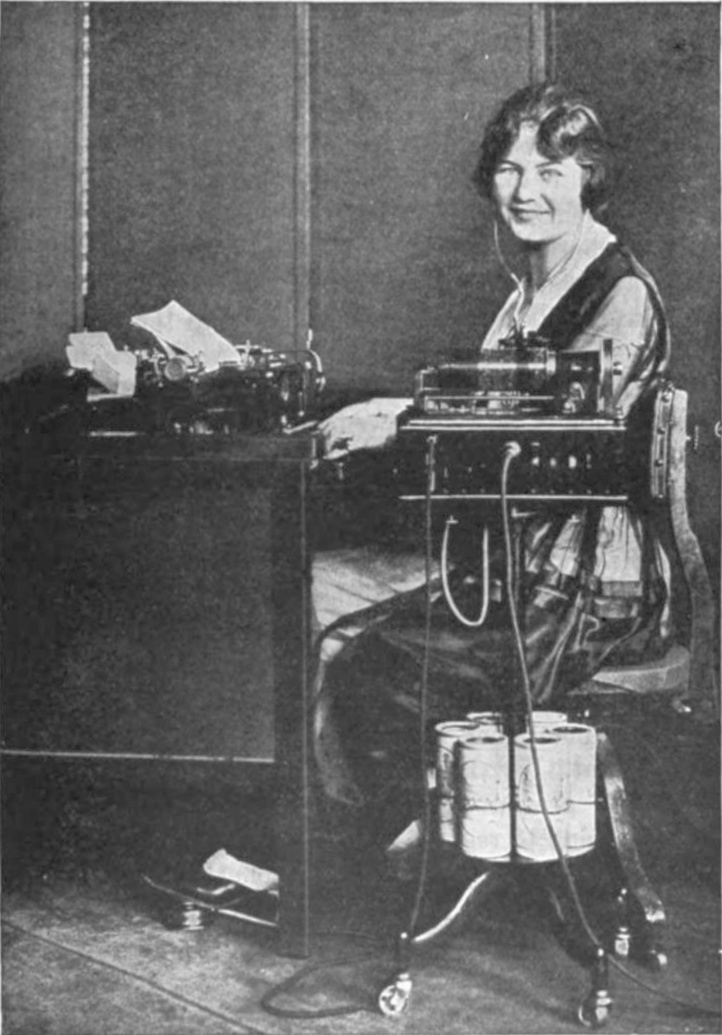
There has been some debate in oral history circles about the merit of full transcriptions over key word summaries. Summaries may certainly be quicker, demand limited resources, and prove useful for search engines, indexing and initial research purposes. However, there can be little doubt that – when it is possible and financially viable – a full textual rendition of an entire interview recording fundamentally and exponentially enhances the value of the recordings by providing a substantial number of additional and important benefits:-
- Increasing the efficiency of research by providing quick access to relevant words, phrases or sections of a recording without having to spend time trawling through the recording.
- Providing clarity for researchers where recordings – due to sound levels, accents or interference – may render the sound difficult to decipher.
- Making content available in a more accessible format to the hearing impaired and to the various text to speech devices they may use.
- Making content available to those without the equipment to play back audio or video recordings or in situations in which this may not be practicable.
- Creating a readily available transcript as the basis for future documents or publications.
Until very recently, this range of advantages was out of the reach of most documentarians (production teams, oral historians, researchers, etc) as the costs of a transcription (with most professional agencies charging between £50 to over £100 per hour of recording) or the time involved in doing it oneself, were substantial and frequently prohibitive. Digital technology gave us early speech to text software in the form of dictation software, which unfortunately proved of limited value to transcribers as it could only recognise one key voice, and even the required a lot of hours of training). Fortunately, advances in artificial intelligence and speech recognition technology are now able to deliver dedicated transcription software; automated programs which can recognise any voice and thus provide a transcript of a conversation even between several speakers.
We know that digitising of recordings reduces wear and tear on original audio and video tapes, and provides versatility, flexibility and efficiency for archive storage, indexing and searching as well as access and distribution. Now, we can also add the value of a fully automated, digital transcription into the mix of benefits.
Oral History Society Conference, Manchester – 18 July 2014
The History Project is honoured to be presenting a workshop at this year’s Annual Conference of the Oral History Society, which promises to be an unmissable event for anyone interested in oral history in the community. With the theme of Community Voices: Oral History On The Ground, the conference has an exciting and diverse range of papers lined up, covering themes such as project outcomes, hidden communities, intergenerational oral history and many more.
Oral History Workshop: Making Better Use of the Archive
Dr.Andrew Dawson is organising this exciting workshop for all industry specialists. Details as follows:-
Event Date: 23rd November 2013
Time: 1:00 pm to 5:30 pm
Address BECTU Head office, 373-377 Clapham Road, London SW9 9B (Nearest tube: Clapham North)
Kaleidoscope Honours The History Project

Representatives from the History Project and BECTU welcome Kaleidoscope’s recognition of the project’s work. Celebrating the achievements of the History Project: l to r, Sue Malden, HP secretary, Chris Perry, Kaleidoscope, Martin Sheffield, HP committee (obscured), Roy Lockett, Roy Fowler and Martin Spence, assistant general secretary. Pic: Mark Shuttleworth.
BECTU’s History Project was honoured with a Lifetime Contribution to Broadcasting award at a ceremony at BAFTA on 23 October.
The award, presented by industry organisation, Kaleidoscope, is designed to honour an individual, in any capacity e.g. writer, producer, artiste, administrator, or an organisation, operating in broadcasting for 20 years or more.
The certificate awarded to the History Project in October 2010.
The History Project, which is sponsored by BECTU, was selected in celebration of the 600 industry interviews which now make up the archive. The 600th interview was with well-known film producer, now Lord, David Puttnam.
The award itself, designed and made by Allister Malcolm at Broadfield House Glass Museum was accepted on behalf of the BECTU History Project by the chair, Roy Lockett, previously the union’s deputy general secretary . The founder of the project, Roy Fowler, was also honoured.
The archive captures the industry experiences of staff and freelances working in the sectors organised by BECTU and is a resource for historians, researchers and students. Find out more about the archive and how to access it.
The History Project was established by members of one of BECTU’s founder unions, the ACTT.
[Source: BECTU 1 November 2010]