
Mary Hillman
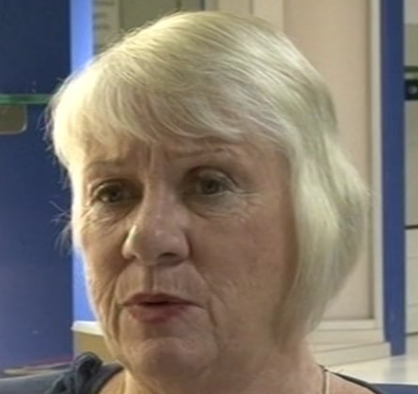
Family name: Hillman
Work area/Craft/Role: Hair and Makeup
Industry: Film, TV
Company: Associated Rediffusion, Thames Television.
Websites: IMDb, BFI, Spicy Onion
Interview date(s): 12 April 2011
Interviewer(s): Mike Dick, Ruth Bolland, Steve Tappin
Production Media: video
Duration (mins): 140
Mary Hillman BECTU History Project Interview Time Sheet
Date: 12 April 2011 Venue: Teddington Studios Interviewer Mike Dick Interviewee Mary Hillman Tape 1
00:03:20 Motivation to come to London from Ireland 00:04:35 Went to Gertrude Hartley school.
00:05:28 Started work as trainee as BBC 00:07:20 Talks about apprenticeships
00:09:25 Types of programmes worked on at apprenticeship 00:12:39 Ready Steady Go
00:16:00 Allocation of Artists to make up staff. 00:16:50 Beatles
00:18:00 Discusses treatment of actors and different jobs of make-up artists. Marriage to Army Officer.
00:20:00 work at TVR
00:20:40 Working with the move to colour TV and the adjustments that needed to be made with make up
00:23:34 Moving into the film industry and problems of being freelance 00:24:00 Working with James Garrett & Partners doing adverts 00:25:28 Was a member of Naptey
00:26:27 Films started to work on. 00:27:00 Differences between Film and TV 00:28:35 Bugsy Malone
00:29:00 Worked with Sarah Monzani
00:30:10 Problem with Bugsy Malone due to strike problem at Pinewood. 00:31:12 Working with Jodie Foster
00:38:32 Step by step break down of working on film.
Mike Dick 00:06
Okay, Mary. Can you tell me who you are and what you do?
Mary Hillman 00:09
Well, my name is Mary Hillman. That's who I am. What I do, I'm a makeup designer trainer at the moment. That's what I do, and at the moment I'm very involved in training for skill set.
Mike Dick 00:24
Great. Okay, let me take you right back. I mean, tell me about you know your early years. Tell me about your family background. You know where were you born and brought up?
Mary Hillman 00:31
I'm Irish. I was born in Carlow, which is in Southern Ireland, and I went to school in Abbey Leaks and in Dublin. I've I have a sister and two brothers, and I left Ireland when I was 17.
Mike Dick 00:55
Maybe did you come from a particularly artistic background, or yes, my
Mary Hillman 00:58
mother was quite artistic. She was a dress designer. My father was a dentist. I don't know whether that's considered to be artistic or not. My brother was an artist, so there's obviously a certain amount of artistic in me. But above all, I'm a people person. Being a makeup artist was not something I had planned. I wanted to do social science and go to university. My mother, bless her, because she had worked in London and she was a dress designer, felt that I ought to go and learn to be a beautician, which I insisted on coming to London and to do that. And it was just extraordinary what happened. I went to the the Gertrude Hartley Academy. Let
Mike Dick 01:46
me just take you through there a wee bit earlier on that as well. I mean, so we're just talking about your sort of early years. Did you have any interest in film and television when you when you were a child? Oh
Mary Hillman 01:56
yes, we did. Yes, I did. My brother and I are always taking off to the cinema, absolutely, without permission, mostly. So I always loved, you know, the Vivian Lee pictures. Those type of thing. Hollywood, Hollywood was big, you know, and obviously Charlie Chaplin and all of this. That would have been my sort of early teens.
Mike Dick 02:17
Did you have any instinct at that time that you thought this is this is something I'd like to get into. Is it just something which was pure pleasure? No,
Mary Hillman 02:23
it was pure pleasure. Absolutely, I mean, I really, you know, I passed all my exams. I was hoping to go to university, but that, in its own way, sort of has helped me in this job understanding what other people need and have to go through, you know, in terms of expressing themselves. So yeah, so that was that was what.
Mike Dick 02:45
So what motivated you to really sort of, you know, to to move, you know, from from from Ireland to to London? I mean, tell me, you know, what the circumstances were.
Mary Hillman 02:54
Well, if you can think of Ireland in the 50s, I mean, it's a very beautiful place, but it was very dominated by the church, and there was still a huge hangover of people not feeling good about themselves, you know. And so I needed freedom. I needed to get away. I needed to be able to express myself, which is coming to London was all about, and it was just amazing.
Mike Dick 03:19
Tell me, you know, when you first arrived in London, what was it like coming from Ireland to London?
Mary Hillman 03:23
Oh, first night in London, actually, we went to see My Fair Lady at the theatre. Sorry. That was the original one with Julie Andrews, yeah, and that was just yeah, and that was just extra.
Mike Dick 03:44
So yeah, so your average memories of coming to London?
Mary Hillman 03:49
Well, my others, I came with my mother, who was very excited to show me London, and on the first night we went to see Julie Andrews in My fair lady, so that was fantastic.
Mike Dick 04:04
So, you went to Gerald Hartley's Academy of Beauty.
Mary Hillman 04:07
Gertrude Hartley's Academy.
Mike Dick 04:09
Oh, Betty Baird. Yeah,
Mary Hillman 04:10
Gertrude Hartley's Alan. She happened to be Vivian Lee's mother. So the the three months of learning beauty culture, we were also always talking about film, and the possibilities. We had a wonderful man called George Parker, who I think was Charlie. Beg your pardon, Charlie Parker, who was Vivid Lee's makeup man, who came and gave us a talk, and that immediately then everybody wanted to be a makeup artist. So we all wrote off to the BBC, and I wrote to read a fusion and try and get a job, and it was again. It was about 1961. I think it was the actors were on strike, and I got an invitation from Reed Fusion to go and have an interview because they thought they would use the downtime to train people. So I went and I had my interview, and I. I was 17, and I said I was 18, and they gave me the job surprisingly. I had absolutely no idea. We didn't even have a television at home, but I mean, obviously, as I say, the cinema and the theatre-you know-I loved. So it was quite exciting.
Mike Dick 05:18
So you were accepted by by Rediffusion as a trainee,
Mike Dick 05:23
what sort of people were they looking for at that point? I mean, do you think what sort of qualities they were looking for?
Mary Hillman 05:28
Well, I know they asked me what my star sign was, and I said I was a Leo. So that was obviously, you know, person they wanted some something that Leos have as part of the of the make of the the trainees, what sort of person were they looking for? I think again, somebody who worked as part of a team. I think that was really important, and I think you you're sort of born that way. I'm not. I mean, I know you can learn it, but I mean, you have to really be part of a team, and that I'm a great believer in that.
Mike Dick 06:04
Can you remember your first day when you went first went to Rediffusion?
Mary Hillman 06:07
Goodness gracious! The first I went to Redifussion, not really. That was an awfully long time ago. The head of makeup was the lady called Pam Elliot, who was originally BBC trained. So our training was based on the traditional BBC makeup school training, and it was three months of actual being introduced to, well, to the to the products, to the procedures, to the the team. You know, the job of a director. We had a talk with the director, a camera person, you know. So from the very beginning, I was very interested in the teamwork and how we all worked together.
Mike Dick 06:49
Was this an apprenticeship then? It
Mary Hillman 06:51
was. Yeah. No, it was a four-year apprenticeship. You had three months in the training school, and then you had two years as an apprentice working on different productions. And in those days, the studios were buzzing with all sorts of programmes, children's programmes. The beginning of Ready, Ready, Steady, Go. So we're involved with with Syllab Black and Tom Jones and the Beatles and the Rolling Stones. That used to be shot down in Colburn. I don't know if any of you remember. So it was very, very exciting for me.
Mike Dick 07:29
How old were you at this point?
Mary Hillman 07:30
I would have been 1718,
Mike Dick 07:34
So your friends and
Mary Hillman 07:36
I still have friends who were at Rediffusion, and I have had another great friend of mine, Diana Donnelly, who was my age, but she came slightly after me. So we did two two years as a trainee, and then two years as a makeup assistant. So I had a four year training, which was the norm at the time.
Mike Dick 07:54
So just describe, you know, sort of your daily routine. You know, you'd come in. I mean, what what would what would the routine be then? How would how would you work?
Mary Hillman 08:01
Well, I mean, usually you would be scheduled a programme, so you would know a week or two ahead of what programme you were going to be working on, and then you would work to the what was then supervisor, now known as a makeup designer, but the supervisor would give you your call time. So you would come in and get set up, and take instruction, basically find out who you were going to be making up. You would then, once they started rehearsal, you'd sit up in with the engineers up in racks, and you'd be able to see what needed to be done, and it would be discussed. And then you would come down, and when the make-up time came, you would they come sit in your chair and and off you go.
Mike Dick 08:50
Yeah, but yeah, we talked about the kind of the range of programmes. That's that's what I'm interested in. It's the kind of the vast range of programmes that you'd actually work on at that particular time. Right.
Mary Hillman 08:59
A lot of the programme Tuesday, yeah. So what's called Tuesday Rendezvous? That that was a regular one, particularly when you were starting because you were just making up the presenters. Really, I mentioned Ready Steady Go, No Hiding Place. That was another series we did. We did a cookery programme with Fanny Craddock, you know, very simple programmes. And then, you know, as as you got more and more experience, you you began to work on dramas, and that was that was really pretty exciting. But we're talking about black and white days here.
Mike Dick 09:38
And again, you know, geography wise, tell me where where where would you go to work?
Mary Hillman 09:42
Oh, generally the the base was Wembley, and Wembley Park was where Edivision Studios were, and if you did Ready Syd, go you go down to Holburn because they they also had a a studio down there, and we did a certain amount of location work, not a lot. I mean. And I remember going out to Wimbledon, and covering the tennis, which was terribly exciting, and you know, but that that would be about it really at that stage.
Mike Dick 10:12
And in terms of where you were living, I mean, just describe what what life was like, you know, for for you.
Mary Hillman 10:17
Gosh, I when I went to work at Wembley, I got a bed sit at Wilson Green, very nice, and I stayed there for about a year. Then I made friends with Diana, who came up from Wales, so we then got a flat in South Kensington, and we used to come up on the tube to Wembley Park, and then I moved to Swiss Cottage, and
Mike Dick 10:44
what kind of hours would you work then?
Mary Hillman 10:46
Oh gosh, the hours! There's certainly nothing like now. I mean, it was very much regimented, so you'd be doing an eight-hour day, 10-hour day, and we managed to do the work in that at that time. It was properly planned, which I'm a great believer in preparation.
Mike Dick 11:03
And you talked about a team. I mean, how how you know what would how many people would be in the team then, for example?
Mary Hillman 11:08
Well, I think in the department there were probably about 12. There may be more actually, probably about 20. I would think in the department, and then you know two people would be allocated a programme, or three people allocated a programme, and we did shift patterns. We didn't work at weekends.
Mike Dick 11:28
You would work on anything that that came through, and you didn't have did you have specialisms or particulars? Not at that. Not at that stage. Not
Mary Hillman 11:36
because I was young, I probably was, you know, got into the pop scene, quite evidently, you know. But then, you know, you have an opportunity, as I say, to work on dramas. I worked on on a hiding place. I'd like to mention some others, and I can't remember them. Sorry. That's
Mike Dick 11:54
okay. It's fine. There's a bit of interruption there. I'm
Mary Hillman 11:57
just trying to remember. Can we
Mike Dick 11:59
close that door just
Mary Hillman 12:02
now,
Mike Dick 12:05
Steve. Thanks. Okay, you mentioned that one of the programmes you worked on was Ready, Steady, Go, which is kind of one of the iconic, you know, series on television. Tell me about the circumstance. How did you start working on that?
Mary Hillman 12:22
Well, again, I mean, at that time, the act of television companies would make all their own their own programmes, so we would be allocated. We wouldn't be chosen by the director or producer. It was a completely your sort of scheduled. I actually stood up here as well. I would allocate programmes to certain people, so you would work with one of the the supervisors, obviously, and then there'd be senior makeup artists probably. As an as a trainee, I would be very much in the background, just doing background people. But on Ready Steady Go, we worked right across the board, and it was it was exciting. I mean, and the makeup at the time, which was very 1960s, is very similar to what it is actually now today. But I mean, you know, the false eyelashes on the girls, and the white lipstick, and the Vidal Sassoon haircuts, and you know, the boys generally the Beatle cuts, if you can if you can imagine, all of that, and it was very very new at the time. I mean, we were sort of breaking ground. I think it's certainly in the looks. If you did a period drama, then obviously you you get the opportunity to work with beards and and wigs and character makeup, but you sort of worked into that on your third and fourth year, really.
Mike Dick 13:50
In terms of ready, did you work there right from the from the beginnings, or was it? Did you come into the series?
Mary Hillman 13:56
Oh no, no, I think I think when the Reddy said he goes start.
Mike Dick 13:59
It's about 63, I think. Ah
Mary Hillman 14:00
no, I was I was by that stage I was a proper assistant.
Mike Dick 14:04
Yeah, I was wasn't just a
Mary Hillman 14:05
trainee. I was an assistant. So yes, no, I would have gone. I would have gone down with two or three of the team.
Mike Dick 14:12
So you work on a new series like that, and it starts to develop, and you've got you know Kathy McGowan and Keith Fordice. Oh yes, yes. Yeah, yeah. And it's a Friday. It was Friday, wasn't it? Yes, yes, yes, yes. Yes,
Mike Dick 14:31
and you were working with El Can Alan. Yes,
Mary Hillman 14:33
he was a producer, I think, wasn't he? Yes, Vicky
Mike Dick 14:36
Wickham.
Mary Hillman 14:38
Yes, but I I wouldn't have spoken to those people because I was only in the system. So I was.
Mike Dick 14:44
That's what I wanted to to know. Describe your role then, and you know you've got this huge, you know. Well, yeah, my
Mary Hillman 14:50
my role is the same as any any trainee, even today. You actually have to work to instructions. You know, you work through. Through the head of the department, you work through through the designer, and that's terribly important for people to understand who's in charge and you know how everything fits in together. You don't go up and talk to a producer as a trainee, or even as an assistant, or even as a makeup artist, and that is the role of the designer. So you work. If you have something you want to ask, you ask the designer.
Mike Dick 15:24
So particular, as I say, Kathy McGowan. Would she have her own particular makeup artist who would be assigned to her, or not
Mary Hillman 15:30
necessarily? Not in those days. No.
Mike Dick 15:33
How did it work then?
Mary Hillman 15:34
Well, you would be allocated an artist by the by the designer or by the supervisor, and obviously the more experienced you became, you know, you you moved up, and you made up the Cattleya at the time and the Syd Lakes, you know.
Mike Dick 15:53
Who did you who did you have a rapport with? Who do you remember? You know, I mean, obviously there were every every every bands and and obviously the singers.
Mary Hillman 16:03
Yeah, it's very much similar today. I mean, you know, as a younger person, you you you have rapport with the pop stars.
Mike Dick 16:11
Any in particular that you remember, or was it just
Mary Hillman 16:15
not really at that stage? It was when I became freelance, then and became my own designer. Then I had a lot of rapport with, obviously the actors. If I was doing the Beatles, you know, the band, you know, right the way up.
Mike Dick 16:33
Did you work with the Beatles then? Did you do their hair at any point?
Mary Hillman 16:36
I did. Yes, I did. We did some Beatles spectaculars. We did Ready, Se, E, Go. I then did later on. I did a record. I can't remember the name of John Hurt, Paul McCartney, Lyndon Cartney, that sort of thing. Ringo Starr, you know. Yes, it never seemed to be a very big thing, you know. Okay, the Beatles were in. That was great. They just come in and be ordinary people, you know. And you just chat to them, you know. You didn't treat them as as though they were untouchables or anything like that.
Mike Dick 17:12
Okay, it
Mary Hillman 17:14
just made people comfortable. That was the whole idea.
Mike Dick 17:16
The interesting thing about it is, as you alluded to earlier on, the fact that you know it was it was this kind of amazing experience in terms of not only in terms of the music, but actually in terms of you know pop culture, fashion, hairstyles, makeup. Oh yeah, absolutely. I mean, what a what an amazing kind of you know training ground, really.
Mary Hillman 17:36
Yeah.
Mike Dick 17:36
Looking back, I mean, what what what do you think you learned from that that period, Dan?
Mary Hillman 17:41
Gosh, what did I learn? I learned. Oh God, what did I learn? Well, I learned to treat the people like people. You know, the fact they're a star doesn't mean they're not a person. You know, and it's it's still the same today. I mean, if you're going to be making up Johnny Depp, or not that I've ever made up Johnny Depp, but you know they're people. They have a job to do, so you've got to understand where they're coming from, what their priorities are. I mean, our our job is not all about making people look fashionable and beautiful. It's also about making people look a character. Period. Also about making people look ill, getting better, making people look as though they they're crying or they're tired or they're on drugs or that's part of our job. So basically, you treat actors as people with respect to their what they're doing, You know, that's that's always been my philosophy. Anyway,
Mike Dick 18:46
that's great. I mean, these these are these are you know the questions that we can we can interject every so often. Keeping on this sort of linear linear line at the moment. So you were with with Rediffusion.
Mary Hillman 18:59
I was with Rediffusion for four years, and then I got married, and thought I'd never work again in the industry. I was going to be an army officer's wife, and have possibly encouraged him to be part of the diplomatic course. I'd be get travel and things like that. In it, didn't work out that way.
Mike Dick 19:21
Did you take a career break, then?
Mary Hillman 19:22
Did I?
Mike Dick 19:23
Did you take
Mary Hillman 19:23
a break? I took I took a I took a career break for probably about two years and moved down to Sussex and was a proper army officer's wife, and then my husband at that time decided to leave the army, so I had to work, And we happened. I lived down in Upfield in Sussex, and we met people down there. Obviously, made friends, and one of the friends I made worked for a small independent, one of the first independent television companies. Called TV TV or television recording, and they had a makeup person there who got her in the family way and had babies, and knew of me and and sort of suggested that she couldn't work for them that they might and she knew I needed the work, she introduced me to them, and that's really where it started. It was incredible.
Mike Dick 20:25
What did what did that lead you into?
Mary Hillman 20:27
Well, I mean, basically, it was at the time when we were changing from black and white to colour, so it was a very small company, and we were doing again mainly presenters. So it was a great learning curve for me because I was part of a small company working as part of a team with the engineers, you know, getting them to adjust the colours and understanding how colours work. I mean, with makeup, what you see is what you get, and if it doesn't look right on camera, there's something wrong, and that's not always my problem or the makeup artist problem, I think, at that time, we we we we did adjust for camera a lot more than we would now because the it wasn't technically as advanced. There were colour biases, for instance, you know, red particularly. I think, at that stage, they were. We were even being asked to paint out the inside of people's mouths, because the red of the tongue or the pink, and the engineers hadn't really got their hands around around how to adjust the camera. So we were doing a lot of that type of adjustment, which was a huge learning curve. And I learned very quickly that actually, what you see to the eye, you should be right on camera. I'm going to leap forward, if I may. But when I came back from being freelance and working on films, and back to here, Thames Television, I couldn't believe the orange faces walking down, because again, they were adjusting for the cameras and the lights. I quickly got them out of that, and I talked to the engineers and the cameramen, and I think that's so important. Even now, today, with the high definition cameras, you really have to have a relationship with the with the camera department.
Mike Dick 22:19
Brilliant.
Speaker 1 22:22
Yeah. Have I moved? Yes, please do.
Mary Hillman 22:23
Have I got very excited? No, it's
Mike Dick 22:25
fine. It's good. This is really good stuff. Feel free, just any of the little techniques and things like that. Just, just drop those in because they're always. I mean, that's that's very very very useful. It's very important
Mary Hillman 22:35
as it comes into my head.
Mike Dick 22:36
Absolutely. Yeah. I mean, I've kind of blocked out little key moments throughout where we can do that, but you're doing it quite natural. Yeah, you know you're basically reading my script as well, which is also very useful as well. Made
Mary Hillman 22:49
clever for you. Didn't know I could do that, did you? I'm psychic.
Mike Dick 22:53
I'm just talking about the little areas that I need to cover. Yeah, that's fine. Do it at this moment in time.
Mary Hillman 22:57
That's fine.
Mike Dick 23:05
I hope this is the right moment to mention this. But when when did you when did you move into the film industry? This feels the next stage. That was
Mary Hillman 23:11
that's really very very interesting because at that time, if you either had a permanent job, and all freelance work really was film and commercials, which were generally shot on film, and the film side at the time were very against anybody going freelance because they wanted to protect themselves and their jobs. So I think I've got a bit of a history because I actually wanted to break through that. I was a member of the union. I'd had my four-year training. I had again the experience of working at TVR, and I got my first call to do a commercial again through the same girl, Wanda Kelly, who introduced me to TVR to work for James Garrett and Partners, and James Garrett and Partners are a very big company doing commercial shops.
Mike Dick 24:07
Would
Mary Hillman 24:08
they be doing commercials?
Mike Dick 24:09
Yeah, but which which in which companies in particular would they be working to? Can you remember which kind of commercials they were doing?
Mary Hillman 24:18
Oh gosh, James Garrett and Partners. I just don't
Mike Dick 24:22
remember which. Well, I'm just trying to say which which which which ones you would have worked on, for example.
Mary Hillman 24:28
Oh, we used to do a lot of beer commercials. I mean, directors like Richard Long Crane. Oh gosh, Stephen Freyers.
Mike Dick 24:41
Yeah, because a lot of people got their first. That's how
Mary Hillman 24:43
people started in film.
Mike Dick 24:45
Yeah, and
Mary Hillman 24:46
then I started to work for Alan Parker, and again doing.
Mike Dick 24:55
Sorry, I'm taking tangent slightly. Let's. You talked about you. You know you were in the union. Which which union were you? I was
Mary Hillman 25:04
in NATTKE at the time, and it was very separated. And I used to be written on the call sheet. I couldn't have my name on a call sheet because you get a union officer coming down to check who was there, and so I would always be down to TBA. I was to be advised, and that went on for years. And even when I started in films, I mean, as I say, I I worked with Alan Parker. One of my first films is B.C. Malone.
Mike Dick 25:31
Sorry, I'm going to take you into the air. So, just this this this move into the film industry from from commercials. Yes, tell me about that.
Mary Hillman 25:39
Well, that I'm telling you about it. I mean, basically, that's how it happened. When
Mike Dick 25:43
did that happen? The end of the 60s, was it?
Mary Hillman 25:47
Yeah, I think so. Can we have a date here for Bugsy Malone? It's Bugsy Malone
Mike Dick 25:51
was was was mid 70s.
Speaker 3 25:53
Yeah. You
Mike Dick 25:54
did things prior prior to that. I mean, you certainly worked on on on the Slade movie. That was one of your early films.
Mary Hillman 26:02
That's right. That was with Richard Long Cran. You see, I'd met I'd met Richard. So
Mike Dick 26:05
you met people through commercial. Through commercials, and I
Mary Hillman 26:08
still I still say to people today, you know, if you want to get into film, don't forget nobody in the film range should work with me because I was a television girl and I was a member of the union, but I was a television, so nobody nobody in film wanted to know. I had to make my way on my own.
Mike Dick 26:25
That's great. That's good. So, what kind of productions, film productions, would you work on in those early days? Can you remember? In
Mary Hillman 26:32
the early days, I mean, things like the Slade, the the film with directed by Richard Longgrain. I did a I did a film called I think No Hard Feelings, which was one of Alan Parker's first tries at at a film, and then from that we moved to Bugsy Malone.
Mike Dick 26:50
What what were the particular demands? I mean, of the film industry in terms of of makeup in comparison with with say the TV industry. What's what's what was the difference?
Mary Hillman 27:02
Well, I think there was a huge difference because I think the reason that they wanted a younger person who was coming, well, not necessarily coming out of television, but I I sort of introduced Liquid Foundations natural makeup so that it didn't look like maker, and then you went from there. So if you were doing commercial for personal, for you know, they just wanted an ordinary housewife look. I sort of achieved that using my own eye and what looked good, and unfortunately, a lot of the older film people they were so used to using pan, pancake, and pan stick, which is a heavier type of makeup, but was and because the technology was changing as well, and it picked up like they were wearing makeup, and I sort of you know managed to sort of get around that by using very similar foundations that we use now, and and that was a big thing, I think.
Mike Dick 28:03
Great. Yeah, 1976.
Mary Hillman 28:11
What was that?
Mike Dick 28:13
That's that's when you started work, you know, chief makeup artist on Bugsy Maloney with Alan Parker. That's
Mary Hillman 28:20
right.
Mike Dick 28:20
Describe the circumstances, how that that came about. Well,
Mary Hillman 28:23
because I met I had met Alan obviously doing commercials, and we had done no hard feelings together. He asked me if I'd do bugs him alone, and I actually turned it down to start with because my children were quite small. Anyway, I got persuaded. Then I had a big problem because nobody from the film branch would work with me, so I had to find my own team. So I was very lucky. I was introduced to Tommy Manderson, who used to be the head of makeup at BBC. Lovely lady. She just started retiring and wanted to do a bit of work, so she came and worked with me in the makeup department. We could only do either makeup or hair, and then I asked a young girl who had just left ATV, as it was at the time, Sarah Manzani, who now is quite a big name in film, if she would do the hair. She was originally a hairdresser, so she did the hair, and another television girl, Sandra Exelby, came in and assisted her. So we worked as a team very much, the four of us, and but we had a huge fight on our hands. The whole of Pinewood was about to come strike, but sir.
Mike Dick 29:37
Okay, we'll cut there for a second. Yeah. Okay, you talked about this battle at Pinewood. Tell me about it.
Mary Hillman 29:44
Yes, I mean, I mean, I remember Alan Marshall, who is the producer, ringing me up and saying, "Would I mind if I didn't do the film because there was a threatened strike by by the union? I'm a bit of. Fighter, so I, I managed to contact the president of the union at the time, who was a gentleman in Belfast, and told him the the situation, and I suggested that the producer Alan Marshall phone him, and see what he said, and he just advised us to not pay any attention and to work. I was a member of the union. I was fully paid up. I was trained, and I had worked obviously with the producer before. So, so that got over that hurdle, and bless Alan Marker. He stood, you know, he stood with his first choice.
Mike Dick 30:36
Tell me about. I mean, you're working at Pinewood. I was trying to get a picture of what Pinewood was like in the mid 70s. Described. Oh, Pinewood! It hasn't
Mary Hillman 30:46
changed all that much. Pinewood, actually. I mean, you you you had the stage. We were very much the poor relations because they were doing Slipper and the Rose at the same time, and then there was this crazy little film coming in called Bugsy Malone, with children playing adults. You know, so it was it was sort of sort of amusing, really. I think, you know, we were on the back two back stages, and we had our own makeup area, and we just worked as a team. But you could see, you know, the slipper and the rose, all the Cinderella costumes, they were on on a different stage to to us, but you could see them in their costumes. Nobody ever came and spoke to us because we were television, and that's sort of how it was. And it was it was great fun to do. The film was wonderful, and I think we did quite a good job, really, considering we were only television girls. I think it won an Oscar or something, not for makeup, but you know, film and Oscar.
Mike Dick 31:49
Because you were, you know, you were. I mean, the main thing was that you were working with, with you know, loads of quite, quite, quite young children. Oh yes, yes. Describe the kind of demands or the particular way you would have to. Well,
Mary Hillman 32:00
I mean, they were probably, I suppose, sort of 12 upwards. You know, there was Jodie Foster who came in. She was probably about 1415, She she was quite an experienced child actress. There was Scott Bio who also had a certain amount of experience. There was little Flory Dugger, who played who did you play? Sorry, Flory Dugger, who played Blausi Blausie Brown. She was the daughter of an air, an air. I think her father was a pilot in the air force, and they had an air field quite close to Pinewood. I'm not sure what it was called. She didn't have very much experience at all, but I mean they had chaperons, you know. And Alan was very good. He had young children of his own. I had my children as well, so we, you know, we related to them. They, as I say, they had their shepherd and they had to do classes and things. So that was
Mike Dick 33:06
one of the important things. I mean, you mentioned that Alan had children. You had young children as well, and that rapport that you develop. Yeah, I think it was important.
Mary Hillman 33:13
I think it was important. But I'm, I mean, I love children. I, I think of their people. They're just little people. So you treat them with respect, and they treat you with respect, and so it goes.
Mike Dick 33:25
I mean, books have been long was set in the 30 s. I mean, what sort of research? How do you develop technology? Oh my goodness!
Mary Hillman 33:31
Oh yes, lots of research. I mean, you know, you you get obviously book references. There was there's a very good book called the History of Makeup by Angela Angelou, and that was my bible basically because it it told you the colours and the products and whatever. We did camera tests. I worked very closely with Monica Howe, who was the costume designer. We had worked. Sorry about that.
Mike Dick 34:02
No, it's just
Mary Hillman 34:03
okay.
Speaker 4 34:08
Yeah.
Mike Dick 34:09
Okay. Do you want to pick that
Mary Hillman 34:10
up? Yes, I worked very closely with the costume designer Monica How. We had worked on commercials together, so that was that was very good. Sarah was a very good hairdresser. We had to do the finger waves, so we'd set the the girls' hair and send them home with a hair net around their heads, so they'd sleep in their curlers, so that it wouldn't take so long in the morning. Because obviously, being children, we you know, we had restricted time with them, yes, and I mean, it was just great. It was just great fun. I mean, again, you always research, usually looking at references, old films, and then. You have to work with what you got, basically,
Mike Dick 35:03
because the look of the film was so so you know integral to to
Mary Hillman 35:07
oh absolutely absolutely but again the team the whole team not just Monica and I had worked on commercials with Alan the the the lighting cameraman Mike Who Saracen. Michael Sarrason, he was the lighting cameraman. We'd worked together, and the the the camera operator John, you know, we we knew each other, so we that was lovely. So we weren't breaking down any barriers there, and the sound tea, the Clive, who was the sound mixer, had worked with him before, you know, we'd really we were a team. Alan sort of got the team from his commercial company, which is called Alan Parker's Limit or whatever, and then we just moved across and and we did Bugsy Malone, and it was just great fun.
Mike Dick 35:54
Great,
Speaker 5 35:55
five minutes.
Mike Dick 35:56
Five minutes on this. Okay, tell me about working with Jodie Foster. What was she like? Oh,
Mary Hillman 36:03
Jodie was lovely. She came with her mother. She's just she actually hasn't changed. Jody's Jody's Jodie. I mean, you must have seen interviews with her. She's very straightforward. She's very professional, and yeah, her name is Tallulah, wasn't that idea she played Tallulah? I had I had one one little incident, not with Jodie particularly, but I think Alan wanted her to have a nail varnish, and I had done my research, and I'm not quite sure whether it was a colour we used, but there was something not quite right, and I didn't want to use the veil of british, but I lost that battle. But I was very much a purist. I wanted things to be right, as they were in those in the days, and that was my first sort of experience of having to forego the the integrity of what I was doing and go à la Hollywood. So you
Mike Dick 37:01
have to make compromises. You have to make
Mary Hillman 37:03
compromises, and even more so today. Even more so today. You know they don't. They. You know a lot of period films now have to be Hollywood glamour, and that's very empty BBC philosophy. In fact, I had a conversation yesterday about that.
Mike Dick 37:24
Were you aware when you were working on a production like that that that you know you had a hit on your hand? I mean, how aware?
Speaker 6 37:30
Oh no!
Mike Dick 37:30
Yeah, tell me about that that element then, because people always think, oh, you must be aware when you're working on a project. Oh God,
Mary Hillman 37:35
no! I'm not really, not in any of the films that I worked on. I mean, even Did Char Heroes of Fire, which is another big hit. We just took them as they were and did our best, and no way did we think we were doing anything special. Certainly not the way we treated a Pinewood, you know, the funny little unit over there shooting on children. Certainly not.
Mike Dick 38:00
Tell me, give me a sort of step by step breakdown. You know, when you work in a production, and you can use whatever example, but in Bugsy might be quite a good one to to do. I mean, when you you know what's what's the step by step?
Mary Hillman 38:10
Step by step. Well, first of all, when when you you get you get a script, you have to break down the script. You break it down into Characters, you discuss with the director and the producer and the costume designer and the set designer the look of the film. You interpret that you know you have to interpret the script, and the director always, to me, is like the conductor of an orchestra. He brings the teams together, so you're actually working to his his interpretation. You you can as part of a team. You obviously you contribute your own ideas, but it's all again coming back to that word teamwork. It is it is all teamwork.
Mike Dick 38:59
At what two minutes? Okay. At what point do you contact the actor or the people? Oh
Mary Hillman 39:04
well, I mean, first of all, you have to wait for them to be cast, and quite often you're you're ready. You've you've done all your research. You're just waiting to find out who's going to play the part, and it's it's even it's worse today. But in those days, you probably got about a week or two weeks notice. The costume designer obviously arranges the fitting. It's always nice if the makeup artist can go down and be at the fitting, so you break the ice by meeting the person, and then you discuss obviously if they've got any allergies or as in bugs in the lean. They didn't. It's very important to discuss with the chaperone or the parent. You know, there's the skin, whether they've got sensitive skin or whether or not they've got dry skin, or they're having problems. So break the ice that way. Then you choose your products, and then you do test makeup, hopefully, and see it on camera. That's how it should be done, and that's how I always do it. And then, if anything needs changing, you do it camera tests, and you break down the character that way, basically. I dread to think.
End of tape 1
Tape 2
Mike Dick 00:07
Okay, Mary. You know we're talking about you know a step by step breakdown of how you work in a large scale you know production like like Bernsey. We talked about you broke down the script. You know, you have a meeting with with the director and the costume designer. One of the key key elements, I guess, is is is being able to see, you know, the kind of work that you've done in terms of like the daily rushes. I mean, tell me, tell me about you know, you know. Oh no,
Mary Hillman 00:38
yeah, daily rushes are very, very, very important. You go to rushes usually at the end of the shoot. I think we had to travel into Soho actually that time, and we'd all look at what we shot the day before, and then either it was good, and hopefully most of it was, or a reshoot, or something needed changing, and you would be there with obviously the director, the producer, the lighting cameraman, costume designer, the hair and makeup department, set designer. Set design is again very important. Well, is extraordinarily important person on the team. So you go you go to Russia. They probably last about 20 minutes, and then you'd have a little meeting afterwards, and then
Mike Dick 01:22
you're sitting there watching the rushes. What what things in particular are you looking for?
Mary Hillman 01:30
What do you look for? What you look for, I look for. I mean, once I once the design has been accepted, I then look for mistakes, and if there are no mistakes, I'm happy, but you know, because once the design has been approved, you know, you, I mean, you have to check for things like, oh, Dandy Dan, Dandy Dan, dear Dandy Dan, Dandy Dan had a little false moustache. He, it was quite a difficult thing to do because he was quite a small little person, and I had to have one specially made for him, and I had to check that it looked right in every single shot, and it generally did. But I mean, they're stuck on with spirit gum, the starters, and obviously with the movement of the upper lip, they can flap, and so you have to check that that doesn't happen. And if you do see it on rushes, you point it out to the director and to the editor and say you can't use that. Please don't use that shot. Or can you can you edit it in a way that doesn't doesn't show the fact that the moustache is coming off? The same with wig lace, same sort of thing. If there's too much shine or something, I mean, they won't do a reshoot on that. But you have to, you know, be aware of it the next day. It's all a learning process, improving.
Mike Dick 02:53
It's also being being able to to see. This is very important. You know, if we don't get this right, then you know, repercussions will be X, Y, and Y.
Mary Hillman 03:00
I think so. I think well, yes. I mean, there was an incident on Roy Ston, Malone, when they decided. I think they brought the children back early from lunch, and Dandy Dan didn't have his massage on. And I said to the first AD, "Look, we've got to get his massage. And he said, "Oh no, it's only going to be a wide shot. I learnt there never to never to believe anybody because it's still on the film today. The fact, and I notice it still today, that Dan to Dan, in it was part of the end sequence when they were all singing, yeah, and slinging cream at each other. That Dan to Dan didn't have his moustache. They wouldn't let me go back, and wouldn't give me the time. Now I was fairly inexperienced at that stage. I wouldn't let them get away with it. Now, I really wouldn't. You've got to. You mustn't be scared of people. You've got to say no for a professional.
Mike Dick 03:55
One other element I think we could discuss at this moment in time also is continuity.
Mary Hillman 04:01
Oh, continuity is terrifically important. I mean, continuity is when you're in the middle of a scene and you have to break. In those days, you you know, and do a pick up, and the the the person, the hair, the makeup has to be look exactly the same as it did in the in the previous shot, so it all it all cuts together smoothly, and yeah, and a continuity. You you really are responsible for continuity for makeup and hair yourself, but you have a continuity script supervisor, they're called now, who also keeps an eye on the continuity, and if there's a long gap between shooting a sequence, you would actually go and have a tape running so you could check how it looked in that shot. In fact, again, there was another mistake in Bugs in Milan, I think, when they they did a pick up in the last sequence where the cream had dried on all the clothes. And there wasn't. We weren't given the time to make it fresh again, which is something you know I pick up on. But thank God the general public didn't. So I was thinking, if you
Mike Dick 05:11
you know if you're working say you know in the studio at Pinewood, then you're on location somewhere. You know the kind of continuity is so so important. How did that person look? Oh,
Mary Hillman 05:21
absolutely. I mean, you you make you make copious notes, do makeup notes from the very beginning, you know, and then you take. We used to take Polaroid photographs, you know, of the hairstyle, of the look. I still have quite a lot of those, but these days you obviously use your digital cameras. It's very important, and if you have a worry, go to talk to the editor. So again, it's the team, you know. I mean, often the director doesn't have the time to discuss that with you, so it's up to you to sort that out with the relevant people on the team.
Mike Dick 05:57
Well, that's their responsibility. Yeah,
Mary Hillman 05:59
absolutely, absolutely.
Mike Dick 06:02
Okay. Moving on to to to 78, and again working with Alan Parker.
Mary Hillman 06:08
78.
Mike Dick 06:09
Midnight Express. Tell me, you know, how you got that gig?
Mary Hillman 06:13
Well, the same way, really. Alan was very pleased with the work we did, and he wanted the same team on Midnight Express. And it was. I think I was shooting, and I was. I was very lucky with Tommy, whom I had made good friends with on Bugs in Malone. She invited me to do a shoot with her in Canada, called "So the Story Goes, which was I couldn't resist. He was fantastic. We went went to Toronto, and then we went to the West Indies, and it was just it was just a great experience again. So I, you know, Alan asked me if I would work on with the same team, and I said yes. So that's how I got it. He had quite strong ideas on the look. It was no Brad Davis played the main character who was called I can't do, but passing it down. Hey, John,
Mike Dick 07:17
Brad, Brad Davis, Paul Smith, and Randy Crawford were the. Yeah,
Mary Hillman 07:21
yeah, they they they were they were the main characters, but it was based on a real life story, and I, you know, I I think for me, I looked after John. He, I was personal makeup artist. Yeah. We had it. We had it. We had a good team actually. We had a different team on that. Slightly different. We had Sarah.
Mike Dick 07:48
Where was it shot?
Mary Hillman 07:49
We were shot in Malta.
Mike Dick 07:50
Malta. Yeah. Seems to have stopped. Yeah.
Mary Hillman 07:53
Okay. Where were we?
Mike Dick 07:56
Yeah, we're just talking about
Mary Hillman 07:57
talking about the characters and the look.
Mike Dick 08:00
Yeah, the look of it. Yeah,
Mary Hillman 08:01
John. John had very. I mean, sorry. Alan Parker had very strong ideas how he wanted the look. And for instance, the John Hurt character, we had to sort of shave his hair to make him look as though he was receding head, and he grew his own little beard and moustache, which was great, and we had to do track knocks on his arm because he was into one of the first characters into heroin or whatever. So, and again, we we we we did the same thing. We did camera tests. We had the same costume designer, Monica, who did that, I think, was it? Yeah, no, was Monica. So again, it was a team effort. It was brilliant, and we had marvellous props. It's so important because there were, you know, lots of fights and knives and cuts, things like that. And you worked. I learned about putting having a knife that had a a tube with blood in it, so that when you stuck the knife in the blood, the actor would squeeze the handle, and the blood would come out. That's how you slid his throat. It's very very easy, very good. And we had another another scene, I think the the big character, the Paul, what was the name? Paul, sorry. I'm asking a question. What was the Paul?
Mike Dick 09:29
Paul Smith. Yeah,
Mary Hillman 09:30
sorry. There was a scene where Paul Smith hit his head off a hook in the wall, and the prop men, they they stood the other side of the wall, and they had a little pump, and I gave them the blood so it would match with the blood that I was using. And as he struck his head, they squeezed the pump, and the blood came spurting out. So very important, or everybody on that team was important. And I think there's also a sequence where Brad Davis actually. Bites somebody's tongue and spits it in the air, so that was fun working again with the props. Yes, had to do a lot of research into, obviously, what a human tongue looked. What was the closest thing to a human tongue? And I think we used a pig's tongue for certain shots, and obviously, when he had it in his mouth, it had to be made up of latex in those days. Now it would be silicon or something.
Mike Dick 10:30
So one of the one of the main attributes, one of the main skills of doing your job, is to be. I mean, you have to have a certain amount of ingenuity. Oh,
Mary Hillman 10:39
absolutely, absolutely. I mean so much. So I mean even today, if you get caught out, I mean I did a film. Was the last one I did the hypnotic film, Doctor Sleep. Oh yeah, I'm sorry. I'm sorry. I'm just trying to think. Anyway, in that film, the the character had a great fisticuff with one of his one of his friends, and now I want to get this right. Sorry, Doctor Sleep. One one of the characters was in a fight, and got pretty badly beaten up. And next time we saw the character, it was a scene. I think that was just written in quite quickly. He was being taken by the police to Guantanamo Bay, but you had to see him with old old scars, scabs. I didn't have any. Didn't have the materials with me. We were down in the docks, so I went to the catering waggon, and luckily they were doing baked potatoes. Baked potato skins make very good old scars, old you know crusty scars. So we use that. So you got you got to be able to think on your feet, and if you don't have blood, you get the caterers great. You know, I wouldn't say quite tomato ketchup, but I mean, you might get some honey, and you could mix in different food colourings to get the right colour for blood. So there's very much that. That's great fun. Yeah.
Mike Dick 12:12
Excellent. So you give me some idea of what life was like on the set. What what was the what were the what was the pain like? I mean, was it?
Mary Hillman 12:20
Oh, the pay in those days was very good. I mean, we did consider ourselves very well paid. I think anyone asked me how much it was. Gosh, I mean, if you got 100 pounds a day, that was very good. That was good. I mean, and we're talking back in the 70s. It was worth a lot of money then,
Mike Dick 12:42
and the working conditions. How would you describe the
Mary Hillman 12:44
working conditions again? Because it was more unionised, and the union had a more more control over the working conditions, and producers and management respected the professions at the time, and you know made sure that everything was was right. People had enough time off. Generally, on camera from May 30 till 530. I mean, you get paid overtime if you actually worked after 530, and or if you broke your lunch break. So the make up. We'd often do our checks in the lunch break. I mean, 10 minutes or whatever, and you get paid extra for that. So the pay at the time was very good, unlike today.
Mike Dick 13:33
What about you know, as a woman working on a big production? I mean, what was life like for a woman?
Mary Hillman 13:40
Great fun, it really was. I think it depends on you know. I think, I think if you want to be taken seriously, you've got to take yourself seriously. And I really think that, you know, you've got to dress suitably. I mean, I did. I did all the wrong things when I started off. I wore mini skirts and I wore little boots and all all of that. And we didn't a low cut low cut tops weren't exactly fashionable at the time, but I think it's very important that you present yourself respectfully, really, and then and and if you want to be taken seriously, you've got to be serious. You know, the footwear the foot wear you wear in a studio, you've got to wear really shoes that don't make a noise. The high heels are out, you know. So you've got to dress sensibly.
Mike Dick 14:30
And you know, because you're working in quite a largely male environment. I mean, how do how do you how do you sort of establish that? Well,
Mary Hillman 14:38
I mean, if you're professional, be treated as a professional, I mean it. I mean I've come a long way, and I don't think I have a problem now. But I mean, as a younger person, obviously you did. You know, the sparks like a flirt. If you go to flirt back, well, then you've got to handle the situation. You know, I mean, relationships do build up, obviously. And and some of them last a very long time. People might meet on a film set, but it should, you know, that all flirtations and fun, and there's plenty of opportunity for that off the set. You know, it it gets in the way. It can get in the way, and it can become non-professional, and that's that's a problem.
Mike Dick 15:20
Can I ask you about you know you know you had had had a young family as well. How how do you how do you balance that kind of you know having a having a young family? Well,
Mary Hillman 15:29
well, I had a young family absolutely. I always had live-in help. I mean, I couldn't have worked without live-in help. I had opères or I had mothers' helps really, and I always had to have a place big enough so they'd have their own room, and that seemed to work really well. And I, where I could, on some, for instance, on Dick Turpin, and when they wanted a lot of children in, I was able to bring my my two in, and you know they became part of the crowd on the odd day, not not very much, just on the odd day. I think they were probably a bit young at Bugsy Malone. I don't think they they were allowed on set at the time. I feel quite strongly about that. That in fact you've got to be professional. You've got to you know be there on time. It is lovely to bring your family in, but it mustn't. They mustn't play around in the makeup room where the actors are probably studying their script or you know need peace and quiet. I mean, it's very important. The family's family is very important too, but it's not part of the working scene. I'm afraid. I feel very strongly about that.
Mike Dick 16:41
Good. Tell me about your relationship with with John Hartman. You know, was it was Midland Express your your first? Yes, the first time
Mary Hillman 16:50
I met I I met John, and we got on very well together. I mean, it was it was great fun. We just we just hit it off really, and then he asked me, I think was it the Bob Champion story? The next time I worked with John, he asked for me to work with him on that, which I did. On the Bob Champion story again, John had to lose all his hair and all his eyebrows, and because he had chemo, the Bob Champion had chemotherapy. He had cancer, so that was pretty tough. And I mean, it seemed to work quite well. Michael Radford directed that, and no, he didn't. Who who was the director? Was it John John the Bob Champion story? It's called Champions.
Mike Dick 17:50
Yeah,
Mary Hillman 17:50
under features.
Mike Dick 17:52
It does. Actually, Champions was 84. The director was John. John Erwin. John
Mary Hillman 18:02
Erwin.
Mike Dick 18:02
Yeah.
Mary Hillman 18:03
Sorry, we're talking about Champions, aren't we? Yeah. Sorry.
Mike Dick 18:05
Yeah.
Mary Hillman 18:07
So John Erwin was the director on Champions. Yeah.
Mike Dick 18:12
What was it about John that that that you liked? I mean, what was what was what was the? He was an actor. What do you think he brought to you know film like Midnight Express, for example, or Champions? I mean, so I
Mary Hillman 18:26
mean, John's an amazing actor. He brings his own special feeling to to the character. I mean, he has play. He does play straight sometimes, but I mean, you know, I think he he did actually ask me to do elephant then, which was very nice of him to do. But I knew I couldn't do it, so I would turn it down because of the prosthetics. Prosthetics at that time were new, fairly new, and I still wouldn't. I'd do small prosthetics, but now it's become such a specialised area. You get you know specialist prosthetic artists, and that is what they do, and they do it very well. I mean you know you, I wouldn't say it was my particular speciality, but I'm very involved in in the look, you know, and I would as as a designer work with the prosthetic artist to get the look required for the production.
Mike Dick 19:25
So, in terms of when you know when the job on Elephant Man was, it was David David Lynch, wasn't it? Yes,
Mary Hillman 19:31
I never met David. It was just that John asked me if I would do it, and I had to say no. I just I just didn't have that the right type of experience.
Mike Dick 19:40
So you'd look at the script and sort of say, you know, that's that's not for me, or what point do you did you?
Mary Hillman 19:46
Well, I think, I mean, things have changed a lot because then in those days, you were expected to do everything. You were expected to be able to do everything. Then I think it became it direct. Jesus realises that there are certain specialities, and the prosthetics is one of them, and it's a whole different science, you know. And so, therefore, you give it to the experts, and they become part of the team, or you become part of their team. Either way.
Mike Dick 20:20
So we jumped ahead a little. Did we? Sorry. That's okay. No, no. It was. It was. It was quite natural. And okay. Was something you mentioned that I really wanted to pick up on?
Mary Hillman 20:37
What I, John?
Mike Dick 20:39
Yes, that was it. Yeah, I found it okay. So the actor has quite a strong input into the kind of people that they want to work with. I wasn't. I think that's the actor does have a huge
Mary Hillman 20:53
input because it's it's it's it's the character. He's got a person's got to feel right, and it's an amazing moment when you do makeup, particularly if you're doing cuts and bruises or black eyes or something like that. You know, then it looks sore. You know, and the act can sort of get into the part of yes, you know, I've just been beaten up, and I'm, you know, so I look sore. Similarly, if you're making somebody look older, there's a stage when they actually look old, and then their body, their language changes. So it's and you have to work with the actor. I mean, if it's essential, you know. And if there's a problem, then you discuss it with the actor and the director. You know, it's a again, it's a team, it's a team effort. I mean, and and you know, most people want to do a good job, so you may have to make some compromises. You know, but you really, I think it's really important that the actor feels right. Okay,
Mike Dick 22:00
in 1981, you worked on a very British film, which I mean, basically revived the British film industry, which was Charlie So far. Oh yes, tell me what how you got involved with that. How
Mary Hillman 22:15
did I get involved with Charlie Safar?
Mike Dick 22:17
That was Hugh Hudson.
Mary Hillman 22:18
Yeah, and I hadn't really met. I think it was through Melena, Milena Casanera, who is the costume designer. Milena did the costumes on Midnight Express. It wasn't Monica. It was Melena Casanero did the costumes on on. So she and I built up a good working relationship on Midnight Express, so she was asked to design. It was a very stylish film, Chariot Sapphire, and she suggested me to work as part of the team, which I think worked quite well. And again, I think we did quite a good job, you know. So that's how I got involved, and and that's where I met Hugh first time I'd worked with Hugh Hudson. It was, it was yes, it was different.
Mike Dick 23:06
What was he like to work with?
Mary Hillman 23:09
Gosh, what was Hugh like to work with? I didn't know him as well as I did obviously, Alan. Very professional, you know. We worked as part of the team, and that was good. Because I was
Mike Dick 23:27
intrigued when you, you know, films as well. Works with a new director they haven't worked with before.
Mary Hillman 23:33
Well, it's all-it's not easy. I mean, but I mean, but once you understand what the what the director wants, and you build up relationship, and you know that should be done in the first week or before when you do the tests or when you're working. You've got to listen. You've got to interpret what what he he does. You've got to hope and pray he likes what you do. You know, but yeah, I mean it's that's part of meeting people. That's the that's the personal thing of being able to listen and
Mike Dick 24:07
try to understand in the 20s.
Mary Hillman 24:09
Yeah.
Mike Dick 24:10
Well, I mean, what what again?
Mary Hillman 24:13
Well, I think that was that was the look of that was very costume led. I think Milena is an amazing designer, and she has very interprets, you know, her productions in a very, you know, positive way, and so you're working with a costume designer who, in in fact, is possibly well, even though I fight it like mad, there are some costume designers who like to be in charge of the all over look, so you've got to be able to work with that. That that's not that means you're part of the team, you know. And I insist that they respect my role and I respect theirs, and we work together, and it's very important.
Mike Dick 25:00
So what are the boundaries then? What what areas? I mean, you you know you've got face, you've got. Well, there really
Mary Hillman 25:05
shouldn't be boundaries, because so somebody gets gets some stabs and needs blood or needs dirt, or no, the costume department do the dirt. But I mean, you know, I've got to match what's on the face to what's on the costume. You know, the mud, the colour, the blood, whatever. You know, and and and the hairstyles have got to be able to fit the hats. Though there are one or two costume designers I know who come up at the last minute and change hats, and I'm not very you know really that should all be sorted out before the shoot, but there are there are some who who look at the scene is all set up, and says, "This is what a Christmas is said to me, Mary, darling, can we make that lady's hair red? You know, and they're just about to turn over. You know, you have to say, "I'm sorry, but we haven't got the dime, or you've got to say, "Oh yeah, absolutely, and you can't do it, you know. Or we just change the hat. I mean, you know, you've got you. You've got to be professional about it, you know. I like to see everybody lined up and approved, and then if they want to change the hat, you work with them, you know, looking after the hair under the hat, so I
Mike Dick 26:23
mean, with Charlie's fire, I mean it was it was you know shot on location in in Scotland and Yorkshire, I think as well. Can't remember, but it was it was very much a
Mary Hillman 26:34
Liverpool,
Mike Dick 26:35
Liverpool, yeah, yeah. What what I mean, what your particular memories of of working on on on that particular shoot. I mean, I mean, David Putnam was producing her film. I remember,
Mary Hillman 26:48
I remember David used to come and bring us tea, come and say hello, girls. And quite often, the director and producer comes and talk. You're you're in a Winnipegger in a makeup waggon mobile. They'll come in the morning to say hello, and you know, and you have quite a good relationship with them. At least I like to think I have a good relationship with them. You know, and the director often comes and gives notes. So you know, it's all very, very integrated, really.
Mike Dick 27:14
So, what kind of atmosphere you're trying to create within within your Winnebago then?
Mary Hillman 27:19
Calm, Relaxed. I think that right covers it. I mean, you know, yeah, you've you've established the look on the artists. They're happy. They know what to expect if you're doing a different look on them. You, I personally would like to try it at least a day, if not two days before, so that they know what they look like. I don't think schedules these days allow for that, or planning doesn't allow for that. I would insist on it. I don't do an awful lot of productions now. For those for those very reasons, that I think you know, planning preparing is is is very important. It's not all about saving. It saves it saves time and money. Funnily enough, if if spending a little bit more often saves a lot more. So, it's down to to producers and directors to build that that little extra into the budget, and it takes a lot of the stress away.
Mike Dick 28:24
Yeah, Charlie's the fire won four Oscars, and that was it was Cullen Willen, I think, said the British the British account. Yes,
Mary Hillman 28:32
he did. Well, we thought we were. I thought he should have said the British were here, but there you go. Yeah, there's been a lot of controversy over those. Did you feel a sense of
Mike Dick 28:43
achievement, though? Oh, huge,
Mary Hillman 28:45
huge! I mean, the wonderful thing working both with Alan and I think with Hugh is they included you. You know, you you were part of the team and and you were very in included. You know, you went to yeah, you you celebrate the success. It was fantastic. It was it was wonderful.
Mike Dick 29:06
So you felt, I mean, because you always have a feeling that once the film's finished, that's that's job done, and you move on to the next. But it depends
Mary Hillman 29:13
on the director. I mean, I have worked on a production which will be nameless, and I only recently found out that it had got five awards, and none of the team were told. You know, that's the modern way. It's not the good way. It's not the modern way. It's it's unnecessary. I I always think it's not about ego. It's about a team, and you're part of the team. And you know, unfortunately, ego comes into it. These days, there's a lot of ego around.
Mike Dick 29:44
1983 was Monty Python. The meaning that was
Mary Hillman 29:47
fun. That was that was a bit of a shock, because I got a phone call from. Gosh, Maggie, who who was Terry Gillum's. She had a family, small family at the time, and she had done all the Monty Python films at the BBC, or programmes at the BBC, and they. She didn't really want to do the the actual shoot, but she wanted to do the design, and I didn't know her, but she rang me up and asked me if I would be interested in doing it. It wasn't really my scene. Comedy wasn't my scene. Me, you know, at the time it was period piece things like that. So it was for me to work with the Pythons was well quite a shock. It was just different, completely different, and I
Mike Dick 30:42
love. Oh
Mary Hillman 30:44
well, you always do. I mean, I do before everything, every single thing I do. That sort of puts you on edge, I think. You know, and I didn't. I had worked with John Cleese on a commercial, so I met John. I hadn't worked with Terry Gillum, who's delightful, Terry Jones, and Graham.
Mike Dick 31:08
Eric Idle.
Mary Hillman 31:08
Eric Idle and Graham.
Mike Dick 31:11
Graham.
Mary Hillman 31:14
I know. Is that not written down? Sorry.
Mike Dick 31:18
No, it's not on. Oh, I just put
Mary Hillman 31:20
the down the pipe. Yeah. Anyway, obviously
Mike Dick 31:22
Michael Palin as well.
Mary Hillman 31:23
Oh, Michael Palin. Yeah, absolutely.
Mike Dick 31:25
Graham Chapman.
Mary Hillman 31:26
Graham Chapman.
Mike Dick 31:27
Yeah.
Mary Hillman 31:28
Now, do you want to ask that question again,
Mike Dick 31:31
Doctor? No, I mean, yeah. So you arrive. You've got all these. Yeah. I mean. Yeah. I mean, I haven't.
Mary Hillman 31:35
I haven't really worked with any of them before, and Terry Jones was the director, and he he also plays a woman part, and I must admit, I at that particular time I wasn't very comfortable with making a man look like a woman. They always looked to me like somebody in drag, and me being a realist wanted it to look real. Anyway, I don't know. I mean, because Terry Jones always plays the woman in it's one of his characters. It was fine. It was fine, and it was yeah. It was good. It was great. And I had Maggie's designs. I worked to those at the beginning, but then things changed. Sequences changed, and we had to make changes. And I was allowed to design the looks for the obviously the background people and the crowd, and I was more the organiser there, and I had my team, who were great.
Mike Dick 32:28
Because I mean, it was a very black film. I mean, there were some of the. I mean, I'm trying to remember some of the characters. mr. Creosote. Now, mr.
Mary Hillman 32:35
Creosote, we had to shop out. This is another one of those, which was the prosthetics and Chris Tucker, whom I knew of, he made the prosthetics and he applied the prosthetics of that particular character, because it's it's a 234 hour job, and when you're doing different characters, you know different actors in the same scenes, it's impossible to be able to do everything. So this was the beginning of my realisation that you actually have to bring in an expert to do that, and you, you know.
Mike Dick 33:06
So they become part of the team.
Mary Hillman 33:08
Well, yeah, they do. They tend to. I mean, like a mr. Querset character, they would, you know, they the makeup, as I say, would take two to three hours, so they'd probably work in in their own space, you know. But as a designer, I would go and make sure they had everything they needed and everything was okay. I like to think anyway, so that you know. So you're there to support them, as I am to support all the members of my team, really.
Mike Dick 33:43
When did you see the the finished article, and what what was your reaction to
Mary Hillman 33:48
it? Oh, I I thought it was pretty good actually. I was quite pleased with it. I was I was pleased with. Do you remember
Mike Dick 33:57
any particular challenges that that came out of you know the work? Ah,
Mary Hillman 34:01
well, I think in some ways, for me, interpreting somebody else's design is quite difficult. You know, it's easier if you're doing your own design, but I was sort of in charge on a day-to-day basis of supervising the look, and I think in the first week we just had a particular incident when they changed the sequence, and I didn't realise, and I think it was, it was something to do with it was a haircut involved. I think, I I think the they were meant to do the scene where the hair was longer 70s look first, and then they had to go to one of the slick back short back and sides, and there wasn't because they changed the sequence. There wasn't the time to. Well, I couldn't couldn't get a wig, you know. I mean, it just wasn't the time, so I had to compromise a little bit on the short back and sides, which I think wasn't very popular. But I think after that, that was the end. Time I really had a problem, and that was really lack of understanding. I think on my my my behalf, and also I mean you just don't change sequences in a production line. Shoot a scene from one sequence and then quickly swap another. It has it has huge implications for makeup and hair, and it got huge implications for costume, and well, the the artist gets into character once they're dressed and wigged and made up, you know, and there has to be time allocated for that. So directors, please, you know, make your mind up. Don't keep changing it.
Mike Dick 35:38
How how influential was was Terry Gilliam and the overall overall look.
Mary Hillman 35:42
Terry was, oh, he was he was great. He had his own. He did his own sequence, didn't he? In the middle bit.
Mike Dick 35:49
Yeah. There was also there was a separate little film. Yes.
Mary Hillman 35:52
Yeah. Yeah. And that was. I mean, obviously, you know, he directed those. I mean, he's he's an he's an amazing visual director, but when he was playing his part of the Pythons, he he was just part part of the part of the team really, you know. And he obviously he respected Terry Jones's directions. I mean, obviously, he had if he had comments to make or had suggestions, that would be taken on board, but I mean, he's he's he's he's he's he's because that was
Mike Dick 36:25
really kind of flourishing of his, you know, he really you know went from there. Yes, he did, and
Mary Hillman 36:30
became a director in his own yeah, and is is extraordinary. Does wonderful stuff.
Mike Dick 36:36
Absolutely. Okay, we've got three minutes.
Mary Hillman 36:39
Go on.
Mike Dick 36:40
Tell me about the tools of the trade.
Mary Hillman 36:43
Well, they've changed hugely. I mean, you know, we we now have because of high definition. Well, sorry.
Mike Dick 36:54
What would you what would you've worked on? Say say you know in the in the in the area. Well, the
Mary Hillman 36:58
tool well the tools of the trade we we would apply makeup using usually sponges, natural sponges, different sponges, sort of thing. Then we sort of progress to using foundation brushes, and the brushes, the shapes of the brushes have changed, the sable, the materials, you know, have changed, and we use airbrushing on quite a lot. It gives a very smooth finish, which is often required by for presenters and that type of thing. But it's got to be very carefully used. If you're over airbrushed, you look as though you're wearing a plastic mask, and you do see that, and it's a shame because in fact it properly used. It's very fast, very hygienic, and gives it a lovely finish. And I strongly recommend it. It's not just to make people look beautiful. You can do wonderful bruising with them. You can do tattoo, tattooing with them, you know, sunburn in a quarter of the time, and to a much better effect. So airbrushing is here to stay. I think, as far as I'm concerned, anyway. It is. I mean, I use brushes, obviously, because sometimes to do the more detailed work, it just depends. It really does depend on what's required. And sponges, we still use. We do stippling with sponges. You know, if you want to do broken veins and things, but you can use. Oh no, with brushes again, you do the splattering. You can splatter colour. The products have changed hugely. They're so much more real and easier to use and longer lasting.
Mike Dick 38:45
Presumably, the demands of you know the industry have also changed. So presumably the you know the tools have to. I think so.
Mary Hillman 38:53
I mean you know I think I think with high definitions very much what you see is what you get. You know so if you're going to do a bruise, it's got to look like a bruise. Can't look like makeup, you know. So you use very fine spirit-based foundations for that type of very fine work. There are now tattooings and colours and tattooings that will go through an airbrush, and foundations. I mean, there are silicon foundations which are long lasting, but for presenters, you can also use more conventional makeup, and they have to be thinned down to certain consistency to go through the airbrush. So,
Mike Dick 39:36
when you watch a movie today, do you think you know the art has really developed and progress.
Mary Hillman 39:41
I think so. Do I now watch movie today? I like to not be aware of makeup. I really do. I mean, it it shouldn't be discernible unless it's meant to be discernible. Unless it's meant to be fashion. It's meant to be very stylized. You know, even oh, I I saw the the King's speech. I just thought it was wonderful. It looked natural. Didn't look like anybody was wearing makeup. It's right. You know, it was wonderful. I don't know if we got an Oscar. It should have done.
End of tape 2
Tape 3
Mike Dick 00:07
Okay, Mary. I'll take you to 1984.
Mary Hillman 00:10
Yes. 1984, the
Mike Dick 00:12
film.
Mary Hillman 00:13
Yes, Michael Redford directed that, and we had John Hurt again, and Richard Burton, it's fascinating film. The George Orwell book, the whole his whole philosophy is very very interesting. We had crowds and crowds, loads of of big crowds, and people had to look well as though they hadn't been very well fed, very short hairstyles, very austere, was the look that we went for.
Mike Dick 00:49
Because the book was written,
Mary Hillman 00:51
it was written in the 40s.
Mike Dick 00:52
Yeah,
Mary Hillman 00:53
but it was it was sort of like he was prophesizing what was going to be like in 1984. Bit early, it actually if it was 2004, even 2011, it's more like it, and it's amazing how it's sort of all. So, how
Mike Dick 01:07
did you approach it from from your perspective?
Mary Hillman 01:10
Well, I well, obviously, I read the book, which was very interesting. Michael Radford had again very clear ideas of of the look, and I think we had a costume designer called Emma Porteous, whom I'd known. And again, you know, the team worked really well together. And once we established the look, it was fairly straightforward, I think. Yes, it was. Yes, as I say, John John played the main the main guy. Gave him a horrible haircut and made him look very pale. And I think at one point we had some dentistry. That's something else doing makeup, you know, teeth. He he lost a tooth in one of the scenes, so he very kindly agreed to have a cap taken off one tooth, and I just blackened the the stump, and it looked as though he'd lost a tooth. So that was fairly straightforward. It was the it was more the look of the film, very cold, and so you know, so a lot of shaving, short back and sides, horrid hairstyles, on the men, and they all wore the same uniform, the dark blue, if I remember. Yeah, and we shot that, Meng Triggerland Film Studios actually, and then we went down to somewhere near Swindon, where there were these great big aircraft hangars that they converted into big halls. It was it was it was good film. It was good. It was good to do.
Mike Dick 02:52
What was Burton like to work with?
Mary Hillman 02:54
Oh, Richard Burton. I beg your pardon, Richard. Richard Burton. He was he was delightful. I mean, he wasn't terribly well at that stage. I allocated him his own makeup artist, who became one of our team as well. Yeah, he was pretty good. I mean, again, he had to just look like Richard Burton in a suit, you know, in whatever, in the blue uniform or whatever. And he was, yeah, he was very pleasant.
Mike Dick 03:22
Great. I mean, the job just you know takes you all over the globe, and you know each each one of them must bring up their own sort of set of challenges to face and to overcome. I mean, I'm thinking specifically of Out of Africa in 1985, and how did you prepare for that particular location? That
Mary Hillman 03:45
was very interesting, because at the at the time of of the story, which was I think about 1920s,
Mike Dick 03:56
1914, 28. Yeah, 1940
Mary Hillman 03:58
and 28. The the native Africans they were very tribal, and the Kikuyu, which were the people who worked on the farm, they had long earlobes. It was really, I mean, so that itself was a challenge. So we had to stick these, had to have take casts of their ears. I first I went over there specially, and I took a cut. These poor people had to have, you know, plaster parasol stuck on their ears to get an idea of the shapes. And then Alan Sherman and his wife Marilyn they made the ear pieces to put on, and they worked. They worked quite well, but as the schedule got wider and wider and wider, and the scenes got longer and longer over days rather than a day or two days, we were running out of ears. So I had to persuade them to wear their ears to bed, and give them the woolly hat to wear. So that we could reuse them the next day, so that so that that was that was good. Obviously, again, it was Melena Casanera who's wonderful designer. She got me on that film with Sydney Pollack. I wouldn't have known him, and yeah, and I we just did we just did the hair on that. Beg your pardon. We just did the makeup on that. We had a separate team in to do the hair, and Merle Street bought her own makeup man, Roy, who we had meetings with and discussed the look of the film. I mean, she was meant to look as though she'd syllable as a one. Afred she didn't, but there you go. That was a compromise we had to make, and then Robert Redford bought his own makeup person. Was that
Mike Dick 05:45
particularly typical?
Mary Hillman 05:47
That's very typical of being American actors. Sometimes, I think Mel Stoop is a superb actress, and I think she's done fabulous work since then. You know, I was very nice to have worked with her, but I'm a great fan of hers, or for her work, I think she's superb. That was, and that was the wonderful. It was just wonderful to be out there in Africa and to work with the local people. And part of the team was some local British girls that came, and I trained them up to do what was necessary for the big, big crowd scenes, so that was.
Mike Dick 06:23
How long would that that production have been? How many?
Mary Hillman 06:27
I think we were there for about five months, and we were in Kenya. And how did
Mike Dick 06:35
you cope with the climate and the heat?
Mary Hillman 06:38
It wasn't too bad, actually. Kenya's not too bad. It was sort of January time, January when we went out, and my family came and joined me, you know, for a few weeks while we were out there, so they got the experience of Africa as well. Actually, it was it was a wonderful experience.
Mike Dick 06:57
Anybody else in the world that you've been to, you think, wow, that that that holds very fond memories or interesting memories. Oh
Mary Hillman 07:03
gosh, lots. I did a film that Sir Peter Hall directed, and we were out in the Seychelles. That was quite interesting working out there. I've been I've worked in America a little bit. I did a television series called the Wilson Years about Winston Churchill, and that involved going out to Phoenix, Arizona, because Churchill was very interested in filmmaking. It was a period when he was out of office before the war, and and working with the Native Americans was amazing. It's just extraordinary, really fantastic. So that was interesting. I've worked in Canada, went to the West Indies, as I say, and so the story goes for Peter Hall. That was lovely. I've also worked in India. I worked with a colleague of mine, Penny Smith. She she headed the team, and India just blew my mind. It's just extraordinary again. And I went down to Kerala, and that they had their wonderful Catacari theatre there, and actually seeing the makeup being applied to the actors is part of the performance, so that was fascinating. So it was really, yeah, not too bad.
Mike Dick 08:26
Because I mean, you're working in a in an art that you know goes back you know 1000s of years. It
Mary Hillman 08:32
does, it does, and it's understanding again. It's it's understanding the the reason why, you know, it's not just it's yes, theatre obviously, and the characters in India they very much the gods and the you know Hindu religion is all very as we would say over the top. It's just wonderful. It is wonderful, and watching the you know the the native people, the people of the country, applying it. I think that that was fascinating. Yeah, never stopped learning.
Mike Dick 09:06
In 1987, your career went in a in a different direction.
Mary Hillman 09:11
Yes, I think I'd done a lot of films, and I was away a lot. And I decided, well, I was very lucky. I moved from where my home was in Bath back up to London, and I lived on a houseboat in in Isleworth, which is very close to Teddington, and I had done work at Teddington Studios, so I knew the department quite well, and they were looking for a head of department, and they interviewed me and gave me the job, which again was amazing because Thames Television was a fabulous company to work for, and the studios were on my doorstep. And apart from, again, obviously it was colour, high definition was coming in, and I did a lot of exploration. Work on high definition all over Europe. Actually, we we did a a little series in different countries. So you know we did Paris, Spain, Central Ireland, Yugoslavia. You know just to pick up some of the local cultures and to show it at an expo. so that was that was amazing, and that again, I was working with the engineers here at Teddington, and Paul Kafner was the director, and Ian Martin the producer. We were sort of ahead of ourselves. I had to
Mike Dick 10:38
change and develop, you know, the makeup at Teddington. How did you approach that?
Mary Hillman 10:44
Well, I got involved. There was a very, very good training department here. Really excellent training department. And I think one of the things I wanted to do when I became part of of Denham Television was to try and explain to people what the job entails, I mean, you get things like either directors or art director or art directors will say we don't want to know. They they don't want to know how long it takes, how you know having to repeat the same thing, look day after day, what that involves like the continuity we spoke about before, and so I I did a magazine, again trying to explain makeup from the actor's point of view and and what it meant to the director and how it affected cameras and costume, and I started doing that. And then also, as I say, we had a very good training department, and I started to run courses here for the for the department in applying prosthetics, that type of thing. So then I got really quite involved in in training, and you constantly need to update your skills because the looks change. I mean, look look how it's changed in the last 10 years. Haircuts for men, women's hairstyles. What's fashionable, particularly when you're doing presenters and news and that pop stars, that type of thing, and the products for drama also. They've got to have improved so much again because the camera sees so much more, particularly with the high definition. So that was that was fantastic training for me to work with Paul on a high definition project and to learn about the technical side of it. So that was that was really good.
Mike Dick 12:39
Good. I mean, could you give us some idea of the kind of the kind of projects, the sort of productions that you were working on at that time?
Mary Hillman 12:48
I can if you give me the piece of paper.
Mike Dick 12:50
Shall I just guide you through one? One that jumps out at me, to be honest, is Harim. You know, with Omer Sherif, that
Mary Hillman 12:59
wasn't here.
Mike Dick 13:00
I wasn't here. What was that?
Mary Hillman 13:01
That was
Mike Dick 13:03
86. Yes. Yeah. That
Mary Hillman 13:05
was just before I joined here. Yeah. Yes. That was Harim.
Mike Dick 13:10
Yeah.
Mary Hillman 13:10
Yeah. That was again great fun. I mean, we did that in North Africa and Spain, and the interior of Spain superb, and it was this. It was again. It was a romantic tale, really, with Art Malick playing the lead and Nancy Travers playing the girl. We had Eva Gardner and Omar Sharif. It was, and that was that was great. Who
Mike Dick 13:38
was that for then? Do you remember? It
Mary Hillman 13:39
was America. It was an American production. So
Mike Dick 13:42
it was made made for TV. Made for television. Yeah,
Mary Hillman 13:46
and I'd like to remember who for whom, but I can't. Sorry, I dropped my head. Alan.
Mike Dick 13:53
Dance to the Music of Time.
Mary Hillman 13:55
Dance to the Music of Time was great. Wonderful production for Channel Four. And that had lovely Simon Russell Beal playing lead, and well, one of the leads. I was just it was great because it went again. It went from I think it was probably about 1918 right up to 1935 or 1940, can't quite remember. But I mean, it was wonderful from the point of view developing the characters all the way through and the ageing.
Mike Dick 14:31
That's what I'm always interested in this ageing process that you get. Some people can do it brilliantly. Other people, it's just to a viewer, it's kind of
Mary Hillman 14:40
well. It's got to be good. I mean, it's got to be good. I mean, we we did have some prosthetics on that, on Simon Russell Beale, but there were then there was still the the old foam latex, which is very difficult to make look like real skin. They now use silicon, and it's much easier. Christopher Moorehan, Christopher Moorhan and Alvin.
Mike Dick 15:14
Okay, you were talking about Arium.
Mary Hillman 15:17
Yes, which we shot mainly in Spain. And dance music time for Channel Four with Simon Russell Beale. That was that was extraordinary. Alvin Raycroft was the producer and directed every second episode, and Christopher Morahan. That was mainly shot in London, and there was, as I say, there was ageing through the period, which was the big challenge there, really.
Mike Dick 15:46
How do you approach something with kind of the ageing process then?
Mary Hillman 15:49
Well, you study. You look up references. I mean, you look up references. I mean, I think at that time I was probably in, you know, fairly of a fairly mature age, so you you understand what is happening, you know, to your body and to your looks. And I mean, we've all done ageing, we've all studied ageing, ageing makeup. So that's been half the course for a long time. But it was a very exciting project to work on. I really do enjoy that.
Mike Dick 16:20
Another one was magnificent amber. The
Mary Hillman 16:22
magnificent Amazon. That was in another interesting. That was made in Ireland, and it was for Fox Television, and the original Austin Wells Magnificent Amberson. There was a lot of controversy. I think he he he made it and then went off to make another film in which time the studio had edited it their way, and he was not a happy bunny about that. So I think Fox were trying to make amends, and it was very interesting because we all got the original Austin Wells script. I mean copies of obviously, and they had a great. They had great stars. We had Madeleine Stowe. Yes. Who else?
Mike Dick 17:10
Jonathan Rees Myers.
Mary Hillman 17:11
Oh, Johnathon Rees Myers, who's since become quite famous. Yeah. And
Mike Dick 17:16
Bruce Greenwood, James Cromwell. James
Mary Hillman 17:18
Cromwell, who played the pig farmer as well. He was in it, yes, but they all took it on because it was the original script. There, there was a change of director just before they started. It was very interesting. I think there was an English director who was originally going to direct the film, but he didn't pass his insurance examination or whatever, and they brought in this wonderful guy, Matt Alfonso Ora, and he's very visual, extremely visual, and he changed the original, the look completely, and he wanted it. He said to me he was Mexican. He said he wanted it modern, but it wasn't modern. It was Edwardian. But he wanted what he wanted was a modern feel to it, which is I think we were talking about this earlier. You know, it's big. You know, I mean certainly films made in the 50s looked like they were made in the 50s, even if they were period pieces. Then we became very pure about purist about what we did, and we wanted everybody to look as they actually were in the period. And this was a move back again to the sort of the glamour look. So it was just extraordinary to work on. And as I say, the the actors originally agreed to do it because of the original script, but that had to change because we were getting behind schedule, and so you'd have five or six producers flown in from Los Angeles, and you know to try and make the actors accept rewrites. There was a lot of it was it was quite tough because again as a makeup artist you know you work to your director obviously but you build up relationship with your artist so you're sort of between two still so had to work very hard at not getting too involved in the politics because they were pretty heavy.
Mike Dick 19:18
Did you refer back to Orson Warner original? I mean, yeah. Yeah, how much do you refer back to the original?
Mary Hillman 19:30
Oh no, we did. We started to work on that. We started to work on a copy of the original script.
Mike Dick 19:35
Yeah, what I meant from your point of view is makeup.
Mary Hillman 19:39
I didn't see the. Funnily enough, I didn't actually see because the costumes again they were very stylized, a bit like Renoir paintings, very black, with just the odd bit of colour. So I didn't need to refer back. I mean, obviously I studied the period, but because it was a sort of. Like a modern version of, you know, we were able to interpret it to our own way, have a feel of the period, and I I saw a copy of it, and I mean it did look amazing, I mean I again something I'm very proud of, but that was Dan Tolf also, his he demanded. You know, it looked very stylized, and so it did. So it was great. That was lovely to work in.
Mike Dick 20:29
Excellent. So
Mary Hillman 20:29
I went back to Dublin to do that.
Mike Dick 20:31
How did you get that that particular project, and how did that come about? If you remember, because you'd been used here.
Mary Hillman 20:38
No, yeah, no, yeah, no. That was after I'd left terms at that stage. I had a phone call to go to Ireland. Oh no, well, a colleague of mine was in Ireland. Was asked to do a production, and couldn't do it. And it was a production about a little Down syndrome boy, and while I was doing that, I'd heard that the Magnificent Amelson was was going to be made, and so I contacted the production office, and it turned out that the production manager knew me because we worked together on Maurice, and so that's how I got that. I got in on that. Yeah, just luck, really, being in the right place at the right time.
Mike Dick 21:30
That's so much. And
Mary Hillman 21:31
obviously, my CV had a certain amount of things on it that people recognised,
Mike Dick 21:36
including Maurice, which was
Mary Hillman 21:37
including Maurice, which was James Ivory. Yeah, that was a. And again, you get it through. It's amazing how you pass on you contacts, networking, not necessarily for a job, but you know, I'd worked with Carol Hemings, who's a wonderful hairdresser, who has worked on all the Merchant Ivory productions, and I had also worked with her when I did the film with Oliver Reed called Castaway, that's right. And I worked with her on that, and Chrissy Beveridge was I was her second in command on that one, and Carol and I worked very well together, and she wanted somebody on it because she was asked, and so that's how I got onto that.
Mike Dick 22:27
You mentioned Castle, I've got to ask you, but working with Oliver because everybody's very interesting.
Mary Hillman 22:32
Very interesting. Oliver has got a very lively mind, and he gets bored very easily. He really does get bored, and when he gets bored, then things start to happen. So I devised a rota of different people to come in and talk while he was having his makeup done, and that more or less settled him down. There was always something on. So, but I mean, there was one particular occasion when I'd finished his makeup, and I probably was talking to the director or to somebody else, and he wasn't getting attention, so he just put his fingers in the colour palette and put it all over my makeup, and I'd start all over again. Yes, I mean he's just just has this low boredom threshold. That's how I put it. Yeah, he's
Mike Dick 23:20
just a wee boy.
Mary Hillman 23:21
Yeah, that was good. That was out in the Seychelles, so that was beautiful.
Mike Dick 23:28
So yeah, we'll go back to Tennington Studios because I think you know I just want to get a wee bit more from that. Because moving back into television must have you know must have been interesting because you you know you were there in the 60s and then suddenly here, about 20 20 years on. No,
Mary Hillman 23:43
but I'd also done television. You know, I used to do ITN. You know, I'd come to Teddington when it was 10s, and I'd help out on programmes here as a freelance. So I sort of knew everybody, knew the place, and had always had a lot of time for the the whole the ethos of Thames Television and the and the programmes, so that was good. I mean, you know, one of the first things I did was redesign the makeup rooms because they were a bit old-fashioned and and had you know pokey. So we redesigned the rooms, and this was one of them at the time.
Mike Dick 24:27
How did you transform it? I mean, what did you bring to it?
Mary Hillman 24:29
How had I transformed it? Well, first of all, we've got proper ventilation here-an extractor fan that takes, which was fairly, you know, new at the time, the the lighting again. I worked with the studio lighting department, and we matched the lighting to the lighting in the studio, so that when we that's for doing interior studio shots. So we did that. I was very lucky. They sent me to Amsterdam. To have a look at the facilities over there, which are superb, and then they sent me to Copenhagen, where again the facilities were superb. So I I did quite a lot of research, and the floors here are all slightly spongy, so that you're not standing on concrete. So it's good for the backs, and I have a waiting area down there that we decided was probably appropriate for shows like Benny Hill. You know where you have a lot of people coming and going and making changes, and comedy shows. You know, they needed a little bit of space. So yeah, we paid the picture
Mike Dick 25:39
at times. It's quite it's quiet here today, but I would imagine, and that's Oh gosh! And those those
Mary Hillman 25:44
absolutely. I mean, it was extraordinary. They've got the big two studios, two big studios, Studio One, which most of the dramas would have been done in, and they do audience shows in there as well. Benny Hill would have been would have been done there, and then in Studio Two they would be doing like sitcoms, that type of thing, and audience shows, and then in Studio Three, which is a smaller studio, they do a lot of children's programmes, so you'd have the three studios going, you know, at the same time, and it was it was superb. And also, you knew everybody. Again, going back to the team, you knew the engineers, you knew the directors, and you know, so it was very team, very much a team effort. It was really good.
Mike Dick 26:35
Well, you're struck as a person who who you know has learned a lot through you know through through a career, but you also give a lot back, and you know, to the industry. Can you describe some of the work that you've done? Because I know in the in the 90s, that's probably my phone pick apart.
Mary Hillman 26:51
Do you want to cut?
Mike Dick 26:52
No. So get this, do my chat anyway. You know, you did a lot. You started doing a lot of work in terms of training, in terms of courses. Well,
Mary Hillman 27:00
I did when when when Thames was shut down. It was shut down because they didn't get the licence, the new licence, and we think that was quite political because they did Death on the Rock, which was not very popular with the government at the time. So we felt that was very political, and so they didn't really need the studio as such. I mean, they kept the bill going, as that was Thames Television. Sorry, what was the question?
Mike Dick 27:34
I just thinking you know you you know you're doing a lot of training work.
Mary Hillman 27:37
Oh, training work. Oh yes, yes. I mean, having worked with the training department here, they actually suggested that I that because we didn't have the training within the companies, because the companies didn't exist anymore, like Denham's and London Weekend, and after that, even the BBC, they didn't have permanent staff. That there was a training idea set up called Skillset, and they were organising training for freelancers in the industry, and so I got I well myself and other heads of other companies of makeup of other companies were part of a consultancy group, trying to steer the the training in the right direction of what was needed, and that was agreed by the heads departments of, as I say, four or five companies: Granada, HTV, Anger. You know, they all came to meetings, so we really agreed on a sort of set standard, and then I continued with that. I became an assessor for young trainees that were taken on by FT two, which is freelance training, and I would mentor them through their two year training, as well as I'd run training courses for freelancers, and obviously FTT would send them on some of the courses. I'm passionate about training. I am absolutely. It's just, but proper training, you know. Training is part of a team. The working together, understanding what other people do and how it affects you, understanding, you know how to talk to the cameraman, how to talk to the director, and that was quite exciting for a while. But that's now stopped, unfortunately, and we're now faced with a with a whole host of academies, which probably don't interlink. I'm not really sure. I'm a bit of a sceptic about that. And then I was asked to become an assessor for the NVQs, so I did that. I did pass my D32, D33 attitude, and then I went out and I assessed young trainees on the job. Which was very good, very nice, and unfortunately that stopped as well.
Mike Dick 30:05
I mean, what what do you think the state of state of play is in the industry? I mean, how how do you assess what you know, especially in terms of training, and the kind of knock on effect that? Well,
Mary Hillman 30:17
I I think it's going to go back to how it used to be, where people will will only will have to work as specialists rather than actual general makeup. I mean, and that's that's fine up to a point, but it also limits the amount of work there is available. In terms of the production, again, it it's it's the team that's important. It's become much more. Sorry.
Mike Dick 30:49
You think we lost sight of that sort of thing? Yeah,
Mary Hillman 30:51
yeah. It's becoming more egotistical. You know, people are out for themselves. It's Maggie Thatcher's philosophy. Thank you, Maggie. You know, and it is. It is you know every man for himself, and I think it's the same in production. I don't think there are young producers coming out of perhaps film schools and directors who have have never worked with a makeup department, for instance. I mean, they tend to or costume department.
Mike Dick 31:23
but that shouldn't be the case. I mean, you know, we have these specialised media courses which you didn't have when you and I were, you know, in the industry. What you know, they should be much more aware.
Mary Hillman 31:32
Well, they should be, but I think what's what's happening is again, I think these universities and colleges are in it for one reason, and that's money, and they tend to take on often as trainers students who've just left college, which you can't. I mean, it they wouldn't have the experience to be able to pass on the knowledge, so you've got to really have experience. People who've worked across the board in the industry who've experienced not just working on on tape or working on film and now high definition, you know you've got to have that. Those are the people who you really need to train. And unfortunately, a lot. I'm not saying all, but some of the schools are just using specialists who haven't had the experience actually working in the industry. So I'm not really sure what we're going to be left with. Quite frankly, I think it's a bit of a it'll it'll be a bit muddled, but we're still using a lot of the older, more experienced designers. I mean, they're still around, but we are retiring fast, and I hope we have trained up enough youngsters for them to be able to carry carry it on, but I have my dad's.
Mike Dick 32:50
Yeah.
Mary Hillman 32:53
Okay. Can I have a sip of coffee?
Mike Dick 32:56
Yeah, go for it. Yeah. Yeah.
Mary Hillman 32:57
Even on. No, I only recording.
Mike Dick 33:03
Mike, you run these workshops, and your training is your passion. I mean, what's your basic ethos when you when you when you're running running workshops, running training schemes?
Mary Hillman 33:13
Well, first of all, I think you have to understand what being freelance is like. That you you're very limited in your time. You may get a phone call, do a film, and you're off the next day. So I tend to work my do my workshops at a weekend if possible. I mean that was before everybody worked 24/7. Now it's even more difficult for people to get time off because, well, just because the way the industry has gone, and we take very small sections, specialist sections, like, for instance, as I say, airbrushing has become now part of the the equipment that you need and know how to use. So we do an airbrushing course, which we're able to run over two days. Provide all the materials Again, with my own experience and that of the of the trainer, you know we can cover any problems that come up, and obviously we always ask the delegates, you know, what they want to get out of the course. It's tight. I mean, two days is tight. You could go on forever, but you can learn the basic techniques in two days, and then it's up to up to them to go and airbrush anybody who comes near them. You know what I mean, that sort of thing.
Speaker 1 34:36
Don't
Mary Hillman 34:37
remember the note. Yeah. Okay.
Mike Dick 34:51
Yeah, we're talking about training. I mean, why is training so important then in this DNA?
Mary Hillman 34:57
Because, because of the two. Technical improvements, you know. For instance, with the cameras and the equipment, it's it's much more discerning. What if you put a wig on, for instance, has got to look like real hair? It's got to look as though it is growing out of the hair head rather than actually being a wig, you know. There's so many new products on the market that being a freelancer, you're often in isolation. You're not part of a department, so it's good to get together with you know six or eight people and have a workshop where you can experience using different products to achieve different effects, and then see it on a monitor, a high definition monitor. So we have a lighting cameraman, Alan Smith, who comes in and does it for us, and you know that seems to work very well. And again, you have people coming out of college who perhaps have done a bit of hairdressing, but haven't really had a lot of experience, so they want to come and do a specialist course in, say, dressing long hair in period styles, which is which is great to do. We work on training blocks to start with, and then we get models in long hair, and they they go to town on them. I mean, from Victorian, you know, Edwardian, Egyptian, anything else they can do, and they have to do it here. And and if we're using on the week courses, I say we we have that on camera so they can judge what they see. We do laying on facial hair, which in fact is an old, quite an old method, because that's how beards and moustaches were were applied. Then, of course, lace came in, and it's much quicker to have it knotted, have a beard knotted onto lace that's made to fit the face, and you can put it on in 10 minutes, whereas to lay on a beard would probably take you up to an hour. So, but but with the again with the advent of high definition, sometimes the lace is a problem. You have to lay over it, so you can use the old-fashioned method to lay over, so you don't have any edges. So that's just an example of what we do: we do making prosthetics, small prosthetics. So we do swollen eyes and swollen lips, and again taking cast of the face, making your moulds, filling them with with the silicon material, and then applying them and making them up and seeing viewing them again on the monitor, so it's it is that, and you don't have time on a production to do that, really, and it's and they probably wouldn't get the get a camera camera, you know, all that costs money, but through the skill set scheme, television companies have put money into that, so we're able to draw on on fund some funding for that. I mean, actually, this year they're doing up to 80% anniversary. It keeps it keeps changing, but I'm sure it'll settle down. Because I mean,
Mike Dick 38:16
one of the one of the main problems that okay that people have in production nowadays is you know kind of long hours that people are paid to work. That didn't happen in your day. No, and
Mary Hillman 38:29
you got paid overtime. I mean, you actually got paid overtime. Now you don't. You get you get a buyout.
Mike Dick 38:34
How can how can we actually start to really kind of crack this nut?
Mary Hillman 38:39
Well, I think because it's so competitive now, and everybody is out there, everybody's out there competing for jobs, that some people work for nothing, just to get the experience. I mean, even though it's illegal, you know, under the European working time regulations, you know, there's no way because again because the unions are not you don't have a shop steward like you used to on each production and I made a suggestion when I was at the NEC that we should have a mobile unit that would go out and you know go either on locations or come and Visit studios, obviously, productions don't like that because that means that they've been questioned. But health and safety-I mean, hello-it's all-it's all given a lot of that. But actually, the actuality is that that you are often working in very very dangerous situations, just in just in in terms of backs and light and you know that's all gone. So how what do we do? Get health and safety officers in every production, but then they're being paid by the production. So they're you know they're not they're not always ready to criticise because they need the money to pay their mortgages. I mean I think this thing of being in debt is the best way of enslaving people since the old days when we, in the Egyptian and Roman days when you had proper slaves. We are slaves now. We're slaves to the system.
Mike Dick 40:20
Cut it loose now. Yep.
End of tape 3
Tape 4
Mike Dick 00:10
You were chairperson of the, you know, the hair and makeup branch of BECTU. I'm just interested in your thoughts about the role of the you know the trade union trade unions in in 2011 in terms of the film and television industry. I mean, I know it's a big subject. It it it
Mary Hillman 00:30
is it is a huge subject. I mean, I I think I think if you forgive me for saying I think the union unions generally, even at the TUC, have sort of lost the plot a little bit. They haven't moved forward. They haven't modernised, and it shouldn't be them and us situation. It shouldn't be the bosses and the unions. I mean, I've been on a negotiating course through BECTU, and I'm absolutely horrified. It's like I'm going to win no matter what, you know, negotiating skills. Well, actually, negotiating skills come naturally. Look at children. You know, you don't have to learn. Well, you shouldn't have to learn how to do it. If you respect the other person and you listen to the other person, what the problem is, then you come to a solution. It's not about them and us in a competition, or even a game of poker. So that's that's number one. I really do feel that the the unions certainly up until last year had lost their way, and it's going to take a long time to recover. And because of that, the union membership, well, they're suffering. I mean, there are all sorts of sorry, there are all sorts of baits being offered, like good insurance, free legal advice. That's fine, and and and and it's good. But that should be as well as having a good service from the union. And we, you know, we have union lawyers who should be arguing the case for for the members for the members who are being asked to work for nothing, being asked to work ridiculously long hours.
Mike Dick 02:09
I was going to say, I think there's a need now more than ever before. Oh
Mary Hillman 02:12
well, I think there was there was a need five years ago. That's when it should have started, or even 10 years ago. But unfortunately, they didn't move forward. It was all about we well we'll go on strike or you know, it was threatening. The management were threatening, and so were the unions threatening, and you know nothing at the end of it. You end up with with just a void, and that's what we have at the moment. And how do we
Mike Dick 02:34
make it relevant? I mean, you talked about these young, isolated young people, and how do
Mary Hillman 02:38
we? Well, I mean, we all we try to do. I mean, what I've tried to do certainly as chairman, and I'm still on the committee, is is to involve them in. I mean, networking. I know. I know BECTU do do a networking day or freelance day, and that is excellent. But you're very isolated when you're out there and you're being asked to do a job and you're desperate to get, you know, you're desperate to get the experience and in fact you can't get funding for further training unless you've actually been working in the industry, and you can't afford to work in the industry for long if you don't get paid. So people are taking cuts, you know, it's the insecurity of of the isolation, And I think also because the sort of the older members of the of the profession are in the same situation. They're vying for work. They haven't got the time to be shop stewards, and the union hasn't really come to grips with that. And I think I think we need to, and I think there's a lot of money being spent and being wasted. And I'll say this: I was on the NEC, and you know I think having conference is great. It's a great weekend out. You stay in a nice hotel down in Bournemouth or whatever, and you do a bit of networking. But quite frankly, until the last two years, you go to conference and you'd have mostly retired people who are not in touch with what's going on. I just I find the whole thing quite extraordinary that the fact that we haven't, you know, been able to deal with it. I mean, the union did a very good job on the bill. I think that was Tom, lovely Tom Bell. You know, he went down to the bill. He talked to the people on the floor. He talked to the management, and there was a very good atmosphere between the management and the the crews. And and you went down there, and and it was lovely. People were happy, working hard, being respected, and I think Tom did a great job.
Mike Dick 04:46
So basically, what you're saying is that we should really be, you know, going to you know the shop floor to where people are.
Mary Hillman 04:51
Absolutely, absolutely. And I know there may be something in law I don't know that says that you can't go on a set unless you invite. By the production, under some health and safety, you know, guise or excuse, but I think it's essential, and I think that's where we should be, you know, lobbying that famous word, lobbying, lobbying our MP or whoever represents us in the industry to say that this, I get the law changed, because it isn't fair. It really isn't fair. So I'm sorry, BECTU, but you're gonna have to do something, because people are actually disillusioned. They come, they they come to a branch meeting and two branch meetings, and they they're not getting any positive feedback. It's all negative, and and then they they they they leave.
Mike Dick 05:48
Painting a very sort of you know black picture about the industry that we we care about, we love. Absolutely.
Mike Dick 05:55
What what grounds for optimism do you see from your position looking looking forward? What hopes do you have?
Mary Hillman 06:03
Well, I think it's got to be the young people. It's got to be the young people who come in, and who who have got to take responsibility. You know, it's that's that's where our hope is, and to be responsible, you know, it would be responsible for the decisions. To be responsible, you know, for their families, for everything. But it is down to them. It really is down to them. I think we had it very good for a while, right up until mrs. Thatcher came in, and by gum did she change things. But she made us all slaves.
Mike Dick 06:44
What lessons would you, you know, to say to you know to future generations of of young people watching? Stay, stick
Mary Hillman 06:49
together, talk to each other, stick together. You know, don't go, don't work below the minimum rate. You know, respect yourself, and just and then the the production will respect you, you know, behave yourself. You know, we're talking about dressing, appropriate dress, and that sort of thing. I mean, I'm I'm talking about both men and and girls, you know. I mean, as you didn't quite but nearly intimated that, you know, being a young girl on a set is can be a bit dodgy, and it can be. There's no question about it. But you've got to be sensible, you know. But it's down to you. That's exactly how it's down to.
Mike Dick 07:34
I'm just interested in what your reflections are in who we are in 2011. Looking back, and it's been 50 years you've been in the industry. Don't be
Mary Hillman 07:42
doing me to cry again. No, no.
Mike Dick 07:43
I'm just interested in what your reflections are. What you know? What do you think you've achieved? What you know? What are your what are your enduring memories? I guess.
Mary Hillman 07:55
No, my enduring memories is battling. I mean, it's either battle the union, or a battle the management, or battle the production to try and to you know to to try and get respect to try and get you know I don't know appreciation is the wrong word. I mean you do get it on productions. This is why I like being freelance. You work with a team for three months, you know, and you have a name, and it's wonderful if it wins awards and everybody is happy. Oh, another one thing I did forget on to mention on Jared Sapphire, and I thought it was absolutely fantastic. We all worked for I suppose just above the minimum at the time, and because it was such a Success. David Putnam, I refuse to call him Noeld. David Putnam. He organised it so that a percentage of the producers' profits was shared amongst the crew, and it was every single member of the crew, and they all got the same percentage, and I think I got about somewhere between seven and 9000 pounds in a sort of bonus because it was so successful, and I think that that that is respecting everybody. I am not. I I absolutely disagree that either top management or producers walk away from a film where everybody is worked as part of a team, and they clean, and and probably for not very good pay, and they get nothing back.
Mike Dick 09:34
Because you say it's all a team. It's a team.
Mary Hillman 09:36
It's a team,
Mike Dick 09:36
and the team is important.
Mary Hillman 09:38
Team is absolutely important.
Mike Dick 09:42
And again, just your own last personal thoughts in terms of what you've achieved, because you've achieved quite a lot. Oh, I don't
Mary Hillman 09:49
know. Right. When
Mike Dick 09:53
you were this little girl in Ireland, you know, and you look look at you know where you are now and what you've achieved over these 50 years. Could you ever? I never, I
Mary Hillman 10:02
never had an ambition. I never, I'm not ambitious. I'm not ambitious in that way. I'm, I'm, I'm, I'm, you know, I want respect. I want, I, I love working as part of a team. I'm getting so boring, but you know, I really do, and I feel that I had that at a certain stage in the seven, well, in the 80s mainly. But then I think when all the rules changed, people became very isolated, and you could always work a very small pocket as a team. You'd have your team or whatever. I mean, I worked recently on found a fabulous production, The Barrots of the Caribbean. I know it was American, and I know they had money, but the I was working in the in the supporting artists, as then I like to be called, with them, and we had 40 makeup and 50 hairdressers working on the pirates and the streets, and and it was just so well organised. If that had been an English production, they would be thinking of the profit margin straight away, and you know we'd be working with half the number, working twice the length of hours, and probably fairly horrendous conditions. the The conditions weren't good in terms of there was mud and wet everywhere, and I believe at Pinewood there were people sort of sliding off into the into the river, the sea, or whatever, you know, which is pretty bad. But you know, everything the catering was superb. They they organised shifts for people to go on set, so people weren't just hanging around doing nothing. Because we were working long hours, they organised shifts of people who worked shorter days, and it is down to organisation. It really is, and thinking, and respect. There you, that's enough for thinking.
End of tape 4
Mary trained as a Make-up Artist at Associated Rediffusion from 1961-1965 She worked in the television and film industries as: Chief Make-Artist/ Make-up/Hair Designer from 1967-1987 and 1993-2006. During this period she worked for companies such as TVR, ITV News. COI. and many commercial companies. She then moved into working on feature films such as Bugsy Malone , Chariots of Fire and Out Of Africa. Mary became Head of Make-up at Thames TV. 1987-1993 . While at Thames she redesigned the Make-up/Hair Areas. In 1990 Mary produced “ The Art of Make-up Exhibition” at Thames TV. In 1993-1994 she co-ordinated front of house at Teddington Studios, which included redesigning the dressing rooms, booking out front of house facilities, setting up guidelines for servicing dressing rooms, green rooms, make-up areas, wardrobe areas etc.
Images may be subject to copyright. If you are the rights holder and wish any image to be removed, please contact us and it will be taken down promptly.
Disclaimer: The views and opinions expressed by interview participants are personal and do not necessarily reflect the views of the History Project or any of its volunteers, employees or representatives. (See details). Please also see our Takedown Policy.