
Keith Clement
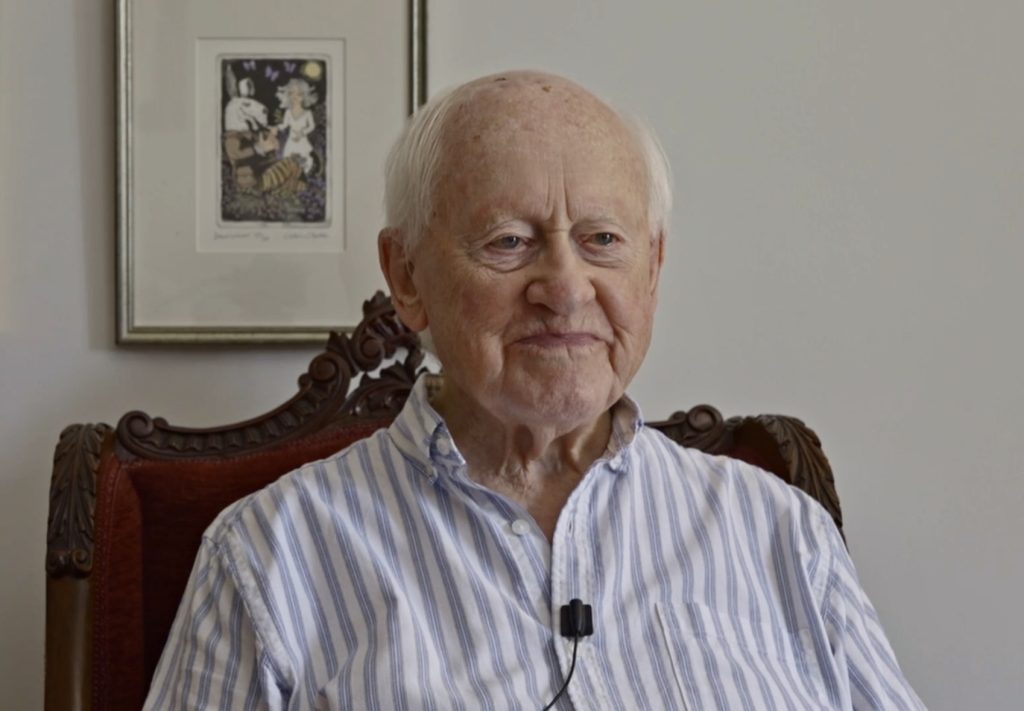
Family name: Clement
Work area/Craft/Role: BBC Producer, Director
Industry: TV
Company: BBC
Interview date(s): 4 August 2026
Interviewer(s): Mike Dick
Camera: Keith Hoult
Production Media: video
The interview traces Keith Clement’s career from post-war Birmingham to senior BBC and ITV regional broadcasting roles.
Early Years
- Born in Birmingham in 1932, Keith left school at 16, completed National Service, then studied economics, politics and social studies at Keele.
- He joined the BBC in 1956, first working in programme administration in Birmingham before becoming a director in Norwich and London.
BBC Television
- Keith described regional television’s growth, including Birmingham’s early output, Norwich news and the network programme Nationwide, launched in 1969.
- He directed coverage of the Apollo missions, including the 1969 Moon landing and Apollo 13, and general election results programmes in 1974 and 1979.
- Later roles included television training, BBC Two planning and directing the launch of Breakfast Time in 1983.
Elstree And Regions
- As Head of Elstree Development, Keith helped establish the BBC Elstree Centre, prepare it for EastEnders and accommodate other television productions. EastEnders began in 1985.
- He became Head of Broadcasting for the South and East, building regional news and network production at Elstree, including Newsroom South East and programmes such as Mastermind.
- As Controller of Regional Broadcasting, he opposed proposals to dismantle English regional structures. He later helped launch Meridian, which began broadcasting in 1993; he retired in 1994.
BEHP transcript Disclaimer
This transcript has been produced automatically using Otter.
It provides a basic, but unverified or proofread transcript of the interview. Therefore, the British Entertainment History Project (BEHP) accepts no liability for any misinterpretation of the content of this interview.
However, the BEHP wants to make every effort to improve the quality of these transcripts and would welcome any voluntary offers to proofread this and/or other interviews. If you want to help, please contact BEHP Secretary, sue.malden@btinternet.com.
Mike Dick 00:01
The copyright of this recording is vested in The British Entertainment History Project. The name of the interviewee is Keith Clement, BBC Television Director, Producer, Head of Elstree Development. The interviewer is Mike Dick. On camera is Keith Hoult. The interview number is 824, and the date is the 4th of August, 2026. Okay, Keith. Can you tell me when and where you were born?
Keith Clement 00:24
I was born in Birmingham when the third of January, 1932. Tell me a little bit about your family background. What did your parents do? Oh well, we lived in the south of Birmingham originally at Harbour, and then at Selly Oak, and then at Bourneville, all the southern perimeter of the city, and we then moved out to Quinton when the bomb started to fall because Dad thought he would get a bit further out, so we ended up living at Quinton. Working class family. My dad worked in the jewellery business. He spent all his life making gold nibs, really, for gold fountain pens. And mother was a housewife and bringing up me and my brother, who was six years older.
Mike Dick 01:22
You mentioned the bombs. What were your memories of the Second World War then?
Keith Clement 01:26
Well, let's see. I was 13 when it finished in 1945, so that's old enough to have some memories. You know, I can remember taking an enormous interest in the in the Second Front. You know, the D-Day invasion, and mapping it out and failing to understand why the advance was so slow, you know, so I could move my little red counters on the map, things like that. The bombing, to be honest, it never got very close to us. It was in the centre of Birmingham, of course. My dad was an air raid warden, so he used to go out and I think occasionally hit potentially in dangerous situations like incendiary bombs. You know, to be honest, I quite enjoyed the raids because when we were at Quinton, we lived in a vacant pub, and what a pub has is a cellar, a large cellar. So when the air raid started, we went down to the cellar. But so all my mates from all the way around came to our cellar. So as far as I was concerned, the air raid meant quite a decent party, you know, in the middle of the night, and that was my memory of those.
Mike Dick 02:41
One of one of the main forms of information at that time, presumably apart from newspapers, would be BBC radio. I mean, what are your memories of listening to radio? Yes.
Keith Clement 02:50
Well, a lot. We listened a lot as a family, especially any of the entertainment or comedy shows like Itma. For those who don't know that, that stands for it's that man again with Tommy Handley, and well, all the all the radio comics we we loved and we listened to as a family, yes, and the news of course endlessly.
Mike Dick 03:16
In terms of schooling, what what was the situation with schooling then? What what kind of school did you go to?
Keith Clement 03:21
Well, I was at a primary school. I moved around a lot because, you know, from Harbin, Selly Oak to to Quinton. When it got to the grammar school stage, we moved to to Selly Oak, and I went to Kings Norton Grammar School, which is a reasonably good grammar school in Birmingham, and my brother had been there before me, so that made it a bit easier, you know. And we were within cycling distance of that, so that was too not too bad.
Mike Dick 03:53
So you left school when when did you leave school?
Keith Clement 03:56
Well, curiously, I left school at 16 with higher school certificate, which is equivalent to A level. Now that's a bit of an extraordinary young age. It suggests I'm some kind of infant prodigy. I was not at all. It's just that in those days, the arrangement with the staff, finding enough teachers, you know, they were all coming back from the war. It was quite difficult. A lot of shuffling about, going up and down classes. Anyway, I left at 16. There was never any conversation in the family, as far as I can remember, about higher education. I mean, by the time I left, national service was only 18 months away, so as far as the family is concerned, I just had to find something to do, a job, find a job, and I went to work for Cadbury's, which is very near. You could smell the cocoa from from the house. Working at Canberry's, the actual factory operation. I think prospered after the war because there was an appetite for more chocolate and confectionery. If you work for them, you got you got what was called waste, because all the misshapen chocolates, which weren't quite right for the consumer, were taken and put into bags and sold off to the staff at very cheap. So we used to get bags of waste chocolate, which were perfectly fine. They were just a bit crooked, you know. So we were all right for chocolate.
Mike Dick 05:28
What was your actual rule there then? What did you have to do?
Keith Clement 05:31
When I first went to Canterbury, I was put on sorting caramels, endless belts of caramels passing in front of you, and you picked out the ones that were wrong, and occasionally one went into the mouth. You know, that stopped after about 24 hours, and I don't think I've touched a caramel since. But that didn't last for long. And then I went into an office work into their planning department, which was, frankly, not very interesting. But it it it provided a small salary until National Service came along.
Mike Dick 06:03
So tell me about National Service. What was what was that like? I mean, that was what in 1950. 1950.
Keith Clement 06:09
Yes. Well, I was I took my basic training in first of all in Winchester, and then I was going to become part of the Royal Education Corps, which ranks a sergeant's rank. So for that training, I went to Bodmin, Bodmin Moor in the winter, and it was absolutely freezing cold. It was terrible. And then once you'd qualified, you were you were you know parcelled out to do the work, I thought. Well, I might as well see the world at His Majesty. It was His Majesty in those days, at His Majesty's expense. So I volunteered for the Far East. I got sent to Lincoln, and I didn't think too much of that. And indeed, I hated it. I absolutely hated it, and I stuck it for about six months. And I belly ate, and you know, there's a limit to what you can do. Really, normally once you're posted, that's it. But I've I made such a nuisance to myself that in the end they said, "Well, there is a vacancy in Trieste. Would you fancy that?" Well, I fancy that like heck, you know. So for the second year of my national service, I was interested and had a wonderful, wonderful time. What sort of skills were you learning at this point then? Well, it was basic education for mainly for corporals or lance corporals who needed qualification in maths, English, some geography, basic subjects, to qualify them to become a sergeant or beyond. So that was the level we were we were we were teaching.
Mike Dick 07:51
So that was that was two years national service. Two years, yeah. And then you went back to Canterbury again.
Keith Clement 07:58
Well, no. I mean, we're talking now about the summer of 5052. Then I was in Trieste. I had no idea what the future held for me. I suppose at the back of my mind, I just assumed that Cadbury's would take me back. They almost certainly would, and would find me a job. And then I got an unexpected letter from a kind of welfare officer at Canterbury, saying he'd heard of a new university which had opened in Newcastle under Lyme. In those days, it was called the University College of North Staffordshire, and they were running a four-year course, and the first year was called a foundation year, a bit like well, almost the history of Western civilization, more or less in all its aspects. And they were quite interested in taking people from industry just for that one year. Would I be interested to do that at Cadbury's expense? So, of course I said yes. That sounds extremely interesting. So that's what I did. So when I demoed in in January, where are we now? 52. That's right, January 52. I went up and had an interview and was accepted just for that one year. And I think within three or four months, I knew I wanted to stay for the full degree, which was another three years on top. But Cadbury's was paying for me for this first year, so I had to have a conversation with them and said, "Look, I'm sorry, but I absolutely adore it here. I want to take a degree, and they said with our blessing, you know. I mean, not they didn't go on paying. I got a local authority grant in the normal, like you used to be able to in those days, from Birmingham, and so I spent in the end four years at Keele. It became. It's now the University of Keel.
Mike Dick 09:58
What was the degree then?
Keith Clement 09:59
Economics and politics and social studies.
Mike Dick 10:02
So, how and when did you join the BBC then? Because that was the next stage.
Keith Clement 10:06
Well, there I was, 1956. Now, summer of '56. What do I do? You know, where will I get some work? To be honest, I can't remember exactly what made me write to the BBC. I must have spotted something. I must have been aware of something or seen an advert. I can't remember, but I knew that the BBC ran a two-year general production course, and that sounded good to me. So I I applied for that, had an interview in London, didn't get it, but I got shortlisted. But I didn't get it. They only take about 20, and you're you're more or less guaranteed a job at the end of two years. So I thought, oh well, what what do I do now? But only a week went by, and I got a letter from the BBC saying, sorry, you didn't get that, but there's something else you might be interested in called the training reserve. With that, we take you in for one year, and we move you around lots of departments, and you know you you do whatever you're told, sort of thing. But the advantage is that since you're on the staff, you can apply for all the internal jobs that might be going. If you land one of those in 12 months, great. If you don't, then you're out.
Mike Dick 11:20
So where where were you based at this point? I was
Keith Clement 11:21
based originally in London
Mike Dick 11:23
with a boat,
Keith Clement 11:24
right by the start of the boat race at Putney, and the work was in Broadcasting House. Yes, and I managed to get a job quite quickly by four months. It took me four months. I got a job curiously back in Birmingham,
Mike Dick 11:42
what was the the job then? The
Keith Clement 11:43
job was called Programme Services Assistant. At that time, since the you know after the war, the BBC was expanding, and the main way it expanded in television was to build transmitters. So it began to build a transmitter chain up the country. Sutton Coalfield, the big one in the Midlands, is one of the first ones, and that enabled it to develop television in in the Midlands in that area. Subsequently, went on to Manchester and beyond, and so they wanted to do television programmes from Birmingham. They'd rented a cinema at a place called Goster Green, which is in Aston district of Birmingham, and converted it into a television studio. And so they wanted all the servicing, you know, scenery, carpenters, painters, and all the production staff as well. And so the they needed an assistant to the head of television there to do all the admin work, and that was my job.
Mike Dick 12:43
What was the impetus of the BBC developing all this? Was it because ITV had started, you know, in '55, or was it something else that you think?
Keith Clement 12:51
Well, I think the impetus was simply that when war came in in '39, television stopped immediately, and that was quite a limited operation. It was it was based in Alexandra Palace. It was a news service, a range of programmes. It did drama and it did light entertainment, but but are limited on one channel, you know. And the BBC had ambitions to do much more on that, and subsequently, of course, it opened BBC Two as a as a second channel, and it didn't want to be just a not just a metropolitan broadcaster; it wanted to be a national broadcaster. So it wanted to do programmes for the network, not just from London, but from Birmingham, Manchester, Bristol, anywhere it could, including the national regions of Glasgow, Belfast, and Cardiff.
Mike Dick 13:41
I'm trying to think of how television viewing really started to develop around that sort of time that people were buying television sets and being able to get access. Well,
Keith Clement 13:50
yes, a lot of it was driven by sets, of course. Rental was very popular in the early days. In fact, the majority of people rented a television set. I remember the main company was called Radio Rentals, which is a bit of a misnomer. Just like Radio Times, it's called Radio Times. But yes, television grew that way. People wanted to watch it. You know. When was the first time you saw television? When do you remember what? We never had a set at home in Birmingham. We never had a set. And to give you an idea of the scarcity, when when the coronation came round in what was it, 53? There wasn't a single television set on the campus at the university. Not a single television set anywhere. Not even in in the staff houses, I don't think. So we we went down to the village, the local village, and imposed ourselves, a number of us, on a friendly neighbour who had a television set, and we watched the coronation there in a very small, black and white set. So that was the first time.
Mike Dick 14:54
Because you were the first programme services assistant. Is that is that correct?
Keith Clement 14:58
I was the first, and then there was some. Basically appointed in all the major English regions. Following on, you know, the job, the work was the same wherever, wherever you were. So,
Mike Dick 15:08
what did the role really, really involve then?
Keith Clement 15:11
Well, it involved looking after the staff. I used to, for example, I used to, I used to take the wages to Gloucester Green every week. I mean, real pounds and coins in an envelope to hand out to the carpenter and the painter and you know all the other people who were working for us, and we gradually accumulated people like designers and graphic graphic people and obviously production staff. Were these
Mike Dick 15:36
local people, or they've been you know brought a lot of them are
Keith Clement 15:39
local, but some of them were, you know, perhaps come from London and couldn't get work there, but found work in Birmingham. The things spread gradually, and my work developed developed with it. I remember going out once with the carpenter to buy his tools. You know, I don't, I'm not too clever on choosing the right hammer or chisel, but he was. So, I
Mike Dick 16:01
mean, what sort of programmes were being produced at that time? I do.
Keith Clement 16:04
Well, the schedule. I can remember the schedule very clearly when it when it began. The schedule for one week, seven days, at this television studio was one half hour of gardening called I think it was called Gardening Club with a man called Percy Thrower, who was a well-known national figure. And then I think twice a week we had a 15-minute programme called Keep Fit, with a woman called Eileen Fowler. That was the seven-day output. Gusta Green, one gardening half hour and two 15 minutes. It grew from there, we started to take drama, and a lot of it was, in a way, imported from London. You know, London was growing at the same time; it was shorter studios. We had a studio big enough for a certain type of drama, so they were quite happy to move a production to Birmingham to make it, so we took on board on a temporary basis a lot of the skill staff that we needed, and gradually acquired our own. We did a certain amount of light entertainment shows like talent shows, entertainment talent shows. We started we started Pop Black, which was a snooker programme, half-hour snooker programme, which is extremely popular, and that that came along when BBC Two started, and and Colour was they were anxious for programmes that exploited Colour, and you couldn't have anything better than snooker for that. So gradually the output, and also we had an outside broadcast unit called a scanner. We called it a scanner, and that went all over the Midlands doing programmes.
Mike Dick 17:51
What sort of programmes would they be capturing? What sort of events?
Keith Clement 17:56
Well, it would do events. Yes, it would do horse racing. It would do cricket. It used to every summer it would decamp to Great Yarmouth for about two or three weeks and do a series of programmes there from the end of the pier. You know, whoever the whatever the talent was, they'd do a show from there. So that outside broadcast work was a key part of the BBC's BBC Birmingham's output at that time,
Mike Dick 18:21
and would that be network?
Keith Clement 18:23
Yes, network. Oh yes, network.
Mike Dick 18:25
I was interested. You were talking about the dramas. I mean, I found a nice, interesting piece. A director called Peter Jews. Yes. Yeah, and he produced an Arnold Bennett play called Hilda Lessways, which was with Judy Denham, and it gave her one of her earliest television appearances. And Eileen Atkinson was always also part of the cast.
Keith Clement 18:48
Yes, Peter was the first drama producer to be employed at Birmingham. A very skilled man, and he went on doing a lot of very good work, and eventually in London.
Mike Dick 19:00
So you spent two years in Birmingham.
Keith Clement 19:02
No, a bit longer than that. I went in '56, and I, well, yes, actually '59, three years, three
Mike Dick 19:12
years, three years, yes.
Keith Clement 19:13
And part of the work I got involved in there was a there was a network programme called Tonight with Cliff Michelmore, 6o'clock in the evening. It there used to be on BBC One there used to be a thing called the Toddler's Truce, in which there was no television at all. The argument being that parents had to get their children to bed, and didn't want to be distracted with something on the box. So it seems strange now, doesn't it, to think of this? But there was a toddler's truce where there was no television, and then the BBC thought, "No, this is ridiculous. You know, not everybody's putting a child to bed." So they invented this programme called Tonight with Cliff Winchell Moore, and that relied quite heavily on stories being fed in from. The regions, preferably rather jokey, funny stories, you know, anecdotal stories, and we would land one of these quite regularly. Either we would suggest it or London would suggest it, and then we would whatever the episode was, we would put it on from Gostregreen, and that needed an element of direction. And I occasionally did that, but it it was not much more than pointing a camera at the one person taking part, so it didn't need much much direction. But it gave me a taste, and so I was keen to develop that that side of the work. And the Midland region not only included Birmingham, but it included Norwich. Norwich had a radio output, and wanted to start television. It wanted to start television, mainly in a way because the BBC hates to be second; it always wants to be first, and it knew that Anglia Television was on the way in Norwich, and so it was desperate to get on the air a local television news magazine programme early evening before Anglia started. So it rushed forward, got the studio ready and everything, and then advertised for a director. And I applied more in hope than in anger because I had no experience really of directing. I had a very valuable friend who was my boss, a man called Peter Cairns, who was head of television then. And I think I owe to him really that I went on the board and then I got the job. So I went to Norwich. Was this a full?
Mike Dick 21:34
Sorry, was this a full-time job or?
Keith Clement 21:36
Oh yes, full-time job. Yes, oh yes. I went to Norwich before the programme was due to begin, an experienced director from Birmingham came with me. He directed the programmes for one week when it started, 10 minutes, 6o'clock, and then he went, and I was on my own then. So I had one week training, and then did the job, two cameras and several film cameras to do the news stories. Most of the film film people were most of the film people were from camera shops. You know, they they'd earn their living doing weddings, still pictures at weddings, And some of them acquired a 16 mil film camera for the first time, especially to be able to apply for work with the BBC. So we were dealing with very inexperienced film cameramen, and of course the operation of the studio two cameras. That's all. They went. They went experienced camera operators. There were people who we managed to recruit, and the film editing was was you know we got someone who had got a vague idea of film editing, so it was pretty it was pretty basic for a for a few months really. While while we all learned how to do it.
Mike Dick 23:02
The other notes I've got here is there was no talk back to the news reader.
Keith Clement 23:06
No, no talk back to the news
Mike Dick 23:08
reader. No one, one telesilly. One telesilly
Keith Clement 23:11
machine, two cameras, a turret lens, four holes for lens, but only two lenses on it in each turret. So you obviously couldn't change lens in vision, so you had to cut to the other camera in order to change the lens, and that's not easy when all you've really got to point at is a is a news reader. So it wasn't complicated. I'm not trying to pretend it was complicated, but it had its difficulties, you know.
Mike Dick 23:38
So talk me through a typical day then, from your from your.
Keith Clement 23:42
Oh well, a typical day would be a morning meeting, and in Norwich, you know, sometimes nothing happens. You know, you're sitting around. There's literally no news. It isn't the case of PA tapes rushing into the building like they are in London all the time. You know, nothing's going on, so you have to be a bit inventive, you know, and ring people up and say, you know, ring a farmer, you know, and ask if there's anything interesting going on in his farm or something. So decisions would then be made about what film stories to do, and then I would be sent out with a film camera and a reporter to direct it. And of course, because we had to get the film back, that couldn't go on much longer than about half past two in the afternoon, and it couldn't be that far from Norwich either. So we then drove drove the film back to the labs. It was processed and remained in negative. So we edited and transmitted 16 mil in negative. And if you know anything about film, you know that negative takes any scratch that is around, and once it's scratched, it's scratched. It doesn't go away. So we did transmit some pretty ropey stuff in those days, I must say, but we got better at it gradually. And then the output developed a half hour. Magazine started called Outlook, which I was moved on to from news, and that was good. That was more experience at directing, going out doing bigger stories, more involvement in the studio because we had studio guests and that.
Mike Dick 25:16
How long would the programme be? You know, what was the duration? Is it 30 minutes?
Keith Clement 25:22
Well, it started as a 10-minute programme. Oh, sorry, the the outlook programme. I suppose it started. Maybe we'd been going for two years, perhaps doing the news on its own when the when the opt-out it was called. Every region had its own programme at the same time slot started, so I did. I did. I suppose the best part of a couple of years on that, and then something rather surprising happened because we had a very good agricultural producer who was from radio originally, called Gordon Mosley, and he was quite well known in London, and he was offered the job of making a network television programme. Now it was unheard of for a small region like Norwich to do a programme for the network. So this was big news, and the subject was dairy farming. Could he make six half hours for the farmers, a specialist programme for dairy farmers for transmission in November, and we knew about it in January, I think. So we had more or less 12 months to do. And he came to me and said, "Would would I be interested in directing it?" And I had a decision to make because by then I was I was itching to go to London. Really, I didn't want to. I didn't. I mean, there were people there who I felt were quite content to stay in Norwich until they were 60. You know, I wasn't. I wasn't. I wanted to be where the action was, and so I was itching to go to London, and I kept asking for for a move. And here was an offer, which would prevent me moving anywhere for 12 months. But I thought, well, it's actually an interesting assignment, you know. It's network television for a start. It's it's it's nationwide, so we were filming from Scotland to Wales to Cornwall, all up and down the country. That was new to me, so I said yes. So I did for 12 months. I spent making six half hours for dairy farmers, and someone from Birmingham who didn't know the front end from the back end of a cow was quite a challenge.
Mike Dick 27:26
Valuable experience, though.
Keith Clement 27:28
Yes, I think looking back, I gained from that. And when I when I finished that, I was even more anxious to get to London. In those days, I'm not quite sure if it happens now. In those days, the BBC had a very good system with called attachments. What happened? You were taken from your job and attached somewhere else, and and you generally you spent about three months there. That's all. From their point of view, it helped them to look at new people who they might find attractive and want to employ in the future. From your personal point of view, it gave you experience somewhere else, and gave you opportunities to learn new skills and all that. So that's what I wanted. I wanted an attachment to London, and because my only experience was in news, really, apart from dairy farming, I wanted to go into current affairs in those days, in the BBC. Current affairs and news were two separate departments, and I wanted to go into current affairs. So I pressed and pressed and pressed, and in the end, I got one. I got an attachment to London for three months, and was immediately put to work. I did some directing straight away because at least I could claim experience at that. Where were you working? I was working in now those days. I must have been working. Let me see now. I guess I guess I worked directly in Lime Grove. Lime Grove was where current affairs was my first programme I ever directed was actually Sky at Night, which was I think 15 minutes with Patrick Moore. It's still running. Sky at Night is still running. I think it's the longest running television programme in the world, something like that.
Mike Dick 29:16
You're at Lime Grove and you're working on the Sky at Night with.
Keith Clement 29:18
Yes, I only did a couple of those,
Mike Dick 29:20
but with a great Patrick. Well, what was he like to work with?
Keith Clement 29:24
Well, he was very eccentric, but he was he was a lovely man, really. He was obsessed with his subject, and he was he wasn't any problem as a as a studio performer. He would do whatever we asked him to do. No, no, he was fine. That didn't that that was really a an accident. I think the the producer was looking for someone to direct his show, and I was around, so he said, "Why not?"
Mike Dick 29:48
Can you remember who the producer was?
Keith Clement 29:50
The producer was Paul Bonner. Yes, Paul Bonner was the producer. But I was there really, attached to current affairs, and. So I was put in the current affairs department of a programme called 24 Hours. It was a late night programme, half past 10 or thereabouts at night. I suppose Newsnight is its modern equivalent, although it was a totally different programme to Newsnight. It did all its own stories. It had a good a good amount of film output, it was a powerful, informative programme and very successful. And I was just one of the production team taking stories, writing them up, investigating them, doing the research, briefing the reporters. Part of the production team, I found that a bit forbidding, really, because how shall I put it? The production staff were very bright; they were a very bright bunch, you know. Nearly all Oxbridge candidates or Oxbridge graduates, and here was I from a provincial university. I'd done, you know, six years in the sticks. I mean, they vaguely knew where Norwich was. That's about all, you know. And here I was in at the morning meeting, having to come up with ideas that would impress the editor, you know. So that was a bit forbidding, but in the end, you you learn that actually you're as ignorant as the Lex man really when you when you're thinking of a new idea you know
Mike Dick 31:27
some names I mean who who was the editor
Keith Clement 31:30
a man called Derek Amor a brilliant man again rather an eccentric too fond of the drink in fact that that more or less what did for him in the end, but he was easily the the finest editor I ever worked with. He was really outstanding.
Mike Dick 31:47
And the team in the studio, I mean, there was Cliff Mitchellmore, Kenneth Allsop,
Keith Clement 31:51
that's right,
Mike Dick 31:52
Michael Barrett,
Keith Clement 31:52
that's right,
Mike Dick 31:53
Bob McKenzie,
Keith Clement 31:54
yes, all those.
Mike Dick 31:55
But the other interesting thing, I did some research into those early days, and the reporters who worked in it. I mean, Michael Aspel.
Keith Clement 32:06
I don't remember Michael Aspel. Michael
Mike Dick 32:07
Parkinson. Michael Parkinson. Yes. Julian Pettifer. Yes. And Fife Robertson, who had been with the Tonight Show as well. Yeah, they've
Keith Clement 32:15
been on the Tonight programme. A lot of those, you know, this is rather a digression. A lot of those came from a magazine called Picture Post. People don't remember Picture Post any longer, but anyway, that's how they got into the BBC. Very many of them, and they were all a bit eccentric. I mean, Five Robinson certainly was, you know, but they were good reporters, and they gave the programme a style, a style which people appreciated, and it was different from news, essentially different from news.
Mike Dick 32:44
I think viewers really appreciated that because they'd made that connection with the Tonight programme. Yes,
Mike Dick 32:51
and that fed into into these these forthcoming programmes. You know. Yes, of course.
Keith Clement 32:56
Tonight was running at the same time as 24 Hours. Right. 24 Hours didn't replace it. Tonight ran on for quite quite a long time after. So
Mike Dick 33:03
was Cliff Mitchell more doing both then?
Keith Clement 33:06
Cliff Mitchell more no no. But I think he he was working in in tonight when 24 hours began. He didn't necessarily begin 24 hours and then he moved across.
Mike Dick 33:18
You became one of the studio directors then. Yes,
Keith Clement 33:20
obviously, I kept on quietly pointing out that the one thing I did have experience of was studio directing, and they weren't that well off for studio directors. They only had two really, and that's not quite enough to keep a nightly programme going. So they said, "All right, well, okay, we'll give you a go." And they gave me an afternoon recording to direct. You know, do it slowly, and then then I did a live show. And after that, I was on the rotor, so I directed 24 hours for quite a long time. Yes, and enjoyed it very much. You know, it was great.
Mike Dick 33:53
So presumably, the attachment developed into a job then.
Keith Clement 33:56
That's right. Well, I'm trying to remember now the attachment. Yes, the attachment came to an end. Now wait a moment. Hang on. What happened? I think the attachment came to an end, and I was about to go back to Norwich. I'd, I'd, I'd left my flat that morning, to drive back to Norwich after the show, and Paul Fox, who was then must have been probably head of current affairs, came up to me and said, "Do you want another three months?" I mean, he gave me you know 12 hours' notice, so of course I rang my wife and said, "I'm sorry, I'm not coming back." So I had another three months, and it was then that I started to direct 24 hours, and at the end of that second three months, I got a permanent job. Yes.
Mike Dick 34:45
So, what was your official job job title at that point? Then, what
Keith Clement 34:48
was
Mike Dick 34:48
your your job title at that point?
Keith Clement 34:52
My job title, assistant producer, I suppose. Yes, assistant producer.
Mike Dick 35:00
The next stage I've got is 1969. You joined Nationwide, which started transmission that that that that year. Yes, that's
Keith Clement 35:08
right. I think 24 Hours came to an end. I seem to remember. Sorry, I I can't quite remember the dates. Whether they overlapped or not, I can't remember. My my memory was that it actually came to an end, so it did release staff actually, and ever since the Tonight programme, which Mitchell Moore was hosting for a long time, ended, the BBC had got this problem again. What it did between the news around about 6o'clock sort of time, and the start of the main programmes, how does it hold on to the audience in that crucial hour between six and seven? That's really what the Tonight programme was all about: holding on to the audience. Now it hadn't got it any longer. What did it have? So Derek Amore came up the idea for Nationwide. He wrote a paper called it Britain at Six, and the notion was that it would rely heavily on input from all the regions of the BBC, including the the national regions, the 12 I think English regions at that time, and three national regions, and it would put together a programme that would deal with major current affairs when it happened, but also take regular output from all the regions. And this was thought would work, and so a team of people got together to start to make it work. And I joined them as the potential director. We had a few months to to get it going. What we didn't have was a title. All we had was Britain at Six, and word got around of what we were doing, and the regions started getting involved and submitting ideas. But of course, it wasn't very long before before somebody from Belfast said, "Oh, hang on, yeah, we like the idea. Yes, we thanks for help. Of course, you can't continue to call it Britain at Six. I mean, you can't call a programme Britain at six in Northern Ireland. What about the United Kingdom of Britain? So that scotched the title, and we agonised and Derek agonised. What the hell do we call this programme? It got to press day. It literally got to press day for Radio Times for the first edition of Nationwide, and a decision had not been made. And the editor of Radio Times was on the phone today saying, "Look, I don't care what you call it, we've got to call it something." And I think one of the junior, I think one of the secretaries or one of the junior production people said, "How about nationwide?" And Derry said, "Okay, Nationwide," and that's how that's how it.
Mike Dick 37:44
So that started transmission in September '69.
Keith Clement 37:47
Yes, and I and I directed that. It was three days a week at first, Tuesday, Wednesday, Thursday, and it caught on with the public very quickly. Michael Barrett used to come through the door every morning, full of he'd pick up the overnight ratings on his way into the building, and he'd come in waving a piece of paper, saying, "Oh, 4 million or whatever it was." You know, gradually the audience got big; it got really big. So it went to five days a week quite quickly.
Mike Dick 38:16
I think. I mean, the beauty of it is, as I remember, as a viewer, was that you know you would get, you know, Scottish items. You would get items from Northern Ireland or Wales or whatever. It was, you know, a real regional feel. Important stories being fed into into into nationwide, and I think that was really that was really important.
Keith Clement 38:34
Yes, and we we were very fond of regional hookups. In other words, an item involving three or four regions. Someone would have a. I can remember one. I've forgotten all the items now. I remember one in particular. Someone at the morning meeting, we had a circuit where everyone joined in on you know circuits, and at the morning meeting, someone mentioned something, some phrase like north of Watford, and the guy in Manchester said, "Hang on, what do you mean North? Well, Watford's not in the north, you know." And then there was a big debate: what's what? What's meant by the north? So we set up a regional hook on what's the north, you know? Watford people may think they're the north. Manchester think they're the north. People further north think they're the north. And what about the Scots? You know, that's the way a regional, an interesting regional item would would develop. Technically, the nationwide went on the air, and the resources were not actually adequate for it. Because you were based at Lime Grove, yeah. We were based in Lime Grove, and there was only I think there was only one distribute what's called a distribution circuit down from all the regions to London, and of course the switching of the output per region had to be from this distribution circuit, and it was worse than that because take an example: there would there was one distribution circuit leg, which went. Up the country and then diverted to Bristol and then to Plymouth, the same circuit. Well, if at the key moment at the beginning of the programme, Bristol what call opted out, I pull the switch from the London output to its own output. It meant Plymouth got the Bristol picture. It was only only worked if Plymouth switched first, and then Bristol could switch, and then see what I mean. And the same problem would be Manchester to Leeds and all the way up to Scotland. The switching had to be done in succession. Well, somewhere you're relying on an engineer as a switching set. He's not even in the in the control room. He's somewhere in another room pulling a switch, you know, on talkback. I mean, inevitably it went wrong. I mean, we had catastrophic failures. I mean, I used to go home in not in tears, but I used to go home in agonies, because we we'd make a mistake. You know, you'd call for Cardiff and upward come Glasgow or something. I mean, when you think now, I mean, take a news programme now, taking inserts from anywhere in the world. There's scarcely ever a technical problem. It's, it's. I regard it as miraculous because the technology now exists. It didn't exist in those days, nowhere near. You see, so we did struggle. In fact, I think I'm right in saying that within about six weeks, we went close to being taken off the air. But a lot of hard questions were being asked. You know, when the hell are you going to get it right? Kind of thing. So we we had a rocky beginning, but we got we got through in the end. I was a member of Current Affairs, of course, directing nationwide, it wasn't the only programme Current Affairs did. It did the Money Programme, it did Panorama, it did a European programme, a whole range of programmes, and also if there was an event of some kind in the region of current affairs, the same team of people had to handle it. An example was an election, or a by-election, or a budget programme, or any huge political event that needed to be covered. It was the same team of people who were probably doing nationwide that night, who covered it. So I found myself directing a lot of single programmes, like by-elections, and in particular, I longed to for the opportunity of directing a general election results programme. That's the one that begins when the polls close at 10 o'clock, goes through till 4o'clock the following morning, and then picks up the next day.
Mike Dick 42:46
That's yet to come, though.
Keith Clement 42:48
Oh,
Mike Dick 42:48
that was oh yes,
Keith Clement 42:50
that was yes, that was 74. Before that, no, I know what you're pointing at. Before that, what came was the Apollo programmes.
Mike Dick 42:59
Can you just talk me through the BBC role in those? I mean, the Apollo, you know, missions were really, really important internationally and nationally.
Keith Clement 43:08
What of Apollo?
Mike Dick 43:09
Yes.
Keith Clement 43:10
Yes. Yes. Obviously, we we were aware of the of the well, we were aware of the space programme from the days when Sputnik, the Russians, beat us to it, and sent a sent a man just around the Earth, and from then on, of course, NASA was. And then we had the famous Kennedy speech, saying that American would would would land someone on the moon and bring him safely back before the end of the decade, and so that really accelerated the work, and we started to get interested, of course, when when the when the Apollo series began, and it was a whole series of initial launches that were unmanned, orbiting the Earth and coming back, rehearsing re-entry and saving the capsule and all those things that had to be rehearsed, and then later Apollo missions went to the Moon, came round and came back again without landing, just like the one has done about six months ago. So, what kind of pictures were you dealing with? Well, you get pictures of the launch, of course. You get no pictures when the when the capsule was travelling to the moon. I can't remember whether we got pictures from inside. My recollection is we didn't in those early days, and of course, we got pictures of the moon when it circled the moon, but nothing closer than that. And then,
Mike Dick 44:50
because I've got some notes about chap called Tam Fry, yes, who was quite instrumental about.
Keith Clement 44:57
I'll come to that in a second. The first landing was
Mike Dick 45:03
1969.
Keith Clement 45:04
Now, interestingly, that's actually the first year of Nationwide. So my career is is crisscrossing a little bit here. That's right. 69 was when Nationwide began. So by 69, I was certainly full time in London. I'd been taken on the staff, and suddenly, well, not suddenly, over a long, longish period, we had the problem of covering the the moon landing. 69. Obviously, we caught we covered the launch, and and and all the rest, and and it was just a series of heart-stopping moments, really, and also genuinely working it out as we went along. I mean, to give you one one tiny example, once it's launched, it takes about two and a half days or so to get to the moon. There's not much you can show. We had a dedicated studio. We had a TC7, which is a medium-sized studio, a television centre, all kitted out with you know big global picture of the moon and charts and everything else, and James Burke and Patrick Moore and other experts sitting there telling the story, and we were on the air often during the during the day. But once it was on its way to the moon, there wasn't much to say. So how do you cover it? Well, we we covered it with with discussion and with sort of projecting their guesswork about what Would happen, and we made an animation of of the lunar capsule travelling to the moon. An animation. Well, the trouble is, it looked like a cartoon. I mean, any animation does. So there's a big debate: should we show it? Do we show it? Isn't it? You know, not only is this a huge technical achievement, but there's something almost spiritual about man going and landing on the moon for the first time. It's a kind of human event, you know. Do you really want to show a a cartoon that people might start laughing at? It's not a laughing matter. And this row was going on behind me while I was directing, yes, and they couldn't decide between the two of them. So in the end, I thought, oh well, you know, I'm directing, I'll run it. So I ran it. There was almost a sigh of relief behind because neither of them had had to make the decision, you know. And we ran it for about a minute, and I said to in James Berkeley, say something about it, you know, and he said this is, this is obviously an artist's impression, you know, it's x 1000 miles away from the moon. He gave all the statistics, and that was enough just to keep the story going. And then, and then the the landing, we we televised the actual landing live. I never know. I never knew, and I don't know to this day whether there was a time delay from NASA. We never found out, and they were, I think, a bit reluctant to tell us. It wouldn't be hard, would it, to imagine that might have been three or four seconds, so that if there had been an absolute catastrophe, they could have cut the feed, and we would not have seen it. But anyway, to all intents and purposes, we transmitted live the landing on the moon, and then everything that followed. There was quite a long delay before the astronauts came out of the the capsule, and they didn't stay on the moon that that for very long that time, maybe a couple of hours, testing, taking the essential samples. That was really what they were there to do to bring back samples. And then they got back in, and there was all the paraphernalia of testing the computers and everything. But when I talk about heart-stopping moments, and we'd got the picture from the moon of the the capsule on the moon waiting to take off. You couldn't help thinking, what do we do if the if the motor doesn't fire? What do we do? I
Mike Dick 49:14
think the whole nation felt that.
Keith Clement 49:16
I mean, what what would actually happen is that NASA would almost certainly have cut the feed, and we would have meant we would have had endless discussion about what on earth was going on. But nevertheless, you know, you're sitting there, and of course it fired. It came up, and you saw the the two land, and then it came back. And the the final heart-stopping moment was re-entry, because when it hits the Earth's atmosphere, it's radio silence while it's going through the atmosphere. It doesn't last for long, something like three or four minutes, I think. But you're listening out for the for the sound of the astronauts again saying, "Hello, hello, hello," and so we. Knew exactly when that should happen, and the moment came and it didn't happen. And you heard Mission Control saying, "What would they say? Hello, Apollo, Apollo 11, Hello Apollo 11, something like that." Nothing, nothing. It was probably only about 20 seconds. It seemed like an eternity, and then suddenly the parachutes were opening, and all was well. All was well.
Mike Dick 50:25
I just wanted to get a feel of how you felt, you know, professionally and personally, about having directed that particular historical moment.
Keith Clement 50:35
Well, I can't pretend that I was overwhelmed. It was a it was a job I had to do. It was one of the most exciting bits of direction I ever had to do, I guess. But once it was done and it had been done well, I think that was on to the next job. You know, I didn't I didn't dwell on it unduly. Well, the next job was Apollo 12, and that that landed more or less in the same way. We covered it in the same way. The astronauts got a lot further, walked a bit further, did various stunts like driving a golf ball and things like that, and came back safely. The next one was Apollo 13, and they were coming quite quickly now. They were coming quite quickly. Apollo 13. Now the trouble with Apollo 13 was that it took off on a, I think Friday or a Saturday, and the following Tuesday there was a budget. Now, as I explained earlier, the same production team in Current Affairs would be doing that programme as well. We were doing a budget programme, but it's it's say it coincided with with the with the Apollo. But then we thought, well, hang on. On Tuesday, the Apollo it's on its way. There's nothing to say, as we as we proved twice already. There's nothing to say. Why don't we do the budget on on the Tuesday, and come back to Apollo the next day? Nothing will be lost. We've got the same. We've got a studio. We've got a spare studio, so that was decided. So the the the moon loaner was was on its way. So I got there about 9o'clock, ready to direct the BBC's coverage of the budget. A producer called Tam Fry was on the phone, ashen-faced. He just heard the message from the command module: "We have a problem here," and we then realised that we had a problem ourselves. So, then followed a quite extraordinary directing day in the studio. We continued to tell the Apollo story frequently on BBC One as it developed, and when the time came in the House of Commons, we we we in those days, you weren't allowed to broadcast the chancellor's speech live, so it was all done by reporters phoning the details of the speech in. So it was a cumbersome process, and we broadcast that. And the Cine men were busy all afternoon taking down the Apollo bucking and putting up the the by-election, and taking that down and putting up Apollo. But you know, we had a studio to play with. It wasn't too bad, and and that's what we did. I think at one time in the afternoon, for for one brief moment, from one corner of the studio we gave an Apollo report, while in the other corner studio we're talking about the budget. Simultaneously, never quite sure how that happened. James
Mike Dick 53:40
Burke in one corner and Mitch Moore in the
Keith Clement 53:42
other. Yes, yes. So that was an interesting day. And then, well, we all know the story of Apollo 13 and and the the rescue. And obviously, we covered we covered all that. And then subsequent Apollo missions followed.
Mike Dick 53:57
Keith, can you tell me about your your career progression within nationwide because you start you promoted to a producer. Yes,
Keith Clement 54:04
yes. There's a saying, isn't there, in in almost any job that you sometimes get promoted out of the job you do best, and I think in a way that might have happened to me. I think I was a good director, although I say it shouldn't. But you get promoted, and so I became assistant editor of Nationwide, together with you know others, and so I was responsible for running the the show, the looking after the content, and doling out the work to the production team to to do all the all the stories. If you're a studio director in current affairs, the one thing you want to do is direct the general election results programme, the one that starts when the polls close through to 4o'clock in the morning and then picks up the next day. I wanted to do that, and in the spring of '74, I got that job directing. The General Election Results Programme. It all went very well from our point of view, not so much from the politicians' point of view because Wilson was still Prime Minister, but with a very very narrow majority. So it was almost certain there'd be an election very quickly, and indeed one came along in October that same year. So we had a second election that year. Again, it went pretty well from from our point of view, and he had a better majority, so he continued as the prime minister. He subsequently resigned in 76, and the next election was in 79. Now, by 79, I'd moved away from current affairs to a job in programme planning, which I can tell you about if you wish in a moment. But I'd done all the rehearsals because we were rehearsing on a fairly regular basis the the results programme because the technology, the computer, kept changing all the time, and so I put forward a case for being, as it were, detached from planning for however long it took to direct the 79 election, and it had to go to the unions to decide whether this was a good idea or not. But in the end, they decided it was a reasonable request. So much to the disappointment of my colleagues, I was allowed to direct my third general election results programme in '79, and in many ways, looking back, I almost regretted that because things didn't go according to plan. Two things went wrong. The first thing that went wrong was at the very beginning. You come on the air at 10 o'clock, and the one thing you're then determined to do is to televise the first result. There's always a competition. Two or three constituencies think they'll win to have the first result. So you have to have a camera at all three, and you're looking at the monitors, keeping an eye on all three. Which one's going to be first? You don't go over too soon because there's nothing really to say. You've got to go over at the right moment. It became clear as the morning, as the evening wore on, that Glasgow Central would probably be the winner. All the expectation were the news coming out that they were about to declare. We kept a close eye on the Glasgow picture with the platform, and we thought we'd be cutting over to there any minute as the returning officer got onto the platform. At that precise moment, the picture the picture went black from Glasgow. We lost the camera feed from Glasgow. What do we do? We we tried to do all sorts of things in about 30 seconds, like taking a feed from Radio Four, for example. None of it quite worked, so we didn't actually televise live the first result. It's like missing the first goal in the cup final, it's as important as that. Of course, we got the result within less than a minute and broadcast it, but we didn't do it live. And the programme went on for the next 10 hours, however long it was. As far as I was concerned, pretty faultless. And the next day, very good from breakfast time right the way through to the afternoon, by which time it was an overwhelming majority victory for Margaret Thatcher. It got to about 3o'clock in the afternoon, something like that, and we'd more or less run out of all the background material, videotape that we could show.
Keith Clement 58:36
You always keep little packages of videotape about subjects which are pertinent to the story, to use as a standby. Well, we'd run out nearly all of them, so we had three experts in the studio waiting for Margaret Thatcher, who eventually went to the palace. So she was on her way to the palace, and we kept on talking. I kept. I was instructed, of course, by the editor, keep them talking. She'll she'll only be there a few minutes. She'll come out in a minute. So I had to say to it was James Burke by then, not Alasdair Burnett. Had to say to James Burke, just keep on going. He was waffling on with Bob McKenzie. Meanwhile, on the sixth floor, the control of BBC One was being besieged by the motherhood of Great Britain, who were waiting for Jack Nori, which was a children's story, which was scheduled something like 4o'clock in the afternoon. And he said, "No, no, we've got to stay. We've got to. It's an important historical moment." And he was under extreme pressure. I mean, you know, if if you if you don't know what it's like, the duty office getting switchboard calls, 1000 coming in every minute, and in the end, he made a fatal mistake. Really, he said, "Right, okay, run Jack and Ory." So I was given the instruction. Said to James, "Right, closing down. We'll.". Come back in a few minutes to let the children have their story, words to that effect, and we went off air. Of course, Sod's law prevailed. 30 seconds later, Margaret Thatcher came out of the palace, and we were showing a children's story. And she travelled. There was some doubt whether she would go to Smith Square, which wouldn't have been too bad, or number 10, but actually, when you think about it, it was obvious she was going to go to number 10. She went to number 10. She made this pretty speech about St Francis of Assisi and everything that she was, you know, was determined to do. Now that she'd got this grand office, went inside, the BBC was still showing a children's story. Of course, we showed the recording of it when we came back. It's not the same. It's not the same. So I think we had an immaculate programme, but we lost at the beginning and the end, and that's a pretty serious couple of couple of mistakes to make. And of course, ITV made an immense capital out of it, as you might imagine.
Mike Dick 1:01:02
Were they in competition at that point? I mean, oh yes, in terms of their output.
Keith Clement 1:01:06
Oh yes, all competition throughout. Yes, who gets the first result? Who covers more live results than the other? Who gets the best interviews? Everything, you know. It's it's a very competitive couple of days, and I think we did pretty well, except for those two key moments, which I sometimes wake up in the middle of the night remembering, I have to say,
Mike Dick 1:01:27
was David Dimbleby fronting, and that
Keith Clement 1:01:29
was David Dimbleby. Yeah, his first, his first general election. He then went on to I don't know how many he's done, you know, since then. But Alison Burnett was very good, but so was David Dimbleby. He was superb. I enjoyed working with him very much. When I was doing the Tonight programme, I was really dissatisfied with
Mike Dick 1:01:53
it. This is, I mean, the Tonight programme had been off since since it's early. This is the this is the second version second version of Tonight in the
Keith Clement 1:02:00
late in the evening, it had been 24 hours. Then there hadn't been a late night programme for a while. Then they came back with this programme, which they were going to call tonight,
Mike Dick 1:02:12
with Sue Lawley, Dennis Toohey, and Donald McCormack.
Keith Clement 1:02:16
That's right, that's right. Sue Lawley, Dennis McCua. That's right, and I had the I thought was the ridiculous job of of doing the programme on a Thursday night, as long as I used an OB unit. Well, it's insane basing the content of a programme on a piece of technology. Frankly, if you've got a programme that wants an OB unit, book an OB unit, but you don't you don't set forth on a series of programmes in which the requirement is to find an OB story, because sooner or later there'll be a week where actually you've done the where on earth to put the cameras because there isn't one, and we struggled like that for four or five weeks trying desperately to find an OB, and we did one or two quite decent programmes, but I was very dissatisfied, and I wanted out really. I wanted out, but I couldn't think where to go because Nationwide was then got other other directors and other producers, you know. So I seized an opportunity. They advertised the job of running television training. This was a two-year assignment, at the end of which you were guaranteed your job back with your departments. So you weren't going to lose your job. You just took time out for two years to run the training school, and I thought, well, actually, that's that sounds quite interesting. So I applied for that and got it in a place called Woodstock Grove near Kensington House, in Shepherd's Bush still, so not far away. It had its own premises. It had just shortly before I arrived acquired a new television colour studio, so I was moving into an operation that had good facilities by then, and I had a team of experienced trainers. How many
Mike Dick 1:04:10
trainers did you have?
Keith Clement 1:04:11
Well, we had we had one who looked after the girls doing the PA training, we had one who looked after studio direction, we had one who looked after film direction, and we had one or two that looked after overseas training, because in those days the BBC ran courses for overseas people as well.
Mike Dick 1:04:30
And that's only quite an important thing. I mean, the the training at the BBC was absolutely second to none and was internationally renowned.
Keith Clement 1:04:36
Yes, yes, and luckily, I mean, this an important point. The television departments thought highly of it. They didn't rubbish it. They valued it, and they wanted to get their people onto the courses. So you were on a winning ticket, as it were. You went, you went fighting for people to come on. So I took over there, and I enjoyed it very much. I was able to bring to the job my directing experience. So the directing courses I was able to assist with in various ways, and I knew enough about film direction to be helpful with that. And we continue to run a programme of courses regularly on a regular basis, serving the departments. Two two things happened in addition to that while I was there, the the the boss of the whole establishment called me one day and said, "Look, there's a there's a development going on in lightweight cameras. It's a new development. The technology is such that the size of a studio camera was coming down now to something not much bigger than that, and it was a whole new system of operating it, and people needed to know about it. Would you run a one-day seminar about it? So we did that, and we we didn't quite fill, but we pretty well filled a large television studio with the audience. We advertised it across the whole of the television service. Come and come and learn about lightweight cameras, and they all came. And we had experts panels. We had we had OB trucks in the studio. Even that was quite difficult to organise because normally there's a well. One of the problems was that the OB engineering staff thought running cameras out in the open air was their job, and EastEnders was was underway, and it wanted to use these lightweight cameras on the outside set, and the OB came and said, "Oh well, that's our job. It's outside, so by definition, it's our job." The studio crew said, "No, no, no. It's part of the studio team. It's our job." So,
Mike Dick 1:06:50
so where did you hold this training session with all the with the audience? Yes, yes. Where was that held?
Keith Clement 1:06:55
At Telton Centre, one of the big studio. I can't remember one of the big not not TC, not TC six, TC three or four,
Mike Dick 1:07:03
TC three. No, no, it wasn't
Keith Clement 1:07:05
TC one. No, and we had another studio giving everybody lunch, so it was it was quite an operation, and I kind of chaired it, you know. And we had Robin Scott to come along, and he was, he was must have been director of programmes, to come along for the afternoon session, and we had all the senior engineers there, so it was a, it was a kind of teach yourself session about you know. I remember one of the first things I did at the beginning. I said, well, actually, we already have a handheld camera. It belongs to OB department, and I queued in the OB cameraman using what's called a steadicam. This is a thing which wraps around your body. You see it on all the football, and it's immensely heavy. You know, and he wandered around the studio. I should probably never been in a studio before. He wandered around the studio taking pictures of the audience to illustrate that we did have a single camera unit, but it would be absolutely no use for drama or light entertainment. So the advent of a single camera was a big piece of technology. So that went well. So a few months later, the same chap called me again and said, "Look, there's a big growth in what's called visual effects. In other words, not not not special effects that are done by people knocking two coconuts together to simulate horses' hooves, but special effects driven by a computer, computer-driven special effects, was being pioneered by America, like everything else, and people needed training in that, so we ran another seminar in that, and getting all the experts, all the special effects people who by then had started coming on board, and some of the light entertainment producers who'd used it all and were able to give their expertise. So it was a genuinely useful one-off piece of training, separate from our our normal work. Well, my two years is coming to towards an end. The
Mike Dick 1:09:08
other element, I think, which I I took part in BBC training, so I was a beneficiary of that, was your ability to actually bring in people from experts from all different fields within within the within the BBC. I'm thinking about. I mean, I did I did one with Tom Mangold, you know, script writing, which was phenomenal experience. I also did directors' courses and all that sort of thing. And again, it was an amalgam of people.
Keith Clement 1:09:35
Yes,
Mike Dick 1:09:35
from it's the point I made
Keith Clement 1:09:37
earlier. The departments were keen on it. They wanted their staff to be well trained, so if we asked for some help, we got we got it, you know, and we got we got good presenters too, you know. We'd get we'd get regular presenters to come and do training exercises or interviewees. I remember we had Humphrey Littleton, the trumpeterry ones, just to be interviewed because we wanted someone in. For the people to test direction, you know, and all that. So yes, it was it was a useful. It was an interesting two years. I never regretted doing it. Towards the end, I began to think, well, hang on, what do I do now? Current affairs will take me back, but I'm not quite sure what I do, to be honest. Any, you know, life's moved on, and anyway, in a way, I didn't. I didn't particularly want to go back, actually. And at some stage in my career, and I can't remember quite when it came, when I was in current affairs, I had one of these attachments that I talked about earlier.
Mike Dick 1:10:36
1978. I've got
Keith Clement 1:10:38
78. Okay, so that was before the third general election. I had an attachment to a department called Programme Planning. It was it was at their request, not for me personally. They they asked for someone to be attached because they had a gap to fill as a holiday relief or something, you know, and I was asked if I if I had any interest in. I said, "Yeah, well, it's you know, it's it's all new experience." So I went and did it. So I did three months in programme planning.
Mike Dick 1:11:13
What was it? What did what did the role that entail then?
Keith Clement 1:11:16
Well, in those days, programme planning was split between current and forward. Current planning was the immediate going to press for Radio Times, getting all the work, and then immediately beyond that, getting all the resources together. And then there was another group in planning who did the long-term planning, six months or even 12 months ahead. So there's really
Mike Dick 1:11:42
scheduling then. Yeah, scheduling. Yes.
Keith Clement 1:11:46
Well, they they decided to to rearrange that so that there was a vertical pattern. There was there was BBC One planning for everything, current and forward, and BBC Two planning, and new new controllers were appointed: head of planning BBC One, head of planning BBC Two. Sorry, controller, controller planning, controller planning. And they wanted a head; they wanted someone to do all the work. Really, no, that's a bit unkind. So they advertised head of planning BBC One, head of planning BBC Two, just as I was looking for work after television training, so I applied for these jobs and got the interview. I had a lucky break at interview, and I was very unwise not to foresee the question, stupid not to foresee the per question. There was the inevitable question at the end: which challenge you want to work for? Why on earth didn't I think of that? And on the spur of the moment, I said one. You see, luckily they didn't pay any attention to it. I got the job, but I got two. I was so relieved in the end. A, I was working with Brian Wenham, who was the control, the new controller, and he'd been my boss in current affairs, so I knew him well, and he knew me well, I think. And it proved to be a very useful, a good partnership. We got on well together. Could
Mike Dick 1:13:15
you describe Brian Wenham's qualities? What what qualities did he bring to the job? Well,
Keith Clement 1:13:19
he was he was a very first of all he was a very funny man a very witty man. He was very intelligent. He was very well informed in the in the whole world of art and theatre, which you needed if you're going to run BBC Two. He was very good with people. He knew how to handle departmental egos. So he was almost tailor-made for the job, and he was certainly very good to us planners. He let us get on with the work. He didn't mind us all doing the detail. He didn't want to do it himself. He was very open to suggestions if we had any, and we tried to have some. I had a planning manager appointed to me, so there was a head of there was a controller, a head of planning, and a planning manager. And in in our mind, the job was sort of split into we were responsible for the content of the channel. And where that worked was there was a spring meeting called editorials, and all the departments would come with all their ideas, uncosted, so they could come with all sorts of fancy ideas, as well as wanting to argue to retain the output they already had. And Brian instituted a change because these were London meetings, and he said, "No, no, we'll go to them. We'll go to them." Well, London departments were easy, but it meant we went to all the regions and all the national regions in turn. We liked that, of course. My my programme manager, a man called Ashley Hill, who was close friend of mine, and Brian, we all liked going off for a couple of days to Glasgow or wherever it was to receive their ideas. So we then have all these ideas, and Brian would say. It would discard some of them immediately, but there'd be a whole mass of ideas to think about, and then a whole lot of costing went on for the next few months, and then we had the meetings all over again, but this time all in London, in which the costing ideas were put forward, and then reality hit the fan, because it was all too much, we couldn't afford it all. So then Brian had to decide what he didn't want and what he did want, and that's when the tears came. Because remember, behind the programme head were all his staff, waiting for him or her to come back from the meeting to tell them what had been accepted and what hadn't, and if they were working on beginning to work on programmes that hadn't been accepted, what were they to do? Were they to be fired? Or so there were big decisions to be made. That was the one job. The second job was the scheduling. So we put together the schedule, the BBC Two schedule, week by week, right up to the Radio Times Press Day, and that was great fun, really, because again, Asher and I could play around and give Brown ideas. He was full of ideas himself. He came up with all sorts of interesting ideas. He was he was very keen to get the chair of the BBC two up to 10%. It was way, way, way below 10% when we started, something like 3%, and he thought we could do much better than that, and so he started to introduce a lot of very. And he also had a big piece of luck. He inherited from his predecessor, a man called Aubrey Singer, very very good programmes that were just being made, because a lot of these programmes take years to make, you know. So there's a there's a throughput of if you're lucky, you inherit programmes from your predecessor. Brian was lucky. He inherited, for example, Life on Earth, the first programme with David Attenborough. He inherited a programme called Body in Question, hosted by Jonathan Miller, all about the human body, which was a fantastic programme. What else did he inherit? Those are the two ones I remember in particular. But he he had to be sympathetic to departmental ideas. A programme like what would be a programme to give you an example, a programme like a science programme.
Mike Dick 1:17:25
I was thinking Horizon.
Keith Clement 1:17:26
They would have a staple diet. They'd have Horizon. Yeah. So they'd come to him and they'd say, you know, instead of 17 Horizons, can we have 21, please? And he'd say no. You know, it was that sort of discussion. And then on top of that, were there one-off ideas? Could they do a programme about whatever it might be? And that's when the discussion started. And when Brian's skill at killing lousy ideas, or accepting ideas that had some merit but needed a lot of work being done, and occasionally seeing, hang on, there's a winner there. Let's have it. There's a winner, you know. What would be a winner? I think I think Antique Roadshow was a winner from Bristol, for example.
Mike Dick 1:18:13
Top Gear came out of Top Gear
Keith Clement 1:18:15
was, you know. Sometimes a programme comes along, you know, and there has to be a degree of trust between heads of department and the controllers. And to give you a good example of this, light entertainment, the head of comedy would come, and he'd say whatever continuing scene is, we'd like to do another six episodes of whatever it
Mike Dick 1:18:39
is. I've got not the 9o'clock news was about that time as well. Well,
Keith Clement 1:18:42
that was new. There was there were always continuing programmes like what would be an example? Faulty Towers. No, Faulty Towers was a was a one-off. Anyway, I'm trying to think of one. Well, Dad's Army would be an example because Dad's Army ran for years. So the conversation would be, we'd like to do Dad's army again. Is that all right? We'll do another eight, and he'd say yes. No further discussion. But they'd sometimes come, and on their bit of paper, it would say something like Carla Lean times six. Now Carla Lean was a writer, a very good comedy writer, and she had a track record. We knew in planning stuff she'd produced before, and Brian had no hesitation. Say yeah, yeah, okay, fine. He had no idea whatsoever what the programme was. So that's trust. That's trust in the department. Taking a budget because you know the budget was then decided. Taking the budget and coming back maybe six months later to say, actually, it's a programme called Butterflies. I think you'll like it. It's really very funny, you know. So that that happened a lot with Verizon Desmond. We'd get we'd get we'd get offers, and it would say Vera Lynn type times six. Now it was probably several years since we'd ever done Vera Lynn. But what that meant to the planners was that it was a show hosted by a top star. It would have a lot of songs by that top star. It would have a comedy act in the middle, perhaps a little sketch or something. It would have a band. It would have certain elements to make up 60-minute variety show. It was that was that package, and it cost that amount of money. The fact it said on the paper, viral in time six, neither here nor there, to planning it meant a certain type of programme. You know, very occasionally it went wrong. And the best example I can give you is, they'd come forward. Comedy department had come forward with a Frankie Howard series, six half hours. Frankie Howard as the star. Well, he was an established star. It seemed to us, seemed to Brian. Okay, we'll buy that. The months went by, and the months went by, and it started getting reasonably close to when we knew the programme would be ready for trans, you know, delivered, ready for transmission. I can remember now the head of the head of comedy coming into our office, our planning office, showing a kind of white-faced, and saying, "I've got I've got terrible news." He said, "I've just been looking at some of the finished programmes." He said, "We we can't put them out; they're not good enough." So he then went into Brian and showed him one, and Brian said, "No, this is absolute rubbish. I'm not transmitting that." So we had we had a you know it was three months away still, but a looming hole in the schedule, where there should have been Frankie Howard times six. So occasionally it went wrong, but that's a very rare exception, and to this day, that series has never gone out. A subsequent controller of BBC Two dug it out of the archives to have a look at it, saying it's surely it can't be that bad, and decided it was. So it's never gone out. It's never gone out. Brian Brian was really, I think, a very good control of BBC Two, and he was very receptive to original ideas. And two two immediate examples come to mind: the the the people running entertainment came forward with a programme called The Young Ones, and in fact, it first arrived at the planning office, at my office. The producer, who I knew quite well, handed me a script. He said, "Have a look at this. See what you think about it." Before he'd been into Sea Brian, and I read it, and I couldn't make top and tail of it. I thought it was. I thought, well, to me it's a bit bit of a nonsense. I have to admit, I said, but see what Brian thinks.
Keith Clement 1:22:46
Well, he he waited and he saw something in it, and it went into production, and so it became the Young Ones. And another example was a programme which eventually got called Not the 9o'Clock News. I can't remember the original title. It was meant to be. It was a satirical, sort of piss-taking or taking programme about current affairs. It was eventually called not the 9o'clock news, and it launched the career of people like Miss. Bean, what's his name?
Mike Dick 1:23:25
Yeah, Rowan Atkinson. Roy Atkinson.
Keith Clement 1:23:26
It launched the career of Rowan Atkinson and all that all that team, and was was very successful. And we were offered a lot of drama, not just from London departments, which we, in a way, although I've talked about the the trust in departments, you also have an obligation to give them enough work to keep their staff busy. You can't say no to all the drama ideas, so it's quite helpful if you're getting drama ideas from somewhere else, so that you can literally pick the best. And Birmingham, in particular, developed a very successful drama department, and were coming up with some single dramas. And one in particular was "Boys from the Black Stuff," which was an outstanding drama. And I remember clearly that we placed it. Ashley and I cooked up a schedule, and we placed it on a Sunday evening, because we knew statistically it would get a better audience there than almost any other time of the week. And this is one of the rare exceptions I can remember, where the produce, where the director, not the head of the programme in Birmingham, the director rang round direct. That doesn't happen very often. The director of Boyce and he said, "I hear the programme is being." He said, "That's a terrible, terrible decision." Old Brian said, "He said, well, he said, I want this programme to be seen." He said, "By the working class of this country, the people it's aimed at." He said, "The working class of this country are not watching.". Drama on a Sunday night. He said, "Out at the pub." He said, "They are probably watching on a Thursday night, just before they get paid on the Friday, or they might be watching on a Friday night when they come back from the pub. Those nights might work, but Sunday night it'll never work." You see, and Brian, because he was a very intelligent guy, heard the message, and we swapped it. I can't remember which night it ran. It got a very good audience anyway. Where it ran, so that's that was an interesting lesson in scheduling, really. And it was while I was while I was still in current affairs that a new programme started or was about to start on BBC too, covering the breakfast period, neither ITV or BBC had ever run a breakfast programme. This was output that was very popular in America. So, like a lot of other things, we had that to copy, if you like. And we knew that ITV were well ahead with plans for a breakfast programme, and the BBC was not going to be beaten. It wanted to be first, like it always does, and so it said Alastair Mill, who was the director general then, said, "We've got to have a breakfast programme." So he appointed a man called Ron Neil, who was in current affairs, to be the editor of this breakfast time to get a team together and do it. So Ron began to assemble a team, a production team from the ranks of current affairs and from wherever else he could get decent people from other departments. Well, he came to me the back end of '82, around about October time. He came to me. We knew each other very well indeed. He said, "Keith," he said, "he said, is there any chance at all, do you think of getting an attachment away from current affairs to come and help me launch Breakfast Time? He said, "You know why I want you." He said, "I want you to not do the direction, but to take charge of the direction of the show, and train the people who are going to do it, and also look after the whole look of the show, the set, the design, the look of the thing, while I continue to worry about the content. So I talked to to Brian, and I think heads of department had conversations, and so it was decided. Yes, okay, if I wanted to do it, do it, and I I thought that was. I mean, I love the idea of getting back into programmes, even though I was enjoying programme planning. So I went and joined Ron and his team in this in this grotty basement office in Lime Grove for the back end of '92, working up a programme, and we gradually
Mike Dick 1:27:36
sorry 1882, 1982, '82,
Keith Clement 1:27:39
sorry, '82, and we we gradually get the programme ideas together, and we gradually assemble the the talent up front. Ron was very good at recruiting good people. Frank Boff, who at the time was still, I think, hosting grandstand, so it was pinching him from sport, Selena Scott, who was then belonged to ITN, so it was pinching her. I think he sent us flowers every day for about five weeks. So we put through our ideas. I think I had the idea of the clock. I said, "Look, the timing is so important when people are getting up. The clock's got to be there the whole time on the screen, so I put forward that, and it was decided to have a not a digital clock. It would have been easy to have got a, you know, 2425, 26 clock, but we said no, no, let's have a proper a proper visual clock with hands on it, in the bottom right hand corner, so that was decided on, and I think technically that was quite difficult to achieve, but the Boffins did it in the end, and we wanted to do a regular weather forecast. We got a very good weather forecast from from LWT, I think, and we invented window on the weather, which was the sort of slogan for the weather forecast, and we had all the ingredients of breakfast time. We had cooking, we had keep fit, we had astrology, we had all the things. Ron's Ron's inner message really was not exactly the Daily Mail, but the tabloid press, all the things the tabloid press had succeeded in working, he wanted to do. So he wanted to do quizzes. He wanted to do astrology, cooking, gardening. All those things he wanted to do. We just had to work out a way of doing them, you know. And above all, we wanted to beat TVAM, which was the commercial channel programme channel, yes, that was providing their breakfast output for for for ITV, and they announced their launch date, and we were desperate to be in front of that. They were going to launch in February '83. And we had a, I think we had a strike on our hands, the beginning of '83, and we were perilously close, not achieving our deadline. But in the end, we got on the air only about three weeks before they did, but we got there first, and we kept hearing in all the build-up to the programme about the tremendous things they were doing. I mean, their talent. You know, everybody from David Frost downwards. David Frost, Michael Parkinson, who else? Angela Rippon. I can't remember. Anyway, they had half a dozen really top broadcasting names. You know, we had Frank Boff and Selena Scott, and anyway, we went on the air. And the first programme went extremely well. We had Harry Sea come on it, and we had some good film stories and some good outside broadcast stories. And the press was terrific. We had a fantastic press. You know, the BBC's got a winner. Was across all the tabloids. I mean, they really went for it. We waited for three weeks for ITV Command, and they came on, and they they caught an absolute cold. I mean, this was a terrible programme. Was heavily reliant on these top presenters, all who had each huge egos, were all battling with one another to get airtime space. They went a team like ours was a team. They didn't have anywhere near the interesting content we did. They had a terrible weather forecaster, a man, who was I mean not just because he was a man; he was just terrible. And they they they were getting no audience at all. I mean, hardly from the beginning, hardly got an audience. I subsequently learned afterwards, this is a true story, that within about two months, the the advertising was so poor they were getting close to not being able to pay the electricity bill. I mean, they were on their operas, and they invented something called what was it, Roll and Rut, which more or less saved them, because that became a rather successful. And of course, they got better, but we made a hugely successful start. And Ron was a very good editor. He was very, very good. He went on subsequently to edit television news. So you know,
Mike Dick 1:32:26
you had a very safe, safe pair of hands. I mean, right across the board, with obviously with Frank and Selena as well. Yes, yes, yeah,
Keith Clement 1:32:33
yes. No, so so, and I, I did my job. I trained up four or five directors to do it because it's quite it's quite a difficult programme to direct because it's so long you know three hours I think three hours half past six till nine I think something I think it
Mike Dick 1:32:50
was 9o'clock yes and what what about the set I mean you were well the set oh
Keith Clement 1:32:55
yes the set what we were going to do well we had a chat about it and Ron who was who was one of these kind of people who who often thought big, you know, he wasn't man for thinking small ideas. He liked big ideas. He said, "We'll go to Harrods." So he and I trooped off to Harrods. I'm sure there was furniture village just up the road, and we trooped off to Harrods to look for furniture, and we spotted this very long settee, curve curved settee, and we we looked at one. I thought, you know, that's that's that would do, wouldn't it? That would really do. It was maroon, and I don't think it was in it was there, but it wasn't. It had to be specially ordered from Italy, so we we got the designer. We got a designer on board, and we we said that's the set. There'll be other chairs about, but basically that's the set. You know, the presenter will sit on it. The guests will sit on it. That's the centre of it, and all the other elements like the cooking and the gardening all had their own little sets as well. That all had to Be designed, and a lot of it wasn't ready for the the days when we began studio rehearsal, so we had to build a sort of makeshift set to do something. Unfortunately, the the press got hold of that and started printing pictures of it, and and gave out news how terrible it looked. Well, of course it looked terrible. When our proper settee arrived, you know, the whole thing looked very good. So I had a big a big say, I think, in the in the the way the shot the the set was shot, the way the cameras were deployed, and just the sheer logistics of keeping on air for as long as that, hitting all the deadlines because we had we had to have a news bulletin every 20 minutes or whatever it was, and that had to be hit spot spot on, you know, and the top of the hour for the news and all that, you know.
Mike Dick 1:34:55
And that formula still still runs today. Yes. Oh yeah, it still runs
Keith Clement 1:34:58
today. Yes. It's dropped a lot of the elements of, but you know things change over the years. But it was it was very successful and got very good audiences. And of course, my my time was over. I'd done the job and I went back to to current affairs and and then subsequently had the had the breakfast time experience as well. After that, to to go and help them do that.
Mike Dick 1:35:24
Michael Checkland, for the future BBC Director General, was head of planning and resources at the time. We're talking about 1984, and he was instrumental in the next important stage of your life, BBC Elstee.
Keith Clement 1:35:38
Yes, he was. I was happily doing head of BBC Two planning, enjoying it, not not looking for work elsewhere. I heard on the grapevine that the BBC had bought this place at Elstree, large television centre, because ATV, who for some years had been the occupant there, run by Lou Grade, had largely been making endless programmes and films for the American market, and the regulator, the IGV regulator, said, "Well, you've got no business of doing that. You're the Midland contractor. You should be making programmes for the UK audience from the Midlands. Kindly get yourself to the Midlands, not at Elstee. So he was forced to move. ATV was forced to move out to Nottingham, and suddenly this place was vacant, and the BBC snapped it up for, I think, 7 million pounds. Well, we heard that, and I, you know, I heard the news, but didn't think much of it. And then the next day, Michael Jacklin put his head round the door and said, "You've heard about Elstree. Do you fancy going up and running it?" So I thought, "Oh." So I lent myself to a colleague of mine who had got the car, and we both drove up to Elstree that afternoon. Couldn't get in because, of course, the security guard was on the gate. I looked through the barbed wire and saw all these buildings, and I thought, "Well, it's quite near where I live. This sounds an interesting project." So I went back and said, "Yes, please."
Mike Dick 1:37:15
Why did the BBC want to buy it in the first place? They
Keith Clement 1:37:18
wanted to buy for expansion because they wanted to get rid of a lot of property they owned, particularly in the Shepherd's Bush area, around Shepherd's Bush Green and elsewhere, they wanted to rationalise all that. They wanted space, but in particular, they had their eyes on making a daily soap opera, like Coronation Street, and the one thing they didn't have was an outside set. They had lots of studios. They didn't have an outside set, and you needed for really for like they had Coronation Street. So that was an additional reason for thinking Elstee might actually fit the bill very well. So they bought it and immediately started to work on plans for a daily soap opera. My brief in going out there was to get the place started, running up from scratch. 16 acres, four very decent-sized studios, a large office block, and all the ancillary buildings that you would need for television, like design and makeup and all the space you need, it was a proper television centre.
Mike Dick 1:38:30
What sort of state was it in after ATV? Well, the ATV
Keith Clement 1:38:33
had moved out almost literally the week before, so it was a going concern. The cameras are all there, the lighting was all there. It needed some money spent on it, you know. ATV had spent all their money making programmes, not not dressing the place up very much. To be to be fair to them, but it was perfectly workable. I mean, the first week we were there, we had the cameras working and the lights working, you know. So my brief was to use it for the BBC, to get other BBC departments to come and work at Elstree, across the whole of the BBC, radio and television. So obviously it had been publicised anyway by the BBC, and I put out some publicity literature about it all, and people started to come and nose around and have a look. I was fairly keen from the beginning that it should only be television, because it was essentially a television centre. I didn't want a lot of radio departments there, to be honest. But I couldn't ignore them if they wanted to come. What was what was your title? Head of Elstee Development. I thought much later, at least two years later, that if you take a job with the word development in it, be careful, because development in the end stops, and then what do you do? But anyway, I didn't think of it at the time. I thought at the time it's this. An interesting project, so I moved in, and I had a staff of five. I had a I had an assistant who came to me from music and arts department, Ian Marshall. I knew of a girl who had worked with me in current affairs for a long time, who I can best describe as a fixer. Very experienced at just fixing anything. You just need something done. She'll do it. I needed somebody like that. I needed a secretary, and I needed a a man who knew about site development, knew about buildings and colour and chairs and tables and all that. So it was only five of us getting the thing started. Did you have a? You had a man with it who had had all the
Mike Dick 1:40:44
keys.
Keith Clement 1:40:44
Yes, I was about to say, we took on from ATV only one person, John Smith, and we took him on because he knew about the the premises, which we didn't know anything to do about the premises, and he had all the keys, and he knew where most of them fitted. Not all of them, but he knew where most of them fitted. He subsequently proved to be extremely useful to have on board, and I'll tell you that about that now before I describe the development. There we were sitting on a large television centre, and we had a year to develop it because the target date for the new soap opera was early the following year, so we knew we had a lot of facilities which we were not going to be able to use for a long time. And suddenly we became aware of people literally knocking on the door, saying, "Oh, excuse me, but we hear you've moved in. We're shooting a film at Elstee Studios across the road, which in those days was owned by EMI. It had had various owners in the past, but it was a was the single in Elstree and Borehamwood. There used to be six studio sites of one kind or another. There were now only two: us owned by the BBC, and this Elstee Studios, that's still the case today. He said, "Well, look, we we make filter films all day long." He said, "And often we're we're you know people are here for a five week shoot, and they want extra space for a week to do two or three scenes, and we have no more space for them. That's why they're knocking on your door because they they know you've got studio space. So I got someone to take me across to Elstee Studios and meet the boss there, a man called Andrew Mitchell, who was running it for EMI. And I explained the situation, and he was very nice, very helpful. He said, "Really," he said, "Well, why not? Why not? Why not let them in and use it? If the BBC doesn't use it, why not let them use it? And I said, well, that's might be a very good idea. Any idea what I could charge? And he gave me the rates. He gave me the rates you could charge. And actually, in in my mind, it seemed a lot of money. I mean, he was talking about about 600 pounds. Now, would that be a day or a week? I think that was a day for a large studio. I thought, well, that's that's that's money, you know. I'll give you one tip, he said. Oh, right. I said. He said, if you take these people on, he said, these filmmakers on, he said, they'll ask the most ridiculous things, " he said. " They'll say, 'Can we put a motor car on the roof or an elephant on the roof, or can we take? Can we paint your office right, you know, red, white, and blue?'" He said, "They'll ask the most ridiculous things," he said. In any, in every case, he said, "You say yes, and then you charge them." He said, "That's my tip." So, and we started to take on board all these people. We had to get union permission first of all to use BBC premises for outside work, which is not normally done. And the union, after giving it some thought, could think of no good reason to say no because we weren't able to use the studios ourselves yet, so why not make use of them and earn some money for the BBC? So that was agreed, and I put this chap John Smith in charge of this outside operation, which he did very effectively because he he knew that commercial world, which I didn't really know, and we did all sorts of things. It was one-off stuff, you know. It might only be a couple of days, one drama sequence. On site was an old music studio, for example, 1930s vintage music studio, and it was just what they wanted for a film that had got Meryl Streep in it called Plenty. The film was called Plenty, and so Meryl Streep came, did a day shoot. Well, that was big news for us, getting Meryl Streep on board, you know. And there were quite a few examples like that.
Mike Dick 1:44:48
I mean, it also was a big cast. John Gilge was in it. Yes. Ian McClellan was in it. Yes. Tracy Ullman was in it, and Charles Dance. And it was also written by David Harris, so it's big noise. Yeah.
Keith Clement 1:44:59
So we. We had a lot of, and of course, I knew little about what was going on. John was handling it all, and to be honest, I didn't care what they used the space for, as long as they, you know, treated the place with respect, and and we even allowed them to use surplus scenery we had if they wanted to, because we were left with a lot of surplus scenery we didn't need, and over the over the just under a year, I'm talking about, we turned over about 50,000 for BBC Enterprises. So it was a worthwhile thing to do, you know, and it was an interesting thing for us to do because it it kept the place alive, you know. So we gradually developed it. We had to build a restaurant from scratch. We had to tart up the studios, gradually replace some of the technical equipment, get all the working areas like like the paint frame and the makeup areas and the dressing rooms all that ready for occupation. And the work continued on the the daily soup. It was eventually called EastEnders. It used the outside lot, which was the main purpose why it was there. And we had big industrial trouble at the beginning of '85.
Mike Dick 1:46:15
Can I just take you back a little bit? I just am still interested in the kind of development because there were certain decisions you had to make in terms of, I mean, the first thing you had to do, naming the place and also the buildings. Can you tell me what? Oh yes,
Keith Clement 1:46:31
yes. We'd inherited this site. ATV, for whatever reason, had never called anything anything. They were just a set of buildings. The studios were all numbered A, B, C, D. A had got fixed audience seating, which was retractable, like like a television centre. So that was obviously a sort of basically an LE studio. And then there were three medium-sized studios, and we began to not only take on this outside work, but also accumulate other BBC output. Grange Hill, the children's series, came, used one of the studios, and also used an outside area as the playground for the children. And we we had Top of the Pops there a few times. A lower low, the comedy series, you know, with the with a funny resistance movement in the French for the French, that they occupied a square for the Market Square for several episodes. We had we had one off Ellie. We had we had Ronnie Ronnie Barker in a comedy show. There, we had a lot of output just using the studios because we could not use them for anything else. I was
Mike Dick 1:47:48
going to say you managed to keep it to television programmes, but other people came out inappropriate, shall we say? Yes. Yes.
Keith Clement 1:47:56
Radio sniffed around, but to be honest, radio most the radio departments were pretty happy where they were. They didn't really want to come. Where was Elstree? It was somewhere beyond, you know. And we managed to bat most of them away. And if television departments approached us, well, they were they were welcome. The only the only one we had to take on, which we didn't want, was we had to take on all the BBC's brass band music, so we had a music library because they wanted to keep it and they wanted more space in central London. So it came out to Elspread, but that was the only one. Otherwise, it was television.
Mike Dick 1:48:36
Who were the first occupants? The first
Keith Clement 1:48:38
occupants were, funnily enough, television training, my old place where I used to work, they wanted more space, and they they were very keen to come, and we were keen to have them. We thought it was a good a good use of the space. We could offer them very good rehearsal rooms, which they needed. They they converted one of the areas into a studio for themselves, so they didn't use one of the four studios. They built their own studio. We had makeup and all those kind of ancillary rooms that you needed. So they moved over a lock, stock, and barrel, and ran the television training operation from there. And they were the first occupants. Meanwhile, we were slowly getting ready for for for EastEnders, And the cast started to arrive. Of course, started to rehearse in all the rehearsal rooms. What did production
Mike Dick 1:49:30
make of this site then? When they when they first came, sorry, when when the when the production staff started to come and have a look at this new setting, what was their their experience? What was their reaction?
Keith Clement 1:49:44
Well, I think the production team, headed by the the the overall producer, who was Julia Smith, they were she was very experienced, and some of the other people with her were very experienced. And some of the cast were very experienced. Wendy Richards, for example, came came on board. They were quite happy, you know. If they'd been in the business a long time, they knew about Elstree, because Elstree is you know part of the filmmaking name of known in the UK, like like Pinewood and other big places, isn't it?
Mike Dick 1:50:19
So had some kudos then.
Keith Clement 1:50:20
Yeah. So they they were quite happy to come to. It was actually oh the first decision I had to make was what to call the centre. We were in Borehamwood. We went in Elstree. Elstree is just a crossroads, a bit further up the road. Doesn't doesn't add up to very much. Borehamwood is the where where there's a lot of work, where everybody lives, where all the shops are, etc. etc. Where the other big studio is, and so we had no compunction but to call it the BBC Elstree Centre because that's what other people had done. Elstree is the well-known word; it means filmmaking. So we call it the BBC Elstree Centre. What do we call the other buildings? Well, the office block didn't have a name. I thought it was quite a good idea to call it Neptune House, because Neptune was the very first film company occupying Elstree and Borehamwood in about 1914, something like that. Neptune Studios. So we called it that. We called we we occupied a central office area, which was distinctive by its architecture, and we discovered it was a place where Douglas Fairbanks used to make a lot of films there for American television in the probably the 1950s, something like that. And so we call that Fairbanks Fairbanks House. And some months later, he was in the area, and some of some of Bob's some of Bob's colleagues were instrumental in this. Introduced him to us, and he came, and he he brought. We gave him a sword, and and we coward off a sign, and with a flourish of a sword, he kind of officially opened his build, opened his building Fairbanks, you know, which was which was nice, and so the place developed. We developed a very good restaurant, and we were ready to open EastEnders in I think February would have been 1985. Yeah,
Mike Dick 1:52:20
can I ask about the the backlot because obviously you know that was the big feature for yes. Well, Albert
Keith Clement 1:52:25
Square got built. Of course, they had no idea how long it would last. It might last six months. You know, there's plenty evidence of soap operas that go on air and don't succeed. You know, no one dreamt it would still be here now in 2026. So the the buildings they built on Albert Square were were temporary in a sense were temporary. They were just a facade propped up with with struts at the back. You know, not meant to last all that long. The designer, I always thought the designer should have had an award because, as a piece of design, it was very distinctive. Albert Square, you know, if you look at it, and it had to serve all sorts of purposes in the in the way of angles of shots and things, and you know, a little market square here and a shop there and various other bits and pieces, and they were they were out several days a week when they started. They had scheduled days in the studio and on the outside lot. And on the outside lot, of course, they were using they were using single cameras, and that reverts back to the story I told you earlier about the development of single cameras. It was called the studio. They eventually, they eventually invented a way of describing it, which seemed to satisfy everyone. Called the studio insert unit. As long as it was called that, it was okay for the studio cameraman to use it. So, so that's what it was called. And of course, that's that happens to to this day. That's exactly how it how it works, except that today now they they occupy all four EastEnders occupies all four studios. But I'll tell you a bit about that later on. But while we were there, we were there, on site was EastEnders, and all these visiting people like Grange Hill and that, eventually Holby City came along, so it it started to become a site that had a lot of soap opera going on. Holby City occupied the ground floor mainly and the some of the office space of Neptune House, which was the office block, so that the the the hospital scenes for Holby City were on the ground floor of of what was our office block, and they occupied one of the studios as well, and so that went on until East End has opened with great success. Yeah,
Mike Dick 1:55:00
it was 19th of February, 1985. That's it. That's
Keith Clement 1:55:03
it, and it was a success pretty well from day one. You know, it started to get a very decent audience. How
Mike Dick 1:55:09
did that impact on you? Because presumably, as it yeah, was it immediate over overnight success, but it must have put more pressure on on you know widening it out. I mean, they started to get new, fresh ideas about you know location. Yes, well it
Keith Clement 1:55:23
did. I mean their demands were paramount. We had to satisfy their requirements first of all. What it was more or less what you want. Tell us what you want. So what they wanted was dedicated rehearsal rooms, or we had four or five of those, so they could have a couple of those. They wanted a dedicated studio. I could certainly let them have that. They had the outside lot; that was their property. They wanted dressing rooms, and they wanted make-up rooms and design rooms and all that. We had all that. Very quickly, I mean, really, after I had had much to do with this, it became clear that EastEnders was such an operation, especially when it was getting started, getting a weekend repeat very quickly, and eventually went to three days a week. Is it still? I think it might still be three days a week now. Anyway, it extended. It became clear that they needed things like dressing rooms and makeup rooms close to the outside lot, not to have to walk in the rain very often from the main building. They needed much closer, so special facilities had to be built. I had nothing to do with that, and indeed I hadn't. So to be clear, I had nothing to do with the content of EastEnders. Editorially, not my concern. My concern was to make the place ready for them. So that's what we did.
Mike Dick 1:56:41
But on an ongoing situation, I mean, in terms of the production, you know, what what input did you have there in terms of being able to discuss their needs? I guess
Keith Clement 1:56:51
only in the sense that whatever they wanted, we gave them. I mean, they wanted the studio. Well, the studio had what it had. It had four cameras. It had all the vision facilities, lighting facilities. It was an ongoing. I thought it had been studio for ATV just a year before. In the fullness of time, the cameras were replaced with more modern ones, and lighting was improved and everything. But I had nothing to do with that. That was that was, it was it was an operation run basically from Television Centre, but housed at Elstee. All we had to do was to make the facilities available to them, and and for the place to run as a site. You know, all the all the facilities worked as a place to work. You know,
Mike Dick 1:57:35
were there any other productions that came in? You know, in in that sort of period that you were you were there. Well, they they
Keith Clement 1:57:41
came in when we had space for them. Yeah,
Mike Dick 1:57:42
yeah. But
Keith Clement 1:57:43
EastEnders had priority.
Mike Dick 1:57:44
Yeah,
Keith Clement 1:57:45
yes. So that was that was the rule. But that left quite a lot of space to use for people like Grange Hill and other people who wanted wanted to make use of it. You know, and that was going on quite quite sensibly and to everyone's satisfaction. And then, then something happened which I took an interest in. The BBC has a has a kind of practice, if you go back 30 or 40 years, of reinventing its regional structure about every decade. It has a new way of running the regions, and lo and behold, it came up with a new plan to run the regions. Up until then, the regions. Oh, I ought to. I ought to say one thing before I get onto that story. One of the things we had to take into Elstee was the nightly news magazine for London and the South East, which was at Lime Grove. It was called London Plus, known conversationally by the staff as London Plus or Sot Off Kent, because Kent and Sussex were a nuisance, really. You know, long way away. Not much news. Much more news in central London and north of London and everything. But it was London Plus was a successful programme. Of course, it was it was hosted by Jeremy Jeremy Paxman, Jeremy Paxman, cut his teeth on on that really on on London Plus. My memory is that I was never I was never instructed to move it to Elstree, but I think there was always a belief that the BBC wanted to close down Lime Grove. So it was made clear to me that it had to move somewhere, and Elstee was the place I wanted to be, and I wanted it there because of the next part of the story I'm about to tell you.
Mike Dick 1:59:59
There's one thing. You're sort of talking about moving productions out of London to Elstee. How did you, or how did the BBC deal with the staffing issues?
Keith Clement 2:00:10
All right, let me come to that, because I've jumped the gun slightly. What happened there? I was head of Elstree Development. The place was going very well, as far as I could see, we were enjoying ourselves. We tried to make it a pleasurable place to be. You know, we would run pancake races on Pancake Day, and and the maintenance. We had one maintenance engineer looking after the boiler house and things, and he came to me one day. He said, "Look, would you mind if I, in my spare time, built a little putting course because I had a lot of spare grass. I said, "Yeah, why not?" So he built a little nine-hole putting course. You see, people used to go out and play putting in the lunch hour, and we had a we had a nice clubhouse, and we we bought two snooker tables, and equipped that very well, and that was quite popular, and dartboards, and we tried to make it a nice sociable place to be, and I think people liked to come for that reason. And then the BBC suddenly announced a new arrangement for regions. It used to be 12 regional television stations up and down England, including regional television in the three nations, a half-hour opt-out programme, which I mentioned when I was in Norwich, which was once a month, which all the regions did. All the regions did a political programme every week, and occasionally other opt-out programmes, And these were, as far as the BBC was concerned, London and the South East were looked after by London Plus at at Lime Grove. And they came up with this new plan: they would divide England into five big areas, and appoint in each charge of each area, a head of broadcasting. So there was a head of broadcasting to be appointed for the southwest, the northwest, the northeast, south, and London and East Anglia together, south and east. Five heads of broadcasting, and a new directorate will be formed, the regional directorate, and that would include the three nations as well. So there will be five heads of broadcasting for England, and the continuing editorial operation in the three nations, all under one big directorate. So, given the fact that I've been at Elstee for a while, and I was beginning to think, you know, this word development is going to stop soon. Where shall I go? So I applied for these jobs, and I got the job of head of what was then called East and Southeast. Now, in a way, I was quite well qualified because I'd worked in Norwich for six years, so I knew about East Anglia output very well and the area very well. I'd directed for a number of years the operation in London on first the news and then nationwide, so I knew that area pretty well. So I think I was a reasonable candidate, and I got the job. Where where to base the new region? Well, if you look at the map encompassing Norfolk and Suffolk and Kent and Sussex all the way around to Brighton and the whole of London and parts of Hertfordshire, if you look at the map, Elstree is just about bang in the middle of that geographical area. So I argued. Well, that's actually not a bad place to to base the region. Naturally, it was in my interest because I wanted to stay at Elstree, and I think I was able to put forward reasonable arguments to say that there was plenty of development space at Elstree. It could develop as a region to start beginning to maybe be as big as the other already established regions like Manchester, Bristol, and and and the Three Nations. So that was accepted. I was allowed to do that. So in a way, I stayed in my office, and instead of being head of Elstree Development, I was head of broadcasting East and South East. I decided early on I didn't like East and South East. It sounded such a mouthful, and I said, "Look, there's there's a head of broadcasting for the Southwest. Why can't I be called head of broadcasting for the South East, which takes in East Anglia as well?" So that was agreed. So I was head of broadcasting for the South, South and East. So then we moved London Plus up to Elstree.
Keith Clement 2:04:47
First of all, in answer to your question, it wasn't easy. The people who were staffing London Plus didn't particularly want to come away from London. They all liked working in London. On the other hand, they knew that Lime Grove had to be vacated. So where else was they where they're going to go? And also, although quite a lot of them lived south of the river, not all of them. Some of them lived in in the direction of Elstree, so it wasn't that impossible a thought, and we got out we got out maps and instruction books about how to get there and where the tube took you. And I remember going to speak to a group at Lime Grove, a very hostile group of production staff, trying to explain what a wonderful place else would be to come, you know. And also, there was a problem about wages because there was a thing in the BFI called London waiting. Ah, you got more money as a journalist working for the London magazine than you did working for the Norwich magazine. What about that? Were they going to lose their London waiting? And so it was a big row about that, and there was a kind of halfway house achieved in the end, which sort of satisfied both parties. And I had a I had a stroke of luck in a way because I appointed a start to appoint a management team. We had a sort of engineering boss and we had a editorial boss looking after the journalism, and he came from Lime Grove. And one of the Lime Grove producers put her hand up and said, "If you like, I'll come and run the the replacement of the London Plus for you at Elstee, she volunteered. A godsend. She was very good person. Editorial Fiona Chesterton, and she she moved up and she took over the preparatory work for starting this new programme. I can't remember the the year it actually started now. Oh, sorry. Are you all right? And she made a big success. We called it Newsroom Southeast. Yeah, it was March, March 89. March 89. Okay, thank you. And it was obviously in competition with Thames News, but given the fact that it was being produced for the whole of the south east, nothing to do with Norfolk and Suffolk, because that was run from the Norwich station where I used to be years before. But it had a big patch, including Kent, shot off Kent, including Kent and Surrey and Sussex and all that. So running from Elstee was not without difficulties, but it it it worked it worked out how to do it. It had camera units deployed in the right places. It had inject points to send rushes back electronically to Elstee for editing and and all that. You know, so they made it work. She made it work. What other facilities did you need, though? Did you need a? We needed a new studio, and so we had to build one from from existing space. We built a ground floor studio in rapid time. Really, it was really it was it was going towards what was already becoming the trend in regional news, which was a a newsroom which had cameras in it, rather than a building separate with cameras in it. So we created basically the newsroom, which had cameras in it. So in the one corner was the table with the chairs. We had Guy Mitchell Moore, who was who was Cliff's son, and Sally Magnuson originally, as as the presenters, and they were very good. We had a good editorial team, and we went on the air, and it was a successful programme, running from Elstee for the whole of the southeast. But then I thought to myself, well, not me. The team thought to ourselves, if we're to be on the same level of the other three big English regions based in Bristol, Cardiff, and Manchester, we ought to have network television as well, which they had in abundance. Bristol had the whole of the Natural History Unit; it had an outside broadcast unit. Manchester had a big tradition of light entertainment and some drama. Bristol had a reputation of drama. It also had casualty being made there rather than in London.
Keith Clement 2:09:36
They were all three were big successful English regional operations, and London, the South and East, which was my my province, only had up to that point the regional television programme and visiting programmes like Grange Hill. And I was given the go-ahead to try to develop network television. I think on the grounds that the point I made to you earlier, television centre will often full up. You know, six studios they were often full, so there was a certain appetite for using studios that were really quite close to London but happened to be at Elstee, so I was encouraged in a way to to try to develop this, and I was enormously helped then. I like to think by accident, although it might have been design, Bill Cotton decided to close down two London departments as a kind of slimming exercise. It saved money and all that. The one department was called Outside Broadcasts and Entertainment and Events, so it included all the events, everything from you know from the Troop in the Colour to the Test Match to Wembley, all the events. So it was basically an Outside broadcast production department, but the content was housed in a place called Kensington House, and that was based solely on the use of outside broadcast units. I didn't have any any of those, but it also had quite a number of studio-based programmes, and a number of those came to me without me even asking for them. So, for example, we inherited Mastermind. We inherited other quizzes. There was one called Golden.
Mike Dick 2:11:30
Going for gold, going for gold,
Keith Clement 2:11:34
going for
Mike Dick 2:11:35
gold,
Keith Clement 2:11:36
going for gold.
Mike Dick 2:11:36
Yeah, Henry Kelly.
Keith Clement 2:11:38
Henry Kelly. Going for gold, and we developed because we inherited those. We thought, oh well, let's let's try and build up a quiz unit. So we we invented one or two ourselves, and we inherited therefore from this department the staff that went with it. A bit like the Lime Grove story, they didn't want to come. I remember going to a place called Centre House, which is opposite Television Centre, which housed the other department that was broken up, which is called Network Features, run by a man called Roger Lawton, who I'll talk about later on. So, as well as the the debris, if you like, from from the entrance events, I had I had programmes from network features, and that included, for example, the history and archaeology unit, quite a a lot of output, regular history programmes, and some a lot of one-off documentaries of one kind or another, and they didn't want to come. I went to Centre House and was faced with the mass of the staff, you know. And they were, where the hell is Elstee? They wanted to know. We, you know, why should we come there? They knew they had to go somewhere because they were going to be closed down for cost reasons. I actually, in the end, I had a fairly. I thought I had a fairly. I mean, it was a tough session, but I had a fairly easy set of answers for them. I mean, they were putting together, for example, rather silly reasons for not moving. Like they said things like, "Don't you realise how many experts we have from Oxford and Cambridge coming into London to see us and talk, I said, "You're far nearer Oxford and Cambridge at Elstree than ever you are at Lime Grove. Think of the traffic problems getting getting to you." I said, "Well, they don't all come by car. Oh, they would come by car." I said, "From Oxford and Cambridge." So that washed away. One of them put his hand up and said, "Would there be enough car parking?" Well, the one that we had at Elstree was abundant car parking, and so on and so on. The arguments went, but they were going to come anyway. So in the end, they came. And when I left Elstree eventually and had one of these books with all the signatures in, I had some very nice messages from these people saying, "Sorry, we were so beastly. You know, we really enjoyed here now. It was that effect. You were
Mike Dick 2:14:04
right all along. 111 interesting character keeps on cropping up in what I've read is Peter Armstrong, and I just wondered if you talk a little bit. I was about to. Sorry, I was
Keith Clement 2:14:15
about to comment on that. With all this output coming to us, we needed someone to run it. So we advertised the job of what was his title? Head of television, head of television South and East. And Peter applied. He was at that time running religious department, so he was already head of a department. But he obviously, I think he'd fallen out with religion a bit. I think he wasn't particularly enjoying the job. They weren't too happy, too unhappy about him moving on. To be honest, and he applied. He was extremely experienced, an intelligent man, and I can't remember who else was applicant, but he was head and shoulders above the rest. So. We appointed him, and he did a wonderful job. He not only took on board all the stuff we'd inherited, like Mastermind, and and and Mastermind, and the History and Archaeology unit, and all that, but he also brought into a lot of a lot of Elstee, a big documentary unit. Now, what was the guy's call? I'm suffering from the usual old age problem of forgetting names. I'll remember his name in a minute. He came and ran a documentary. You might remember his name. He ran a series called The Family some years before,
Mike Dick 2:15:44
Roger Graves. No, no, not
Keith Clement 2:15:46
Roger Graves.
Mike Dick 2:15:47
No, it'll come
Keith Clement 2:15:49
to me. It'll come to me
Mike Dick 2:15:50
as well, probably.
Keith Clement 2:15:51
Again, a rather maverick character, but he came and he built up a very good documentary unit. So, if you add together all this output, within a relatively short time, we were making about the same amount of network television as Manchester and Birmingham and Bristol, about 300 hours a year, because with quizzes that mops up a lot of a lot of hours, you know, and and we were learning lots of tricks, which other other people were learning. I know we went alone in this, but for example, we learnt the trick about shooting more than one episode of a quiz a day, like going for gold. We probably shoot three in a day. I think now they've streamlined it so much they do more than that. You know, I think programmes like like University Challenge and things like I think they knock off four or five a day because studio space is valuable.
Mike Dick 2:16:46
One one documentary series that I remember, I think Peter Armstrong is behind was Global Report, which was a huge. Yes, I mean one of the great documentary series.
Keith Clement 2:16:56
Yes, yes, we were doing good stuff, and the and the the controllers, the channel controllers, were all in favour of us. I mean, the editorial and office meetings that I described to you earlier. That you know, I then became the reverse side of that process because I I wished to go with Peter to these meetings, as it were, flogging our output, trying to get acceptance, to make get the stuff made, and we were received with welcome arms. You know, the controllers liked fresh ideas, of course, coming to them, and we were on the whole giving them new ideas as well as all this established output, which which we'd inherited. So it was a going concern, and it was it was filling up the space. Once all that arrived, all four studios were in use. The outside lot, of course, was in use by EastEnders. They wanted more and more space all the time themselves. They were beginning to take over some of the maintenance workshops, and that were being converted into studios for EastEnders' purposes. So the whole place was thriving and developing.
Mike Dick 2:18:04
I remember going there. I mean, the place was absolutely buzzing. Yes, it was a great, great, exciting place to be in. To be perfectly honest, it was. I mean, looking back at your time, if you take that overall period of your years at Elstee, I mean, what are your what are your reflections?
Keith Clement 2:18:19
What
Mike Dick 2:18:19
what are your reflections? What are I mean? It must be a proud, proud time. I would have thought.
Keith Clement 2:18:25
Oh well, I suppose it was sequential. I suppose there was an enormous satisfaction in EastEnders' beginning. I had no control of the content whatsoever, but I was in charge of the place and getting it ready, and we did that successfully to everyone's satisfaction, so that was satisfying. I was pleased to welcome television training for obvious reasons, and I think we gave them more than they asked for. Almost, they they were very happy with what they received there. I certainly enjoyed the commercial work. I didn't have anything to do with it editorially. In fact, some of it rather, rather astonished me. You know, I mean, sometimes horror sequences were shot at the weekend. You know, and we'd turn up and we'd find rather kind of ghoulish things lying about the studio floor and things. You know, so anyway, I didn't want to know about it. It was bringing in steady income. I was delighted with the fact that Newsroom South East worked so well, having had to take it from Lime Grove as London Plus and bring it. And I was enormously pleased and proud, really, that over a fairly short period, we managed to place South and East as one of the five broadcasting regions, not in competition with the others, but we were all part of the regional directorate, and therefore we stood on equal terms with the other three. The one. Fell out actually, not fell out, lost out in that raffle was the North East run head of broadcasting, a very nice man called Bill Grierson, great friend of mine, and they had the worst end of the stick. Really, they inherited a studio in Newcastle, but headquarters in Leeds, so the two didn't match up right from the beginning, and their attempt to create network television up there, which is what I was wanting to do in Elstree, didn't work, and in the end it didn't last all that long. It was effectively overtaken by the northwest and became north, so from five heads of broadcasting it was reduced to four, with one head of broadcasting for the north. So the northeast lost out in that, but otherwise there were four left, and I was proud of the fact that we held our own with the rest by then. You know. So that's the end, really, of my Ulstee story. There's one more step to tell you. I then got to 1988 thereabouts. I was going to be 60 in January 1992, January 1992. So I had sort of four years, and I was quite happy to continue being head of broadcasting, south and east for the rest of my career. I had no ambition to go anywhere else. Ron Neil, who was by then, had taken over the original managing director of regional broadcasting was a very very nice Welshman called Geraint Stanley Jones, who really was the sort of inspiration behind the new directorate. I think had he stayed, a lot would have been different, as I will describe. But he was moved on fairly quickly from that job to take over the the controllership of of Wales, and so there was a vacancy for the regional job. And Ron Neil, my old pal Ron Neil became the control of the the sorry the director of the regional directorate, and he had an assistant called David Barlow, who was due for retirement, and he duly came to retirement age, and Ron came out to Elstee one day, in about it would have been about 89 I suppose, and said, "Keith, would you consider taking the job of control of regional broadcasting?" And that meant working in broadcasting house. So I had another of these decisions to make, and I felt that I still had work to do at Ulster. You know, it was working very well, but I could see ways in which it could develop further, and I was enjoying it and liking the people that were there and all that, you know, and it was close to home and everything.
Keith Clement 2:23:10
So, you know, and so I, I took one of his colleagues out to lunch on I remember locally here, and asked him what he thought. Should I should I take the job? Was it a proper job? You know all that, and he said, "Yeah, take it." He said, "There's work to be done, and you do it very well, and all that." So I said, "Yes." So there we are. My final job in the BBC was control of regional broadcasting.
Mike Dick 2:23:34
So was it broadcasting house? I mean, that was the first time you'd ever worked there. First
Keith Clement 2:23:37
time I worked in broadcasting house, and it was a job which, because the regional director took in England and Scotland, Wales and Northern Ireland, so did my job. But to say that I had any influence or even responsibility for the three nations would be overdoing it. Really, I didn't really. I mean, they had their own controllers running their countries. I mean, notionally, it was all in the same directorate. But the real the real task I had was doing something about the English side of the operation. And it was it was an era when John Birch was around as Deputy Director General. He had all sorts of plans. He was under either under constraint or because he thought it was something he needed to do to cut costs, to reduce things. He he had little time for the regions. He went to visit some and thought nothing of them. He came to Elstree and thought it was a mistake. The BBC even owned it, apart from it needed somewhere for East Enders to be.
Mike Dick 2:24:47
Why? I mean, that's what I don't quite understand. Well, he he
Keith Clement 2:24:50
kind of disliked he disliked converted buildings. He was all in favour of new buildings. He looked askance at the. Big broadcasting houses in Birmingham, Manchester, and Belfast. He knew he could do nothing about the big houses in the three nations, but he believed passionately, really, that network television should all come down into London. Make programmes by all means across England. Send crews wherever you want to: film crews, video crews. Base them for three weeks, making whatever you want to do. But you don't have to have the administrative structure in a large house called called a broadcasting centre in these three regions, and you certainly don't need it at a place called Elstee, which is you know what is it five miles from the centre of London. So I sat on a resources committee which was dedicated basically to destroying this whole English regional setup, and of course I put tooth and nail because I thought he was quite wrong. In his in his autobiography, which he wrote after he retired, he became director general, of course, in that time. I didn't buy the book. In fact, I haven't read it yet, and I don't think I'm going to. But I did borrow one and look at the index to see if there was any reference, and there was a reference to the Resources Committee, and I went to him. He just had one line. He said, "The regional representative was the most reactive." No. Yeah. Yes, the regional representative was the most reactive. I think what he meant was was the most critical. That's all. He didn't name me by name. I won some battles. I won some battles. There was certainly a battle at board level, which Ron Ron had to face, and it. I think it preceded producer choice. Do you know all about producer choice?
Mike Dick 2:27:00
I think you should describe producer choice. I know nothing.
Keith Clement 2:27:03
I know very little about producer choice. It was after my time, but I know I know what it entailed. I think it held up producer choice for a while, but this this decision to close down this English regional structure went ahead, and this is what John Bird wanted. So all that stopped. It no longer exists. the The television side, the 12 English regional television stations, including the one for the southeast, all went back as separate. In a sense, there was no change. They just came under a different directorate. That's all. Newsroom South East ended up in Malibu High Street, where it now is. So it can't be at Elstree because you know it stopped at Elstree. All the all the rest of the regional output went by the board. Occasionally, I notice in Radio Times is occasionally reference to an opt out, which is clearly in in Newcastle or in one of the other smaller regions, but not in any constant way. We we'd started a political programme for the southeast that that was cancelled. So all all that was, you know, nothing. One of my I just digress for a moment here. One of my beefs about the history of the BBC is that if you now type in to Google or somewhere search engine head of broadcasting or you know head of broadcasting Manchester or anything atoning to this, you will find no reference to it. It seems to have been wiped out of history. It lasted. Oh, it only lasted from when did I say 1918 1998, I think to about 1998. It lasted about six years. No,
Mike Dick 2:29:05
1988 would it be? No, sorry,
Keith Clement 2:29:07
1988 to about 1994 or five. It lasted six or seven years. That that whole regional structure, and then mainly by John Bird, was destroyed. It was it was all brought back into London. Interestingly, I mean, to be honest, several years later didn't happen overnight. Several years later, I think the BBC woke up to the fact that it shouldn't be seen to be a metropolitan only broadcaster. Whatever you might say about programmes being made all over the place, it ought to have a presence elsewhere. So it bought Salford, rents it, I think, leases Salford, and built up Salford to now a very considerable operation. It's developed Birmingham doing network programmes. I think it has a different Birmingham centre now. But in a way, it had it already had that, which it destroyed in the early 90s.
Mike Dick 2:30:05
But it's what appears on the screen that's the crucial thing. So really, yes,
Keith Clement 2:30:08
that would be John Bird's argument. It's what appears on the screen. The public don't care where it's made, but the BBC non-metropolitan argument does care, particularly when charter renewal comes up, as it's now coming up next year in 27, renewing the BBC's charter, Salford is a very important weapon in its armoury now because it's able to point to Salford and the amount of output it's got there. It's moved wholesale departments there. Sport is now there, I think breakfast time comes from there, I think religion comes from there. A number of departments were moved wholesale from London up to Salford. Think of the cost of that, in terms of resettlement and all all that, which the BBI has had to spend to, in a sense, reverse that direction. Was that the right thing to do? I don't know. At the time, I thought it was enormously the wrong thing to do. Looking back now from 2026, maybe maybe that regional structure was top heavy, with big houses in broadcasting centres all over the place. Perhaps that was top heavy. Perhaps it did need a streaming down, as it were, and then resurrecting again at Salford. You know, but
Mike Dick 2:31:28
some of some of the programmes and the you know the the people that you worked with. I mean, that that that was the BBC at at its best. I would argue.
Keith Clement 2:31:37
Well, I think so. Yes. Of course, the other thing you had when when you had big broadcasting centres in these places was in terms of the public presence. I mean, at big agricultural shows, and they're big. You know, the Royal Agricultural Show is a big, the Royal Malvern Show is big, South and West is big, big events like that. The BBC had a big stand. This is BBC in Manchester publicising itself, and ditto Birmingham, ditto Bristol, and all the other public events like like the Grand National. The BBC had a big stand. It had a big presence at the Grand National. So, in a way, the the population of these areas was constantly made aware of the BBC being on their turf, and I think that counted for something. I think it counted for a great deal, really, and that was lost for a while. But it's it's gradually coming back. It's gradually coming back. Can I ask you what your experience was like, Bennett Broadcasting House, just to sum that up? It was the worst six months of my life, well, six months to a year of my life, easily. It was largely because it was dominated by cost cutting. I was given the job of losing. For example, it had been decreed that local radio should should suffer a 5% cut, just like that. No argument, and no rationale behind it. Just an order: cut 5% out of local radio. And it was my job to come up with a plan, which I did. But it'd been going to local radio and discussing with them and coming up with suggestions. You know, could you lose such and such a post? And you know, it's it's getting rid of real people with real salaries to cut that that amount of money, and and that that broadcasting operations which are threadbare anyway, you know. I mean, local radio exists on peanuts. I mean, it really does. But anyway, I did that that kind of thing. Well, that's pretty disagreeable work, really. I mean, I admit it was quite nice being at the heart of things, being at Broadcasting House, there's a certain enjoyment in that which I hadn't had before. It was good for the pension because I had a salary rise.
Mike Dick 2:33:49
So you're reaching, you know, sort of pension age. I mean, what were your options at that point then?
Keith Clement 2:33:55
To to do what
Mike Dick 2:33:56
in terms of well, you know, as I say, you were you know you were you must have been looking for an outlet.
Keith Clement 2:34:03
Oh no, I had no options. There I was. I had only recently taken over the job of control of regional broadcasting. You know, it's it's a top job being a controller. You know, I'm not knocking it. I was working closely with Iran, who I liked and enjoyed working with. We were introducing various changes, which I thought were worth doing and useful. We we had the backing of the of the three bosses in the three regions, who still ran their operations, but were no longer called head of broadcasting, And despite the fact that I hated working with John Birch for the reasons I've given you, I quite enjoyed being at Broadcasting House, and therefore was quite happy to wait. After all, 92, a couple of years, I'd be retired. I might even retire early, you know. But then what happened was that the government announced that ITV franchises were up for grabs, and they would be put out to competitive tender. This announcement must have been round about 1990, perhaps 8991. They announced this, and very soon after that, we learned that Roger Lawton had left the BBC. He was the one who ran network features when I took over some of his output. He subsequently became first head of co-productions, and then head of daytime television. Which doesn't sound much of a job, but up until then, daytime television hardly existed. The test card was shown for hours of the day for the train to tune all their sets. He had to invent a schedule seven days a week for the daytime. You know, it's quite a job. It was Roger Lawton who spotted neighbours in Australia. It was new in Australia, and he spotted it and said to Michael Grey, "I think you might take this." So we we got Roger Lawton to thank for for Carla Minogue. You know, so he was doing that job very well, and suddenly he resigned. And he resigned because he he was asked to form a consortium to bid for an ITV franchise. And we, you know, it's public knowledge that that's what he was doing. And it was a franchise in the south of England. That's more or less all we knew. We didn't even know at that time where it was going to be based. I don't think. I was still a good friend of his, and so in the Christmas of. So it was 1990. Yeah, hang on. Yeah. Christmas of 9090,
Mike Dick 2:37:04
yeah.
Keith Clement 2:37:05
I sent him a Christmas card, and all I put in it was, you know, love from Keith. Do you want any help? That's all I said. Do you want any help? I didn't hear from him. I didn't hear a particular bird frame. Didn't respond or anything. And the months went by. You know, 91. The months went by. I was doing this boring job in broadcasting house, and in July he suddenly rang me up and he said, "Oh, you, you," he said, "You asked all right." He said, "Any help?" I said, "Yes, I did." I said, "Come and come and see me." He said, "So I went and see him." He'd set up offices belonging to MAI, which was the a big financial company that was the the money behind this consortium, and they'd got offices just behind Southwark Cathedral, where all their stockbrokers were. You had to go through a room of stockbrokers to get to this little office at the end that Roger was in, and he explained a bit more about what it was. That it was a franchise in this. I knew it was in the south. In the south, it was to be based in Southampton. Da da da da da. Would I be interested in taking a job with them? And the job was director of regional development. Word development again. Director of regional development. And I thought, well, I may. That sounds really interesting. I wasn't enjoying my work very much. He said, "You don't have to. Of course, you don't have to say yes now, except express an interest, because we might not get the franchise. And I don't want you to be out of work." So he said, "So keep your BBC job, but just say you would be interested if it came up." I said, "Yes." The answer is yes. So, time went on, and Roger accumulated a lot of people, some of which, very few, very few he'd taken on as sort of permanent staff, who, if we didn't win the franchise, would be out of work. Most of them he'd taken on, like me, people who had been made promises or an understanding, we were called names in a brown envelope. That was the expression that was used: names in a brown envelope, and our names were not publicised. So it produced extremely interesting episodes. There was one very large meeting he held one day in the early autumn or late summer, in which everyone connected with the Meridian operation, it was to be called Meridian. We knew that by then, came together in a room for him to explain the progress so far, how they might each play a part, all only promises, not securities, and through the door, joining this throng, came a management consultant from one of the top song houses. Like who would be a top management consultant? Yes, yes, one of the top firms. And three days before. I'd been with him at a John Burnt meeting in the BBC, representing the regional director. You see, and he came the door. We had this enormous double take, you know, like this. And I went, you see, and he went. So, and it was that kind of meeting. We were all sworn to secrecy. What you, I don't. Roy used to say, "Don't go round telling people about this or all the news I've given you. I don't want people to know about what we're doing. Only you need to know. We're all sworn to secrecy." And the the franchises were being announced on October the 16th, 1991, and I knew I didn't want to be in the BBC on that day because I knew what would happen if we won the franchise. I would be out of the door that day, no question, carrying my cardboard box with all my office. You know, that's not the way to end my BBC career. So I said to the BBC, "Look, I want to end early. I want to. I want to end at least three months early. I want to end by certainly by September. I can't tell you why, but I just would like to end early, and that was arranged. Okay, I lost a little bit of pension, but fraction, because I was due to retire in January '92 anyway on my birthday, and so and in celebration, almost my wife and I went to New. Sorry.
Keith Clement 2:41:24
Just do the in celebration bit again. So I was I I left and waited nervously for October the 16th to come round, and my wife and I went to New York about a week before, and I said to my son, "Look, keep keep your ears open. Listen to the news, October 16th. For goodness' sake, let me know because I wasn't quite sure how far the news would spread to America. It actually spread instantly, but never mind." And John rang up on the 16th and said, "You've got it, Meridian of One." And it was against the odds because TVS, bidding for its own franchise, you realise it already was the incumbent, had built enormous. I mean, something like 56 million pounds it had built for it had bid to get to retain its franchise. We'd bid. I can't remember the exact figure, but something like 36 million. I mean, enormous sums of money.
Mike Dick 2:42:23
So, what what what won the bid then? Do you think in terms of
Keith Clement 2:42:26
what won was Simon Albury was Rogers number two, and he was a clever man, and he'd worked all his life in the fringes of the media industry in broadcasting. I think he'd worked for one of the television ITV companies for a while, and he got built into the regulations a financial clause, which wasn't there before. He got it. He got it built in by a lot of political persuasion, which meant that the people applying for a franchise not only had to satisfy the regulator about the kind of broadcasting operation they would run, what kind of programmes they would do, where they would do them, how they would staff them, etc. They also had to put a financial figure against what it was going to cost. Now TVS ran ran foul of that one clause. The regulator were able to argue successfully. I think, obviously, I think from my point of view, that they remained unconvinced that TVS could run at a profit with the money they were going to have to pay 56 million or so for the franchise. It was way way above anybody else. I mean, Central Television, bidding for its own franchise, knew that there was no other person bidding for the Central for the Midlands franchise. They thought they knew; they could never be absolutely certain because it was all such a secretive process. But they they bid on their knowledge. They had spies everywhere. They were pretty certain there was no other bidder. So for their franchise, they bid 2000 pounds. They were going to bid something like a fiver, and someone said, "No, no, no, no! Don't, don't make it so ridiculous. You'll be turned down." So they bid 2000 pounds, and there was no other bidder. So the regulator had no choice but to give it to Central Television, who took over the Midland franchise. So we we got it. I got the news in New York. My wife and I had dinner that night at the only revolving restaurant in New York, at the top of one of the main hotel chains. Seeing the new New Empire State Building come round every every 20 minutes, you know. So I was cock a hoop because what. Not only was it an interesting project, but it was going to give me work for probably a couple of years. Being realistic, again, the word development in the title. Being realistic, I know knew wouldn't last much longer than that.
Mike Dick 2:45:12
So you're part part of the startup team, and what was what was your what was your title?
Keith Clement 2:45:17
Director of regional development, and we had a year. We had to go on air with the new franchise January the first, 1993, and this was October 91. So effectively, we had the whole of 1992 to get our operation up and running. Where were we to base ourselves? Well, in the bid which we made, and the bid was a very exhaustive document. It had to spell out every little detail of what you wanted to do, including where you were going to be based. So we had to select somewhere. I had no part in this work. It was before I was on board. But Roger and his very small team had to do all this work, and they they took some kind of lease on a disused carpet warehouse opposite the railway station in Southampton. Not quite big enough, to be honest, for what they wanted to do, but they could build on it, and that's where they were going to place their broadcasting operation. And then they won the franchise. Well, Roger and his team didn't like the cockpit warehouse anyway. It's just they had to put somewhere. What they did like very much was the thought of taking over TVS's television centre at a place called Northam in Southampton, outskirts of Southampton. TVS had no use to it any further. It had lost the franchise. All the people there were ostensibly out of work. They would work the whole of 1992, January 93. They'd be all out of work. So in a way, it was a buyer's market. You know, Meridian wanted to buy it. TVS had to find someone to sell it to. Nobody. They went. There went crowds of people offering to buy a 16-acre television centre at the Edscott was 100. So we got it at a very bargain price. I can't remember what. Don't know what we paid for it, but after a lot of dealing backwards and forwards, we got it. I was still in the London office, and I knew all that discussion was going on with the lawyers. It was very much a legal argument, you know, about if we bought it, what would it contain? Would it contain the cameras? Would it contain all the lighting, etc., etc. A lot to be worked out. And then I was in there, and I I got the call from the lawyer in London. He said, Keith, he said, I I've got news to you. He said, "We've we've done the deal, and Meridian are going to buy the northern side. Fantastic!" I said. He said, "There's a snag." I said, "Oh, really?" He said, "Yes." He said, "The snag is the deal is that you have to employ up to and including 150 TVS staff." I nearly hit the roof. I said, "You do realise that the total staff of Meridian is going to be 200, so you're asking me to employ 150 out of 200 of TVS staff, quality unknown." He said, "Yes, that's the deal." So I said, "Okay." So we we set up shop in Southampton. There were five of us. It was a bit reminiscent of me starting at Elstree with five people. Really, here we go again. I thought, except that then I was sitting in the middle of a of a up until that time, prosperous television franchise TVS. It had to run for another 12 months, making all its output. It was a curious position to be in because they all hated us because we'd won. At the same time, they all wanted work from us. They all wanted a job, so they couldn't hate us very much. If you see what I mean. So it was an extremely one of looking back. It was one I would think it was probably one of the most interesting jobs I had in my entire career. Really, I had to win over the hearts and minds of the staff, and then I had to decide whether to employ 150 Of them, so you know, we we took our we took our office. They they gave us offices in the in a discreet part of the site, and I used to I started issuing a weekly newsletter about how we're getting on. I promised to to announce appointments every as soon as they existed. I'd put them on the notice boards. People would be clear what was happening. I began running endless interviews. Endless.
Keith Clement 2:49:48
I gave a guarantee: would we would interview every TVS staff who wanted to apply. If they applied, we would interview them. Well, they had a staff. I suppose they had a staff of 200. And something, yes. So most of them, in a sense, most of them were applying for their own job. Some of them were keen enough to apply for a different job, thinking they might have a change, you know. But that's all right. And we we went through this series of interviews. And I held regular, I think they were weekly meetings with the TVS management. So we met as a joint operation. I explained what we were doing. They kept me in touch with what was going on their side of the house. They were in an invidious position, really, because they had to keep going as a broadcaster and do good output. You know, there were rules and regulations they had to follow about compliance and things, so they couldn't just sort of slow down in terms of the output. They were they were losing people because people were were wondering, you know, whether they would get the sack at the end. But while there was still a chance of being employed by Meridian, people on the whole were not deserting the sheep; they were waiting to see, and the interviews dragged on for several months, you know. But in the end, it was not a problem. They were quality staff. Editorially, we we recruited almost the entire editorial teams of the two regional programmes, which were based in Southampton and Maidstone. We Meridian wanted to extend that to a third base in Newbury, that meant new staff, and again we staffed that largely from TVS people who wanted the work. So, we actually gave work to more than 150 TVS start.
Mike Dick 2:51:41
Newbury was a news news base then. Yeah,
Keith Clement 2:51:44
it was brand new. It was being covered. This area was covered from central. It was a news
Mike Dick 2:51:49
operation.
Keith Clement 2:51:50
Yes, it didn't exist before. It was being covered in terms of what the viewer was watching, largely from central. The transmitter was, you know, in in the central area. We had transmitter problems then, but I won't. That's rather boring technical detail, but it took a long time to sort that out. But we built Newbury as a brand new television news station, and had to open it on time on the first of January, 1993. So it had to be built quickly. We just had 12 months to build it, and equip it, and staff it, and train people in it. So we we had a we had we recruited a head of training from from TVAM actually. TVAM had lost its franchise in this in this grab. It had gone to who runs who runs Breakfast Television now, I'm not sure what they're called. Anyway, TVM didn't get it, much to Margaret Thatcher's disgust because she she was she loved the man who used to run it. A man called Brown Gingell was his name, I think. Anyway, so we we took their head of training, and he he turned out to be extremely good, and he ran endless training exercises, and we went on the air on January the first, 1993. We were all together, all the senior people, and my wife was there, and everyone at midnight, December 1992, in in one of the studios at at Northam, to watch the changeover because we didn't think it would happen, but we thought if it's going to be sabotage, that's the moment it would happen. You know, the changeover wouldn't work. Someone would pull a plug. Some aggrieved TVS person would make it possible that we never went on it. You see what I mean? So we all sat there at midnight, 1992, January the 31st, and watched as it where the the final programme of TVS go out, and the captions come up, and then it went on into the early morning output. You wouldn't notice the difference. It was just that it was us controlling it from midnight onwards. It happened perfectly. Yes, there was no sabotage, and in fact, there was none of that at all. There was no. I think because we had employed, we'd we'd been honest with people. We'd said at the beginning, look, we have to employ 150 of you. We'll do our best, you know. And I think I think in the end we lot we got a lot of brownie points from that. Contrast this with Thames Television, taken over by Central. They employed two people from Thames Television. That's all two. And they must have had a staff of about 200, like like TVS did, so there's the contrast. So we were, we were blue-eyed boys with the unions as well. You know, the unions were very much in favour of Viridian because we'd done this.
Mike Dick 2:54:52
And in terms of the channel, you know, going on air, I mean, how successful was was that?
Keith Clement 2:54:57
Well, it was good. We had this now three news. Operations. They'd got good presenters, good production teams, and they started to get very good. They already had good audiences in Southampton and Maidstone. They were building up a new audience in Newbury. We had transmitter problems because the one transmitter that was normally feeding the Newbury area actually technically carried the service to Southampton, so for quite a long time, Newbury was getting the Southampton programme, which went against everything we were advertising. But it was sorted out technically, but it did take a time. Take a time. I had to go and see one of the MPs in the Commons and try to explain this to him, and he wasn't best pleased, you know. But anyway, and we gradually built up a non-news output. In other words, weekly or sometimes monthly programmes for the for the region, and of course the region stretched from from Brighton all the way around to Kent. It didn't include London, of course. That was owned by by LWT, and by yes, by LWT. So we didn't have the London franchise. We had the that outer ring of Brighton all the way around to Kent. And we we built up a cadre of good good regional programmes. We had obligations to meet about community programmes. We had to make a certain quota. We had to we had to obey the restrictions which came in about that time of taking 25% from independent operations rather than from in-house, you know, all that had to be coped with.
Mike Dick 2:56:48
You won an award, though. You won an award. Did you? You won an award.
Keith Clement 2:56:54
Yes, we we had a major triumph in the autumn of '92, it was time for the Royal Television Society Journalism Awards, and of course we were we were in for it. The programme was called Meridian Tonight, and there were three editions from Newbury, Mason, and Southampton. So three programmes went in. I had long-standing detailed connections with the RTS. I'd been vice chairman for three years, so I knew exactly how the operation worked, and the programmes went in. And the man who was running was the director of RTS by then, man called Michael Buns, who I'd worked with in the BBC for many years, rang me off. He said, "I've got news for you, Keith." He said, "Meridian Tonight have won the journalism award, the regional journalism award." He said, "But actually, it was better than that." He said, "Because when the jury met, he said there was a lot of programmes to view, so we split up into three groups of sort of three or four judges on each group, and each group had one edition of Meridian Tonight to judge. He said two groups put Meridian Tonight as the winner, the third group put it as the runner-up. He said so unusually, he said we're going to award the programme to Miriam tonight as a group of programmes because it's so outstanding. It's one, as it were, two thirds of the vote anyway, and probably a bit more. So that was quite an achievement, and that was announced, of course, and the staff was exuberant, and we had the the dinner, and Bill Cotton, who was the what was he? He was the chairman of the RTS, I think. Was that or was he president? I can't remember. Gave the award to our senior editorial guy. You know, big hugs all round and everything. Oh no! By then, no, no, by then Bill Cotton was was deputy chairman of MAI, the company that owned Meridian. That's right, he joined us. I used to go to board meetings with Bill Cotton in the chair. Whole thing was pantomime, really. But anyway, and so that lasted the whole of '93, and by then I was I'd been working for them for two years. You see, all of '92 and then '93, and there was no development work still to be done, really sensibly. So I was given some really boring tasks to do about compliance, making sure that all the programmes complied with the ITV regulations, which meant went looking at output and making decisions about whether our quotas were. It was tedious stuff, and it went part time. You know, I couldn't do it. It went part time, and in the end, Roger said, "Look.". Keith, I think let's call it a halt. Thank you for all your help. You know, so I stopped. So the middle of '94, I actually retired.
Mike Dick 3:00:09
Remarkable story. I mean, it seriously is. You know, I mean, in terms of you know how you've influenced, how you've changed television in this country. I mean, hopefully, when people actually watch this, they'll realise the impact that you know you've had on it. I mean, as I said to
Keith Clement 3:00:23
you earlier, I I think I had lucky breaks. You know, new work came along when I needed it, and I took
Mike Dick 3:00:34
it. But you bought skills, you bought wisdom, you did. You know, I think you I think you've been quite a kind person to work for as well, I guess.
Keith Clement 3:00:41
Well, I don't know about that, but
Mike Dick 3:00:43
these are skills that are really important. It's how you work with people. Yes, it is. It is. I mean, I'm just thinking back. You know, when we first started. You know, this this young lad joining the BBC in 1956. I mean, what would he have made of you know your achievements?
Keith Clement 3:00:59
Yes. Well. Okay. Thank you. I mean, I. I think apart from the last year, I can honestly say there was never a time when I didn't enjoy going into work. Really, and sometimes the achievements and the pleasure was enormous. You know, I really felt fulfilled, and so you know, not not everyone can say that about their careers, can they? So I'm lucky. I think I'm lucky.
Keith Clement is a retired British television director and broadcasting executive whose career at the BBC spanned nearly four decades. A graduate of Keele University (Class of 1956), Clement joined the corporation during a transformative era for British television and became a key figure behind some of its most prominent current affairs and drama broadcasts.
In the late 1960s, Clement worked extensively as a studio director in the BBC’s Current Affairs department in London. He gained particular recognition as the original director of Nationwide when it launched in 1969. Working alongside presenter Michael Barratt, Clement helped navigate the early technical hurdles of linking live regional broadcasts into a cohesive national programme, laying the groundwork for modern British consumer and magazine journalism. Beyond daily current affairs, he directed high-pressure live television events, including three BBC General Election night programmes. He famously oversaw the 1979 election broadcast—which charted Margaret Thatcher’s rise to power—an experience he once described in the Radio Times as the "Agony and the Ecstasy" of live television.
In 1983, Clement transitioned into senior studio management when he was appointed the inaugural Head of the BBC Elstree Centre. Following the BBC’s acquisition of the former ATV studios in Borehamwood, Clement led a small, dedicated team tasked with revamping the site into a fully functioning production hub. Under his leadership, Elstree became the permanent home of EastEnders, with Clement overseeing the construction of the original Albert Square exterior set ahead of the soap opera's 1985 debut.
Keith later helped launch the ITV company Meridian, which began broadcasting in 1993; he retired in 1994.
Keith Clement played a vital role in shaping both live news broadcasting and flagship British television productions
Images may be subject to copyright. If you are the rights holder and wish any image to be removed, please contact us and it will be taken down promptly.
Disclaimer: The views and opinions expressed by interview participants are personal and do not necessarily reflect the views of the History Project or any of its volunteers, employees or representatives. (See details). Please also see our Takedown Policy.